
Original: $3,695.00
-70%$3,695.00
$1,108.50The Story
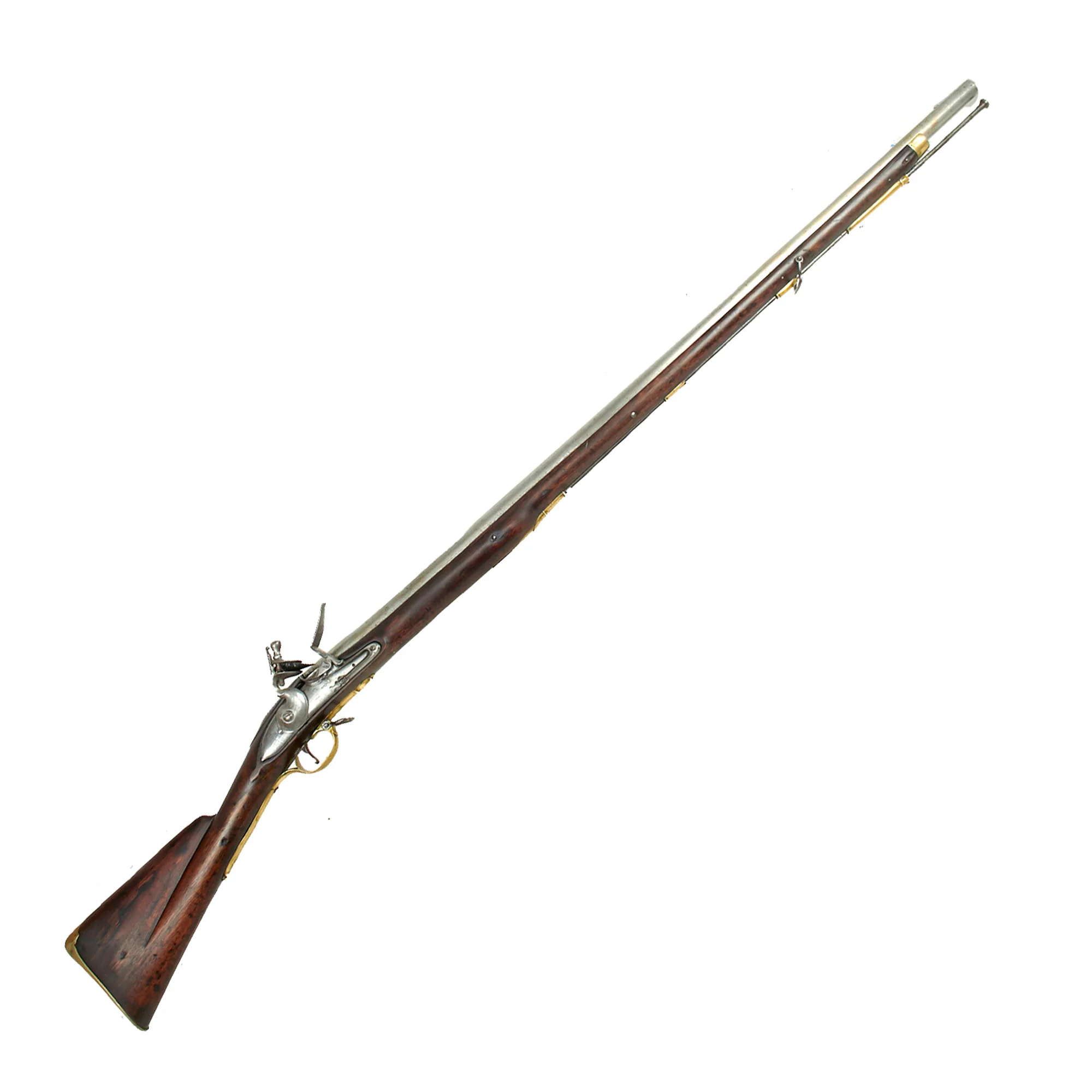
Original Item: Only One Available. The Victorian Era was a time of great change in firearms technology, with Queen Victoria's crowning coinciding with the first official "Pattern" of percussion rifle for British forces, the Brunswick P-1837 "Two Groove" Rifle. There had previously been rifles and some percussion arms, but this was the first one put into wide spread production, and Flintlocks would continue to be used for decades after this point, however their time was definitely over. It was then only a few decades later when muzzle loaded percussion arms began to be superseded by self-contained cartridges of various types, with most eventually settling on centerfire as being the better choice.
However, throughout this time, the propellant remained the same as it had been for centuries: black powder. In 1886 however, this all changed, with the introduction of the 8×50mmR Lebel cartridge for the French Lebel Fusil Modèle 1886 Rifle. Germany followed quickly with their introduction of the Gewehr 1888 "Commission Rifle", and at the same time Great Britain had been developing it's own design for the use of high power smokeless powder.
Unfortunately, they were not able to settle on the propellant to use, and after years of protracted development, the decision was made to release the new design using black powder propellant, with the intension that it would be switched to smokeless powder once development was complete. The rifle released in 1888 was the Magazine Lee-Metford (MLM) rifle, utilizing a rimmed Cartridge .303 Mk I cartridge loaded with black powder. The design would continue development and serve as a platform for testing various smokeless powder formulations, while at the same time was deployed as the new front-line weapon for British forces.
Various changes were made to the Lee-Metford, including changing the type of sights used, the location of the safety, the shape of the handguard, and other minor issues. It was however also noted during the testing of smokeless powders that the higher power and bullets used led to relatively rapid wear of the rifling in the barrel. By the time Cordite was selected as the propellant, it was known that the barrels would become unusable after 6,000 rounds. The "Metford" rifling was polygonal, often favored for black powder because it has no sharp edges to trap powder fouling. However with the increased pressure, this wore away more rapidly, and RSAF Enfield developed a new rifled lining for the barrels. It featured deeper square cut grooves, and was able to withstand 10,000 rounds before failure.
At this point the Magazine Lee-Metford Mk.I rifles had the barrel design changed to use the new "Enfield" rifling, and were renamed the "Magazine Lee-Enfield MkI". They were identical to the Metford except for the rifling, and development continued incrementally. The Magazine Lee-Enfield Mk.I* removed the cleaning rod from the inside of the stock and the bayonet lug was filled in. Then in 1904, not even 10 years later, it was decided that the rifles were too long, and the Short Magazine Lee-Enfield, or SMLE, was born, and would continue to serve for over 50 years in various versions.
After the introduction of the SMLE, many of the older MLM and MLE rifles were sent back to arsenal and updated to the SMLE standard, with shorter barrels and modified stocks. Some of these then would again be updated to become .22 Trainer rifles for use during WWI and WWII. It is very rare to find an original Magazine Lee-Enfield rifle still in the original configuration, however that is exactly what we have here! We have only ever had a small number of Lee-Metford rifles, and cannot recall the last time that we had a "Long" Lee-Enfield, which makes this a real treat!
This rifle is in lovely condition, showing signs of moderate to light service, and really looks great! So many of these would later be modified, but this example still has all of the correct features that make the "Long" Magazine Lee-Enfield rifle what it is. The dust cover for the bolt is present, as is the safety on the cocking piece. The "volley" front and rear sights on the left side of the stock are both present and functional. It still retains the handguard, with the "lip" on the front to make it easier to remove, and the magazine cut-off is present as well. The bayonet lug on the nose cap still has the hole for the cleaning rod as well, though the cleaning rod is missing.
Checking the receiver, it is marked with original serial number 9011 on the left side, and the top of the barrel nocks form is correctly stamped E for "Enfield" rifling, used to quickly identify the type of barrel installed in the field. The butt stock still has a fully visible R. M. / WD / ENFIELD cartouche under M. & D., and the butt stock tang is unit marked 88 VF / 203, which we have not been able to identify. The "cup" at the rear of the receiver where the butt stock attaches is marked with the rifle's original production information:
(CROWN)
V.R.
ENFIELD
1896
L.E.
I.
The royal cypher Crown over V.R. stands for for Victoria Regina. Well, this Queen, who reigned for almost 64 years, had an influence far beyond the British Isles and the British Empire during the Nineteenth Century. Victorian morals dominated the cultured classes of Great Britain and the new United States, and even now, in the Twenty-First Century, nostalgic organizations such as the Victorian Riflemen thrive in the former Colonies. ENFIELD indicates that the first incarnation of this piece was produced by the Royal Small Arms Factory at Enfield Lock and 1896 was the year of original manufacture. L.E. is the abbreviation for the .303 calibre, Rifle, Magazine, Lee–Enfield, with the I indicating the first version. There are no stars indicating that it was produced as a modified first version, or that it was modified later. There are also no additional markings on the receiver cup, and there is no evidence from any of the parts that this was ever converted to anything but a "Long" Magazine Lee Enfield.
Condition is very good, still showing strong bluing on a lot of the metalwork, while parts that were originally bright steel now show an oxidized patina. The stock is also great, showing a lovely color and wear from use and service, but no major damage such as cracks or repairs. There is a small gouge on the front left fore stock, which is probably the most serious wear on the entire rifle. The action works well, with a crisp dry fire and functional safety, though we have no way to test to see if the magazine is still able to feed. The magazine looks to be in good shape, with the follower depressing easily. We checked the bore, and it is in excellent condition, showing crisp lands and grooves with a bright finish. There is just a bit of wear present, and no real oxidation or fouling, making it a really choice example. Both sling swivels are present and move freely, and the stacking swivel is present as well.
The included P-1888 Mk.I Bayonet and Scabbard are in lovely condition, matching the appearance of the rifle well. The blade ricasso is marked CROWN / VR / 7 '96 on the blade ricasso, for acceptance in July of 1896 by the Victorian military. The other side has the ARROW / WD War Department stamp and other proof markings. The scabbard is faintly marked with what appears to be a 96 date. The bayonet still properly locks onto the rifle, and the blade is in really good shape, showing only light staining.
Really a great example of a very hard to find early Lee-Enfield variant, still in the original early configuration and complete with an original correct bayonet. Ready to research and display!
Specifications (Rifle):-
Year of Manufacture: 1896
Caliber: .303 British
Cartridge Type: Centerfire Cartridge
Overall Length: 30.2 Inches
Overall Length: 49.6 Inches
Action type: Bolt-Action
Feed System: Single Shot
Specifications (Bayonet):-
Blade Length: 12"
Blade Style: Double Edged Hollow Ground Spear Point
Overall length: 16 5/8"
Crossguard: 2 5/8”
Scabbard Length: 12 3/8"

Details & Craftsmanship
Every detail has been carefully considered to bring you the perfect product.

Details & Craftsmanship
Every detail has been carefully considered to bring you the perfect product.

Details & Craftsmanship
Every detail has been carefully considered to bring you the perfect product.

Details & Craftsmanship
Every detail has been carefully considered to bring you the perfect product.

Details & Craftsmanship
Every detail has been carefully considered to bring you the perfect product.

Details & Craftsmanship
Every detail has been carefully considered to bring you the perfect product.

Details & Craftsmanship
Every detail has been carefully considered to bring you the perfect product.

Details & Craftsmanship
Every detail has been carefully considered to bring you the perfect product.

Details & Craftsmanship
Every detail has been carefully considered to bring you the perfect product.

Details & Craftsmanship
Every detail has been carefully considered to bring you the perfect product.

Details & Craftsmanship
Every detail has been carefully considered to bring you the perfect product.

Details & Craftsmanship
Every detail has been carefully considered to bring you the perfect product.

Details & Craftsmanship
Every detail has been carefully considered to bring you the perfect product.

Details & Craftsmanship
Every detail has been carefully considered to bring you the perfect product.

Details & Craftsmanship
Every detail has been carefully considered to bring you the perfect product.

Details & Craftsmanship
Every detail has been carefully considered to bring you the perfect product.

Details & Craftsmanship
Every detail has been carefully considered to bring you the perfect product.

Details & Craftsmanship
Every detail has been carefully considered to bring you the perfect product.

Details & Craftsmanship
Every detail has been carefully considered to bring you the perfect product.

Details & Craftsmanship
Every detail has been carefully considered to bring you the perfect product.

Details & Craftsmanship
Every detail has been carefully considered to bring you the perfect product.

Details & Craftsmanship
Every detail has been carefully considered to bring you the perfect product.

Details & Craftsmanship
Every detail has been carefully considered to bring you the perfect product.

Details & Craftsmanship
Every detail has been carefully considered to bring you the perfect product.

Details & Craftsmanship
Every detail has been carefully considered to bring you the perfect product.
Description
Original Item: Only One Available. The Victorian Era was a time of great change in firearms technology, with Queen Victoria's crowning coinciding with the first official "Pattern" of percussion rifle for British forces, the Brunswick P-1837 "Two Groove" Rifle. There had previously been rifles and some percussion arms, but this was the first one put into wide spread production, and Flintlocks would continue to be used for decades after this point, however their time was definitely over. It was then only a few decades later when muzzle loaded percussion arms began to be superseded by self-contained cartridges of various types, with most eventually settling on centerfire as being the better choice.
However, throughout this time, the propellant remained the same as it had been for centuries: black powder. In 1886 however, this all changed, with the introduction of the 8×50mmR Lebel cartridge for the French Lebel Fusil Modèle 1886 Rifle. Germany followed quickly with their introduction of the Gewehr 1888 "Commission Rifle", and at the same time Great Britain had been developing it's own design for the use of high power smokeless powder.
Unfortunately, they were not able to settle on the propellant to use, and after years of protracted development, the decision was made to release the new design using black powder propellant, with the intension that it would be switched to smokeless powder once development was complete. The rifle released in 1888 was the Magazine Lee-Metford (MLM) rifle, utilizing a rimmed Cartridge .303 Mk I cartridge loaded with black powder. The design would continue development and serve as a platform for testing various smokeless powder formulations, while at the same time was deployed as the new front-line weapon for British forces.
Various changes were made to the Lee-Metford, including changing the type of sights used, the location of the safety, the shape of the handguard, and other minor issues. It was however also noted during the testing of smokeless powders that the higher power and bullets used led to relatively rapid wear of the rifling in the barrel. By the time Cordite was selected as the propellant, it was known that the barrels would become unusable after 6,000 rounds. The "Metford" rifling was polygonal, often favored for black powder because it has no sharp edges to trap powder fouling. However with the increased pressure, this wore away more rapidly, and RSAF Enfield developed a new rifled lining for the barrels. It featured deeper square cut grooves, and was able to withstand 10,000 rounds before failure.
At this point the Magazine Lee-Metford Mk.I rifles had the barrel design changed to use the new "Enfield" rifling, and were renamed the "Magazine Lee-Enfield MkI". They were identical to the Metford except for the rifling, and development continued incrementally. The Magazine Lee-Enfield Mk.I* removed the cleaning rod from the inside of the stock and the bayonet lug was filled in. Then in 1904, not even 10 years later, it was decided that the rifles were too long, and the Short Magazine Lee-Enfield, or SMLE, was born, and would continue to serve for over 50 years in various versions.
After the introduction of the SMLE, many of the older MLM and MLE rifles were sent back to arsenal and updated to the SMLE standard, with shorter barrels and modified stocks. Some of these then would again be updated to become .22 Trainer rifles for use during WWI and WWII. It is very rare to find an original Magazine Lee-Enfield rifle still in the original configuration, however that is exactly what we have here! We have only ever had a small number of Lee-Metford rifles, and cannot recall the last time that we had a "Long" Lee-Enfield, which makes this a real treat!
This rifle is in lovely condition, showing signs of moderate to light service, and really looks great! So many of these would later be modified, but this example still has all of the correct features that make the "Long" Magazine Lee-Enfield rifle what it is. The dust cover for the bolt is present, as is the safety on the cocking piece. The "volley" front and rear sights on the left side of the stock are both present and functional. It still retains the handguard, with the "lip" on the front to make it easier to remove, and the magazine cut-off is present as well. The bayonet lug on the nose cap still has the hole for the cleaning rod as well, though the cleaning rod is missing.
Checking the receiver, it is marked with original serial number 9011 on the left side, and the top of the barrel nocks form is correctly stamped E for "Enfield" rifling, used to quickly identify the type of barrel installed in the field. The butt stock still has a fully visible R. M. / WD / ENFIELD cartouche under M. & D., and the butt stock tang is unit marked 88 VF / 203, which we have not been able to identify. The "cup" at the rear of the receiver where the butt stock attaches is marked with the rifle's original production information:
(CROWN)
V.R.
ENFIELD
1896
L.E.
I.
The royal cypher Crown over V.R. stands for for Victoria Regina. Well, this Queen, who reigned for almost 64 years, had an influence far beyond the British Isles and the British Empire during the Nineteenth Century. Victorian morals dominated the cultured classes of Great Britain and the new United States, and even now, in the Twenty-First Century, nostalgic organizations such as the Victorian Riflemen thrive in the former Colonies. ENFIELD indicates that the first incarnation of this piece was produced by the Royal Small Arms Factory at Enfield Lock and 1896 was the year of original manufacture. L.E. is the abbreviation for the .303 calibre, Rifle, Magazine, Lee–Enfield, with the I indicating the first version. There are no stars indicating that it was produced as a modified first version, or that it was modified later. There are also no additional markings on the receiver cup, and there is no evidence from any of the parts that this was ever converted to anything but a "Long" Magazine Lee Enfield.
Condition is very good, still showing strong bluing on a lot of the metalwork, while parts that were originally bright steel now show an oxidized patina. The stock is also great, showing a lovely color and wear from use and service, but no major damage such as cracks or repairs. There is a small gouge on the front left fore stock, which is probably the most serious wear on the entire rifle. The action works well, with a crisp dry fire and functional safety, though we have no way to test to see if the magazine is still able to feed. The magazine looks to be in good shape, with the follower depressing easily. We checked the bore, and it is in excellent condition, showing crisp lands and grooves with a bright finish. There is just a bit of wear present, and no real oxidation or fouling, making it a really choice example. Both sling swivels are present and move freely, and the stacking swivel is present as well.
The included P-1888 Mk.I Bayonet and Scabbard are in lovely condition, matching the appearance of the rifle well. The blade ricasso is marked CROWN / VR / 7 '96 on the blade ricasso, for acceptance in July of 1896 by the Victorian military. The other side has the ARROW / WD War Department stamp and other proof markings. The scabbard is faintly marked with what appears to be a 96 date. The bayonet still properly locks onto the rifle, and the blade is in really good shape, showing only light staining.
Really a great example of a very hard to find early Lee-Enfield variant, still in the original early configuration and complete with an original correct bayonet. Ready to research and display!
Specifications (Rifle):-
Year of Manufacture: 1896
Caliber: .303 British
Cartridge Type: Centerfire Cartridge
Overall Length: 30.2 Inches
Overall Length: 49.6 Inches
Action type: Bolt-Action
Feed System: Single Shot
Specifications (Bayonet):-
Blade Length: 12"
Blade Style: Double Edged Hollow Ground Spear Point
Overall length: 16 5/8"
Crossguard: 2 5/8”
Scabbard Length: 12 3/8"