
Original Antique Finnish - Soviet Continuation War Mosin-Nagant M91/30 Infantry Rifle Serial 26481 with 1942 Dated VKT Barrel - Tula Receiver Dated 1896
Original Antique Finnish - Soviet Continuation War Mosin-Nagant M91/30 Infantry Rifle Serial 26481 with 1942 Dated VKT Barrel - Tula Receiver Dated 1896
Original: $1,895.00
-70%$1,895.00
$568.50The Story
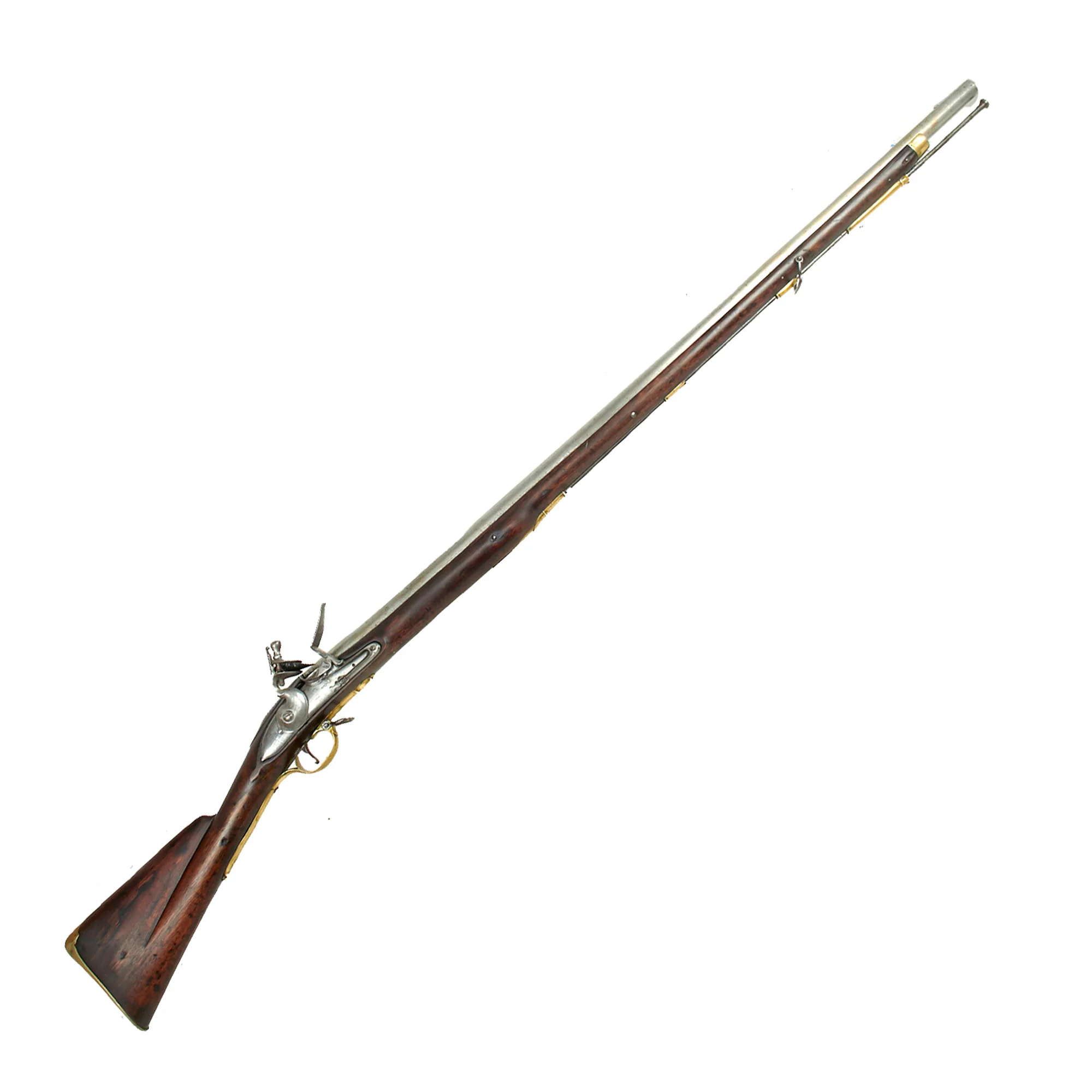
Original Item: Only One Available. These are so very rare, a real pre-1898 Antique Russian Mosin-Nagant M1891 Full Length Rifle, more officially referred to as the "Three Line Infantry Rifle, Model of 1891." This particularly example is very interesting, as it looks to currently be in the M91/30 configuration as used by Soviet forces during WWII and long afterwards. However, the barrel is of Finnish manufacture, dated 1942, and is also the correct length for an M/91 Mosin-Nagant, 31 1/2 Inches, not the correct 29.
The rear sight is the correct M91/30 type, retained by two cross pins, and has a slider with slopes to the rear and the front, the style used during the WWII Era. However the front sight is a simple blade sight, which only was used very early in M91/30 production, 1930-1932. However it is documented to have been used as a replacement on later examples as needed. The stock is also correct for an M91/30, with the slots for a sling, as well as the hand guard with brass fittings on either end. The barrel bands, band springs, and other parts are all also completely correct for this model.
The barrel on the example we have here is one of those produced following the winter war, which means it most likely saw service curing the Continuation War of 1941-1944. It had the barrel replaced, and the full markings on the barrel are mostly clear, and read:-
[SA]
[VKT]
D
26481
1942
The barrel bears the VKT logo of Valtion Kivääritehdas (lit. State Rifle Factory), the Finnish State Arsenal located in Jyväskylä. This is one of four known Finnish manufacturers of Mosin-Nagant rifle barrels, and the also manufactured barrels for Finnish maxims, as well as the Lahti L-39 Anti-tank rifle. There are additional markings on the breech end of the barrel, including an SA inside a rectangle, for Suomi Armeija (Finnish Army). The right side of the barrel by the front sight has import and caliber markings from Century Arms International of St. Albans, VT. This was imported with a large number of other Mosin-Nagant rifles from Finland, and all were marked, regardless of antique status.
The receiver has been marked 26481 on the left side to match the barrel, and the bolt has been re-marked to match as well. Most importantly, the bottom of the receiver tang is dated 96г. (г is short for год "god", or year in English) for 1897, legally classifying this as a Pre-1899 Antique Firearm. Above this marking is the "Hammer" marking of Tula arsenal, a Czarist marking which was discontinued following the Russian revolution and subsequent civil war. This is one of many Imperial Russian receivers that saw service for well over half a century.
The right side of the bolt, the firing pin holder, and the front of the magazine are marked with the Hammer proof of Tula Arsenal, Czarist markings which were discontinued following the Russian revolution and subsequent civil war. However, the barrel bands are both marked with the Arrow in a Triangle Post 1928 Soviet marking for Izhevsk Arsenal.
Condition of the rifle is very good, especially considering the age and amount of service it must have seen. The stock is in very good condition, with a lovely light brown color showing the grain well. It shows dents and dings consistent with service, but there are no cracks, repairs, or other major damage. It does look like it was probably arsenal reconditioned, possibly multiple times. The metalwork was reblued when it was updated in Finland during the WWII period, and it may have been refinished again when a new stock was fitted. The finish is well retained, giving it a great look. It still retains the original cleaning rod, which is in good shape, and still threads correctly into the stock retaining block.
The rifle cycles well, with a crisp dry fire. The bore is in very good condition, showing clear lands and grooves with a partly bright finish. There is however wear to the lands, and the grooves are mostly dark, so this rifle looks to have seen a good amount of use after being rebarreled, probably with corrosive powder.
A wonderful piece of Firearms and European History! Originally made in 1896 in Russia, and then later used against them by Finland during the WWII Era, when it was very possibly captured, or maybe repaired using captured Soviet components. Ready to research and display!
Specifications-
Year of Manufacture: 1896 - Updated 1942 and Later.
Caliber: 7.62×54mmR Russian
Cartridge Type: Centerfire Cartridge
Barrel Length: 31 1/2 Inches
Overall Length: 51 1/2 Inches
Action type: Bolt Action
Feed System: 5 Round Internal
The Russian "Mosin-Nagant" bolt-action rifle is arguably the most-produced rifle in history, with around 37 million being produced in various versions in several different countries. This number easily surpasses the Lee-Enfield, Mauser GEW98 and Mauser K98K in number produced. The reasons for this are multiple, including both the size of Russia and later USSR, as well as the long service life of this design, which is still in use today in some locations.
The history of what is known as the "Mosin-Nagant" rifle begins in the late 19th century in Russia, following the Russo-Ottoman war. During the course of the war, it became apparent that Russian troops needed a modern bolt-action rifle to compete with the rest of the world, so they started evaluations in 1889 on what would become the general issue rifle for infantry troops. Three designs were submitted, and at the time in Russia bullet diameter was measured in "line"s, where one line was 1/10 of an inch. This is what gave rise to the official name of the rifle, the "3-line rifle, Model 1891", as it was in .30cal, or 7.62mm. The name "Mosin-Nagant" is in reality somewhat of a misnomer, as the design chosen was designed by Mosin, not Nagant. However due to legal issues with Nagant over certain design aspects of the rifle, his name was attached to the design as well, leading to the name used in most of the world, the "Mosin-Nagant Model 1891". Three other models would subsequently be put into service prior to WWI: the M1891 Dragoon, the M1891 Cossack, and the M1907 Carbine.
When Finland achieved independence from Russia, over 190,000 Model 1891 infantry rifles were already stockpiled in the ex-Russian military depots within Finland. As a result, the rifle was adopted as the standard Finnish Army weapon, and surplus Mosin–Nagants were purchased from other European nations which had captured them during World War I. The official designation of these were "3-линии пехотная винтовка образца 1891–го года" which translates to "Three Line Infantry Rifle, Model of 1891". These rifles were then overhauled to meet Finnish Army standards and designated M/91.
This entailed replacing the stock with a new one, constructed from two pieces of wood with a glued finger joint in the middle. The new stock featured traditional sling swivels fitted into escutcheons, instead of the slots used on the Russian types. This example has both intact, and does not show any signs of recapture by the Soviets, or other later alterations.

Details & Craftsmanship
Every detail has been carefully considered to bring you the perfect product.

Details & Craftsmanship
Every detail has been carefully considered to bring you the perfect product.

Details & Craftsmanship
Every detail has been carefully considered to bring you the perfect product.

Details & Craftsmanship
Every detail has been carefully considered to bring you the perfect product.

Details & Craftsmanship
Every detail has been carefully considered to bring you the perfect product.

Details & Craftsmanship
Every detail has been carefully considered to bring you the perfect product.

Details & Craftsmanship
Every detail has been carefully considered to bring you the perfect product.

Details & Craftsmanship
Every detail has been carefully considered to bring you the perfect product.

Details & Craftsmanship
Every detail has been carefully considered to bring you the perfect product.

Details & Craftsmanship
Every detail has been carefully considered to bring you the perfect product.

Details & Craftsmanship
Every detail has been carefully considered to bring you the perfect product.

Details & Craftsmanship
Every detail has been carefully considered to bring you the perfect product.

Details & Craftsmanship
Every detail has been carefully considered to bring you the perfect product.

Details & Craftsmanship
Every detail has been carefully considered to bring you the perfect product.

Details & Craftsmanship
Every detail has been carefully considered to bring you the perfect product.

Details & Craftsmanship
Every detail has been carefully considered to bring you the perfect product.

Details & Craftsmanship
Every detail has been carefully considered to bring you the perfect product.

Details & Craftsmanship
Every detail has been carefully considered to bring you the perfect product.

Details & Craftsmanship
Every detail has been carefully considered to bring you the perfect product.

Details & Craftsmanship
Every detail has been carefully considered to bring you the perfect product.
Description
Original Item: Only One Available. These are so very rare, a real pre-1898 Antique Russian Mosin-Nagant M1891 Full Length Rifle, more officially referred to as the "Three Line Infantry Rifle, Model of 1891." This particularly example is very interesting, as it looks to currently be in the M91/30 configuration as used by Soviet forces during WWII and long afterwards. However, the barrel is of Finnish manufacture, dated 1942, and is also the correct length for an M/91 Mosin-Nagant, 31 1/2 Inches, not the correct 29.
The rear sight is the correct M91/30 type, retained by two cross pins, and has a slider with slopes to the rear and the front, the style used during the WWII Era. However the front sight is a simple blade sight, which only was used very early in M91/30 production, 1930-1932. However it is documented to have been used as a replacement on later examples as needed. The stock is also correct for an M91/30, with the slots for a sling, as well as the hand guard with brass fittings on either end. The barrel bands, band springs, and other parts are all also completely correct for this model.
The barrel on the example we have here is one of those produced following the winter war, which means it most likely saw service curing the Continuation War of 1941-1944. It had the barrel replaced, and the full markings on the barrel are mostly clear, and read:-
[SA]
[VKT]
D
26481
1942
The barrel bears the VKT logo of Valtion Kivääritehdas (lit. State Rifle Factory), the Finnish State Arsenal located in Jyväskylä. This is one of four known Finnish manufacturers of Mosin-Nagant rifle barrels, and the also manufactured barrels for Finnish maxims, as well as the Lahti L-39 Anti-tank rifle. There are additional markings on the breech end of the barrel, including an SA inside a rectangle, for Suomi Armeija (Finnish Army). The right side of the barrel by the front sight has import and caliber markings from Century Arms International of St. Albans, VT. This was imported with a large number of other Mosin-Nagant rifles from Finland, and all were marked, regardless of antique status.
The receiver has been marked 26481 on the left side to match the barrel, and the bolt has been re-marked to match as well. Most importantly, the bottom of the receiver tang is dated 96г. (г is short for год "god", or year in English) for 1897, legally classifying this as a Pre-1899 Antique Firearm. Above this marking is the "Hammer" marking of Tula arsenal, a Czarist marking which was discontinued following the Russian revolution and subsequent civil war. This is one of many Imperial Russian receivers that saw service for well over half a century.
The right side of the bolt, the firing pin holder, and the front of the magazine are marked with the Hammer proof of Tula Arsenal, Czarist markings which were discontinued following the Russian revolution and subsequent civil war. However, the barrel bands are both marked with the Arrow in a Triangle Post 1928 Soviet marking for Izhevsk Arsenal.
Condition of the rifle is very good, especially considering the age and amount of service it must have seen. The stock is in very good condition, with a lovely light brown color showing the grain well. It shows dents and dings consistent with service, but there are no cracks, repairs, or other major damage. It does look like it was probably arsenal reconditioned, possibly multiple times. The metalwork was reblued when it was updated in Finland during the WWII period, and it may have been refinished again when a new stock was fitted. The finish is well retained, giving it a great look. It still retains the original cleaning rod, which is in good shape, and still threads correctly into the stock retaining block.
The rifle cycles well, with a crisp dry fire. The bore is in very good condition, showing clear lands and grooves with a partly bright finish. There is however wear to the lands, and the grooves are mostly dark, so this rifle looks to have seen a good amount of use after being rebarreled, probably with corrosive powder.
A wonderful piece of Firearms and European History! Originally made in 1896 in Russia, and then later used against them by Finland during the WWII Era, when it was very possibly captured, or maybe repaired using captured Soviet components. Ready to research and display!
Specifications-
Year of Manufacture: 1896 - Updated 1942 and Later.
Caliber: 7.62×54mmR Russian
Cartridge Type: Centerfire Cartridge
Barrel Length: 31 1/2 Inches
Overall Length: 51 1/2 Inches
Action type: Bolt Action
Feed System: 5 Round Internal
The Russian "Mosin-Nagant" bolt-action rifle is arguably the most-produced rifle in history, with around 37 million being produced in various versions in several different countries. This number easily surpasses the Lee-Enfield, Mauser GEW98 and Mauser K98K in number produced. The reasons for this are multiple, including both the size of Russia and later USSR, as well as the long service life of this design, which is still in use today in some locations.
The history of what is known as the "Mosin-Nagant" rifle begins in the late 19th century in Russia, following the Russo-Ottoman war. During the course of the war, it became apparent that Russian troops needed a modern bolt-action rifle to compete with the rest of the world, so they started evaluations in 1889 on what would become the general issue rifle for infantry troops. Three designs were submitted, and at the time in Russia bullet diameter was measured in "line"s, where one line was 1/10 of an inch. This is what gave rise to the official name of the rifle, the "3-line rifle, Model 1891", as it was in .30cal, or 7.62mm. The name "Mosin-Nagant" is in reality somewhat of a misnomer, as the design chosen was designed by Mosin, not Nagant. However due to legal issues with Nagant over certain design aspects of the rifle, his name was attached to the design as well, leading to the name used in most of the world, the "Mosin-Nagant Model 1891". Three other models would subsequently be put into service prior to WWI: the M1891 Dragoon, the M1891 Cossack, and the M1907 Carbine.
When Finland achieved independence from Russia, over 190,000 Model 1891 infantry rifles were already stockpiled in the ex-Russian military depots within Finland. As a result, the rifle was adopted as the standard Finnish Army weapon, and surplus Mosin–Nagants were purchased from other European nations which had captured them during World War I. The official designation of these were "3-линии пехотная винтовка образца 1891–го года" which translates to "Three Line Infantry Rifle, Model of 1891". These rifles were then overhauled to meet Finnish Army standards and designated M/91.
This entailed replacing the stock with a new one, constructed from two pieces of wood with a glued finger joint in the middle. The new stock featured traditional sling swivels fitted into escutcheons, instead of the slots used on the Russian types. This example has both intact, and does not show any signs of recapture by the Soviets, or other later alterations.