
Original: $1,095.00
-70%$1,095.00
$328.50The Story
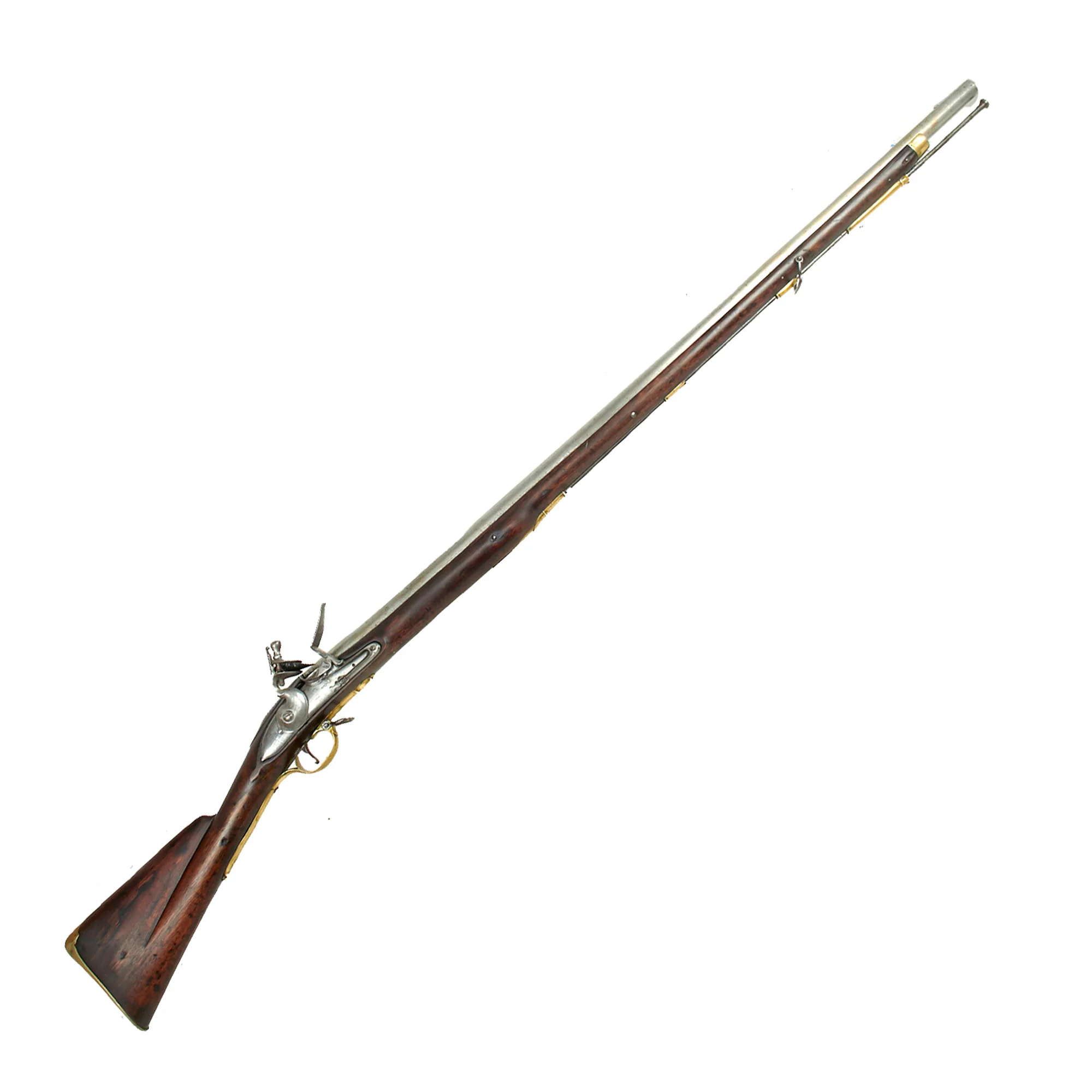
Original Item: Only One Available. The Type 30 rifle Arisaka (三十年式歩兵銃, Sanjū-nen-shiki hoheijū; 'year 30 type infantry firearm') is a box-fed bolt-action repeating rifle that was the standard infantry rifle of the Imperial Japanese Army from 1897 (the 30th year of the Meiji period, hence "Type 30") to 1905. Manufacture started in 1897 at Koishikawa Arsenal (小石川工廠, Koishikawa Kōshō) in Tokyo, and production continued until 1905, with about 600,000 rifles and carbines produced. These were serial numbered sequentially, and did not use any type of "series" marking later adopted in the 20th century. With roughly 75,000 produced each year (the arsenal had produced 200 Muratas EVERY DAY), those with serial numbers under 100,000 are definitely considered Pre-1899 Antique Firearms. This example is serial number 24863, most likely made during 1897, the first year of production, and this is the first example of a Type 30 Arisaka rifle that we have ever had!
The rifle is in lovely matured condition, possibly having seen service for 40 years or more. It is correctly marked 三 十 年 式 (30 Year Type) on the front of the receiver between the gas escape holes, and above this is still an original Intact Chrysanthemum Crest, which shows no signs of attempted defacement. We unfortunately do not know the history of the rifle, but it very possibly may have been captured during WWII. The left side of the receiver is marked with serial number 24863 next to the "Stacked Cannonball" logo of Koishikawa Arsenal, which would later be used by Kokura arsenal. Below this are two kanji that we do not recognize. There are other serial numbers on the rifle, so we assume that parts swapping did occur over the many years of service.
The rifle is complete with almost all parts, as the upper receiver tang is missing, while the lower is still present. In a Type 30 Arisaka, both of these are separate parts that latch into the rear of the receiver, so they can relatively easily be lost during servicing. The upper tang screw is still present, so we assume it was lost long ago. The rifle was cleaned and restored in the past, but it was done tastefully, avoiding excessive cleaning of the metalwork, which displays a lovely oxidized patina from long service. There are some areas of peppering, but no major rust, and it really has a fantastic look.
Functionally, the rifle is still able to cock and dry fire, and the bolt release on the left hand side works as well. The Type 30 took a lot of inspiration from the Model 93 and 95 Mauser rifles that were being shipped around the world at the time. It even has the "pop up" magazine follower, which gets in the way of moving the bolt forward after the last cartridge is ejected. The magazine floor plate and follower can be removed for cleaning by pressing the release on the front of the trigger guard forward. The safety on the back of the rifle is still present, however the last time the bolt was taken apart, it was put on backwards, so the hook is on the wrong side. Due to this we were not able to check to see if it can be put into the safety position. We checked the bore, and we can see clear rifling, but it is quite dark from fouling and oxidation.
The stock on the rifle is in great shape, with a lovely red brown finish. As with many later rifle designs, the butt stocks were often made from two pieces of wood, since Japan did not have access to the large lumber supplies other parts of the world did. The joint on the butt stock does show the seam on both sides, but it is still quite solidly attached. The hand guard is also in great shape. Both sling swivels are present and moveable, and the rear sight works correctly as well. There is a cleaning rod present, but it looks to be a fabricated replacement.
A lovely matured example of a very hard to find antique Type 30 Arisaka Rifle! The first that we have ever had, ready to add to your collection and display!
Specifications-
Year of Manufacture: 1897-1898
Caliber: 6.5×50mm Arisaka
Cartridge Type: Centerfire Cartridge
Barrel Length: 38 Inches
Overall Length: 50.2 Inches
Action type: Bolt-Action
Feed System: 5-round internal magazine
History of the Type 30 Arisaka Rifles & Carbines
The Imperial Japanese Army began development of a new rifle in December 1895 to replace the Murata rifle, which had been in use since 1880. The project was handled by the Koishikawa Arsenal in Tokyo under the direction of Colonel Arisaka Nariakira, and was the first in a series of rifles which would be used through World War II. By 1900, the Imperial Japanese Army had most of its divisions fully equipped with the rifle.
The Type 30 was first designed for the semi-rimmed 6.5×50mm Arisaka cartridge. The sights could be set up to 2,000 meters (2,200 yd). Besides the standard rifle, there was also a carbine version, 962 mm (37.9 in) long, which was intended for the cavalry and other troops who needed a shorter or lighter weapon. It had a sight that could be set up to 1,500 meters (1,600 yd). The prototype was called the "Type 29 rifle" and, after enhancements, was redesignated as the "Type 30". It went into production in 1899. This weapon could be equipped with the Type 30 bayonet.
The Type 30 was used by front-line Japanese forces in the Russo-Japanese War. Although it was a major improvement over the Type 22 rifle (also known as "Murata"), it had some reliability and safety issues. Based on combat experience, an improved version, the Type 38 rifle, was introduced in 1905, although not all units received the new version and, as a result, a mixture of models was retained by the Japanese Army into World War I and later into World War II.
Aside from Japan, the Type 30 was supplied to numerous nations during and after World War I. The most predominant user was the Russian Empire, who ordered up to 600,000 Arisaka rifles, with at least half of those being Type 30 rifles and carbines.
Early in World War I Britain ordered around 150,000 Type 30, and Type 38 rifles and carbines from Japan as a stopgap until the manufacture of their own Lee–Enfield rifles caught up with demand. Some of these rifles were handed over to the Royal Navy and to Arab forces fighting with Lawrence of Arabia. The majority of these weapons (Type 30s and Type 38s) were handed over to Russia in 1916, who were far more desperate for arms. Russia in turn also bought many more thousands of Type 30s rifles and carbines, Type 35 rifles and Type 38 rifles and carbines from Japan. A number of these rifles ended up being left behind in Finland or captured from Red Finns in the Finnish Civil War as the Soviets armed them with Arisakas. Later on Finland gave some of these rifles to Estonia who also received them from other sources. Estonia later converted some or all to take .303 British as Britain had also supplied Estonia with Vickers machine guns and P14 rifles. The Czechoslovak Legion fighting in the Russian Civil War was also armed with Japanese Arisakas, including the Type 30.

Details & Craftsmanship
Every detail has been carefully considered to bring you the perfect product.

Details & Craftsmanship
Every detail has been carefully considered to bring you the perfect product.

Details & Craftsmanship
Every detail has been carefully considered to bring you the perfect product.

Details & Craftsmanship
Every detail has been carefully considered to bring you the perfect product.

Details & Craftsmanship
Every detail has been carefully considered to bring you the perfect product.

Details & Craftsmanship
Every detail has been carefully considered to bring you the perfect product.

Details & Craftsmanship
Every detail has been carefully considered to bring you the perfect product.

Details & Craftsmanship
Every detail has been carefully considered to bring you the perfect product.

Details & Craftsmanship
Every detail has been carefully considered to bring you the perfect product.

Details & Craftsmanship
Every detail has been carefully considered to bring you the perfect product.

Details & Craftsmanship
Every detail has been carefully considered to bring you the perfect product.

Details & Craftsmanship
Every detail has been carefully considered to bring you the perfect product.

Details & Craftsmanship
Every detail has been carefully considered to bring you the perfect product.

Details & Craftsmanship
Every detail has been carefully considered to bring you the perfect product.

Details & Craftsmanship
Every detail has been carefully considered to bring you the perfect product.

Details & Craftsmanship
Every detail has been carefully considered to bring you the perfect product.

Details & Craftsmanship
Every detail has been carefully considered to bring you the perfect product.

Details & Craftsmanship
Every detail has been carefully considered to bring you the perfect product.

Details & Craftsmanship
Every detail has been carefully considered to bring you the perfect product.
Description
Original Item: Only One Available. The Type 30 rifle Arisaka (三十年式歩兵銃, Sanjū-nen-shiki hoheijū; 'year 30 type infantry firearm') is a box-fed bolt-action repeating rifle that was the standard infantry rifle of the Imperial Japanese Army from 1897 (the 30th year of the Meiji period, hence "Type 30") to 1905. Manufacture started in 1897 at Koishikawa Arsenal (小石川工廠, Koishikawa Kōshō) in Tokyo, and production continued until 1905, with about 600,000 rifles and carbines produced. These were serial numbered sequentially, and did not use any type of "series" marking later adopted in the 20th century. With roughly 75,000 produced each year (the arsenal had produced 200 Muratas EVERY DAY), those with serial numbers under 100,000 are definitely considered Pre-1899 Antique Firearms. This example is serial number 24863, most likely made during 1897, the first year of production, and this is the first example of a Type 30 Arisaka rifle that we have ever had!
The rifle is in lovely matured condition, possibly having seen service for 40 years or more. It is correctly marked 三 十 年 式 (30 Year Type) on the front of the receiver between the gas escape holes, and above this is still an original Intact Chrysanthemum Crest, which shows no signs of attempted defacement. We unfortunately do not know the history of the rifle, but it very possibly may have been captured during WWII. The left side of the receiver is marked with serial number 24863 next to the "Stacked Cannonball" logo of Koishikawa Arsenal, which would later be used by Kokura arsenal. Below this are two kanji that we do not recognize. There are other serial numbers on the rifle, so we assume that parts swapping did occur over the many years of service.
The rifle is complete with almost all parts, as the upper receiver tang is missing, while the lower is still present. In a Type 30 Arisaka, both of these are separate parts that latch into the rear of the receiver, so they can relatively easily be lost during servicing. The upper tang screw is still present, so we assume it was lost long ago. The rifle was cleaned and restored in the past, but it was done tastefully, avoiding excessive cleaning of the metalwork, which displays a lovely oxidized patina from long service. There are some areas of peppering, but no major rust, and it really has a fantastic look.
Functionally, the rifle is still able to cock and dry fire, and the bolt release on the left hand side works as well. The Type 30 took a lot of inspiration from the Model 93 and 95 Mauser rifles that were being shipped around the world at the time. It even has the "pop up" magazine follower, which gets in the way of moving the bolt forward after the last cartridge is ejected. The magazine floor plate and follower can be removed for cleaning by pressing the release on the front of the trigger guard forward. The safety on the back of the rifle is still present, however the last time the bolt was taken apart, it was put on backwards, so the hook is on the wrong side. Due to this we were not able to check to see if it can be put into the safety position. We checked the bore, and we can see clear rifling, but it is quite dark from fouling and oxidation.
The stock on the rifle is in great shape, with a lovely red brown finish. As with many later rifle designs, the butt stocks were often made from two pieces of wood, since Japan did not have access to the large lumber supplies other parts of the world did. The joint on the butt stock does show the seam on both sides, but it is still quite solidly attached. The hand guard is also in great shape. Both sling swivels are present and moveable, and the rear sight works correctly as well. There is a cleaning rod present, but it looks to be a fabricated replacement.
A lovely matured example of a very hard to find antique Type 30 Arisaka Rifle! The first that we have ever had, ready to add to your collection and display!
Specifications-
Year of Manufacture: 1897-1898
Caliber: 6.5×50mm Arisaka
Cartridge Type: Centerfire Cartridge
Barrel Length: 38 Inches
Overall Length: 50.2 Inches
Action type: Bolt-Action
Feed System: 5-round internal magazine
History of the Type 30 Arisaka Rifles & Carbines
The Imperial Japanese Army began development of a new rifle in December 1895 to replace the Murata rifle, which had been in use since 1880. The project was handled by the Koishikawa Arsenal in Tokyo under the direction of Colonel Arisaka Nariakira, and was the first in a series of rifles which would be used through World War II. By 1900, the Imperial Japanese Army had most of its divisions fully equipped with the rifle.
The Type 30 was first designed for the semi-rimmed 6.5×50mm Arisaka cartridge. The sights could be set up to 2,000 meters (2,200 yd). Besides the standard rifle, there was also a carbine version, 962 mm (37.9 in) long, which was intended for the cavalry and other troops who needed a shorter or lighter weapon. It had a sight that could be set up to 1,500 meters (1,600 yd). The prototype was called the "Type 29 rifle" and, after enhancements, was redesignated as the "Type 30". It went into production in 1899. This weapon could be equipped with the Type 30 bayonet.
The Type 30 was used by front-line Japanese forces in the Russo-Japanese War. Although it was a major improvement over the Type 22 rifle (also known as "Murata"), it had some reliability and safety issues. Based on combat experience, an improved version, the Type 38 rifle, was introduced in 1905, although not all units received the new version and, as a result, a mixture of models was retained by the Japanese Army into World War I and later into World War II.
Aside from Japan, the Type 30 was supplied to numerous nations during and after World War I. The most predominant user was the Russian Empire, who ordered up to 600,000 Arisaka rifles, with at least half of those being Type 30 rifles and carbines.
Early in World War I Britain ordered around 150,000 Type 30, and Type 38 rifles and carbines from Japan as a stopgap until the manufacture of their own Lee–Enfield rifles caught up with demand. Some of these rifles were handed over to the Royal Navy and to Arab forces fighting with Lawrence of Arabia. The majority of these weapons (Type 30s and Type 38s) were handed over to Russia in 1916, who were far more desperate for arms. Russia in turn also bought many more thousands of Type 30s rifles and carbines, Type 35 rifles and Type 38 rifles and carbines from Japan. A number of these rifles ended up being left behind in Finland or captured from Red Finns in the Finnish Civil War as the Soviets armed them with Arisakas. Later on Finland gave some of these rifles to Estonia who also received them from other sources. Estonia later converted some or all to take .303 British as Britain had also supplied Estonia with Vickers machine guns and P14 rifles. The Czechoslovak Legion fighting in the Russian Civil War was also armed with Japanese Arisakas, including the Type 30.