
The Story
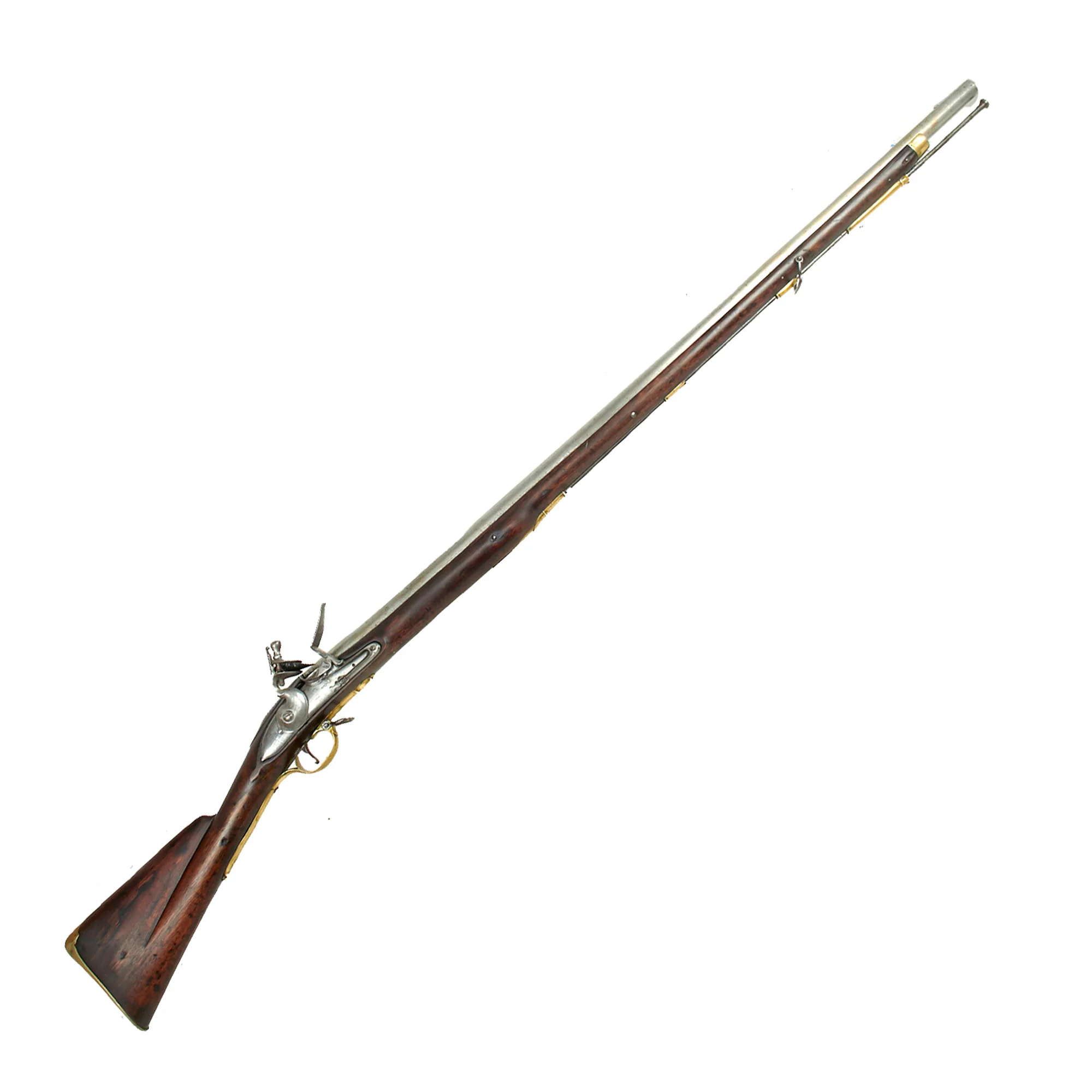
Original Item: Only One Available. Here we have a lovely mid 19th Century Austrian Pinfire Shotgun, which features a very interesting "under lever" system to break open the breech. Instead of moving to the side, it pulls down, and raises the barrel assembly up high for easy cartridge removal. It also has a latch on the left side, which allows the barrel assembly to be removed for easy storage in a case if desired. We measured the bore, and it is about 0.696", which is about 14 Gauge / Bore, a relatively popular fouling size.
The Pinfire system was the earliest form of "Cartridge" developed with a pin projecting out at 90 degrees to the cartridge case. When depressed by the falling hammer the cartridge discharged. At the time up against muzzle loading Revolvers these were revolutionary. Like most things by the end of the Civil War technology had moved on and in the late 1860's regular type cartridges as we know them today had been introduced.
The shotgun is lovely, with some great engraving on the back action locks and the receiver / table, and looks to have "Damascus" barrels. There are no markings on the gun except for a name on the rib near the breech, which still retains a good amount of the original gold inlay and reads:-
F. WIGGENHAUSER
F. Wiggenhauser was based in the Constanz (Lake Constance) area of Austria, which is where Germany, Austria, and Switzerland all meet at the Bodensee large freshwater glacial lake. We have not been able to find much information about him, but we have found other examples, and also some guns marked "Wiggenhauser & Sohn". We did check for proofs on the bottom of the barrel, but there are none, which is typical for Austrian and German guns of the time, who did not have any unified proof system until later.
The damascus barrels are 30 3/4" in length and the gun measures 45 1/2" in overall length. It looks to possibly have been refinished sometime in the past, but it was definitely tastefully done, and the engraving is still strong. We checked the lock action, and both sides are fully functional, holding correctly at half cock and firing at full. The stock is checkered at the wrist, and is quite lovely, showing wear from use but no major damage.
A lovely example with lots of research and display potential!
Specifications-
Year of Manufacture: circa 1865
Caliber: .695" - 14 bore/gauge.
Cartridge Type: Pinfire Cartridge
Barrel Length: 30 3/4 Inches
Overall Length: 45 1/2 Inches
Action type: Back Action Locks
Feed System: Top Break
History of the Pinfire Cartridge:
The Swiss gun maker Samuel Joannes Pauly patented the first breech-loading cartridge in 1812. This was for use in a shotgun with fixed barrels which was loaded by lifting a breech block on the top. French gun maker Henri Roux attempted to improve this cartridge in the 1820s but a constantly primed cartridge was felt by many to be too dangerous and many breech-loading guns reverted to using an unprimed cartridge. This was fired by a separate percussion cap which was used on the still dominant muzzle-loading guns.
Casimir Lefaucheux of Paris decided in 1832 to patent a breechloader where the barrel hinged downwards to reveal the breech ends. These still used a separate percussion cap. Though used before this, (as seen in surviving pinfire shotshells that lists the names of early gun makers he signed contracts with in 1833 and 1834,) in 1835 he was granted an addition to the 1832 patent for a new type of cartridge in which the cartridge's priming compound is ignited by striking a small pin which protrudes radially from just above the base of the cartridge. These pins fitted into a small groove cut in the top of each barrel-end and made it easy to see if the gun was loaded. The cartridge used metal bases (often brass) with paper tubes which were usually loaded by the shooter or his staff but were not entirely gas-tight. This reduced the force of the charge and allowed powder residue and gas to escape.
The pinfire cartridge was greatly improved by the 1846 patent (number 1963) by Benjamin Houllier of Paris which introduced a base wad and effectively made the cartridge gas-tight which greatly improved the performance, and were cheap and clean shooting. These improved pinfire guns grew in popularity in France and some were imported by British gun makers to overwhelming indifference on the part of the gun users there. They were prejudiced technically against a gun that 'broke' in the middle, despite the much vaunted benefits of breechloading.[citation needed] They owned muzzle-loaders of exquisite perfection, considered themselves the best engineers in the world (inventing the Industrial Revolution), and had a poor view of the French - the old enemy and an unreliable ally.
It wasn't until the Great Exhibition of 1851 was held in London that breech-loading guns were taken more seriously by British and American gun makers in particular. The display of a Lefaucheux breech-loading gun inspired English apprentice gunmaker Edwin Charles Hodges (1831-1925) to make an improved copy and persuade leading London gun maker Joseph Lang that this was the gun of the future. Lang was universally credited to be the first established British gunmaker to produce pinfires in any numbers. His first weapon of this new type was produced in 1853. Other British gun makers including Lancaster, Blanch and Reilly were similarly inspired by French originals and improved pinfire breechloaders became the new type of gun which by 1857/8 every fashionable British prince and titled gentleman wanted to have. EC Hodges continued to make a good living as a specialist independent maker of breech-loading actions commissioned by leading gunmakers such as Boss, Lancaster, Egg, Grant, Atkin, Rigby, Dickson, Purdey, Woodward, Army and Navy, and many others.
After Casimir's death in 1852, his son Eugene continued to market the pinfire design with great success. It became increasingly popular in Europe and large numbers of shotguns and revolvers (often called Lefaucheux guns after their inventor whoever the maker was), were manufactured from the mid-1850s until the 1890s. They were quicker and easier to load than percussion weapons with loose black powder, percussion caps and bullet; and they were also much more likely to fire reliably when wet. Pinfire cartridges were available in a large number of sizes for various types of weapon.
While pinfire shotguns declined from the early 1860s after the introduction of mass-produced centerfire shotgun cartridges, pinfire revolvers in particular became very successful and widespread, being adopted by the armies of France, Italy, Spain, Switzerland, Sweden and others.[citation needed] They were also used during the American Civil War, although sometimes despised because of their low power compared to Colt and other percussion revolvers. Some navies also adopted them, "sea service" examples often being made out of brass which is largely unaffected by the corrosion caused by salt.
Pinfire became obsolete once reliable rimfire and centerfire cartridges became available because without a pin which needed aligning in the slot in the chamber wall they were quicker to load. They were also safer because they had no protruding pin which could cause the ammunition to accidentally detonate during rough handling, particularly of loose ammunition.
NOTE: International orders of antique firearms MUST be shipped using UPS WW Services (courier). USPS Priority Mail international will not accept these. International customers should always consult their country's antique gun laws prior to ordering.

Details & Craftsmanship
Every detail has been carefully considered to bring you the perfect product.

Details & Craftsmanship
Every detail has been carefully considered to bring you the perfect product.

Details & Craftsmanship
Every detail has been carefully considered to bring you the perfect product.

Details & Craftsmanship
Every detail has been carefully considered to bring you the perfect product.

Details & Craftsmanship
Every detail has been carefully considered to bring you the perfect product.

Details & Craftsmanship
Every detail has been carefully considered to bring you the perfect product.

Details & Craftsmanship
Every detail has been carefully considered to bring you the perfect product.

Details & Craftsmanship
Every detail has been carefully considered to bring you the perfect product.

Details & Craftsmanship
Every detail has been carefully considered to bring you the perfect product.

Details & Craftsmanship
Every detail has been carefully considered to bring you the perfect product.

Details & Craftsmanship
Every detail has been carefully considered to bring you the perfect product.

Details & Craftsmanship
Every detail has been carefully considered to bring you the perfect product.

Details & Craftsmanship
Every detail has been carefully considered to bring you the perfect product.

Details & Craftsmanship
Every detail has been carefully considered to bring you the perfect product.

Details & Craftsmanship
Every detail has been carefully considered to bring you the perfect product.

Details & Craftsmanship
Every detail has been carefully considered to bring you the perfect product.

Details & Craftsmanship
Every detail has been carefully considered to bring you the perfect product.

Details & Craftsmanship
Every detail has been carefully considered to bring you the perfect product.

Details & Craftsmanship
Every detail has been carefully considered to bring you the perfect product.

Details & Craftsmanship
Every detail has been carefully considered to bring you the perfect product.

Details & Craftsmanship
Every detail has been carefully considered to bring you the perfect product.

Details & Craftsmanship
Every detail has been carefully considered to bring you the perfect product.

Details & Craftsmanship
Every detail has been carefully considered to bring you the perfect product.

Details & Craftsmanship
Every detail has been carefully considered to bring you the perfect product.

Details & Craftsmanship
Every detail has been carefully considered to bring you the perfect product.

Details & Craftsmanship
Every detail has been carefully considered to bring you the perfect product.

Details & Craftsmanship
Every detail has been carefully considered to bring you the perfect product.

Details & Craftsmanship
Every detail has been carefully considered to bring you the perfect product.

Details & Craftsmanship
Every detail has been carefully considered to bring you the perfect product.

Details & Craftsmanship
Every detail has been carefully considered to bring you the perfect product.

Details & Craftsmanship
Every detail has been carefully considered to bring you the perfect product.

Details & Craftsmanship
Every detail has been carefully considered to bring you the perfect product.

Details & Craftsmanship
Every detail has been carefully considered to bring you the perfect product.
Description
Original Item: Only One Available. Here we have a lovely mid 19th Century Austrian Pinfire Shotgun, which features a very interesting "under lever" system to break open the breech. Instead of moving to the side, it pulls down, and raises the barrel assembly up high for easy cartridge removal. It also has a latch on the left side, which allows the barrel assembly to be removed for easy storage in a case if desired. We measured the bore, and it is about 0.696", which is about 14 Gauge / Bore, a relatively popular fouling size.
The Pinfire system was the earliest form of "Cartridge" developed with a pin projecting out at 90 degrees to the cartridge case. When depressed by the falling hammer the cartridge discharged. At the time up against muzzle loading Revolvers these were revolutionary. Like most things by the end of the Civil War technology had moved on and in the late 1860's regular type cartridges as we know them today had been introduced.
The shotgun is lovely, with some great engraving on the back action locks and the receiver / table, and looks to have "Damascus" barrels. There are no markings on the gun except for a name on the rib near the breech, which still retains a good amount of the original gold inlay and reads:-
F. WIGGENHAUSER
F. Wiggenhauser was based in the Constanz (Lake Constance) area of Austria, which is where Germany, Austria, and Switzerland all meet at the Bodensee large freshwater glacial lake. We have not been able to find much information about him, but we have found other examples, and also some guns marked "Wiggenhauser & Sohn". We did check for proofs on the bottom of the barrel, but there are none, which is typical for Austrian and German guns of the time, who did not have any unified proof system until later.
The damascus barrels are 30 3/4" in length and the gun measures 45 1/2" in overall length. It looks to possibly have been refinished sometime in the past, but it was definitely tastefully done, and the engraving is still strong. We checked the lock action, and both sides are fully functional, holding correctly at half cock and firing at full. The stock is checkered at the wrist, and is quite lovely, showing wear from use but no major damage.
A lovely example with lots of research and display potential!
Specifications-
Year of Manufacture: circa 1865
Caliber: .695" - 14 bore/gauge.
Cartridge Type: Pinfire Cartridge
Barrel Length: 30 3/4 Inches
Overall Length: 45 1/2 Inches
Action type: Back Action Locks
Feed System: Top Break
History of the Pinfire Cartridge:
The Swiss gun maker Samuel Joannes Pauly patented the first breech-loading cartridge in 1812. This was for use in a shotgun with fixed barrels which was loaded by lifting a breech block on the top. French gun maker Henri Roux attempted to improve this cartridge in the 1820s but a constantly primed cartridge was felt by many to be too dangerous and many breech-loading guns reverted to using an unprimed cartridge. This was fired by a separate percussion cap which was used on the still dominant muzzle-loading guns.
Casimir Lefaucheux of Paris decided in 1832 to patent a breechloader where the barrel hinged downwards to reveal the breech ends. These still used a separate percussion cap. Though used before this, (as seen in surviving pinfire shotshells that lists the names of early gun makers he signed contracts with in 1833 and 1834,) in 1835 he was granted an addition to the 1832 patent for a new type of cartridge in which the cartridge's priming compound is ignited by striking a small pin which protrudes radially from just above the base of the cartridge. These pins fitted into a small groove cut in the top of each barrel-end and made it easy to see if the gun was loaded. The cartridge used metal bases (often brass) with paper tubes which were usually loaded by the shooter or his staff but were not entirely gas-tight. This reduced the force of the charge and allowed powder residue and gas to escape.
The pinfire cartridge was greatly improved by the 1846 patent (number 1963) by Benjamin Houllier of Paris which introduced a base wad and effectively made the cartridge gas-tight which greatly improved the performance, and were cheap and clean shooting. These improved pinfire guns grew in popularity in France and some were imported by British gun makers to overwhelming indifference on the part of the gun users there. They were prejudiced technically against a gun that 'broke' in the middle, despite the much vaunted benefits of breechloading.[citation needed] They owned muzzle-loaders of exquisite perfection, considered themselves the best engineers in the world (inventing the Industrial Revolution), and had a poor view of the French - the old enemy and an unreliable ally.
It wasn't until the Great Exhibition of 1851 was held in London that breech-loading guns were taken more seriously by British and American gun makers in particular. The display of a Lefaucheux breech-loading gun inspired English apprentice gunmaker Edwin Charles Hodges (1831-1925) to make an improved copy and persuade leading London gun maker Joseph Lang that this was the gun of the future. Lang was universally credited to be the first established British gunmaker to produce pinfires in any numbers. His first weapon of this new type was produced in 1853. Other British gun makers including Lancaster, Blanch and Reilly were similarly inspired by French originals and improved pinfire breechloaders became the new type of gun which by 1857/8 every fashionable British prince and titled gentleman wanted to have. EC Hodges continued to make a good living as a specialist independent maker of breech-loading actions commissioned by leading gunmakers such as Boss, Lancaster, Egg, Grant, Atkin, Rigby, Dickson, Purdey, Woodward, Army and Navy, and many others.
After Casimir's death in 1852, his son Eugene continued to market the pinfire design with great success. It became increasingly popular in Europe and large numbers of shotguns and revolvers (often called Lefaucheux guns after their inventor whoever the maker was), were manufactured from the mid-1850s until the 1890s. They were quicker and easier to load than percussion weapons with loose black powder, percussion caps and bullet; and they were also much more likely to fire reliably when wet. Pinfire cartridges were available in a large number of sizes for various types of weapon.
While pinfire shotguns declined from the early 1860s after the introduction of mass-produced centerfire shotgun cartridges, pinfire revolvers in particular became very successful and widespread, being adopted by the armies of France, Italy, Spain, Switzerland, Sweden and others.[citation needed] They were also used during the American Civil War, although sometimes despised because of their low power compared to Colt and other percussion revolvers. Some navies also adopted them, "sea service" examples often being made out of brass which is largely unaffected by the corrosion caused by salt.
Pinfire became obsolete once reliable rimfire and centerfire cartridges became available because without a pin which needed aligning in the slot in the chamber wall they were quicker to load. They were also safer because they had no protruding pin which could cause the ammunition to accidentally detonate during rough handling, particularly of loose ammunition.
NOTE: International orders of antique firearms MUST be shipped using UPS WW Services (courier). USPS Priority Mail international will not accept these. International customers should always consult their country's antique gun laws prior to ordering.