
Original: $1,595.00
-70%$1,595.00
$478.50The Story
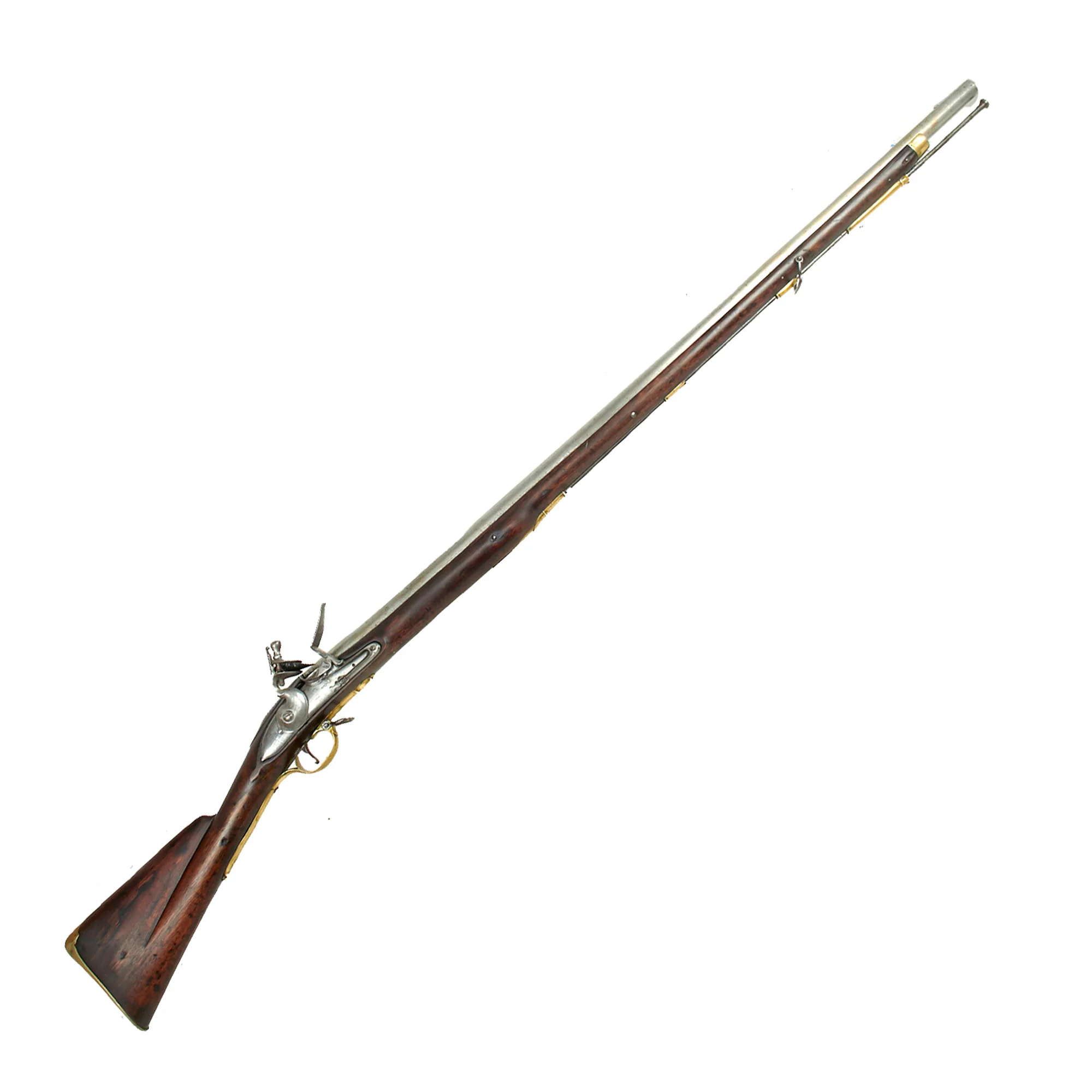
Original Item: Only One Available. This is very interesting, and something that we have only seen once before! While we have had several examples of the rare Springfield Model 1863 Robert's Patent 1867 conversions, this is only the second time we have handled a British Enfield Rifled musket converted in a similar fashion. In the late 1860s like the United States, the British were looking for ways to move to a breech-loading system, and hopefully one that could be used to convert previously made "Rifled Muskets" to the same configuration.
The design that was settled on became the Pattern 1866 Snider-Enfield rifle, based on the design by American Jacob Snider. However, the development and improvements to the design took several years, during which time other competing designs attempted to catch the attention of the British Military. This converted example started life as a .577 caliber two band ENFIELD Percussion Short Rifle model of P-1856. The lock plate is marked by maker BARNETT / LONDON, with a "CROWN" on the tail over TOWER. Thomas Barnett started work in London in 1750 until 1800 when the firm became Barnett & Son. In 1835 the firm was named "John Barnett & Sons" and from 1875 until 1900 "Edward Barnett & Sons" An English gun making dynasty that enjoyed many government contracts as well as from the East India Company and the Hudson's Bay Company.
Of note is that there is no "V.R." monogram or lock viewer's marking, so this rifle was made for the private market, and not a military issued example. These would have been easily obtainable for the purpose of trials. We also noted that there is a "serial" number 4839 marked on the left side of the stock, and there is also 242 stamped into the stock by the lock plate tail, and on the inside of the modified hammer.
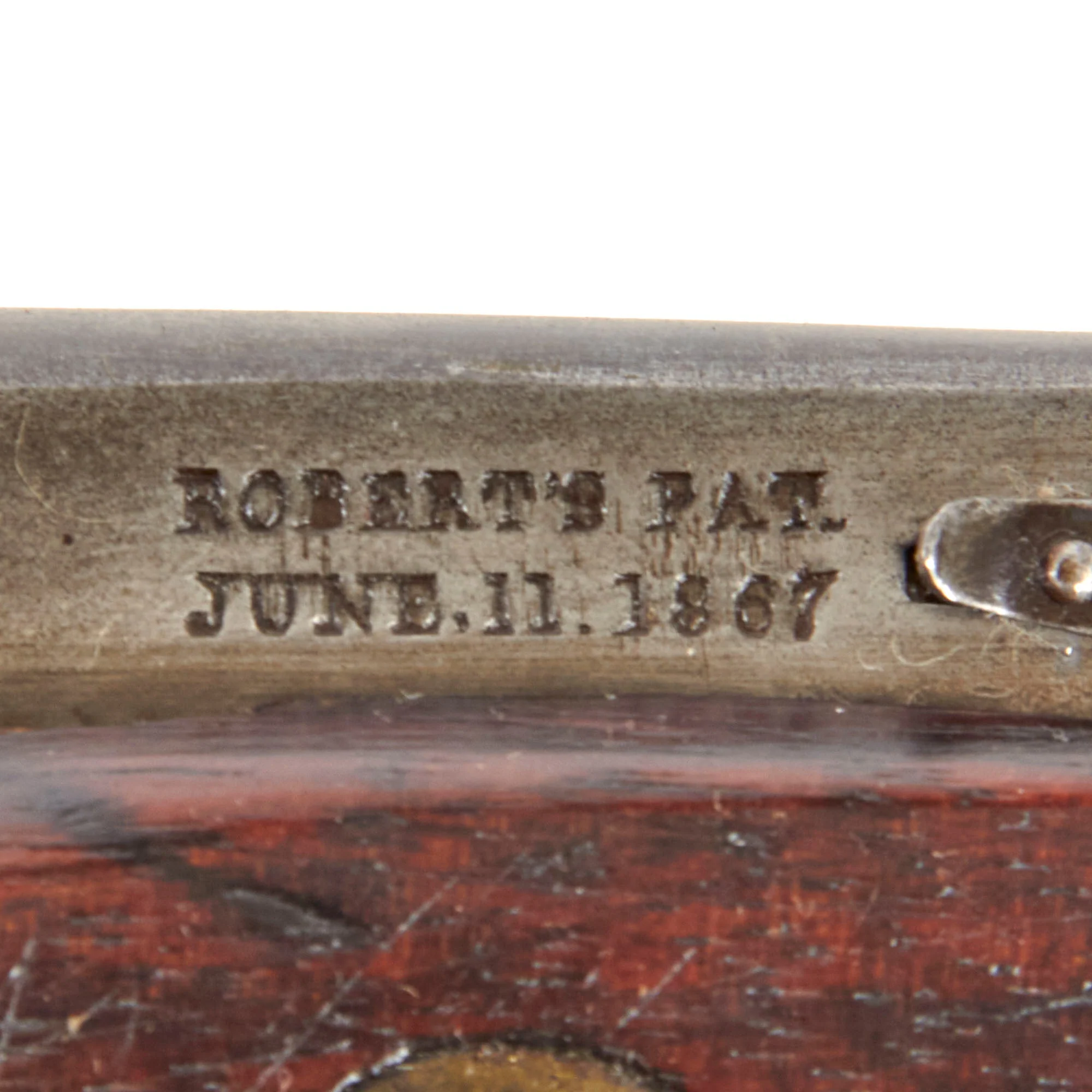
The Robert's Patent 1867 system is actually a type of "falling-block" action, similar to the Martini-Henry. The breech is accessed by raising a lever behind the tang that can only be fully opened with the hammer in the fired position. This drops the breech block into the stock, allowing a cartridge to be inserted from the rear. The action is then closed and locked, and the rifle can then be cocked and fired. Patent marking ROBERT'S PAT. / JUNE.11.1867 is visible on the left hand side of the receiver.
The whole rifle is in very good collector's condition, with a lovely glow to the wooden stock. It does show some damage from service, especially on the left side by the lock screws. The barrel has standard three grove rifling and the bore is in excellent condition, showing a mostly bright finish with strong lands and grooves. We do not see any signs of major use, definitely pointing to this being a trials rifle. The metalwork has a lovely worn finish, and the rifle still has the original cleaning rod and both sling swivels present. The breech functions correctly, and the lock properly holds at half cock, firing at full.
A very rare and interesting Robert's Patent 1867 Breechloading rifle, originally made by Barnett of London! In lovely condition and ready to display!
Specifications:
Year of Manufacture: Circa 1860 - Converted Later
Caliber: .58 inches
Ammunition Type: .577 Centerfire Cartridge
Barrel Length: 30 3/4 inches
Overall Length: 50 inches
Action: Side Action Lock
Feed System: Trapdoor Breech Single Shot
More on the P-1853 Rifle-Musket: The Enfield Pattern 1853 rifle-musket (also known as the Pattern 1853 Enfield, P53 Enfield, and Enfield rifle-musket) was a .577 calibre Minié-type muzzle-loading rifle-musket, used by the British Empire from 1853 to 1867, after which many Enfield 1853 rifle-muskets were converted to (and replaced in service by) the cartridge-loaded Snider-Enfield rifle.
The term "rifle-musket" originally referred to muskets with the smooth-bored barrels replaced with rifled barrels. The length of the barrels were unchanged, allowing the weapons to be fired by rank, since a long rifle was necessary to enable the muzzles of the second rank of soldiers to project beyond the faces of the men in front. The weapon would also be sufficiently long when fitted with a bayonet to be effective against cavalry. Such guns manufactured with rifled barrels, muzzle loading, single shot, and utilizing the same firing mechanism, also came to be called rifle-muskets.
The 39 in (99 cm) barrel had three grooves, with a 1:78 rifling twist, and was fastened to the stock with three metal bands, so that the rifle was often called a "three band" model. After several years, the Pattern 1856 Short Rifle was designed as the Pattern 1856, and various other models came afterwards to fill various different needs.
NOTE: International orders of antique firearms MUST be shipped using UPS WW Services (courier). USPS Priority Mail international will not accept these. International customers should always consult their country's antique gun laws prior to ordering.

Details & Craftsmanship
Every detail has been carefully considered to bring you the perfect product.

Details & Craftsmanship
Every detail has been carefully considered to bring you the perfect product.

Details & Craftsmanship
Every detail has been carefully considered to bring you the perfect product.

Details & Craftsmanship
Every detail has been carefully considered to bring you the perfect product.

Details & Craftsmanship
Every detail has been carefully considered to bring you the perfect product.
Details & Craftsmanship
Every detail has been carefully considered to bring you the perfect product.

Details & Craftsmanship
Every detail has been carefully considered to bring you the perfect product.

Details & Craftsmanship
Every detail has been carefully considered to bring you the perfect product.

Details & Craftsmanship
Every detail has been carefully considered to bring you the perfect product.

Details & Craftsmanship
Every detail has been carefully considered to bring you the perfect product.

Details & Craftsmanship
Every detail has been carefully considered to bring you the perfect product.

Details & Craftsmanship
Every detail has been carefully considered to bring you the perfect product.

Details & Craftsmanship
Every detail has been carefully considered to bring you the perfect product.

Details & Craftsmanship
Every detail has been carefully considered to bring you the perfect product.

Details & Craftsmanship
Every detail has been carefully considered to bring you the perfect product.

Details & Craftsmanship
Every detail has been carefully considered to bring you the perfect product.

Details & Craftsmanship
Every detail has been carefully considered to bring you the perfect product.

Details & Craftsmanship
Every detail has been carefully considered to bring you the perfect product.

Details & Craftsmanship
Every detail has been carefully considered to bring you the perfect product.

Details & Craftsmanship
Every detail has been carefully considered to bring you the perfect product.

Details & Craftsmanship
Every detail has been carefully considered to bring you the perfect product.

Details & Craftsmanship
Every detail has been carefully considered to bring you the perfect product.

Details & Craftsmanship
Every detail has been carefully considered to bring you the perfect product.
Description
Original Item: Only One Available. This is very interesting, and something that we have only seen once before! While we have had several examples of the rare Springfield Model 1863 Robert's Patent 1867 conversions, this is only the second time we have handled a British Enfield Rifled musket converted in a similar fashion. In the late 1860s like the United States, the British were looking for ways to move to a breech-loading system, and hopefully one that could be used to convert previously made "Rifled Muskets" to the same configuration.
The design that was settled on became the Pattern 1866 Snider-Enfield rifle, based on the design by American Jacob Snider. However, the development and improvements to the design took several years, during which time other competing designs attempted to catch the attention of the British Military. This converted example started life as a .577 caliber two band ENFIELD Percussion Short Rifle model of P-1856. The lock plate is marked by maker BARNETT / LONDON, with a "CROWN" on the tail over TOWER. Thomas Barnett started work in London in 1750 until 1800 when the firm became Barnett & Son. In 1835 the firm was named "John Barnett & Sons" and from 1875 until 1900 "Edward Barnett & Sons" An English gun making dynasty that enjoyed many government contracts as well as from the East India Company and the Hudson's Bay Company.
Of note is that there is no "V.R." monogram or lock viewer's marking, so this rifle was made for the private market, and not a military issued example. These would have been easily obtainable for the purpose of trials. We also noted that there is a "serial" number 4839 marked on the left side of the stock, and there is also 242 stamped into the stock by the lock plate tail, and on the inside of the modified hammer.
The Robert's Patent 1867 system is actually a type of "falling-block" action, similar to the Martini-Henry. The breech is accessed by raising a lever behind the tang that can only be fully opened with the hammer in the fired position. This drops the breech block into the stock, allowing a cartridge to be inserted from the rear. The action is then closed and locked, and the rifle can then be cocked and fired. Patent marking ROBERT'S PAT. / JUNE.11.1867 is visible on the left hand side of the receiver.
The whole rifle is in very good collector's condition, with a lovely glow to the wooden stock. It does show some damage from service, especially on the left side by the lock screws. The barrel has standard three grove rifling and the bore is in excellent condition, showing a mostly bright finish with strong lands and grooves. We do not see any signs of major use, definitely pointing to this being a trials rifle. The metalwork has a lovely worn finish, and the rifle still has the original cleaning rod and both sling swivels present. The breech functions correctly, and the lock properly holds at half cock, firing at full.
A very rare and interesting Robert's Patent 1867 Breechloading rifle, originally made by Barnett of London! In lovely condition and ready to display!
Specifications:
Year of Manufacture: Circa 1860 - Converted Later
Caliber: .58 inches
Ammunition Type: .577 Centerfire Cartridge
Barrel Length: 30 3/4 inches
Overall Length: 50 inches
Action: Side Action Lock
Feed System: Trapdoor Breech Single Shot
More on the P-1853 Rifle-Musket: The Enfield Pattern 1853 rifle-musket (also known as the Pattern 1853 Enfield, P53 Enfield, and Enfield rifle-musket) was a .577 calibre Minié-type muzzle-loading rifle-musket, used by the British Empire from 1853 to 1867, after which many Enfield 1853 rifle-muskets were converted to (and replaced in service by) the cartridge-loaded Snider-Enfield rifle.
The term "rifle-musket" originally referred to muskets with the smooth-bored barrels replaced with rifled barrels. The length of the barrels were unchanged, allowing the weapons to be fired by rank, since a long rifle was necessary to enable the muzzles of the second rank of soldiers to project beyond the faces of the men in front. The weapon would also be sufficiently long when fitted with a bayonet to be effective against cavalry. Such guns manufactured with rifled barrels, muzzle loading, single shot, and utilizing the same firing mechanism, also came to be called rifle-muskets.
The 39 in (99 cm) barrel had three grooves, with a 1:78 rifling twist, and was fastened to the stock with three metal bands, so that the rifle was often called a "three band" model. After several years, the Pattern 1856 Short Rifle was designed as the Pattern 1856, and various other models came afterwards to fill various different needs.
NOTE: International orders of antique firearms MUST be shipped using UPS WW Services (courier). USPS Priority Mail international will not accept these. International customers should always consult their country's antique gun laws prior to ordering.