
Original: $595.00
-70%$595.00
$178.50The Story
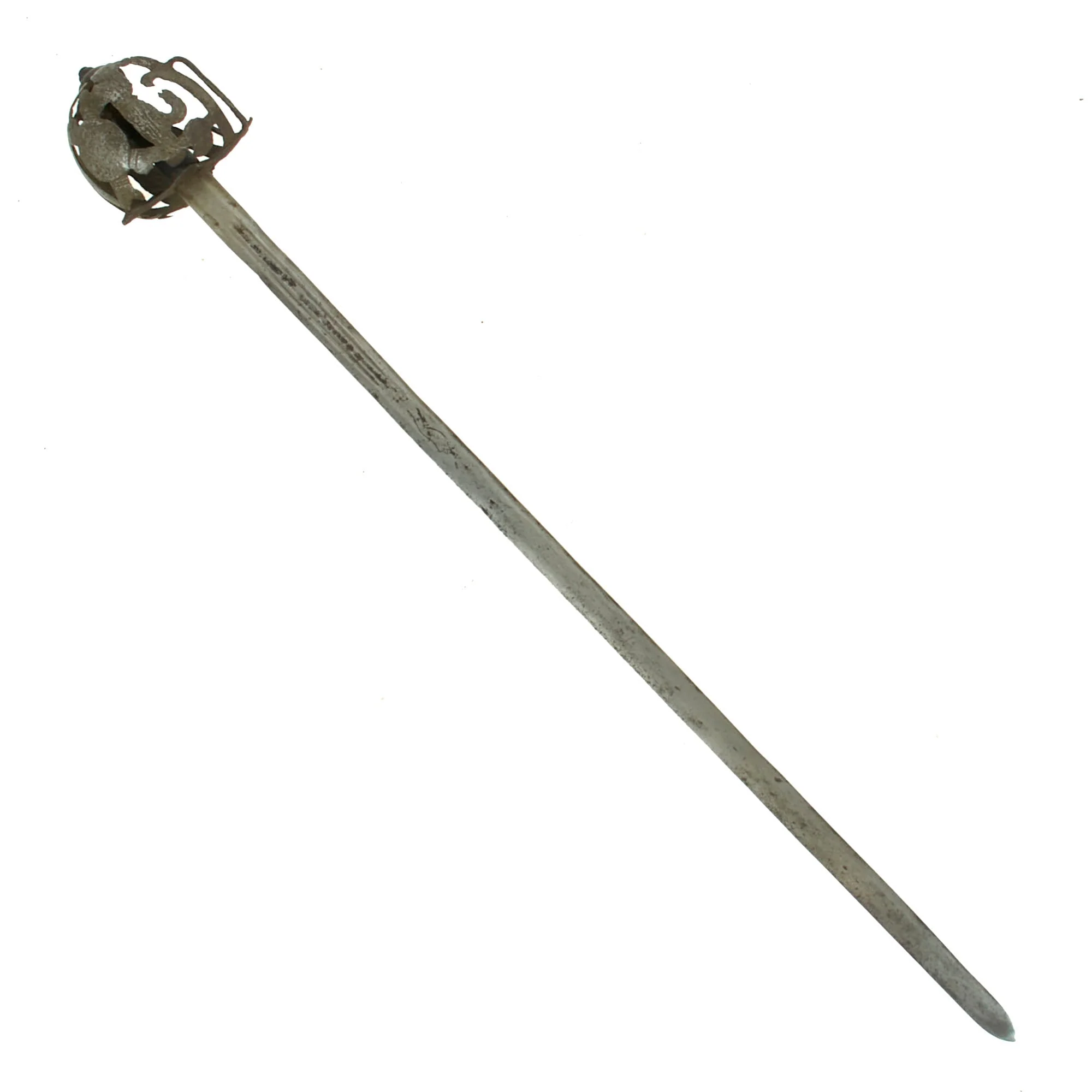
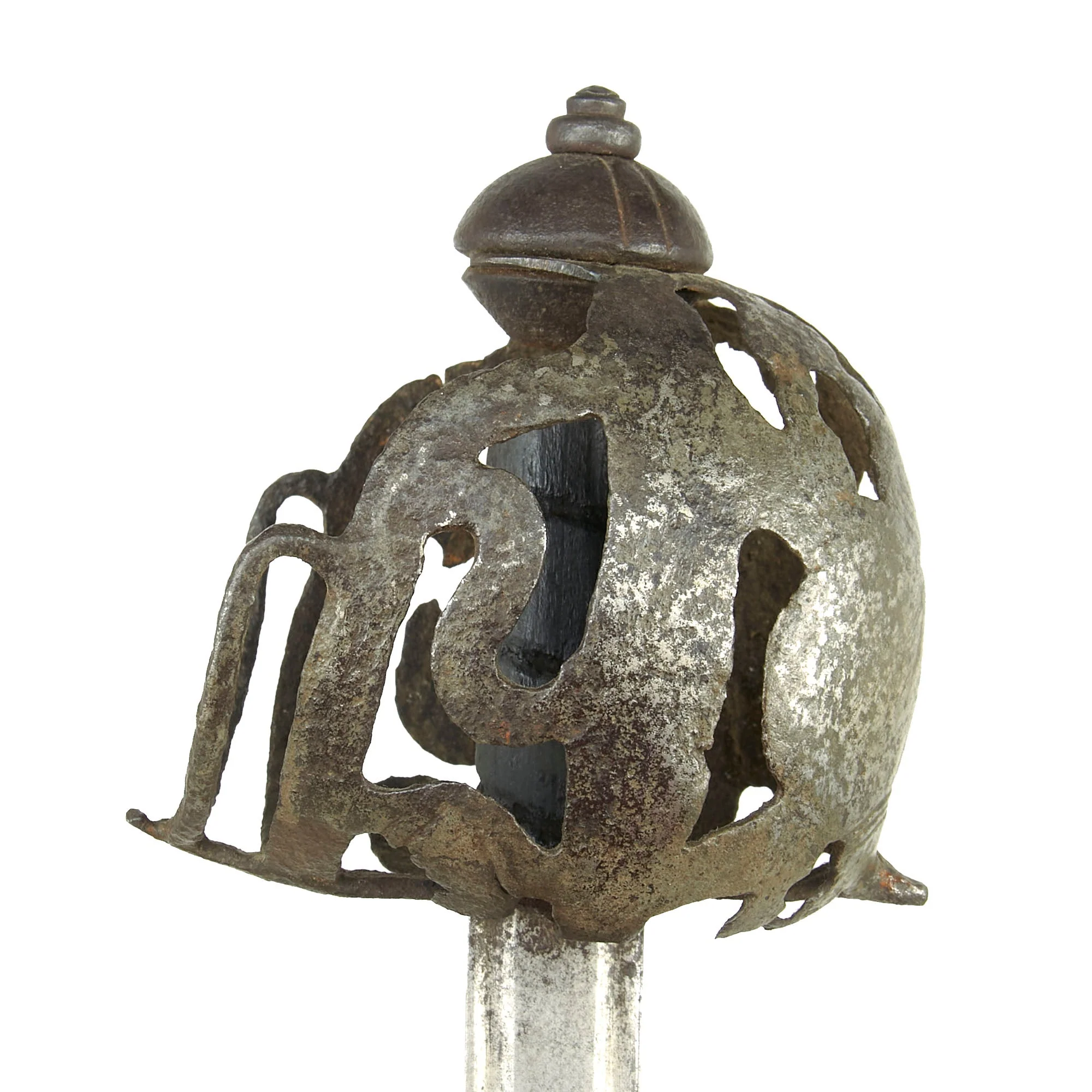
Original Item. Only One Available. This is a fantastic example of a British Officer’s Pattern 1796 Spadroon sword. The sword, though offered without a scabbard, is in very good condition and is one of the first spadroons we have been able to offer. This example also has the rare early folding guard. This would be a welcomed addition to any late-18th/Early 19th Century British collection!
A spadroon is a light sword with a straight-edged blade, enabling both cut and thrust attacks. This English term first came into use in the early 18th century, though the type of sword it referred to was in common usage during the late 17th century. They were primarily used as a military (army & navy) sidearm in the late 17th and early 18th centuries, and for officers and NCOs in the latter part of the 18th and early 19th centuries. The type of sword also saw widespread use across Europe and America, though the term 'spadroon' is unique to the Anglophone world.
Spadroon is a term used to categorize a type of sword that is in between a small sword (which thrusts only), and the heavier-bladed broadsword. They may have single- or double-edged blades, and hilt types ranging from a simple stirrup guard, to double shells, and even further protection to the sides of the hand.
The 1796 pattern sword (spadroon) was the first British infantry sword to truly follow a pattern and be controlled by strict parameters. It followed the same regulation blade outlined in 1786, but now also featured a regulation hilt. A brass gilded double shell guard with knuckle bow and urn shaped pommel. A guard that was in fact very similar to many small swords of the day, a fact that leads to them often being mistaken for one another. The 1796 spadroon was not a copy of the small sword, but in fact one in a long lineage of double shell military swords that had been in use in Britain from the late 17th century, as well as in widespread use across Europe. The exact ornamentation of the 1796 was indeed a copy of those carried by the Prussian Frederick the Great and his officers. One shell was often hinged, like on this example, so that the sword sat flush when wearing against the uniform, but this was not part of the regulation, and at the discretion of the purchaser.
It was widely disliked, as is noted in many sources at the time. Though it is important to note that officers had to purchase their own swords, and so whilst many 1796 pattern spadroons are poor weapons, it is entirely possible to specify and make a successful and effective sword within the parameters of the regulation. Therefore, decent fighting weapons do exist among surviving examples of this pattern type, as well as many that range from adequate to poor fighting weapons. Attempts to replace this spadroon with a robust saber were only partially successful. With an infantry pattern introduced in 1803, and many non-regulation sabres carried both within and against the regulations of the day. Despite this, the 1796 spadroon lived on until it was replaced in army service in 1822 by a new model of saber, and ended the use of the Spadroon in British army service, and in Naval use in 1827 (also by a new saber pattern).
This example is a gorgeous higher-end example with an engraved blade bearing the Crown over GR cypher of King George III, who reigned from 1760-1820. There is no maker marking on this example, so it’s likely a British-made blade. There are very few chips in the edge, and the blade is in good worn condition with some heavy pitting and oxidation near the tip, but the engraving is still mostly clear except near the ricasso. The hilt is a small bit loose, and the handguard looks to have been bent up a bit over the years, with heavy wear and loss of the gilt finish.
A fantastic wall hanger sword from the War of 1812 era. This example is in great shape overall, and comes ready for further research and display.
Specifications:
Blade Length: 32”
Blade Style: Spadroon
Overall length: 38 1/2”

Details & Craftsmanship
Every detail has been carefully considered to bring you the perfect product.

Details & Craftsmanship
Every detail has been carefully considered to bring you the perfect product.

Details & Craftsmanship
Every detail has been carefully considered to bring you the perfect product.

Details & Craftsmanship
Every detail has been carefully considered to bring you the perfect product.

Details & Craftsmanship
Every detail has been carefully considered to bring you the perfect product.

Details & Craftsmanship
Every detail has been carefully considered to bring you the perfect product.

Details & Craftsmanship
Every detail has been carefully considered to bring you the perfect product.

Details & Craftsmanship
Every detail has been carefully considered to bring you the perfect product.

Details & Craftsmanship
Every detail has been carefully considered to bring you the perfect product.

Details & Craftsmanship
Every detail has been carefully considered to bring you the perfect product.
Description
Original Item. Only One Available. This is a fantastic example of a British Officer’s Pattern 1796 Spadroon sword. The sword, though offered without a scabbard, is in very good condition and is one of the first spadroons we have been able to offer. This example also has the rare early folding guard. This would be a welcomed addition to any late-18th/Early 19th Century British collection!
A spadroon is a light sword with a straight-edged blade, enabling both cut and thrust attacks. This English term first came into use in the early 18th century, though the type of sword it referred to was in common usage during the late 17th century. They were primarily used as a military (army & navy) sidearm in the late 17th and early 18th centuries, and for officers and NCOs in the latter part of the 18th and early 19th centuries. The type of sword also saw widespread use across Europe and America, though the term 'spadroon' is unique to the Anglophone world.
Spadroon is a term used to categorize a type of sword that is in between a small sword (which thrusts only), and the heavier-bladed broadsword. They may have single- or double-edged blades, and hilt types ranging from a simple stirrup guard, to double shells, and even further protection to the sides of the hand.
The 1796 pattern sword (spadroon) was the first British infantry sword to truly follow a pattern and be controlled by strict parameters. It followed the same regulation blade outlined in 1786, but now also featured a regulation hilt. A brass gilded double shell guard with knuckle bow and urn shaped pommel. A guard that was in fact very similar to many small swords of the day, a fact that leads to them often being mistaken for one another. The 1796 spadroon was not a copy of the small sword, but in fact one in a long lineage of double shell military swords that had been in use in Britain from the late 17th century, as well as in widespread use across Europe. The exact ornamentation of the 1796 was indeed a copy of those carried by the Prussian Frederick the Great and his officers. One shell was often hinged, like on this example, so that the sword sat flush when wearing against the uniform, but this was not part of the regulation, and at the discretion of the purchaser.
It was widely disliked, as is noted in many sources at the time. Though it is important to note that officers had to purchase their own swords, and so whilst many 1796 pattern spadroons are poor weapons, it is entirely possible to specify and make a successful and effective sword within the parameters of the regulation. Therefore, decent fighting weapons do exist among surviving examples of this pattern type, as well as many that range from adequate to poor fighting weapons. Attempts to replace this spadroon with a robust saber were only partially successful. With an infantry pattern introduced in 1803, and many non-regulation sabres carried both within and against the regulations of the day. Despite this, the 1796 spadroon lived on until it was replaced in army service in 1822 by a new model of saber, and ended the use of the Spadroon in British army service, and in Naval use in 1827 (also by a new saber pattern).
This example is a gorgeous higher-end example with an engraved blade bearing the Crown over GR cypher of King George III, who reigned from 1760-1820. There is no maker marking on this example, so it’s likely a British-made blade. There are very few chips in the edge, and the blade is in good worn condition with some heavy pitting and oxidation near the tip, but the engraving is still mostly clear except near the ricasso. The hilt is a small bit loose, and the handguard looks to have been bent up a bit over the years, with heavy wear and loss of the gilt finish.
A fantastic wall hanger sword from the War of 1812 era. This example is in great shape overall, and comes ready for further research and display.
Specifications:
Blade Length: 32”
Blade Style: Spadroon
Overall length: 38 1/2”