
Original: $1,795.00
-70%$1,795.00
$538.50The Story
Original item: Only one Available. This came to us from a recent gun show, and is in fact a part of one of the oldest continuous military and political alliances in history, going back to the Anglo-Portuguese Treaty of 1373. Since that point, through various different political systems, Portugal and Britain have remained allies, with the former relying on the industrial capacity of England to supply with arms. In the early 1870s the British sold the Portuguese 10,000 British government Snider infantry rifles and bayonets, along with 3000 carbines, which were delivered in 1873 and began to replace Portugal's older arms. These came from British stores and originally carried full British markings, sometimes having additional markings added.
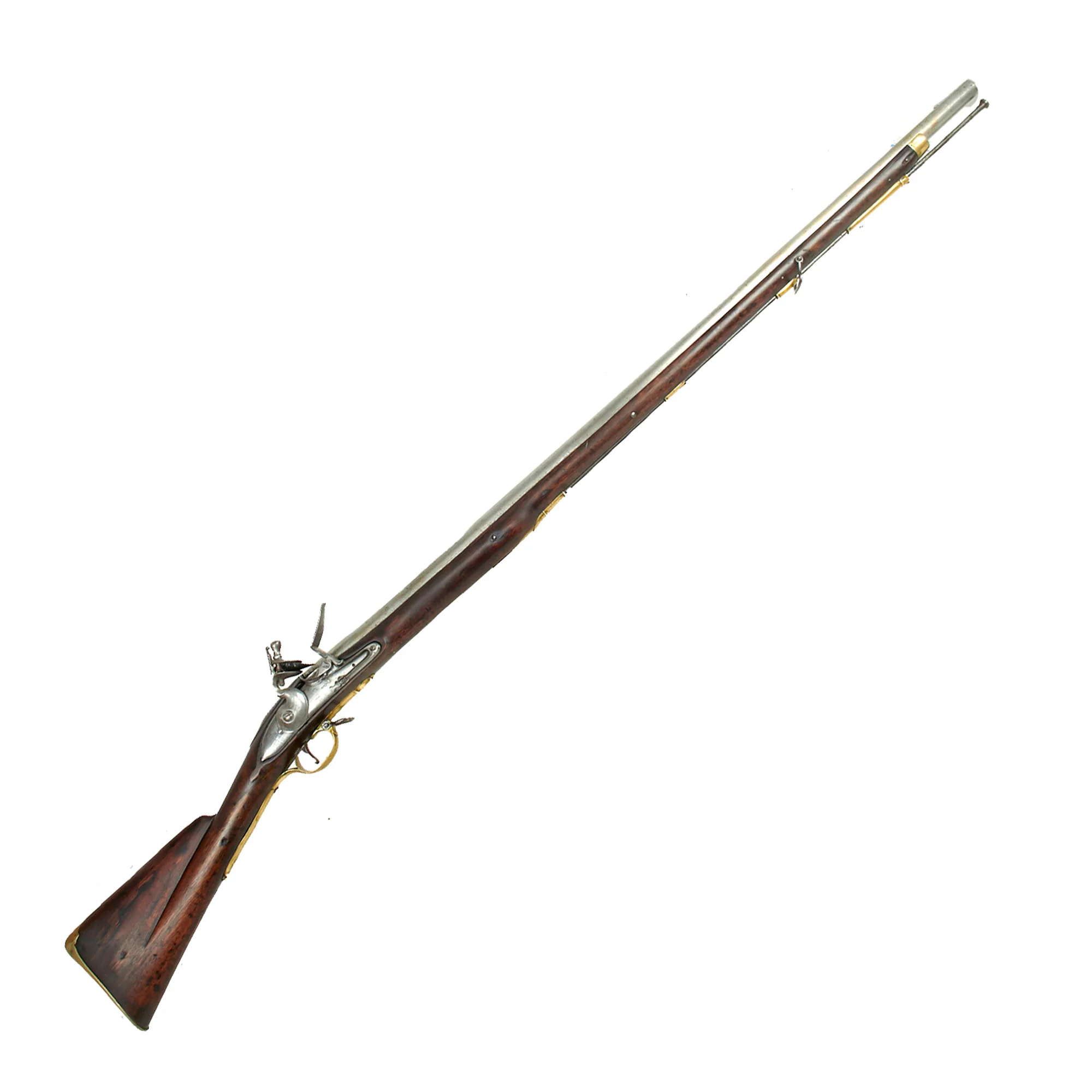
The following year, Portugal placed an order with Birmingham Small Arms & Metal Company Ltd., for an additional 10,000 infantry rifles and 1200 cavalry carbines, which were delivered in 1875. All of these later arms were the MK III latching breech block design and what we have here is one of the 1,200 cavalry carbines supplied. The lock plate is correctly marked on the tail with the Portuguese Heraldic Royal Crown above initials G.P. and forward of the hammer is B.S.A. & M. Co above 1875, the year of manufacture. The breech block is also BSA Co marked, and SNIDER PATENT and the Snider Arrow though S symbol are marked on top of the receiver shoe, along with an a Crown over FA, understood to be the Portuguese inspector's acceptance marking.
This example is in fine condition, fitted with the correct MkIII action, which is the final locking version with a thumb lever on the breech block. This still locks securely, and is marked 707 on the bottom. The barrel still has the correct Birmingham proof marks, including the CROWN / CROSSED SCEPTERS / BPC "proof" and CROWN / CROSSED SCEPTERS / V "viewed" marks. There is also the CROWN / BP definitive proof, and a 25 marking, indicating "25 bore" or about .571". There is an additional "viewed" marking on the shoe of the receiver, and the other side of the barrel is marked C711, possibly the Portuguese contract serial number. The rear sight is the correct shorter carbine sight, and there are threaded screw holes on either side of the stock underneath, which originally would have held screws that secured a leather sight protector, all of which are now absent.
The lock still functions correctly, holding and half cock, and firing full, allowing the breech to open at half cock. The breech unlocks correctly, with an intact firing pin, and can be pulled back to eject spent cartridge casings, though the mechanism is covered with dried grease, and must be moved back and forth by hand. The barrel features five groove rifling, and is in very good condition, showing a bright finish with strong lands and grooves. There is just a bit of wear and past fouling present, making this a really exceptional bore for a Snider carbine. We often see these close to shot out or smoothbored for fowling use.
This particular carbine does not have the saddle ring bar on the left side, and there is a steel saddle ring attached to an iron extension of the trigger guard on the butt stock. THe stock itself is in lovely shape, showing great grain and the lovely patina that only long use in service can give. There is not any major damage we can see, and the butt plate tang is unit marked with R9 / D / 56. The fore stock has the correct final "Baddeley" style band as seen on the final Sniders produced. It even comes one part of the original two piece cleaning rod, which we almost never see!
A great example of a hard to find Portuguese contract Snider carbine, ready to add to your collection and display!
Specifications:
Year of Manufacture: 1875
Caliber: .58 inches
Ammunition Type: .577 Centerfire Cartridge
Barrel Length: 19 1/4 inches
Overall Length: 37 1/4 inches
Action: Side Action Lock
Feed System: Side Hinge Rotating Breech block
History of the Snider rifle- Jacob Snider, an American from New York, developed this breech loading system for the P-1853 Enfield, the most prolific imported Percussion rifle in use by both the North and South during the U.S. Civil War. When the British Board of Ordnance appointed a Select Committee in 1864 the Snider system was swiftly adopted with the first breech loaders being issued in 1865 to British forces.
Improved in 1867 by the use of Colonel Boxer's center fire brass bodied cartridge, the rifle was used very effectively in the Abyssinian Campaign of 1868. The system utilized a hinged breech block with an internal firing pin assembly that permitted the use of a self contained cartridge of lead bullet in cardboard, and, after 1867, brass casing. This highly efficient conversion system prolonged the active life of the P-1853 rifles up until 1871 when the Martini System was adopted. Snider rifles saw continued use throughout the Empire but were officially obsoleted by the late 1880s.
NOTE: International orders of antique firearms MUST be shipped using UPS WW Services (courier). USPS Priority Mail international will not accept these. International customers should always consult their country's antique gun laws prior to ordering.

Details & Craftsmanship
Every detail has been carefully considered to bring you the perfect product.

Details & Craftsmanship
Every detail has been carefully considered to bring you the perfect product.

Details & Craftsmanship
Every detail has been carefully considered to bring you the perfect product.

Details & Craftsmanship
Every detail has been carefully considered to bring you the perfect product.

Details & Craftsmanship
Every detail has been carefully considered to bring you the perfect product.

Details & Craftsmanship
Every detail has been carefully considered to bring you the perfect product.

Details & Craftsmanship
Every detail has been carefully considered to bring you the perfect product.

Details & Craftsmanship
Every detail has been carefully considered to bring you the perfect product.

Details & Craftsmanship
Every detail has been carefully considered to bring you the perfect product.

Details & Craftsmanship
Every detail has been carefully considered to bring you the perfect product.

Details & Craftsmanship
Every detail has been carefully considered to bring you the perfect product.

Details & Craftsmanship
Every detail has been carefully considered to bring you the perfect product.

Details & Craftsmanship
Every detail has been carefully considered to bring you the perfect product.

Details & Craftsmanship
Every detail has been carefully considered to bring you the perfect product.

Details & Craftsmanship
Every detail has been carefully considered to bring you the perfect product.

Details & Craftsmanship
Every detail has been carefully considered to bring you the perfect product.

Details & Craftsmanship
Every detail has been carefully considered to bring you the perfect product.

Details & Craftsmanship
Every detail has been carefully considered to bring you the perfect product.

Details & Craftsmanship
Every detail has been carefully considered to bring you the perfect product.

Details & Craftsmanship
Every detail has been carefully considered to bring you the perfect product.

Details & Craftsmanship
Every detail has been carefully considered to bring you the perfect product.

Details & Craftsmanship
Every detail has been carefully considered to bring you the perfect product.

Details & Craftsmanship
Every detail has been carefully considered to bring you the perfect product.
Description
Original item: Only one Available. This came to us from a recent gun show, and is in fact a part of one of the oldest continuous military and political alliances in history, going back to the Anglo-Portuguese Treaty of 1373. Since that point, through various different political systems, Portugal and Britain have remained allies, with the former relying on the industrial capacity of England to supply with arms. In the early 1870s the British sold the Portuguese 10,000 British government Snider infantry rifles and bayonets, along with 3000 carbines, which were delivered in 1873 and began to replace Portugal's older arms. These came from British stores and originally carried full British markings, sometimes having additional markings added.
The following year, Portugal placed an order with Birmingham Small Arms & Metal Company Ltd., for an additional 10,000 infantry rifles and 1200 cavalry carbines, which were delivered in 1875. All of these later arms were the MK III latching breech block design and what we have here is one of the 1,200 cavalry carbines supplied. The lock plate is correctly marked on the tail with the Portuguese Heraldic Royal Crown above initials G.P. and forward of the hammer is B.S.A. & M. Co above 1875, the year of manufacture. The breech block is also BSA Co marked, and SNIDER PATENT and the Snider Arrow though S symbol are marked on top of the receiver shoe, along with an a Crown over FA, understood to be the Portuguese inspector's acceptance marking.
This example is in fine condition, fitted with the correct MkIII action, which is the final locking version with a thumb lever on the breech block. This still locks securely, and is marked 707 on the bottom. The barrel still has the correct Birmingham proof marks, including the CROWN / CROSSED SCEPTERS / BPC "proof" and CROWN / CROSSED SCEPTERS / V "viewed" marks. There is also the CROWN / BP definitive proof, and a 25 marking, indicating "25 bore" or about .571". There is an additional "viewed" marking on the shoe of the receiver, and the other side of the barrel is marked C711, possibly the Portuguese contract serial number. The rear sight is the correct shorter carbine sight, and there are threaded screw holes on either side of the stock underneath, which originally would have held screws that secured a leather sight protector, all of which are now absent.
The lock still functions correctly, holding and half cock, and firing full, allowing the breech to open at half cock. The breech unlocks correctly, with an intact firing pin, and can be pulled back to eject spent cartridge casings, though the mechanism is covered with dried grease, and must be moved back and forth by hand. The barrel features five groove rifling, and is in very good condition, showing a bright finish with strong lands and grooves. There is just a bit of wear and past fouling present, making this a really exceptional bore for a Snider carbine. We often see these close to shot out or smoothbored for fowling use.
This particular carbine does not have the saddle ring bar on the left side, and there is a steel saddle ring attached to an iron extension of the trigger guard on the butt stock. THe stock itself is in lovely shape, showing great grain and the lovely patina that only long use in service can give. There is not any major damage we can see, and the butt plate tang is unit marked with R9 / D / 56. The fore stock has the correct final "Baddeley" style band as seen on the final Sniders produced. It even comes one part of the original two piece cleaning rod, which we almost never see!
A great example of a hard to find Portuguese contract Snider carbine, ready to add to your collection and display!
Specifications:
Year of Manufacture: 1875
Caliber: .58 inches
Ammunition Type: .577 Centerfire Cartridge
Barrel Length: 19 1/4 inches
Overall Length: 37 1/4 inches
Action: Side Action Lock
Feed System: Side Hinge Rotating Breech block
History of the Snider rifle- Jacob Snider, an American from New York, developed this breech loading system for the P-1853 Enfield, the most prolific imported Percussion rifle in use by both the North and South during the U.S. Civil War. When the British Board of Ordnance appointed a Select Committee in 1864 the Snider system was swiftly adopted with the first breech loaders being issued in 1865 to British forces.
Improved in 1867 by the use of Colonel Boxer's center fire brass bodied cartridge, the rifle was used very effectively in the Abyssinian Campaign of 1868. The system utilized a hinged breech block with an internal firing pin assembly that permitted the use of a self contained cartridge of lead bullet in cardboard, and, after 1867, brass casing. This highly efficient conversion system prolonged the active life of the P-1853 rifles up until 1871 when the Martini System was adopted. Snider rifles saw continued use throughout the Empire but were officially obsoleted by the late 1880s.
NOTE: International orders of antique firearms MUST be shipped using UPS WW Services (courier). USPS Priority Mail international will not accept these. International customers should always consult their country's antique gun laws prior to ordering.