The Story
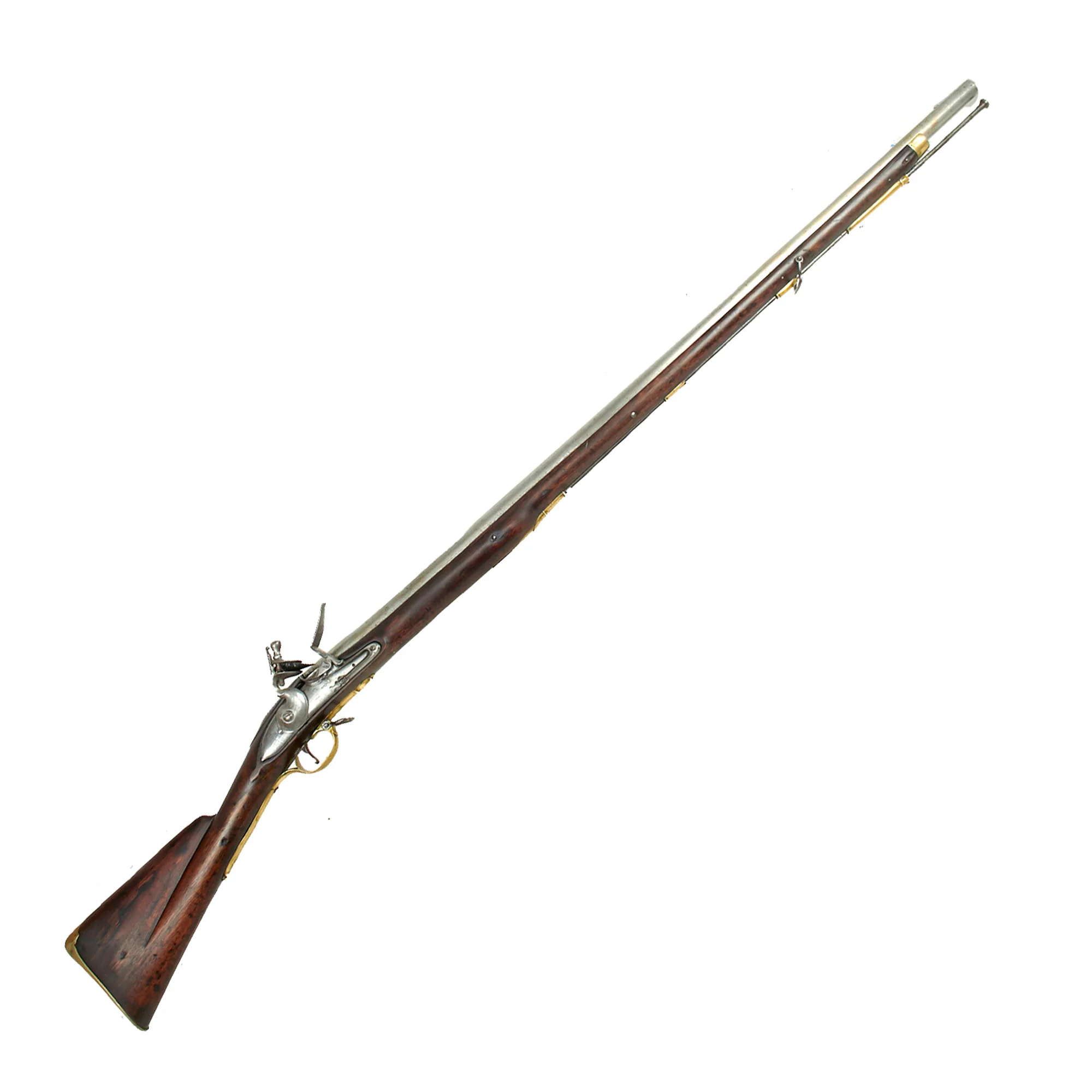
Original Item: Only One Available. The Mannlicher-Berthier rifles and carbines were a family of bolt-action small arms in 8mm Lebel, used in the French Army from the 1890s to the beginning of World War II (1940).
The Berthier design began as the "Mousquetons Berthier" - a series of bolt-action cavalry and artillery carbines with distinctly different actions from the Mle 1886/M93 8mm Lebel rifle. For instance, the Berthier carbine's bolt lugs lock vertically into the receiver instead of horizontally as in the Lebel rifle. Berthier carbines were first issued in 1890 and 1892, and had been designed by Emile Berthier, an engineer at the French Algerian Railways, to be used with standard 8mm Lebel ammunition.
The Berthier design was introduced as a replacement for the various aging Mle 1874 Gras single-shot carbines - still standard for French cavalry, artillery, and gendarme forces even after the introduction of the Mle 1886/M93 Lebel. Prior experiments with several carbine versions of the Lebel action proved unacceptably heavy and slow to load while on horseback. While retaining most of the action's strong points, the Berthier carbine improved on the earlier Mle 1886 rifle by using a one-piece stock and a Mannlicher-style, charger-loaded en bloc 3 shot clip. These Berthier carbines were progressively allocated to all cavalry, artillery and gendarmerie troops during the 1890s.
The first Berthier carbine came into production as the "Carabine de Cavalerie Modèle 1890", which was officially adopted for service on March 14, 1890. The main production facilities were the Manufacture d'Armes de St Etienne or MAS and the Manufacture d'Armes de Chatellerault or MAC. The search for a suitable small arm for mounted troops was given greater urgency by the Germans' development of the Karabiner Modell 1888, a carbine variant of the Gewehr 1888. It was issued to essentially all French artillery and cavalry troops. As the high Command appreciated the performance of the Mle 1890 Berthier carbine, a second version was specifically produced for artillery service, the "Mousqueton Mle 1892" which could mount a short blade bayonet and thus had a re-designed forend stock. However it continued to feature the 3-round En-bloc clip of the Model 1890 carbine. During the First World War it became obvious that the 3-round clip was a handicap compared to German short weapons such as the German Kar98AZ which had a 5-round clip.
The left side of the receiver on this fine example is clearly marked with Châtellerault, and to the right MLE 1892, indicating manufacture at the government arsenal at Châtellerault. The rifle has arsenal proofs on most parts, and also is marked MA C 1892, the abbreviation for Manufacture d'Armes Châtellerault, indicating that it was produced in 1892, the first year of production. The carbine has serial number A 89527 on the barrel, bolt assembly, stock, and trigger guard, making this a great "ALL MATCHING" example, with no major parts swapped out over the years. This low serial number serial number with an "A" prefix also is correct for a Pre-1899 manufactured example, which means this is definitely considered an "Antique Firearm" by the BATF. The carbine is fitted with a large Saddle Ring on the left side of the 17" barrel, and the stock shows several wood graft repairs on the butt stock and a plugged cleaning rod channel on the left side.
This Berthier Saddle Ring carbine is in very good condition, with typical wear from years of service. The bolt cycles well with a crisp dry fire, though we have no way to test to see if the magazine still feeds. The bore is in very good condition, with a bright finish showing strong lands and grooves. There is just a bit of overall wear, so it did see some level of use while in service, but not a lot. The metalwork has a lovely lightly used look, with the original bluing still very well retained on the barrel and receiver, while the bolt shows some oxidation staining, but no major rust. The stock is in good condition, showing the usual wear from use and handling, and definitely was reconditioned at arsenal. We can see several wood graft repairs on the top and bottom of the butt stuck, with the bottom toe looking to have been repaired TWICE. Definitely some interesting history to this carbine!
The carbine comes complete with an original issue leather carbine sling, which has the correct narrower front section retained by a stud to go over the carbine loop. There is also an original three round en-bloc clip inside the magazine.
A great example of a hard to find carbine in very good shape, ready to display!
Specifications-
Year of Manufacture: 1897
Caliber: 8×50mmR Lebel
Cartridge Type: Centerfire Cartridge
Barrel Length: 17 Inches
Overall Length: 37 Inches
Action type: Bolt-Action
Feed System: 3-round Mannlicher-style en-bloc clip

Details & Craftsmanship
Every detail has been carefully considered to bring you the perfect product.

Details & Craftsmanship
Every detail has been carefully considered to bring you the perfect product.

Details & Craftsmanship
Every detail has been carefully considered to bring you the perfect product.

Details & Craftsmanship
Every detail has been carefully considered to bring you the perfect product.

Details & Craftsmanship
Every detail has been carefully considered to bring you the perfect product.

Details & Craftsmanship
Every detail has been carefully considered to bring you the perfect product.

Details & Craftsmanship
Every detail has been carefully considered to bring you the perfect product.

Details & Craftsmanship
Every detail has been carefully considered to bring you the perfect product.

Details & Craftsmanship
Every detail has been carefully considered to bring you the perfect product.

Details & Craftsmanship
Every detail has been carefully considered to bring you the perfect product.

Details & Craftsmanship
Every detail has been carefully considered to bring you the perfect product.

Details & Craftsmanship
Every detail has been carefully considered to bring you the perfect product.

Details & Craftsmanship
Every detail has been carefully considered to bring you the perfect product.

Details & Craftsmanship
Every detail has been carefully considered to bring you the perfect product.

Details & Craftsmanship
Every detail has been carefully considered to bring you the perfect product.

Details & Craftsmanship
Every detail has been carefully considered to bring you the perfect product.

Details & Craftsmanship
Every detail has been carefully considered to bring you the perfect product.

Details & Craftsmanship
Every detail has been carefully considered to bring you the perfect product.

Details & Craftsmanship
Every detail has been carefully considered to bring you the perfect product.

Details & Craftsmanship
Every detail has been carefully considered to bring you the perfect product.

Details & Craftsmanship
Every detail has been carefully considered to bring you the perfect product.

Details & Craftsmanship
Every detail has been carefully considered to bring you the perfect product.
Description
Original Item: Only One Available. The Mannlicher-Berthier rifles and carbines were a family of bolt-action small arms in 8mm Lebel, used in the French Army from the 1890s to the beginning of World War II (1940).
The Berthier design began as the "Mousquetons Berthier" - a series of bolt-action cavalry and artillery carbines with distinctly different actions from the Mle 1886/M93 8mm Lebel rifle. For instance, the Berthier carbine's bolt lugs lock vertically into the receiver instead of horizontally as in the Lebel rifle. Berthier carbines were first issued in 1890 and 1892, and had been designed by Emile Berthier, an engineer at the French Algerian Railways, to be used with standard 8mm Lebel ammunition.
The Berthier design was introduced as a replacement for the various aging Mle 1874 Gras single-shot carbines - still standard for French cavalry, artillery, and gendarme forces even after the introduction of the Mle 1886/M93 Lebel. Prior experiments with several carbine versions of the Lebel action proved unacceptably heavy and slow to load while on horseback. While retaining most of the action's strong points, the Berthier carbine improved on the earlier Mle 1886 rifle by using a one-piece stock and a Mannlicher-style, charger-loaded en bloc 3 shot clip. These Berthier carbines were progressively allocated to all cavalry, artillery and gendarmerie troops during the 1890s.
The first Berthier carbine came into production as the "Carabine de Cavalerie Modèle 1890", which was officially adopted for service on March 14, 1890. The main production facilities were the Manufacture d'Armes de St Etienne or MAS and the Manufacture d'Armes de Chatellerault or MAC. The search for a suitable small arm for mounted troops was given greater urgency by the Germans' development of the Karabiner Modell 1888, a carbine variant of the Gewehr 1888. It was issued to essentially all French artillery and cavalry troops. As the high Command appreciated the performance of the Mle 1890 Berthier carbine, a second version was specifically produced for artillery service, the "Mousqueton Mle 1892" which could mount a short blade bayonet and thus had a re-designed forend stock. However it continued to feature the 3-round En-bloc clip of the Model 1890 carbine. During the First World War it became obvious that the 3-round clip was a handicap compared to German short weapons such as the German Kar98AZ which had a 5-round clip.
The left side of the receiver on this fine example is clearly marked with Châtellerault, and to the right MLE 1892, indicating manufacture at the government arsenal at Châtellerault. The rifle has arsenal proofs on most parts, and also is marked MA C 1892, the abbreviation for Manufacture d'Armes Châtellerault, indicating that it was produced in 1892, the first year of production. The carbine has serial number A 89527 on the barrel, bolt assembly, stock, and trigger guard, making this a great "ALL MATCHING" example, with no major parts swapped out over the years. This low serial number serial number with an "A" prefix also is correct for a Pre-1899 manufactured example, which means this is definitely considered an "Antique Firearm" by the BATF. The carbine is fitted with a large Saddle Ring on the left side of the 17" barrel, and the stock shows several wood graft repairs on the butt stock and a plugged cleaning rod channel on the left side.
This Berthier Saddle Ring carbine is in very good condition, with typical wear from years of service. The bolt cycles well with a crisp dry fire, though we have no way to test to see if the magazine still feeds. The bore is in very good condition, with a bright finish showing strong lands and grooves. There is just a bit of overall wear, so it did see some level of use while in service, but not a lot. The metalwork has a lovely lightly used look, with the original bluing still very well retained on the barrel and receiver, while the bolt shows some oxidation staining, but no major rust. The stock is in good condition, showing the usual wear from use and handling, and definitely was reconditioned at arsenal. We can see several wood graft repairs on the top and bottom of the butt stuck, with the bottom toe looking to have been repaired TWICE. Definitely some interesting history to this carbine!
The carbine comes complete with an original issue leather carbine sling, which has the correct narrower front section retained by a stud to go over the carbine loop. There is also an original three round en-bloc clip inside the magazine.
A great example of a hard to find carbine in very good shape, ready to display!
Specifications-
Year of Manufacture: 1897
Caliber: 8×50mmR Lebel
Cartridge Type: Centerfire Cartridge
Barrel Length: 17 Inches
Overall Length: 37 Inches
Action type: Bolt-Action
Feed System: 3-round Mannlicher-style en-bloc clip