Original: $995.00
-70%$995.00
$298.50The Story
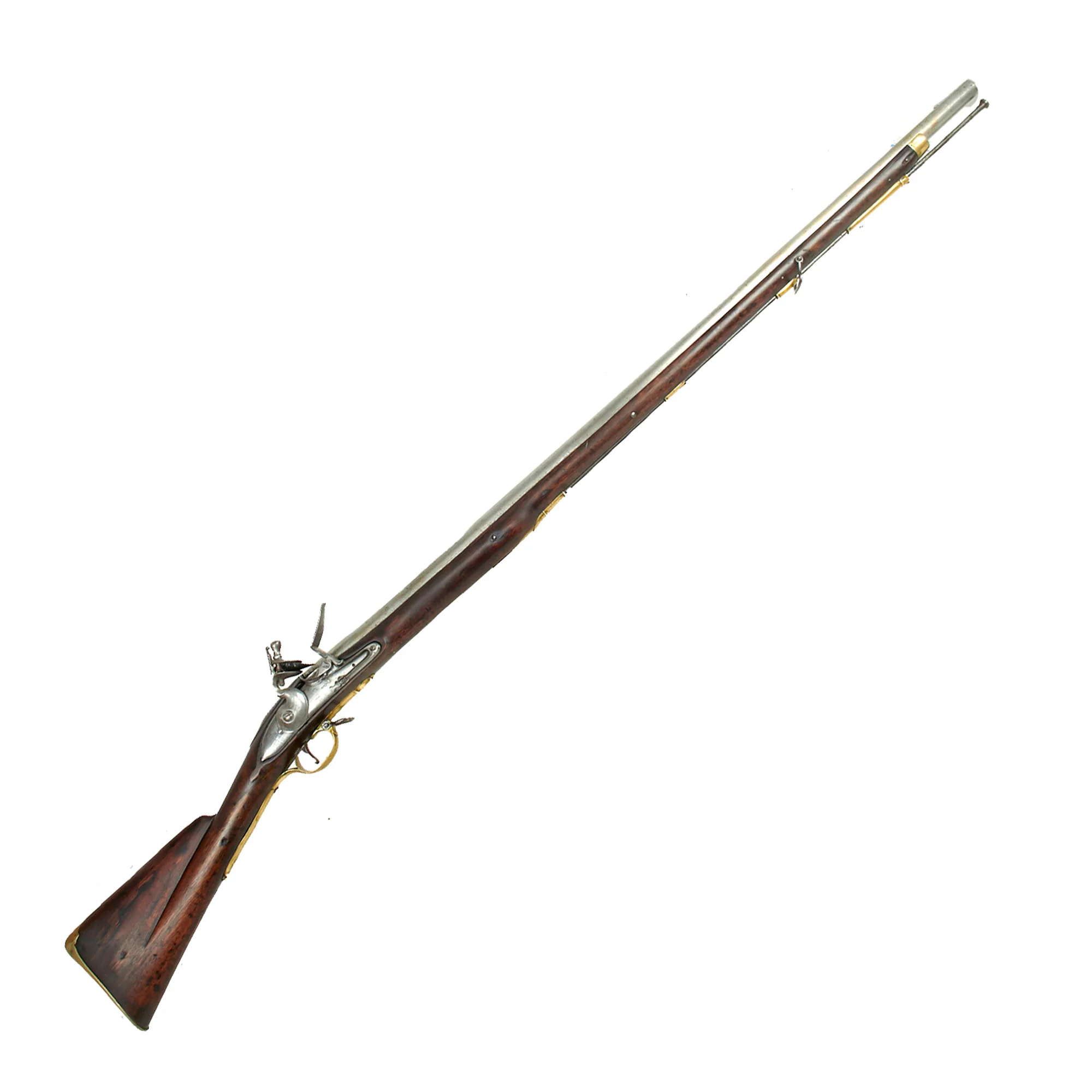
Original Item: Only One Available. This lovely little brass mounted CAMEL SHORT RIFLE / CARBINE was issued for "Colonial Service", as indicated by the brass mounts, and it definitely has had a long and interesting history! It was actually originally produced as a Modèle 1866 'Chassepot' Needle Fire rifle, and was then later converted to a Mle 1866-74 'Gras' Rifle. The left side of the receiver is marked St. Etiénne / M.80 next to MLE 1866-74 indicating original manufacture at the government arsenal at St. Étienne. The "M 80" is for a later update to the action that added a channel for gas escape to the bolt and receiver, in the case of a ruptured primer, which we have confirmed is present. The rifle has arsenal proofs on most parts, and also is marked S.1871 S.1878, indicating original manufacture as an Mle 1866 Chassepot in 1871 and update to an Mle 1866-74 Gras in 1878 (S Is the St. Étienne Prefix).
The rifle was then later shortened for colonial service and arsenal reworked into a short rifle, being shortened by about 6 inches overall, giving it a 27 1/2 inch barrel, perfect for use on a Camel. The bolt was replaced with a mounted trooper's "turn down" bolt handle, a bolt modification that helped prevent the carbine snagging on the horse or camel's tack. It would also have been fitted with modified brass bands and a nose cap on the fore stock. The carbine still bears serial number F 71956 on the left side of the barrel, while the other components are all non-matching, typical of arsenal refitted rifles.
Overall condition of this short rifle is good, showing the expected wear from service. The meal finish has worn to a matte gray patina overall due to years of cleaning in the field. As one might expect, the action of the bolt is definitely a bit "clunky" from wear and long use in the desert sands. The bore shows clear lands and grooves, but also oxidation and other wear from service. It is presently mostly dark, with some lighter finish on the rifling from cleaning. The stock has the expected dents, scratches, and chips as expected of a weapon that was in service for decades. It was refurbished at arsenal, so some of these were removed, and there is a flattened area on the left wrist, probably removed due to a rough surface. Really quite nice looking.
Remember GARY COOPER in "BEAU GESTE" about the French Foreign Legion? In really good condition, fully cleaned and ready to display, all you need is a Camel!
Specifications-
Year of Manufacture: 1871, converted 1878 and again later
Caliber: 11×59mmR Gras
Cartridge Type: Centerfire Cartridge
Barrel Length: 27 1/2 Inches
Overall Length: 46 Inches
Action type: Bolt-Action
Feed System: Single Shot
History of the Gras rifle:
A caliber of 11mm and used black powder centerfire cartridges that weighed 25 grams. It was a robust and hard-hitting weapon, but it had no magazine and so could only fire one shot after loading. It also had a triangular-shaped sword bayonet, known as the Model 1874 "Gras" Sword Bayonet. It was replaced by the Lebel rifle in 1886, the first rifle to use smokeless gunpowder. In the meantime, about 400,000 Gras rifles had been manufactured.
The metallic-cartridge Gras was manufactured in response to the development of the metallic cartridge designed by Colonel Boxer in 1866 (Boxer cartridge), and the British 1870 Martini-Henry rifle. Those were soon emulated by the Germans with the 1871 Mauser.
The Hellenic Army adopted the Gras in 1877, and it was used in all conflicts up until the Second World War. It became the favorite weapon of Greek guerrilla fighters, from the various revolts against the Ottoman Empire to the resistance against the Axis, acquiring legendary status. The name entered the Greek language, and Grades (γκράδες) was a term colloquially applied to all rifles during the first half of the 20th century. It was manufactured by Manufacture d'armes de Saint-Étienne, one of several government-owned arms factories in France. However most of the Gras rifles (60,000) used by the Hellenic military were manufactured under license by Steyr in Austria.
The Gras rifle was partly the inspiration for the development of the Japanese Murata rifle, Japan's first locally-made service rifle.
NOTE: International orders of antique firearms MUST be shipped using UPS WW Services (courier). USPS Priority Mail international will not accept these. International customers should always consult their country's antique gun laws prior to ordering.

Details & Craftsmanship
Every detail has been carefully considered to bring you the perfect product.

Details & Craftsmanship
Every detail has been carefully considered to bring you the perfect product.

Details & Craftsmanship
Every detail has been carefully considered to bring you the perfect product.

Details & Craftsmanship
Every detail has been carefully considered to bring you the perfect product.

Details & Craftsmanship
Every detail has been carefully considered to bring you the perfect product.

Details & Craftsmanship
Every detail has been carefully considered to bring you the perfect product.

Details & Craftsmanship
Every detail has been carefully considered to bring you the perfect product.

Details & Craftsmanship
Every detail has been carefully considered to bring you the perfect product.

Details & Craftsmanship
Every detail has been carefully considered to bring you the perfect product.

Details & Craftsmanship
Every detail has been carefully considered to bring you the perfect product.

Details & Craftsmanship
Every detail has been carefully considered to bring you the perfect product.

Details & Craftsmanship
Every detail has been carefully considered to bring you the perfect product.

Details & Craftsmanship
Every detail has been carefully considered to bring you the perfect product.

Details & Craftsmanship
Every detail has been carefully considered to bring you the perfect product.

Details & Craftsmanship
Every detail has been carefully considered to bring you the perfect product.

Details & Craftsmanship
Every detail has been carefully considered to bring you the perfect product.

Details & Craftsmanship
Every detail has been carefully considered to bring you the perfect product.

Details & Craftsmanship
Every detail has been carefully considered to bring you the perfect product.

Details & Craftsmanship
Every detail has been carefully considered to bring you the perfect product.

Details & Craftsmanship
Every detail has been carefully considered to bring you the perfect product.

Details & Craftsmanship
Every detail has been carefully considered to bring you the perfect product.

Details & Craftsmanship
Every detail has been carefully considered to bring you the perfect product.
Description
Original Item: Only One Available. This lovely little brass mounted CAMEL SHORT RIFLE / CARBINE was issued for "Colonial Service", as indicated by the brass mounts, and it definitely has had a long and interesting history! It was actually originally produced as a Modèle 1866 'Chassepot' Needle Fire rifle, and was then later converted to a Mle 1866-74 'Gras' Rifle. The left side of the receiver is marked St. Etiénne / M.80 next to MLE 1866-74 indicating original manufacture at the government arsenal at St. Étienne. The "M 80" is for a later update to the action that added a channel for gas escape to the bolt and receiver, in the case of a ruptured primer, which we have confirmed is present. The rifle has arsenal proofs on most parts, and also is marked S.1871 S.1878, indicating original manufacture as an Mle 1866 Chassepot in 1871 and update to an Mle 1866-74 Gras in 1878 (S Is the St. Étienne Prefix).
The rifle was then later shortened for colonial service and arsenal reworked into a short rifle, being shortened by about 6 inches overall, giving it a 27 1/2 inch barrel, perfect for use on a Camel. The bolt was replaced with a mounted trooper's "turn down" bolt handle, a bolt modification that helped prevent the carbine snagging on the horse or camel's tack. It would also have been fitted with modified brass bands and a nose cap on the fore stock. The carbine still bears serial number F 71956 on the left side of the barrel, while the other components are all non-matching, typical of arsenal refitted rifles.
Overall condition of this short rifle is good, showing the expected wear from service. The meal finish has worn to a matte gray patina overall due to years of cleaning in the field. As one might expect, the action of the bolt is definitely a bit "clunky" from wear and long use in the desert sands. The bore shows clear lands and grooves, but also oxidation and other wear from service. It is presently mostly dark, with some lighter finish on the rifling from cleaning. The stock has the expected dents, scratches, and chips as expected of a weapon that was in service for decades. It was refurbished at arsenal, so some of these were removed, and there is a flattened area on the left wrist, probably removed due to a rough surface. Really quite nice looking.
Remember GARY COOPER in "BEAU GESTE" about the French Foreign Legion? In really good condition, fully cleaned and ready to display, all you need is a Camel!
Specifications-
Year of Manufacture: 1871, converted 1878 and again later
Caliber: 11×59mmR Gras
Cartridge Type: Centerfire Cartridge
Barrel Length: 27 1/2 Inches
Overall Length: 46 Inches
Action type: Bolt-Action
Feed System: Single Shot
History of the Gras rifle:
A caliber of 11mm and used black powder centerfire cartridges that weighed 25 grams. It was a robust and hard-hitting weapon, but it had no magazine and so could only fire one shot after loading. It also had a triangular-shaped sword bayonet, known as the Model 1874 "Gras" Sword Bayonet. It was replaced by the Lebel rifle in 1886, the first rifle to use smokeless gunpowder. In the meantime, about 400,000 Gras rifles had been manufactured.
The metallic-cartridge Gras was manufactured in response to the development of the metallic cartridge designed by Colonel Boxer in 1866 (Boxer cartridge), and the British 1870 Martini-Henry rifle. Those were soon emulated by the Germans with the 1871 Mauser.
The Hellenic Army adopted the Gras in 1877, and it was used in all conflicts up until the Second World War. It became the favorite weapon of Greek guerrilla fighters, from the various revolts against the Ottoman Empire to the resistance against the Axis, acquiring legendary status. The name entered the Greek language, and Grades (γκράδες) was a term colloquially applied to all rifles during the first half of the 20th century. It was manufactured by Manufacture d'armes de Saint-Étienne, one of several government-owned arms factories in France. However most of the Gras rifles (60,000) used by the Hellenic military were manufactured under license by Steyr in Austria.
The Gras rifle was partly the inspiration for the development of the Japanese Murata rifle, Japan's first locally-made service rifle.
NOTE: International orders of antique firearms MUST be shipped using UPS WW Services (courier). USPS Priority Mail international will not accept these. International customers should always consult their country's antique gun laws prior to ordering.