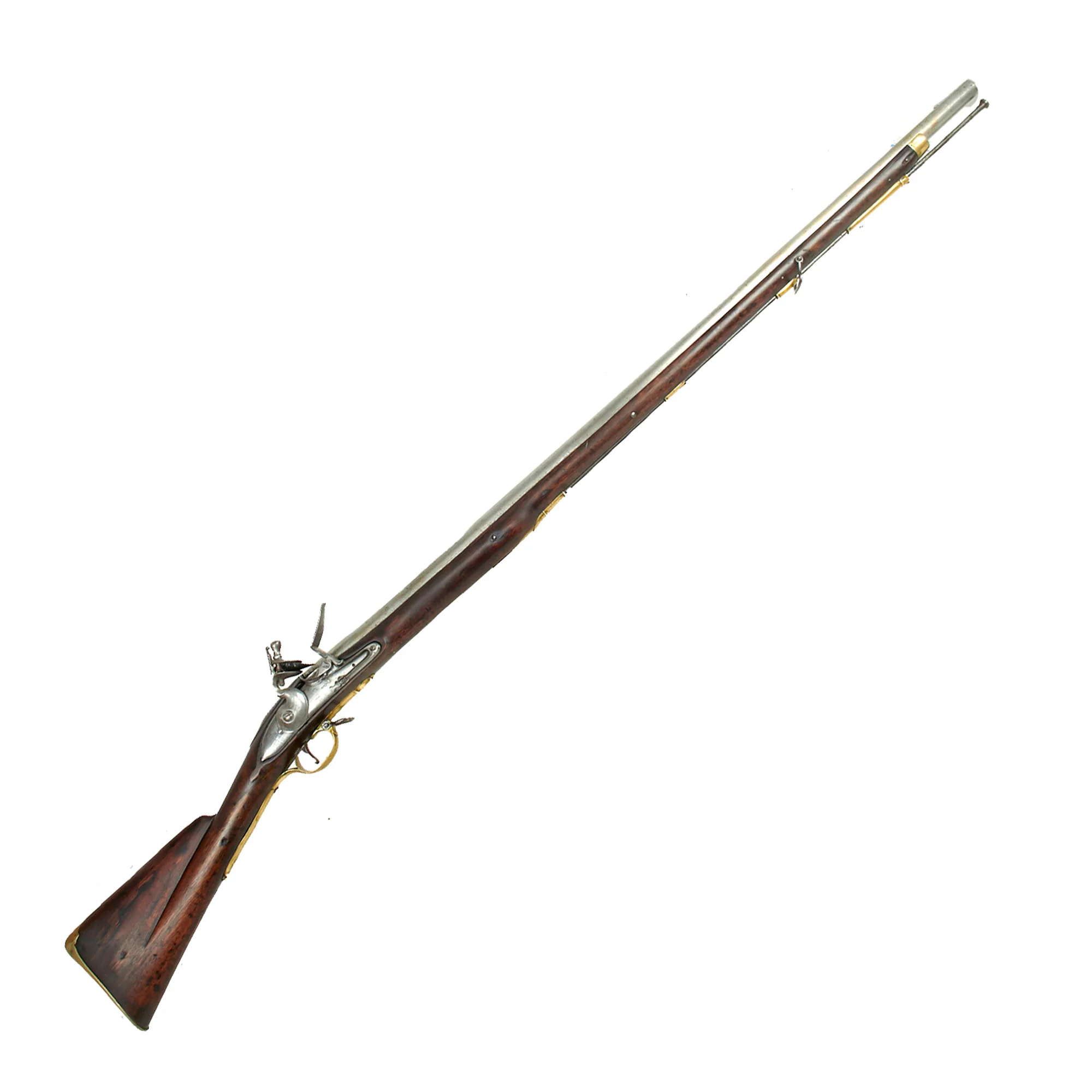

Original German Dreyse Zündnadel Needle Fire M1874 Baden Border Guard Rifle by F. v. Dreyse Sömmerda with Replacement Stützen Stock - Serial 14344
Original German Dreyse Zündnadel Needle Fire M1874 Baden Border Guard Rifle by F. v. Dreyse Sömmerda with Replacement Stützen Stock - Serial 14344
The Story
Original Item: Only One Available. These are really hard to find! In 1836 JOHANN NIKOLAUS VON DREYSE designed this breech loading cartridge system while the rest of the world were still using muzzleloaders. These were called Zündnadelgewehr, which translates roughly as "ignition needle rifle". These were adopted by the Prussian Military in 1841, and called the leichtes Perkussionsgewehr Modell 1841("light percussion rifle Model 1841"), with the name chosen to hide the revolutionary nature of the new weapon.
Its first notable service was in the May uprisings in Dresden in 1849. Taking a 15.4mm paper cartridge ignited by a needle projecting from the front of the bolt, the barrel on these is heavily rifled to engage the cartridge. The system was so revolutionary that it was observed that in the Austro-Prussian War of 1866, a Prussian Infantryman could fire five rounds from a prone position in the time it took an Austrian Infantryman to discharge one round from a standing position.
The Zündnadel saw service up through the Franco-Prussian War of 1870-1871, when the Prussians were quickly victorious despite the French Chassepot Needle fire Rifle introduced in 1866, which was considered a far superior weapon. It was this action that brought the German Empire together in 1871, and by this time the Needle Rife rifles were in use by many other German states. The Dreyse Needle Fire was obsoleted in 1871 with the introduction of Paul Mauser's M1871 bolt action rifle which took what we would think of as conventional brass cased ammunition (10.4mm).
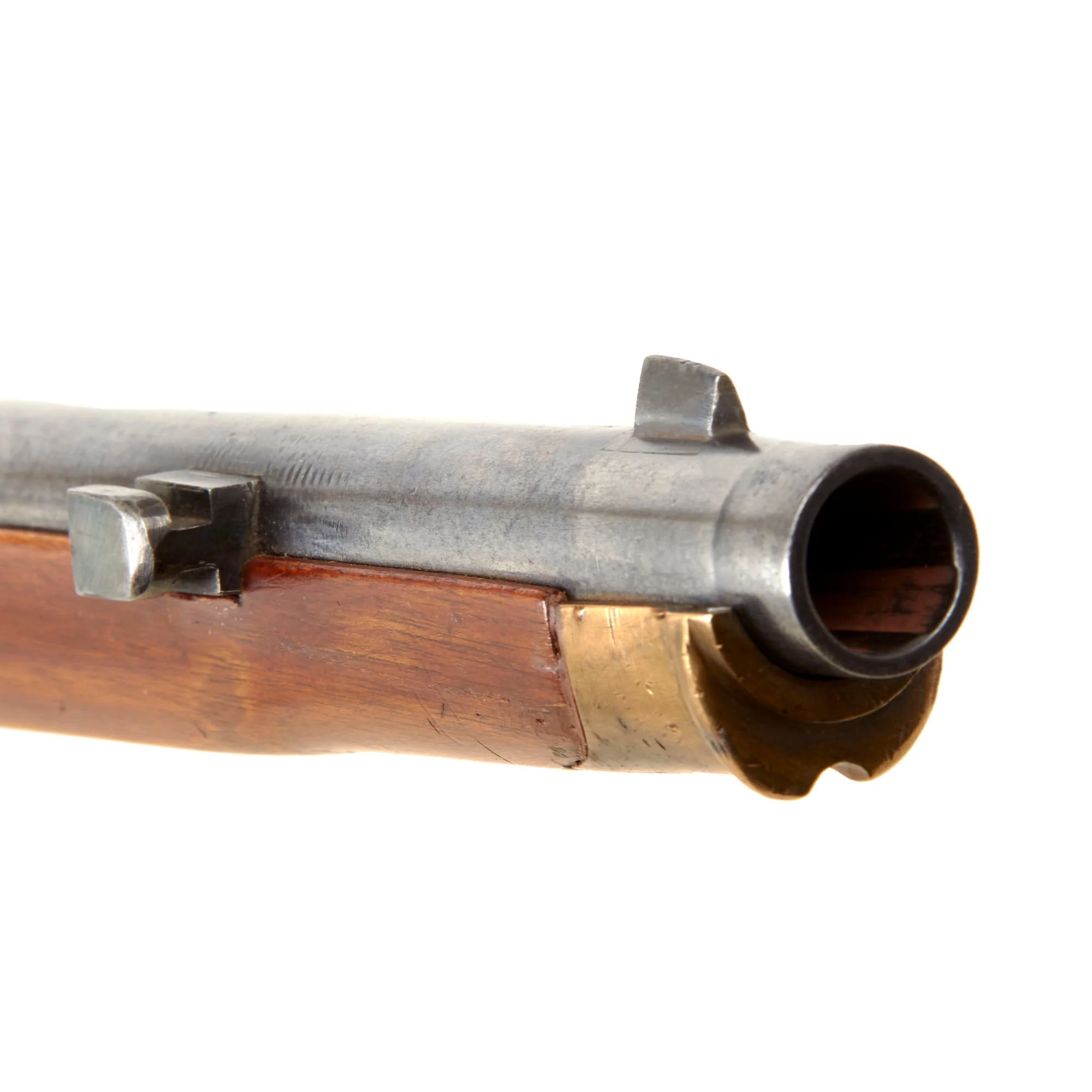
This is a nice example of probably the last Needle Fire rifle produced, as well as the most advanced, the Model of 1874. This particular example has markings consistent with issue to the Customs & Border Guard of the Grandy Duchy of Baden, one of the states of the newly formed German Empire. It has however been re-stocked at some point, and now is fitted with a lovely Stützen-style stock that goes all the way to the muzzle, looking to be made from beech wood. The stock is in fantastic condition, with a lovely honey color, and has a great cheek piece on the left side, as well as a "trigger grip" style trigger guard. Many of the fittings bear German proof marks, and it does have sling swivels, so it may have been adapted from another military rifle. It also shows a plugged cleaning rod channel at the front. Definitely a very interesting example that looks fantastic!
Unlike previous needle fire designs, the M1874 was "self-cocking", and just moving the bolt would cock the needle. Our example shows wear to the exterior from repeated cleanings, however most of the markings are still retained. The right side of the barrel nocks form is marked with serial number 14344, with shortened serial number 344 on the right front receiver. The bolt is however marked with shortened number 356, so it was swapped out at some point. The right side of the receiver is marked with F. v. Dreyse Sömmerda, for Franz von Dreyse, the son of the famous inventor and firearms manufacturer Johann Nicolaus von Dreyse. It was he that developed the self-cocking modification to the firing system, almost as a last ditch attempt to prolong the service life of the needle fire design. The father and son had started a gun factory in Sömmerda together, which Franz continued after his father passed in 1867, until his own passing in 1894.
Research shows that these border guards rifles have serial numbers in the 13,000 and 14,000 ranges, so this example is definitely a later example, towards the end of production. The gun is in good condition, with a lovely aged patina from years of cleaning. The replaced stock is in beautiful condition, showing wear from serviced and looking to have been matched to the rifle during the period. The needle is still intact, as far as we can see, and protrudes past the bolt face when in the fired position, though some may be missing. The action cycles relatively well, though the bolt can require some force to pull it back. The bore is in excellent condition, showing a bright finish with strong land and grooves. There is just a bit of past oxidation and fouling, now removed, and it does not look like this rifle saw much use during its time in service.
The top front of the receiver is marked B. Z. 288., which is an abbreviation for Baden Zoll (Baden Customs & Border Guards), 288th Weapon. The rifle also comes with a very nice brass muzzle cover. Both sling swivels are present and move easily, and the rear sight is intact as well.
These are incredibly rare, and this is only the second example we have seen, and the first that has been fitted with a Stützen Stock. From looking around these are very seldom encountered. A rare late example of a revolutionary firing system, ready to display.
Specifications-
Year of Manufacture: circa 1874
Caliber: 15.4mm Dreyse
Cartridge Type: Needlefire Cartridge - Lead bullet in Paper Cartridge
Barrel Length: 24 inches
Overall Length: 42 1/2 Inches
Action type: Bolt-Action Needle Fire
Feed System: Single Shot
NOTE: International orders of antique firearms MUST be shipped using UPS WW Services (courier). USPS Priority Mail international will not accept these. International customers should always consult their country's antique gun laws prior to ordering.

Details & Craftsmanship
Every detail has been carefully considered to bring you the perfect product.

Details & Craftsmanship
Every detail has been carefully considered to bring you the perfect product.

Details & Craftsmanship
Every detail has been carefully considered to bring you the perfect product.

Details & Craftsmanship
Every detail has been carefully considered to bring you the perfect product.

Details & Craftsmanship
Every detail has been carefully considered to bring you the perfect product.

Details & Craftsmanship
Every detail has been carefully considered to bring you the perfect product.

Details & Craftsmanship
Every detail has been carefully considered to bring you the perfect product.

Details & Craftsmanship
Every detail has been carefully considered to bring you the perfect product.

Details & Craftsmanship
Every detail has been carefully considered to bring you the perfect product.

Details & Craftsmanship
Every detail has been carefully considered to bring you the perfect product.

Details & Craftsmanship
Every detail has been carefully considered to bring you the perfect product.

Details & Craftsmanship
Every detail has been carefully considered to bring you the perfect product.

Details & Craftsmanship
Every detail has been carefully considered to bring you the perfect product.

Details & Craftsmanship
Every detail has been carefully considered to bring you the perfect product.

Details & Craftsmanship
Every detail has been carefully considered to bring you the perfect product.

Details & Craftsmanship
Every detail has been carefully considered to bring you the perfect product.

Details & Craftsmanship
Every detail has been carefully considered to bring you the perfect product.
Details & Craftsmanship
Every detail has been carefully considered to bring you the perfect product.

Details & Craftsmanship
Every detail has been carefully considered to bring you the perfect product.

Details & Craftsmanship
Every detail has been carefully considered to bring you the perfect product.
Description
Original Item: Only One Available. These are really hard to find! In 1836 JOHANN NIKOLAUS VON DREYSE designed this breech loading cartridge system while the rest of the world were still using muzzleloaders. These were called Zündnadelgewehr, which translates roughly as "ignition needle rifle". These were adopted by the Prussian Military in 1841, and called the leichtes Perkussionsgewehr Modell 1841("light percussion rifle Model 1841"), with the name chosen to hide the revolutionary nature of the new weapon.
Its first notable service was in the May uprisings in Dresden in 1849. Taking a 15.4mm paper cartridge ignited by a needle projecting from the front of the bolt, the barrel on these is heavily rifled to engage the cartridge. The system was so revolutionary that it was observed that in the Austro-Prussian War of 1866, a Prussian Infantryman could fire five rounds from a prone position in the time it took an Austrian Infantryman to discharge one round from a standing position.
The Zündnadel saw service up through the Franco-Prussian War of 1870-1871, when the Prussians were quickly victorious despite the French Chassepot Needle fire Rifle introduced in 1866, which was considered a far superior weapon. It was this action that brought the German Empire together in 1871, and by this time the Needle Rife rifles were in use by many other German states. The Dreyse Needle Fire was obsoleted in 1871 with the introduction of Paul Mauser's M1871 bolt action rifle which took what we would think of as conventional brass cased ammunition (10.4mm).
This is a nice example of probably the last Needle Fire rifle produced, as well as the most advanced, the Model of 1874. This particular example has markings consistent with issue to the Customs & Border Guard of the Grandy Duchy of Baden, one of the states of the newly formed German Empire. It has however been re-stocked at some point, and now is fitted with a lovely Stützen-style stock that goes all the way to the muzzle, looking to be made from beech wood. The stock is in fantastic condition, with a lovely honey color, and has a great cheek piece on the left side, as well as a "trigger grip" style trigger guard. Many of the fittings bear German proof marks, and it does have sling swivels, so it may have been adapted from another military rifle. It also shows a plugged cleaning rod channel at the front. Definitely a very interesting example that looks fantastic!
Unlike previous needle fire designs, the M1874 was "self-cocking", and just moving the bolt would cock the needle. Our example shows wear to the exterior from repeated cleanings, however most of the markings are still retained. The right side of the barrel nocks form is marked with serial number 14344, with shortened serial number 344 on the right front receiver. The bolt is however marked with shortened number 356, so it was swapped out at some point. The right side of the receiver is marked with F. v. Dreyse Sömmerda, for Franz von Dreyse, the son of the famous inventor and firearms manufacturer Johann Nicolaus von Dreyse. It was he that developed the self-cocking modification to the firing system, almost as a last ditch attempt to prolong the service life of the needle fire design. The father and son had started a gun factory in Sömmerda together, which Franz continued after his father passed in 1867, until his own passing in 1894.
Research shows that these border guards rifles have serial numbers in the 13,000 and 14,000 ranges, so this example is definitely a later example, towards the end of production. The gun is in good condition, with a lovely aged patina from years of cleaning. The replaced stock is in beautiful condition, showing wear from serviced and looking to have been matched to the rifle during the period. The needle is still intact, as far as we can see, and protrudes past the bolt face when in the fired position, though some may be missing. The action cycles relatively well, though the bolt can require some force to pull it back. The bore is in excellent condition, showing a bright finish with strong land and grooves. There is just a bit of past oxidation and fouling, now removed, and it does not look like this rifle saw much use during its time in service.
The top front of the receiver is marked B. Z. 288., which is an abbreviation for Baden Zoll (Baden Customs & Border Guards), 288th Weapon. The rifle also comes with a very nice brass muzzle cover. Both sling swivels are present and move easily, and the rear sight is intact as well.
These are incredibly rare, and this is only the second example we have seen, and the first that has been fitted with a Stützen Stock. From looking around these are very seldom encountered. A rare late example of a revolutionary firing system, ready to display.
Specifications-
Year of Manufacture: circa 1874
Caliber: 15.4mm Dreyse
Cartridge Type: Needlefire Cartridge - Lead bullet in Paper Cartridge
Barrel Length: 24 inches
Overall Length: 42 1/2 Inches
Action type: Bolt-Action Needle Fire
Feed System: Single Shot
NOTE: International orders of antique firearms MUST be shipped using UPS WW Services (courier). USPS Priority Mail international will not accept these. International customers should always consult their country's antique gun laws prior to ordering.