
The Story
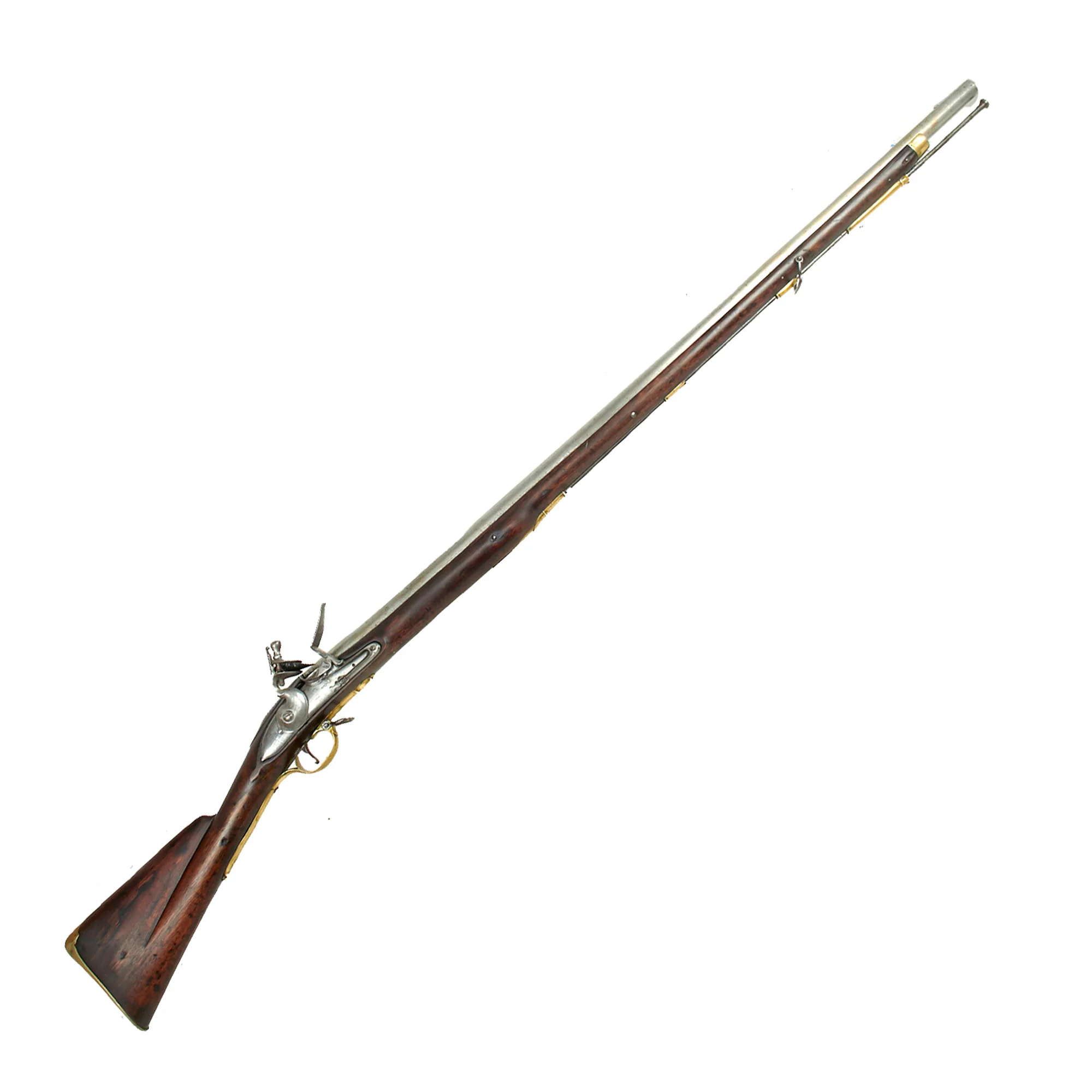
Original Item: Only One Available. This is a very nice example of the Mauser Model 1871 Infantry Rifle, manufactured by the famous ŒWG Steyr in Austria. It is covered with Imperial German inspection and acceptance markings on the metalwork. It bears serial number 3367 P on the barrel, receiver, bolt, butt plate, and just about every other part that would have a serial number. Unfortunately the nose cap / bayonet stand is missing, which would normally have the serial number marked on it as well, which makes this a very nice "Mostly Matching" example.
The receiver is dated with 1875 and marked I. G. Mod. 71 in German "Black Letter" type. This stands for Infanterie Gewehr (Infantry Rifle) Model 71. The top of the barrel nocks form is marked ŒSTERR. WAFFFB. GES., an abbreviation of "Österreichische Waffenfabriksgesellschaft", or the Austrian Arms-Manufacturing Company. Part of ŒWG was Steyr-Mannlicher, known mainly as Steyr, who continue to make firearms to this day. Below this is the Crown over FW proof for Kaiser Wilhelm I, who used the F.W. monogram, with an 11,1 marking next to the receiver, giving the bore diameter in millimeters.
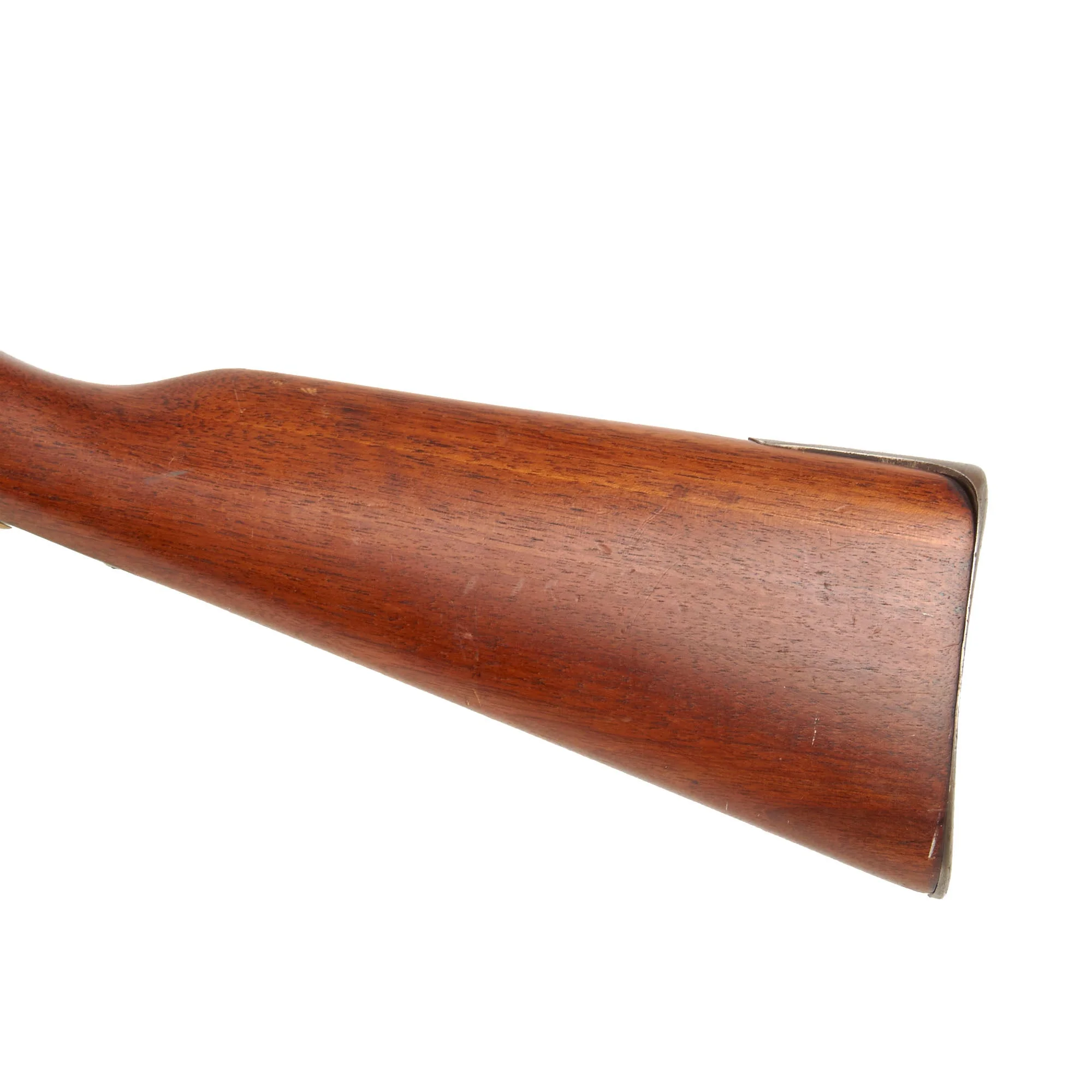
The rifle comes very good condition overall, looking to have been cleaned multiple times over its long life, with the stock looking like it has been reconditioned, showing a lovely honey color with a nice varnish finish applied. It is now below the level of the butt plate, and the original stock cartouches are now very faint. Interestingly, it has a brass trigger guard installed, which were usually removed during WWI due to brass shortages. The rifle still has both sling swivels intact and they move easily. The bore is in very good condition, showing strong lands and grooves with a bright finish. There is just a bit of wear and some areas of light fouling, definitely a great example from the black powder era. The rifle cycles correctly, and the firing pin and extractor are both intact. The "wing" safety is fully functional, preventing firing and locking the bolt closed in the right position.
Overall this is an very good example of a German Mauser model 1871 by the legendary Steyr in Austria. The perfect addition to any German Mauser collection! Just needs a nose cap!
Specifications:-
Years of Manufacture: 1875
Caliber: 11x60mmR Mauser
Cartridge Type: Centerfire Cartridge
Barrel Length: 33.5 inches
Overall Length: 53 Inches
Action type: Bolt-Action
Feed System: Single Shot
History of the Mauser 1871
Adopted as the Gewehr 71 or Infanterie-Gewehr 71, or "Infantry Rifle 71 ("I.G.Mod.71" was stamped on the rifles themselves) was the first rifle model in a distinguished line designed and manufactured by Paul Mauser and Wilhelm Mauser of the Mauser company and later mass-produced at Spandau arsenal.
Paul Mauser developed his bolt-action rifle from 1866 to 1871. During 1870-71 trials with many different rifles took place, with the "M1869 Bavarian Werder" being the Mausers' chief competitor. The Mauser was provisionally adopted on 2 December 1871, pending the development of an appropriate safety. With support from the government's Spandau arsenal, the improvements to the safety mechanism were completed and the rifle was formally accepted on 14 February 1872 as Infantry Rifle Model 1871 by the German Empire excluding Bavaria. The action was not based on its predecessor, the Dreyse needle gun which had seen service during the Franco-Prussian War of 1870-71, and which was found to have a number of weaknesses.
The now well known Mauser "wing" type safety lever was developed for the Gewehr 71. The Gewehr 71 is a conventional looking bolt action chambered in 11mm using black powder cartridges. The action included only a bolt guide rib as its single locking lug, locking forward of the receiving bridge. The original design was a single-shot. The design was updated in 1884 with an 8-round tubular magazine designed by Alfred von Kropatschek, making this Germany's first repeating rifle. This version was designated the Gewehr 1871/84. A version of this repeater was adopted by the Ottoman Empire. Designated the M1887, it differentiated from the M71/84 in that it had a side mounted cleaning rod, a second locking lug on the rear of the bolt, and it was in caliber 9.5×60mmR, which Paul Mauser touted as the most efficient (black powder) cartridge. In the early 20th century a few were converted to 7.65×53mm smokeless by the arsenal in Ankara.
NOTE: International orders of antique firearms MUST be shipped using UPS WW Services (courier). USPS Priority Mail international will not accept these. International customers should always consult their country's antique gun laws prior to ordering.

Details & Craftsmanship
Every detail has been carefully considered to bring you the perfect product.

Details & Craftsmanship
Every detail has been carefully considered to bring you the perfect product.

Details & Craftsmanship
Every detail has been carefully considered to bring you the perfect product.

Details & Craftsmanship
Every detail has been carefully considered to bring you the perfect product.

Details & Craftsmanship
Every detail has been carefully considered to bring you the perfect product.

Details & Craftsmanship
Every detail has been carefully considered to bring you the perfect product.

Details & Craftsmanship
Every detail has been carefully considered to bring you the perfect product.

Details & Craftsmanship
Every detail has been carefully considered to bring you the perfect product.

Details & Craftsmanship
Every detail has been carefully considered to bring you the perfect product.

Details & Craftsmanship
Every detail has been carefully considered to bring you the perfect product.

Details & Craftsmanship
Every detail has been carefully considered to bring you the perfect product.

Details & Craftsmanship
Every detail has been carefully considered to bring you the perfect product.

Details & Craftsmanship
Every detail has been carefully considered to bring you the perfect product.

Details & Craftsmanship
Every detail has been carefully considered to bring you the perfect product.
Details & Craftsmanship
Every detail has been carefully considered to bring you the perfect product.

Details & Craftsmanship
Every detail has been carefully considered to bring you the perfect product.

Details & Craftsmanship
Every detail has been carefully considered to bring you the perfect product.

Details & Craftsmanship
Every detail has been carefully considered to bring you the perfect product.

Details & Craftsmanship
Every detail has been carefully considered to bring you the perfect product.

Details & Craftsmanship
Every detail has been carefully considered to bring you the perfect product.

Details & Craftsmanship
Every detail has been carefully considered to bring you the perfect product.

Details & Craftsmanship
Every detail has been carefully considered to bring you the perfect product.

Details & Craftsmanship
Every detail has been carefully considered to bring you the perfect product.

Details & Craftsmanship
Every detail has been carefully considered to bring you the perfect product.

Details & Craftsmanship
Every detail has been carefully considered to bring you the perfect product.
Description
Original Item: Only One Available. This is a very nice example of the Mauser Model 1871 Infantry Rifle, manufactured by the famous ŒWG Steyr in Austria. It is covered with Imperial German inspection and acceptance markings on the metalwork. It bears serial number 3367 P on the barrel, receiver, bolt, butt plate, and just about every other part that would have a serial number. Unfortunately the nose cap / bayonet stand is missing, which would normally have the serial number marked on it as well, which makes this a very nice "Mostly Matching" example.
The receiver is dated with 1875 and marked I. G. Mod. 71 in German "Black Letter" type. This stands for Infanterie Gewehr (Infantry Rifle) Model 71. The top of the barrel nocks form is marked ŒSTERR. WAFFFB. GES., an abbreviation of "Österreichische Waffenfabriksgesellschaft", or the Austrian Arms-Manufacturing Company. Part of ŒWG was Steyr-Mannlicher, known mainly as Steyr, who continue to make firearms to this day. Below this is the Crown over FW proof for Kaiser Wilhelm I, who used the F.W. monogram, with an 11,1 marking next to the receiver, giving the bore diameter in millimeters.
The rifle comes very good condition overall, looking to have been cleaned multiple times over its long life, with the stock looking like it has been reconditioned, showing a lovely honey color with a nice varnish finish applied. It is now below the level of the butt plate, and the original stock cartouches are now very faint. Interestingly, it has a brass trigger guard installed, which were usually removed during WWI due to brass shortages. The rifle still has both sling swivels intact and they move easily. The bore is in very good condition, showing strong lands and grooves with a bright finish. There is just a bit of wear and some areas of light fouling, definitely a great example from the black powder era. The rifle cycles correctly, and the firing pin and extractor are both intact. The "wing" safety is fully functional, preventing firing and locking the bolt closed in the right position.
Overall this is an very good example of a German Mauser model 1871 by the legendary Steyr in Austria. The perfect addition to any German Mauser collection! Just needs a nose cap!
Specifications:-
Years of Manufacture: 1875
Caliber: 11x60mmR Mauser
Cartridge Type: Centerfire Cartridge
Barrel Length: 33.5 inches
Overall Length: 53 Inches
Action type: Bolt-Action
Feed System: Single Shot
History of the Mauser 1871
Adopted as the Gewehr 71 or Infanterie-Gewehr 71, or "Infantry Rifle 71 ("I.G.Mod.71" was stamped on the rifles themselves) was the first rifle model in a distinguished line designed and manufactured by Paul Mauser and Wilhelm Mauser of the Mauser company and later mass-produced at Spandau arsenal.
Paul Mauser developed his bolt-action rifle from 1866 to 1871. During 1870-71 trials with many different rifles took place, with the "M1869 Bavarian Werder" being the Mausers' chief competitor. The Mauser was provisionally adopted on 2 December 1871, pending the development of an appropriate safety. With support from the government's Spandau arsenal, the improvements to the safety mechanism were completed and the rifle was formally accepted on 14 February 1872 as Infantry Rifle Model 1871 by the German Empire excluding Bavaria. The action was not based on its predecessor, the Dreyse needle gun which had seen service during the Franco-Prussian War of 1870-71, and which was found to have a number of weaknesses.
The now well known Mauser "wing" type safety lever was developed for the Gewehr 71. The Gewehr 71 is a conventional looking bolt action chambered in 11mm using black powder cartridges. The action included only a bolt guide rib as its single locking lug, locking forward of the receiving bridge. The original design was a single-shot. The design was updated in 1884 with an 8-round tubular magazine designed by Alfred von Kropatschek, making this Germany's first repeating rifle. This version was designated the Gewehr 1871/84. A version of this repeater was adopted by the Ottoman Empire. Designated the M1887, it differentiated from the M71/84 in that it had a side mounted cleaning rod, a second locking lug on the rear of the bolt, and it was in caliber 9.5×60mmR, which Paul Mauser touted as the most efficient (black powder) cartridge. In the early 20th century a few were converted to 7.65×53mm smokeless by the arsenal in Ankara.
NOTE: International orders of antique firearms MUST be shipped using UPS WW Services (courier). USPS Priority Mail international will not accept these. International customers should always consult their country's antique gun laws prior to ordering.