
Original: $995.00
-70%$995.00
$298.50The Story
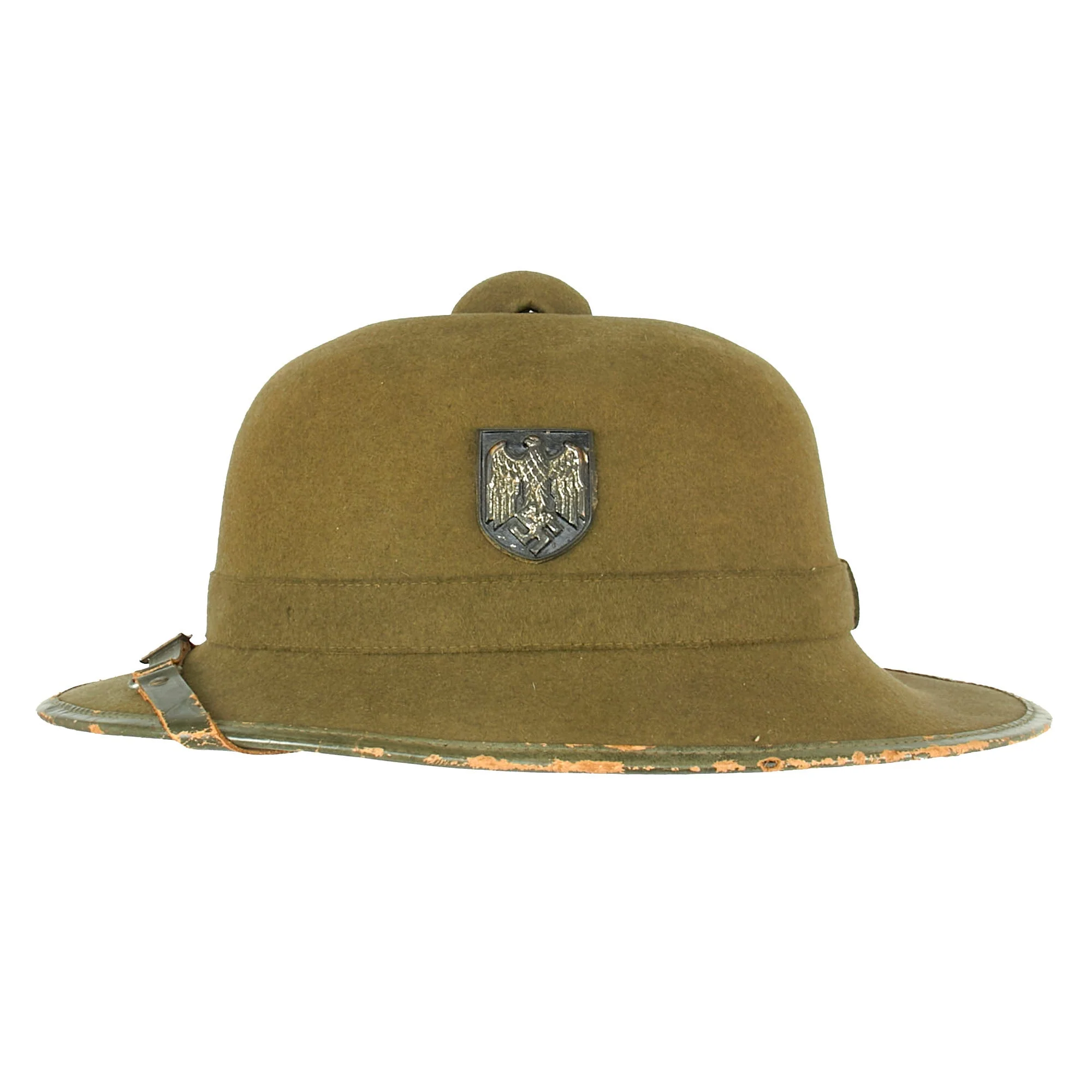
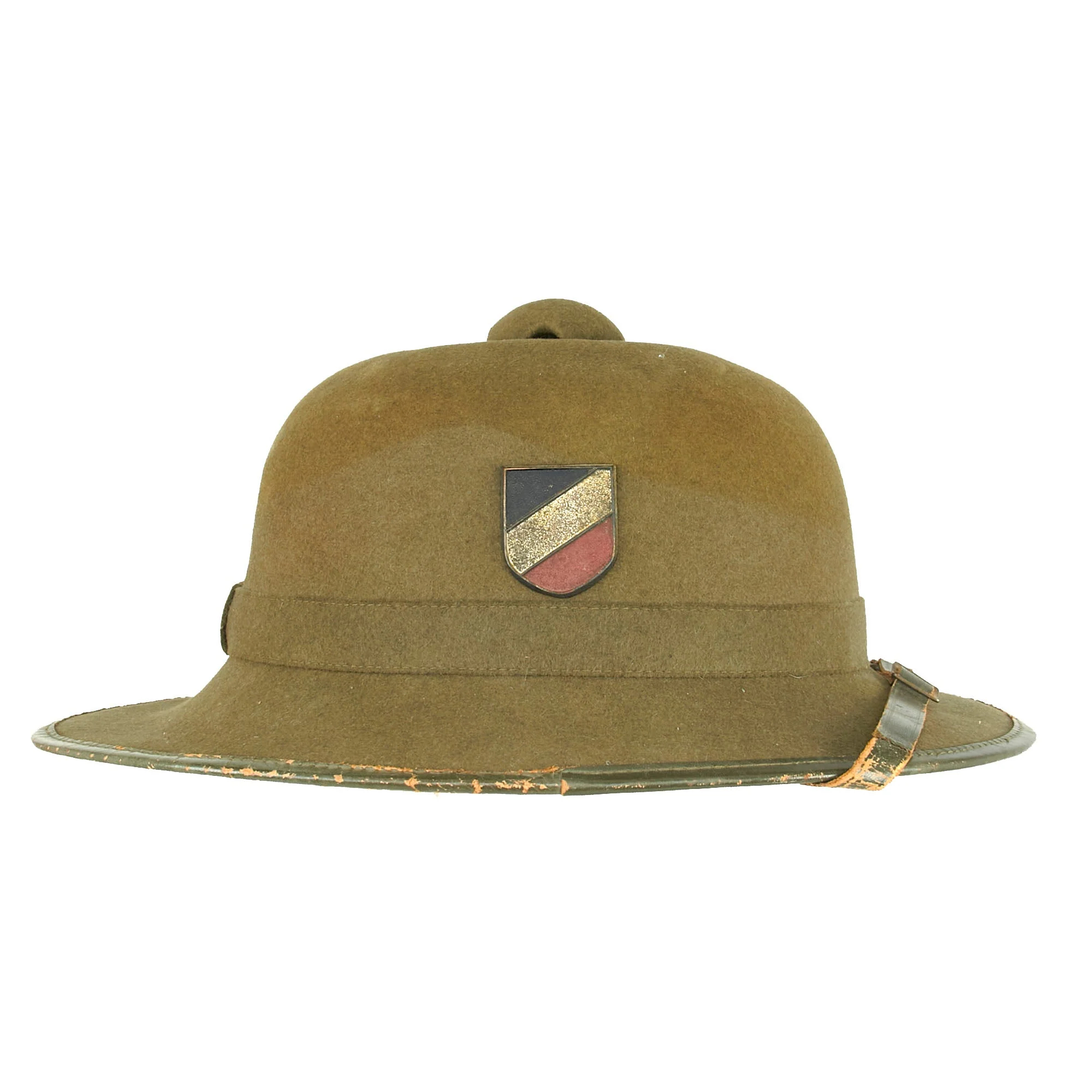
Original Item: Only One Available. This is a very good condition Imperial German Prussian Artillery enlisted man's Mannschaften (other ranks) Artillery Pickelhaube. On this version of the Pickelhaube, a ball representing a cannon ball replaced the usual spike, leading this to be referred to as an Artillerie Kugelhelm (Artillery Ball-Top Helm). The helmet is dated 1916, and is a fantastic untouched example with all original pieces retained, including the elusively scarce chinstrap!
The M1915 was the last model of Pickelhaube issued prior to the move to all steel helmets. In accordance with the 1915 regulations these helmets would no longer use brass, silver, or Tombak as the M1895 did. All issued Pickelhaube would now use grey oxidized steel fittings for all regiments.
This Helmet features a oxidized steel frontplate (wappen) with the Prussian state eagle clutching a scepter and crown, over the King's motto, "Mit Gott Für Koenig und Vaterland" (With God for King and Country, i.e. Prussia). The wappen is secured via the original leather thongs on the reverse, just as issued. The crown of this leather helmet displays a vented enlisted removable ball (kugel) mounted on an oxidized steel baseplate. The ball is in great condition, and is easily removable using the "bayonet-style" attaching system. The front leather visor has oxidized steel trim in very good condition. The metal spine that descends from the spike's baseplate to the edge of the rear visor is also in very good condition. The steel fittings have all matured with a gorgeous patina, with none appearing to have been replaced.
It is complete with the Prussian (black and white) and German National Colors (red white and black) kokarden (cockades) around the chin strap lugs. Both are in great shape and are held in place by the original chinstrap. The baseplate for the spike has a little looseness but still looks great.
The Attached chin strap is a gorgeous original, complete, and in good worn shape. The interior features a nice original leather liner. The black leather shell shows normal age crazing and wear with heavy darkening. There is also some heavy verdigris on the interior. The lacquer finished leather is in very good condition having no serious issues minus crazing. The front and rear visor stitching is still strong. The interior rear visor is stamped:
B.A.XVI
1916
This denotes servicing at XVI Armee-Korps (Metz). Overall a very nice condition Imperial Prussian Artillery pickelhaube, a great hard to find addition to any collection.
Germany’s Pickelhaube helmet, distinguished by a lone spike jutting straight from its top, became a symbol of Prussian militarism in the early 20th century. At first glance, the distinctive spike seems to have served no practical purpose and use of these helmets on the battlefield was abolished during World War I.
Introduced by the Prussian military in 1843, the Pickelhaube was originally proposed for use by cavalry troops. The helmets, made of pressed leather, were developed as an updated solution to the conical shako hats worn by Prussians during the Napoleonic Wars. Napoleonic-era shakos offered virtually no head protection and were cumbersome to wear in wet conditions, as they easily soaked up rain. The Pickelhaube, therefore, was greeted as a practical modern invention. The new “leather helmets” or “helmets with spikes” gave soldiers’ greater head covering and visibility.
The distinctive spike on the Pickelhaube was supposed to function as a blade tip. It was designed to deflect sword blows aimed at the head. The spikes could be modified depending on soldiers’ battlefield duties and outfitted with plumes on formal occasions.
Use of the helmet became widespread throughout Germany and was even adopted by regional police forces and fire brigades. The helmet was often greeted with sarcasm and mockery, even within Germany. In 1843, the famous German poet, Heinrich Heine, wrote and published a satiric poem, “Germany: A Winter’s Tale,” in the poem, Heine compared the Pickelhaube to a lightning rod:
“Yes, yes, I like the helmet, it demonstrates the loftiest wit!
A kingly inspiration, it was! Complete with a point and tip!
I’m just afraid a storm will come and only too easily hit,
That romantic crown of yours with a fancy lightning blitz!”
The Pickelhaube became a symbol of Prussian aggressiveness and battle prowess. An imperial proclamation in 1871 made the Pickelhaube mandatory for all German troops. Proud Prussian military leaders with bristling mustaches posed for publicity photos sporting the Pickelhaube, including Kaiser Wilhelm II, Otto von Bismarck, and Paul von Hindenburg. In other countries, the horned helmets became synonymous with barbarism, especially during World War I.

Details & Craftsmanship
Every detail has been carefully considered to bring you the perfect product.

Details & Craftsmanship
Every detail has been carefully considered to bring you the perfect product.

Details & Craftsmanship
Every detail has been carefully considered to bring you the perfect product.

Details & Craftsmanship
Every detail has been carefully considered to bring you the perfect product.

Details & Craftsmanship
Every detail has been carefully considered to bring you the perfect product.

Details & Craftsmanship
Every detail has been carefully considered to bring you the perfect product.

Details & Craftsmanship
Every detail has been carefully considered to bring you the perfect product.

Details & Craftsmanship
Every detail has been carefully considered to bring you the perfect product.

Details & Craftsmanship
Every detail has been carefully considered to bring you the perfect product.

Details & Craftsmanship
Every detail has been carefully considered to bring you the perfect product.

Details & Craftsmanship
Every detail has been carefully considered to bring you the perfect product.
Description
Original Item: Only One Available. This is a very good condition Imperial German Prussian Artillery enlisted man's Mannschaften (other ranks) Artillery Pickelhaube. On this version of the Pickelhaube, a ball representing a cannon ball replaced the usual spike, leading this to be referred to as an Artillerie Kugelhelm (Artillery Ball-Top Helm). The helmet is dated 1916, and is a fantastic untouched example with all original pieces retained, including the elusively scarce chinstrap!
The M1915 was the last model of Pickelhaube issued prior to the move to all steel helmets. In accordance with the 1915 regulations these helmets would no longer use brass, silver, or Tombak as the M1895 did. All issued Pickelhaube would now use grey oxidized steel fittings for all regiments.
This Helmet features a oxidized steel frontplate (wappen) with the Prussian state eagle clutching a scepter and crown, over the King's motto, "Mit Gott Für Koenig und Vaterland" (With God for King and Country, i.e. Prussia). The wappen is secured via the original leather thongs on the reverse, just as issued. The crown of this leather helmet displays a vented enlisted removable ball (kugel) mounted on an oxidized steel baseplate. The ball is in great condition, and is easily removable using the "bayonet-style" attaching system. The front leather visor has oxidized steel trim in very good condition. The metal spine that descends from the spike's baseplate to the edge of the rear visor is also in very good condition. The steel fittings have all matured with a gorgeous patina, with none appearing to have been replaced.
It is complete with the Prussian (black and white) and German National Colors (red white and black) kokarden (cockades) around the chin strap lugs. Both are in great shape and are held in place by the original chinstrap. The baseplate for the spike has a little looseness but still looks great.
The Attached chin strap is a gorgeous original, complete, and in good worn shape. The interior features a nice original leather liner. The black leather shell shows normal age crazing and wear with heavy darkening. There is also some heavy verdigris on the interior. The lacquer finished leather is in very good condition having no serious issues minus crazing. The front and rear visor stitching is still strong. The interior rear visor is stamped:
B.A.XVI
1916
This denotes servicing at XVI Armee-Korps (Metz). Overall a very nice condition Imperial Prussian Artillery pickelhaube, a great hard to find addition to any collection.
Germany’s Pickelhaube helmet, distinguished by a lone spike jutting straight from its top, became a symbol of Prussian militarism in the early 20th century. At first glance, the distinctive spike seems to have served no practical purpose and use of these helmets on the battlefield was abolished during World War I.
Introduced by the Prussian military in 1843, the Pickelhaube was originally proposed for use by cavalry troops. The helmets, made of pressed leather, were developed as an updated solution to the conical shako hats worn by Prussians during the Napoleonic Wars. Napoleonic-era shakos offered virtually no head protection and were cumbersome to wear in wet conditions, as they easily soaked up rain. The Pickelhaube, therefore, was greeted as a practical modern invention. The new “leather helmets” or “helmets with spikes” gave soldiers’ greater head covering and visibility.
The distinctive spike on the Pickelhaube was supposed to function as a blade tip. It was designed to deflect sword blows aimed at the head. The spikes could be modified depending on soldiers’ battlefield duties and outfitted with plumes on formal occasions.
Use of the helmet became widespread throughout Germany and was even adopted by regional police forces and fire brigades. The helmet was often greeted with sarcasm and mockery, even within Germany. In 1843, the famous German poet, Heinrich Heine, wrote and published a satiric poem, “Germany: A Winter’s Tale,” in the poem, Heine compared the Pickelhaube to a lightning rod:
“Yes, yes, I like the helmet, it demonstrates the loftiest wit!
A kingly inspiration, it was! Complete with a point and tip!
I’m just afraid a storm will come and only too easily hit,
That romantic crown of yours with a fancy lightning blitz!”
The Pickelhaube became a symbol of Prussian aggressiveness and battle prowess. An imperial proclamation in 1871 made the Pickelhaube mandatory for all German troops. Proud Prussian military leaders with bristling mustaches posed for publicity photos sporting the Pickelhaube, including Kaiser Wilhelm II, Otto von Bismarck, and Paul von Hindenburg. In other countries, the horned helmets became synonymous with barbarism, especially during World War I.