
Original: $295.00
-70%$295.00
$88.50The Story
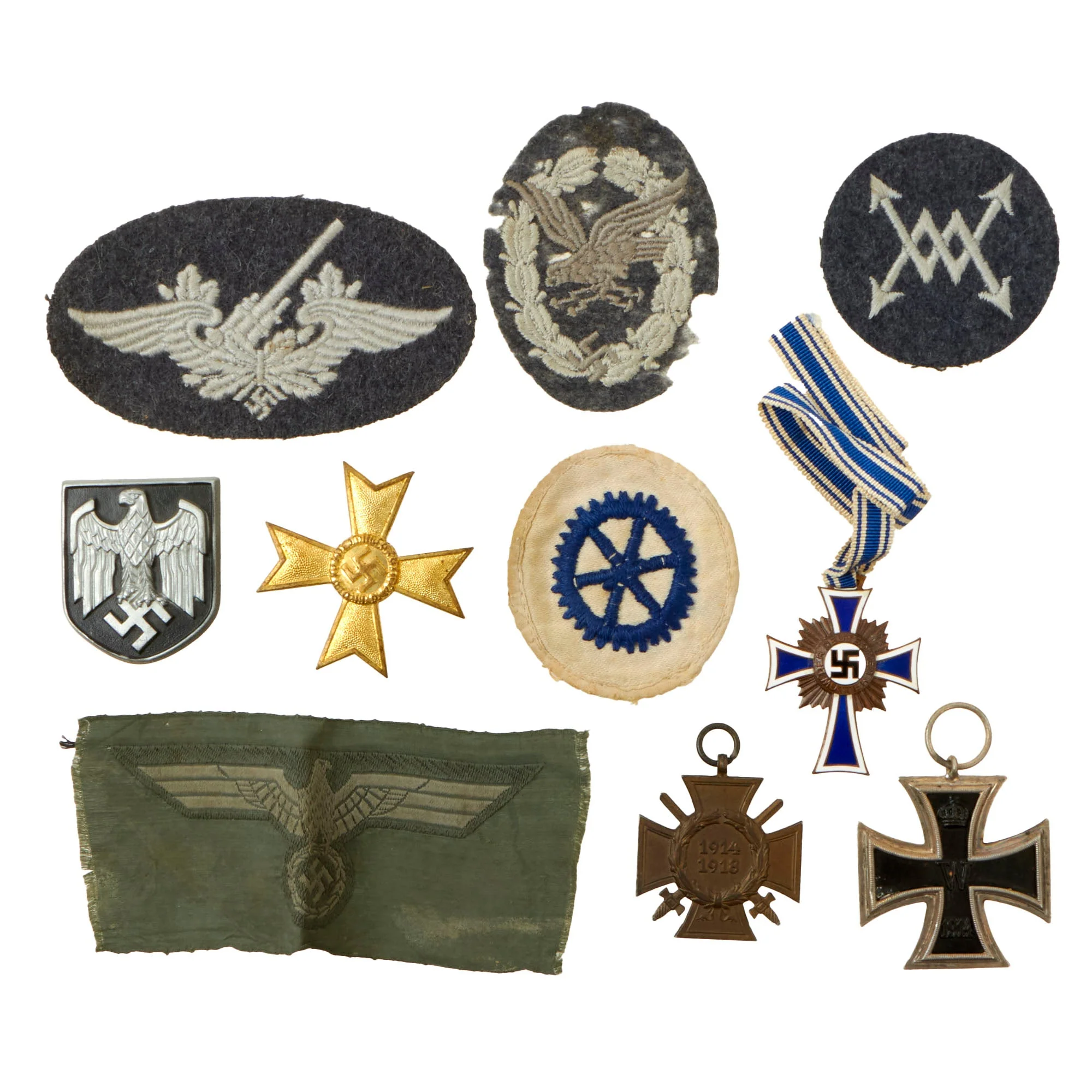
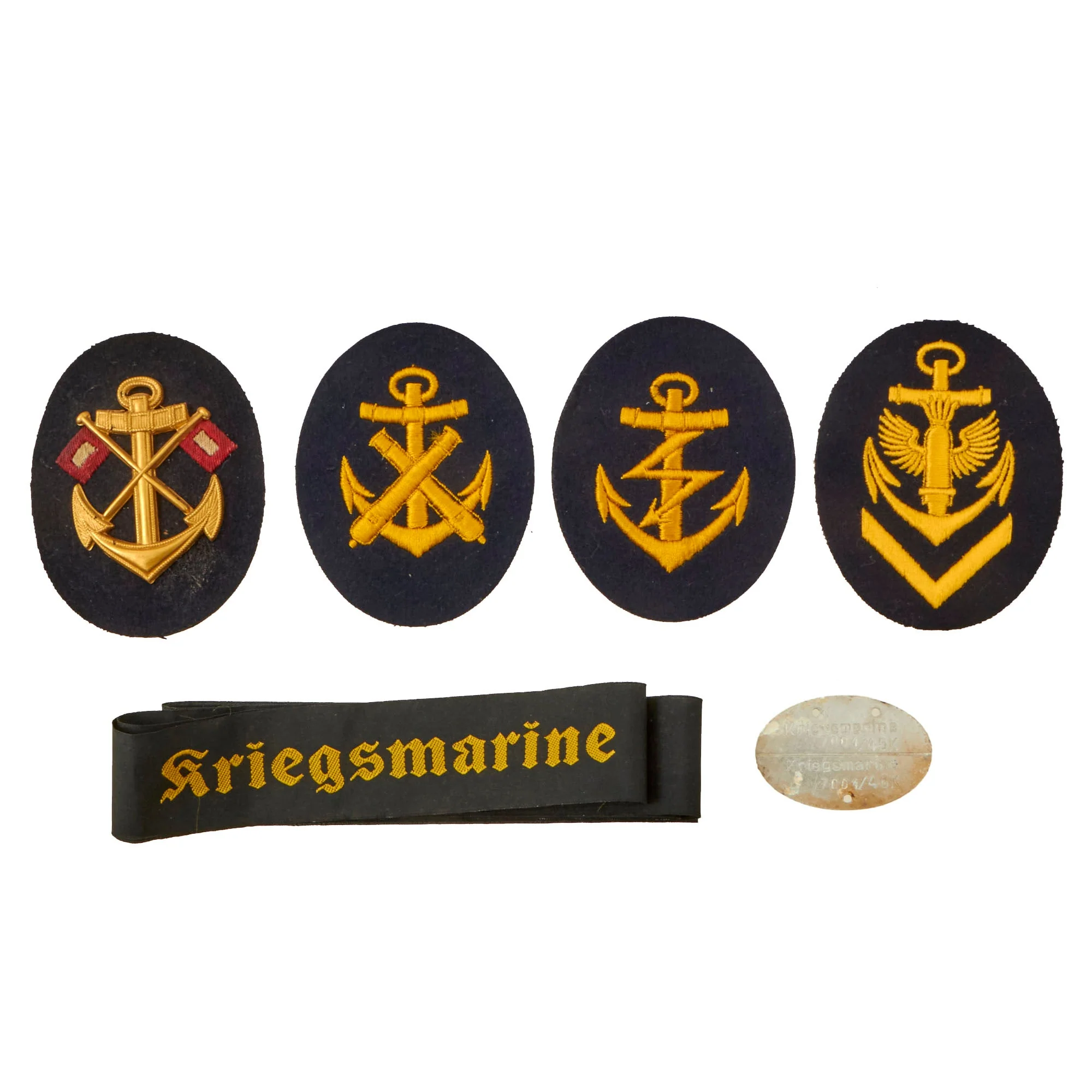
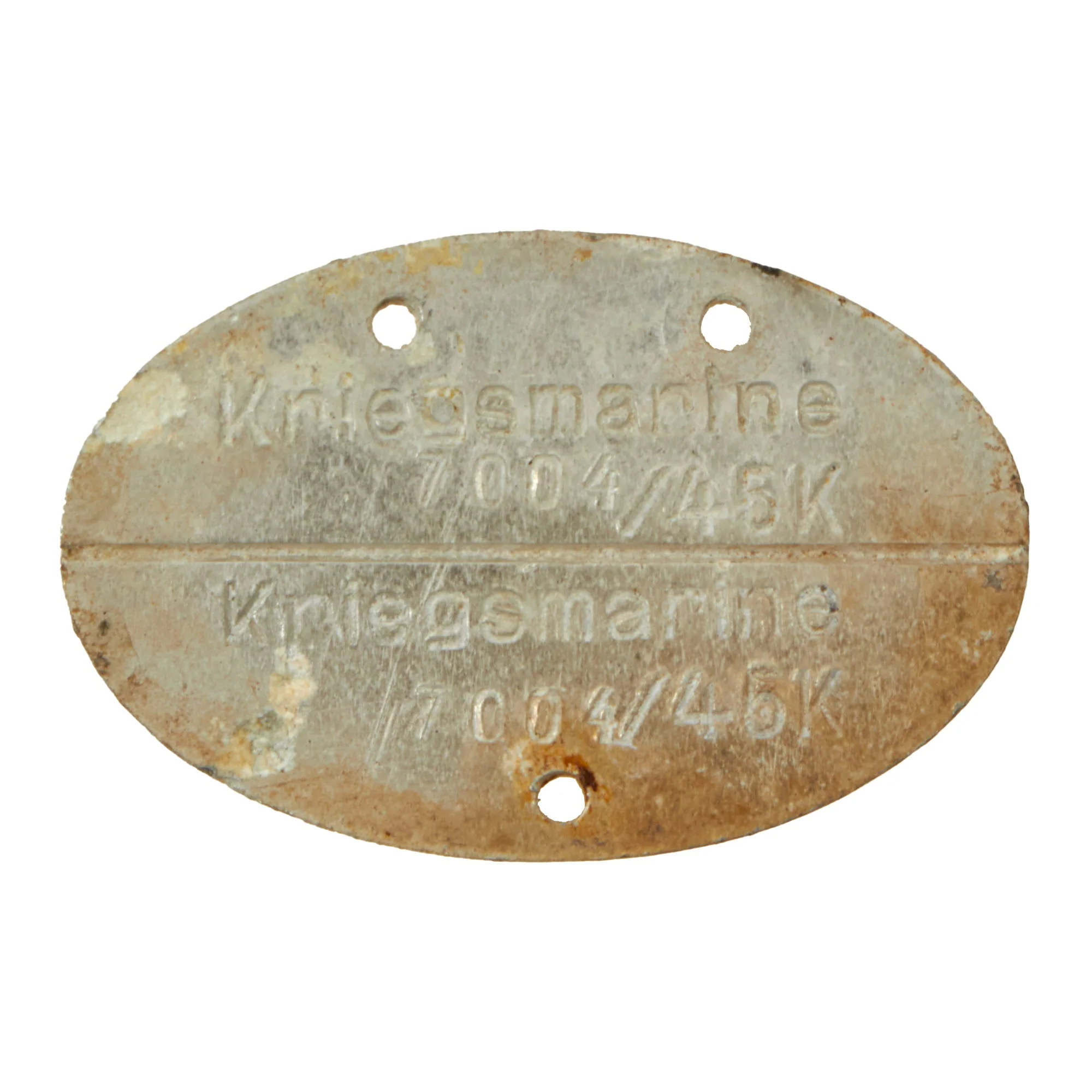
Original Items: Only One Set Available. This is a very nice collection of German WWI & WWII Awards and Insignia, which was brought back from the European theater by a USGI after the war was concluded. Many solders traded these on the way back, and would end up with a pocket full of various different collectible items, and this set represents the typical "haul" one might have come back with. It includes a nice WWI Iron Cross 1914 Second class, as well as awards and insignia from the WWII period.
This lovely set includes:
- One Imperial German WWI Iron Cross 1914 2nd Class Medal (Eisernes Kreuz II. Klasse 1918), missing ribbon. It is maker marked CD 800 on the ring, indicating it was made by Carl Dillenius of Pforzheim with .800 pure silver. There is some age to the paint and oxidation, but the silver is still present, with a lovely tarnished patina. The paint on the central cross is relatively well retained.
- One Imperial German WWI 1915 German Cross Enamel Pin. This shows the "Iron Cross" on the front with a 1915 date.
- One Pre-WWII German WWI Honor Cross of the World War 1914/1918 (Hindenburg Cross) Medal with Swords (for Combat) with ribbon. This example is in very good condition, and the ribbon has a lovely age toned look, with just a bit of fraying. It is marked on the back with R.V. 61 / PFORZHEIM.
- One German Pre-WWII Soldatenbund Aluminum Cap Eagle Insignia. The Soldatenbund (Registered Soldier’s League) was an early Veteran's association founded in 1936, which proved to be very short lived. The insignia features a Reichsadler National Eagle surmounted by crossed swords and an Iron Cross
- One German WWII Reichsbahn BeVO Embroidered Sleeve Eagle. It has the correct left-facing eagle in gold yellow thread on a black backing, and has not been installed on a uniform.
- One German WWII Kriegsmarine BeVO Embroidered Breast Eagle. It has the correct gold yellow thread on a navy blue backing, and has not been installed on a uniform, though it does show some damage staining and age.
- One German WWII Heer Army Stabsgefreiter Sleeve Chevrons with rank pip. These are the correct silver tresse and have a green HBT background. Intended for the late war HBT Drilljacke style tunic, the a Stabsgefreiter was equivalent to a U.S. Army Administrative corporal, and often handled quartermaster duties.
- One German WWII Heer Army Machine Embroidered Cap Insignia Trapezoid. Made from olive fabric with gray threading, these combined Wehrmachtadler Eagle and National Color cockade type insignia was used later in the war on Field Caps.
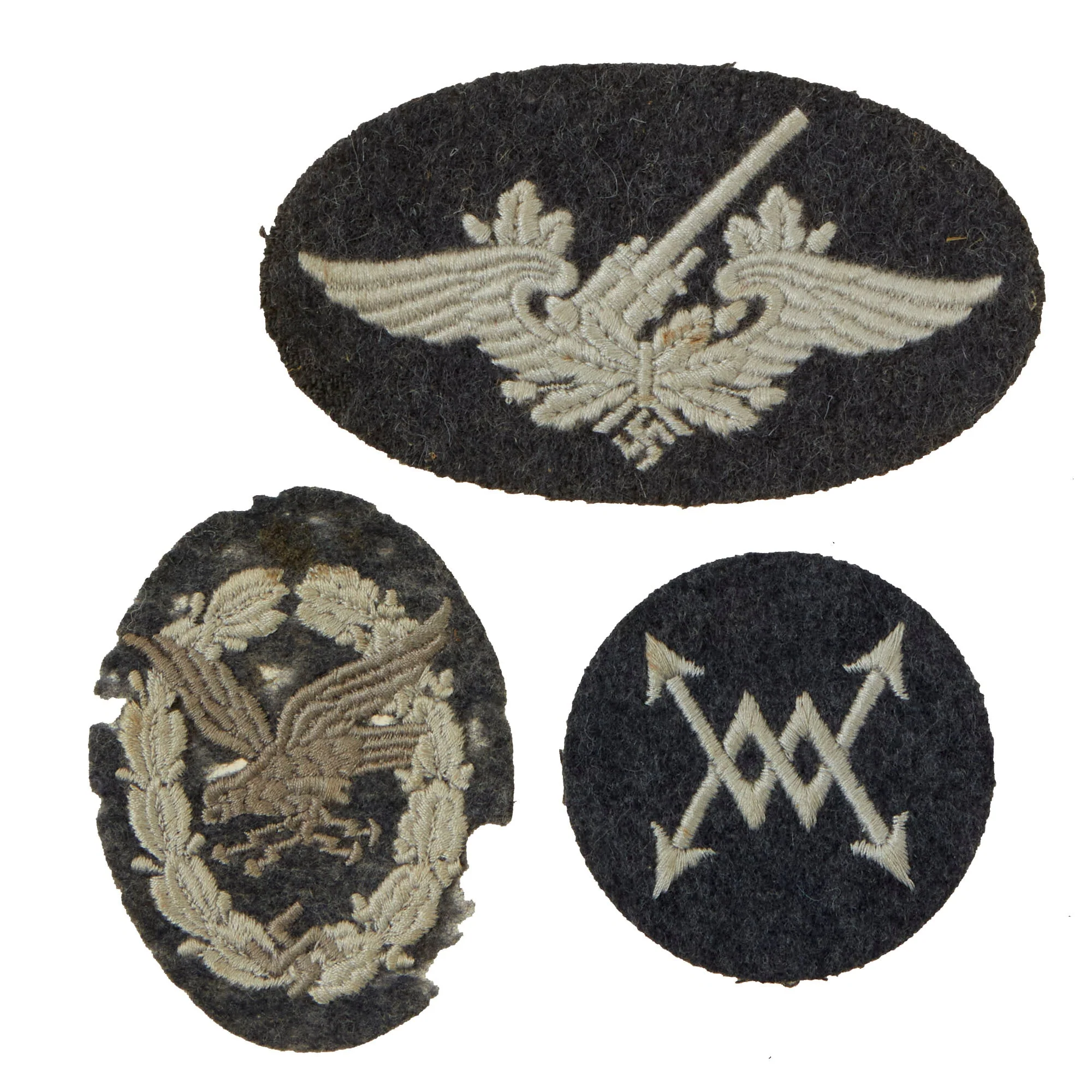
- One German WWII Luftwaffe Air Force Flight Technical Personnel Tätigkeitsabzeichen (Trade Badge). The oval badge shows a 5 cylinder radial engine flanked by stylized wings, all in silvery/grey rayon threads on a Luftwaffe fliegerblau background.
- One German WWII REICHSPARTEITAG 1935 Tinnie. This is for one of the annual Reichs Party Congress or Nuremberg Rallies.
A wonderful totally genuine grouping perfect for the German Medal and Insignia collector. Ready to research and display!
More information on some of the awards in this set:
German WWI Prussian Iron Cross 2nd Class:
Established by Frederick William in 1813 for gallantry in action, the decoration was revived several times for later conflicts. The bulk of the issues are divided into 1st and 2nd class versions, but a rare and superior 'Grand Cross' was also awarded for successful field commanders. During WW1 the lower decoration was freely awarded with 5½ million second class types issued. Originally, the Iron Cross was an award of the Kingdom of Prussia, however given Prussia's pre-eminent place in the German Empire formed in 1871, it became an award for all of Germany.
The basic design of the WW1 crosses is a central Tatzenkreuz (cross pattée) struck from iron and mounted in a silver frame which has a raised crenulated decorative border. The obverse of the cross bears the date 1914 under a crowned 'W' monogram. Reverse bears an oak leaf cluster with the date of the decoration’s institution, 1813 underneath - the crowned initials of Frederick William are in the top arm above the oak leaf cluster. Suspension for second-class types is by means of a ring, and frequently this ring bears a maker's stamp.
Please examine the edge seam for authentication, which is not present on reproductions. Iron crosses were commonly constructed from an iron core sandwiched in a surrounding two part silver frame, normally the seam of these two silver parts is visible around the edge of the cross as is seen on this fine example.
Hindenburg Cross with Crossed Swords (for combat):
The Honor Cross of the World War 1914/1918 (German: Das Ehrenkreuz des Weltkriegs 1914/1918), commonly, but incorrectly, known as the Hindenburg Cross was established by Field Marshal Paul von Hindenburg, President of the German Republic, by an order dated 13 July 1934, to commemorate the distinguished deeds of the German people during the First World War. This was Germany's first official service medal for soldiers of Imperial Germany who had taken part in the war, and where they had since died it was also awarded to their surviving next-of-kin. Shortly after its issuance, the government of NSDAP Germany declared the award as the only official service decoration of the First World War and further forbid the continued wearing of German Free Corps awards on any military or paramilitary uniform of a state or NSDAP Party organization.

Details & Craftsmanship
Every detail has been carefully considered to bring you the perfect product.

Details & Craftsmanship
Every detail has been carefully considered to bring you the perfect product.

Details & Craftsmanship
Every detail has been carefully considered to bring you the perfect product.

Details & Craftsmanship
Every detail has been carefully considered to bring you the perfect product.

Details & Craftsmanship
Every detail has been carefully considered to bring you the perfect product.

Details & Craftsmanship
Every detail has been carefully considered to bring you the perfect product.

Details & Craftsmanship
Every detail has been carefully considered to bring you the perfect product.

Details & Craftsmanship
Every detail has been carefully considered to bring you the perfect product.
Description
Original Items: Only One Set Available. This is a very nice collection of German WWI & WWII Awards and Insignia, which was brought back from the European theater by a USGI after the war was concluded. Many solders traded these on the way back, and would end up with a pocket full of various different collectible items, and this set represents the typical "haul" one might have come back with. It includes a nice WWI Iron Cross 1914 Second class, as well as awards and insignia from the WWII period.
This lovely set includes:
- One Imperial German WWI Iron Cross 1914 2nd Class Medal (Eisernes Kreuz II. Klasse 1918), missing ribbon. It is maker marked CD 800 on the ring, indicating it was made by Carl Dillenius of Pforzheim with .800 pure silver. There is some age to the paint and oxidation, but the silver is still present, with a lovely tarnished patina. The paint on the central cross is relatively well retained.
- One Imperial German WWI 1915 German Cross Enamel Pin. This shows the "Iron Cross" on the front with a 1915 date.
- One Pre-WWII German WWI Honor Cross of the World War 1914/1918 (Hindenburg Cross) Medal with Swords (for Combat) with ribbon. This example is in very good condition, and the ribbon has a lovely age toned look, with just a bit of fraying. It is marked on the back with R.V. 61 / PFORZHEIM.
- One German Pre-WWII Soldatenbund Aluminum Cap Eagle Insignia. The Soldatenbund (Registered Soldier’s League) was an early Veteran's association founded in 1936, which proved to be very short lived. The insignia features a Reichsadler National Eagle surmounted by crossed swords and an Iron Cross
- One German WWII Reichsbahn BeVO Embroidered Sleeve Eagle. It has the correct left-facing eagle in gold yellow thread on a black backing, and has not been installed on a uniform.
- One German WWII Kriegsmarine BeVO Embroidered Breast Eagle. It has the correct gold yellow thread on a navy blue backing, and has not been installed on a uniform, though it does show some damage staining and age.
- One German WWII Heer Army Stabsgefreiter Sleeve Chevrons with rank pip. These are the correct silver tresse and have a green HBT background. Intended for the late war HBT Drilljacke style tunic, the a Stabsgefreiter was equivalent to a U.S. Army Administrative corporal, and often handled quartermaster duties.
- One German WWII Heer Army Machine Embroidered Cap Insignia Trapezoid. Made from olive fabric with gray threading, these combined Wehrmachtadler Eagle and National Color cockade type insignia was used later in the war on Field Caps.
- One German WWII Luftwaffe Air Force Flight Technical Personnel Tätigkeitsabzeichen (Trade Badge). The oval badge shows a 5 cylinder radial engine flanked by stylized wings, all in silvery/grey rayon threads on a Luftwaffe fliegerblau background.
- One German WWII REICHSPARTEITAG 1935 Tinnie. This is for one of the annual Reichs Party Congress or Nuremberg Rallies.
A wonderful totally genuine grouping perfect for the German Medal and Insignia collector. Ready to research and display!
More information on some of the awards in this set:
German WWI Prussian Iron Cross 2nd Class:
Established by Frederick William in 1813 for gallantry in action, the decoration was revived several times for later conflicts. The bulk of the issues are divided into 1st and 2nd class versions, but a rare and superior 'Grand Cross' was also awarded for successful field commanders. During WW1 the lower decoration was freely awarded with 5½ million second class types issued. Originally, the Iron Cross was an award of the Kingdom of Prussia, however given Prussia's pre-eminent place in the German Empire formed in 1871, it became an award for all of Germany.
The basic design of the WW1 crosses is a central Tatzenkreuz (cross pattée) struck from iron and mounted in a silver frame which has a raised crenulated decorative border. The obverse of the cross bears the date 1914 under a crowned 'W' monogram. Reverse bears an oak leaf cluster with the date of the decoration’s institution, 1813 underneath - the crowned initials of Frederick William are in the top arm above the oak leaf cluster. Suspension for second-class types is by means of a ring, and frequently this ring bears a maker's stamp.
Please examine the edge seam for authentication, which is not present on reproductions. Iron crosses were commonly constructed from an iron core sandwiched in a surrounding two part silver frame, normally the seam of these two silver parts is visible around the edge of the cross as is seen on this fine example.
Hindenburg Cross with Crossed Swords (for combat):
The Honor Cross of the World War 1914/1918 (German: Das Ehrenkreuz des Weltkriegs 1914/1918), commonly, but incorrectly, known as the Hindenburg Cross was established by Field Marshal Paul von Hindenburg, President of the German Republic, by an order dated 13 July 1934, to commemorate the distinguished deeds of the German people during the First World War. This was Germany's first official service medal for soldiers of Imperial Germany who had taken part in the war, and where they had since died it was also awarded to their surviving next-of-kin. Shortly after its issuance, the government of NSDAP Germany declared the award as the only official service decoration of the First World War and further forbid the continued wearing of German Free Corps awards on any military or paramilitary uniform of a state or NSDAP Party organization.