
The Story
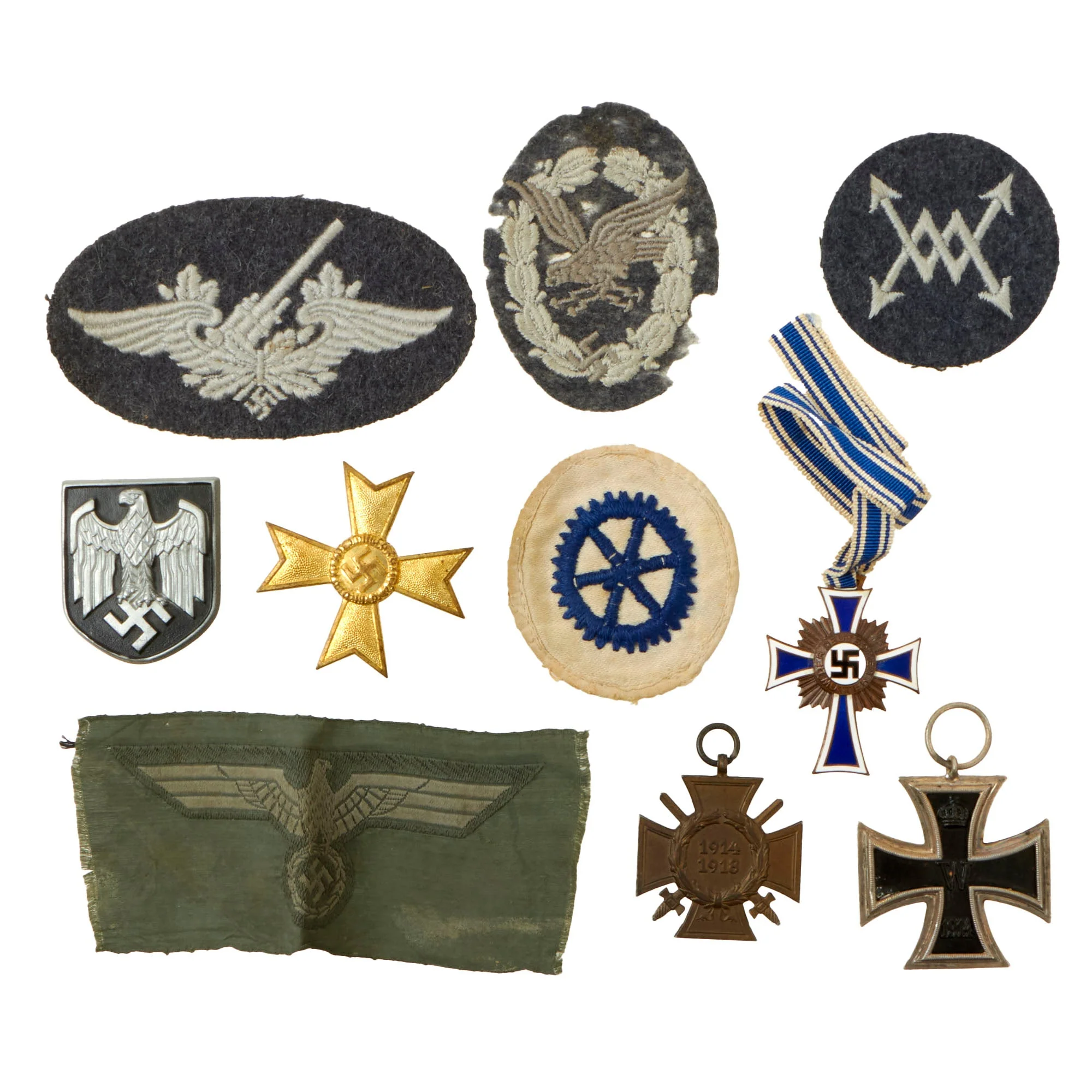
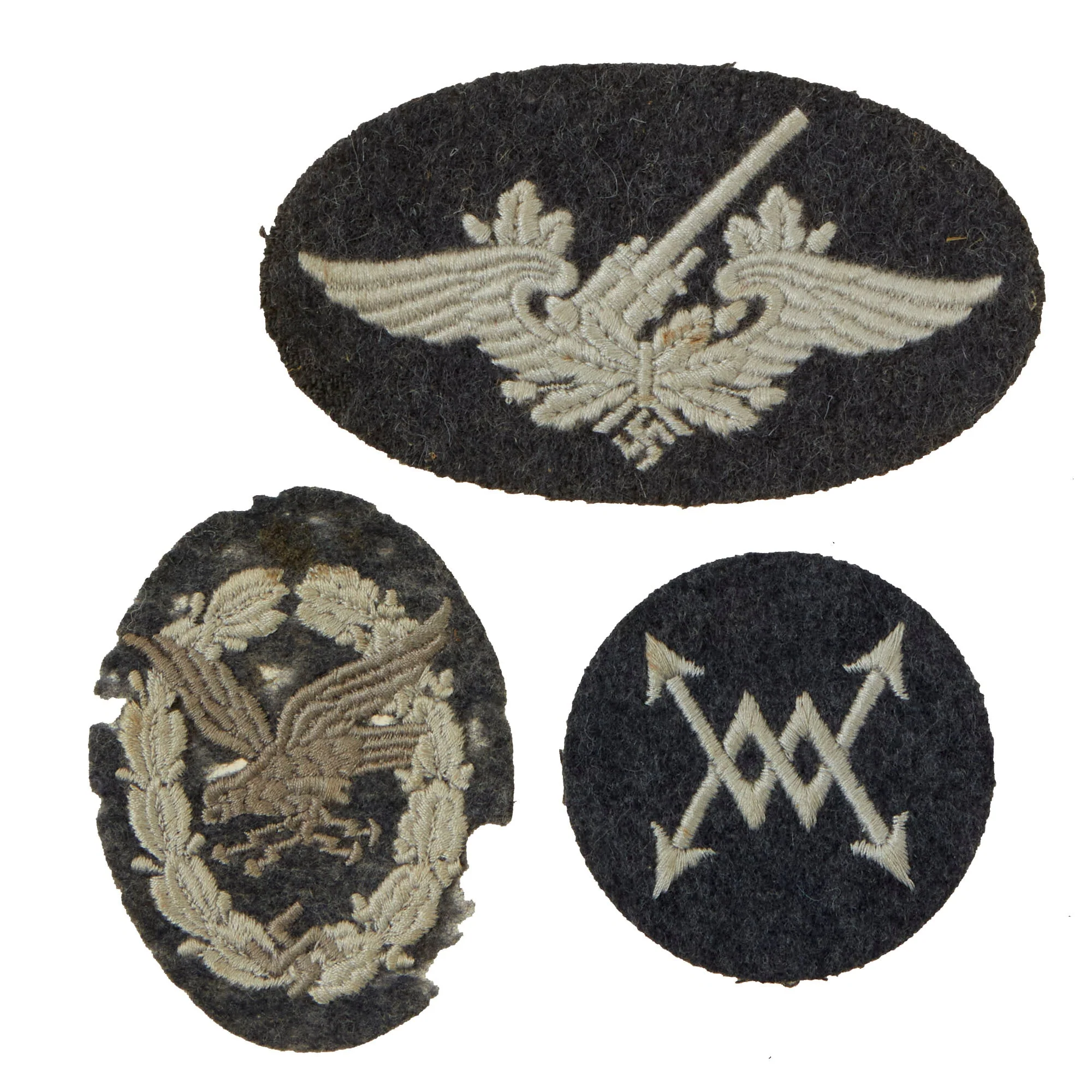
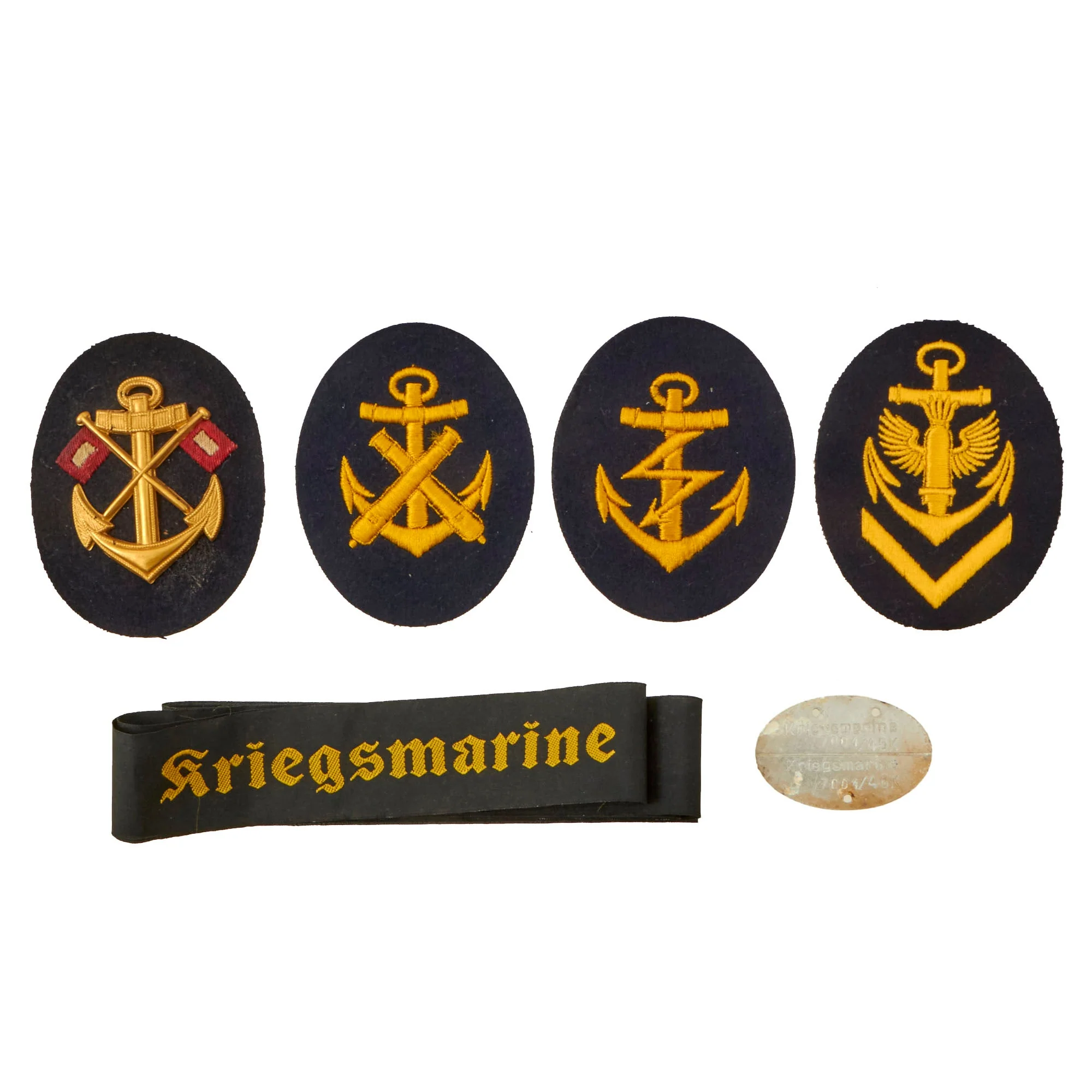
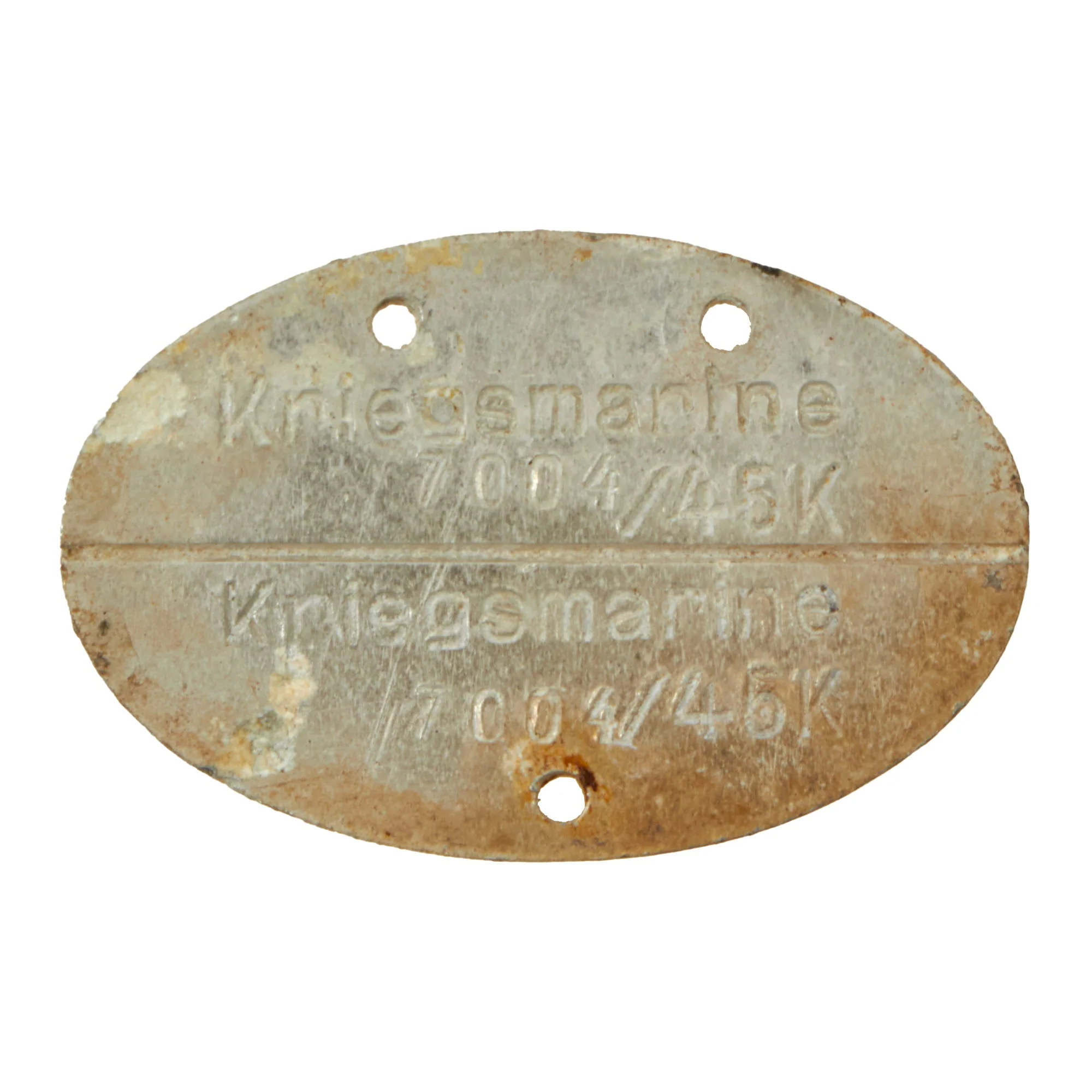
Original Items: Only One Set Available. This is a very nice collection of German WWI & WWII Awards and other items, which was brought back from the European theater by a USGI after the war was concluded. Many soldiers traded these on the way back, and would end up with a pocket full of various different collectible items, and this set represents the typical "haul" one might have come back with. It includes four different WWII awards, as well as some WWI era awards, combined with some insignia and tinnie event badges.
This lovely set includes:
- One German WWI Era 1914 1918 Blank die Wehr Rein die Ehr Kyffhäuserbund Veteran's Medal, without ribbon. This is one of several veteran's medals issued for participation in WWI.
- One German WWII Eastern Front Medal (Ostmedaille), without ribbon. The medal is in very nice patinated condition, with the silvering on the border and helmet now showing oxidation, giving it a lovely aged look. There is no maker marking on the hanger ring, and the original ribbon is not included.
- One German WWII Western Wall / Siegfried Line Metal with Ribbon. The award has a lovely patina on the brass medal, and the ribbon has a great lightly stained look, and has a staple put through the top to secure it. Definitely looks to have seen a good amount of service.
- One German WWII Kriegsmarine Navy Navy Coastal Artillery Badge. The badge is not maker marked on the back, and does show wear from service. The original pinback, broke off, and was replaced by a soldered on pin at the top.
- One German Pre WWII 1933 Rettungsmedaille am Band (Life Saving Medal on Ribbon). These were awarded for a life saving rescue act while using his/her own life, not in the course of their normal duties. This replaced the various "lifesaving" medals issued by the various states.
- One German WWII Nationalsozialistische Frauenschaft (National Socialist Women’s-organization) badge, which is a triangle shape with NAT. SOZ. FRAUENSCHAFT at the top, and letters G, H, and L surrounding the Swas for “GLAUBE, HOFFNUNG, LIEBE” (“FAITH, HOPE, LOVE”). It shows a bit of damage, and is missing some of the enamel.
- One German WWII RAD Labor Corps cap insignia.
- One German WWII NSDAP Visor Cap Tri-Color Cockade. These are distinctiev, with a ribbed enamel red surround and suspended swas in the center.
- One German WWII NSDAP Uniform Gold Reichsadler Button. It is marked on the back with (RZM) M5/290indicating manufacture by Lenkwerk Brüder Schneider AG, Wien (Vienna).
- One German WWII DAF Labor Front Stickpin.
- One German Pre WWII 1934 TAG DER ARBEIT labor day tinnie event badge.
There are four more tinnies that were were unfortunately unable to identify, and leave these as a lovely research project for the future owner.
A wonderful totally genuine grouping perfect for the German Medal and Insignia collector. Ready to research and display!
More information on some of the awards in this set:
"Tinnies" (Veranstaltungsabzeichen - Event Badges) are small commemorative pins or medals, acquired when one attended a specific event held in Germany. They were often made of thin stamped metal, bakelite, or even pressed paper. Many of these were given out as part of the WHW (Winterhilfswerk - Winter Help Work) Organization, which often involved Germans traveling quite a bit to help out the war effort. Many others were given for the annual Reichsparteitag (Reich Party Congress), otherwise known as the Nuremberg Rallies.
The Eastern Medal (Ostmedaille), officially the Winter Battle in the East 1941–42 Medal (Medaille Winterschlacht im Osten 1941/42), was a military award of the Wehrmacht which was created by ordinance of Adolf H on 26 May 1942.
The Eastern Medal was awarded to any member of the Wehrmacht and Waffen-SS "in recognition of experience in the struggle against the Bolshevik enemy and the Russian winter within the period from 15 November 1941 to 15 April 1942." It was also awarded posthumously to any service member who died in the line of duty within the Soviet Union. It was wryly called the Frozen Meat Medal or the "Order of the Frozen Flesh" (Gefrierfleischorden).
The West Wall Medal (Deutsches Schutzwall-Ehrenzeichen) was a decoration of NSDAP Germany. It was instituted on 2 August 1939 and was given to those who designed and built the fortifications on Germany's western borders, known as the Westwall or, in English, the Siegfried Line, between 15 June 1938 to 31 March 1939. On 13 November 1939 eligibility was extended to include servicemen of the Wehrmacht who served on the Westwall for at least ten weeks. In all 622,064 medals were awarded until 31 January 1941, when awards of the medal ceased. This early version was made of solid bronze. The back has the statement FÜR ARBEIT ZUM SCHUTZE DEUTSCHLANDS - "For Work to Protect Germany."
The Naval Artillery War Badge or War Badge for the Coastal Artillery (German: Kriegsabzeichen für die Marineartillerie) was a World War II German military decoration awarded to the crews of Kriegsmarine land-based marine artillery and anti-aircraft units. It was presented to personnel of coastal defense (Küstenartillerie) units, and anti-aircraft units. The award was instituted on 24 June 1941 by Grand Admiral Erich Raeder to reward the actions of both individuals and crew members. It was also awarded to those killed in action in said units.
The medal was designed by Otto Placzek of Berlin. It consists of an outer laurel wreath of oak leaves with the German Eagle at the top, displaying "down-swept" wings while clutching a swas (both gold in color). The central area featured a coastal artillery gun with the sea behind (in grey color). The early war version were made of bronze and later nickel. Inferior quality late-war versions were made of "pot or monkey metal". The medal was worn on the lower part of the left breast pocket of the naval service tunic.
Criteria for award
A crew could receive the award by achieving eight points:
- Two for downing an aircraft unassisted
- One for downing an aircraft assisted by another crew
- half a point for non-gun crew members, operating a searchlight, fire control, sound locator or radio operator for aiding in the downing of aircraft
The badge was issued in a single degree only.

Details & Craftsmanship
Every detail has been carefully considered to bring you the perfect product.

Details & Craftsmanship
Every detail has been carefully considered to bring you the perfect product.

Details & Craftsmanship
Every detail has been carefully considered to bring you the perfect product.

Details & Craftsmanship
Every detail has been carefully considered to bring you the perfect product.

Details & Craftsmanship
Every detail has been carefully considered to bring you the perfect product.

Details & Craftsmanship
Every detail has been carefully considered to bring you the perfect product.

Details & Craftsmanship
Every detail has been carefully considered to bring you the perfect product.

Details & Craftsmanship
Every detail has been carefully considered to bring you the perfect product.

Details & Craftsmanship
Every detail has been carefully considered to bring you the perfect product.

Details & Craftsmanship
Every detail has been carefully considered to bring you the perfect product.
Description
Original Items: Only One Set Available. This is a very nice collection of German WWI & WWII Awards and other items, which was brought back from the European theater by a USGI after the war was concluded. Many soldiers traded these on the way back, and would end up with a pocket full of various different collectible items, and this set represents the typical "haul" one might have come back with. It includes four different WWII awards, as well as some WWI era awards, combined with some insignia and tinnie event badges.
This lovely set includes:
- One German WWI Era 1914 1918 Blank die Wehr Rein die Ehr Kyffhäuserbund Veteran's Medal, without ribbon. This is one of several veteran's medals issued for participation in WWI.
- One German WWII Eastern Front Medal (Ostmedaille), without ribbon. The medal is in very nice patinated condition, with the silvering on the border and helmet now showing oxidation, giving it a lovely aged look. There is no maker marking on the hanger ring, and the original ribbon is not included.
- One German WWII Western Wall / Siegfried Line Metal with Ribbon. The award has a lovely patina on the brass medal, and the ribbon has a great lightly stained look, and has a staple put through the top to secure it. Definitely looks to have seen a good amount of service.
- One German WWII Kriegsmarine Navy Navy Coastal Artillery Badge. The badge is not maker marked on the back, and does show wear from service. The original pinback, broke off, and was replaced by a soldered on pin at the top.
- One German Pre WWII 1933 Rettungsmedaille am Band (Life Saving Medal on Ribbon). These were awarded for a life saving rescue act while using his/her own life, not in the course of their normal duties. This replaced the various "lifesaving" medals issued by the various states.
- One German WWII Nationalsozialistische Frauenschaft (National Socialist Women’s-organization) badge, which is a triangle shape with NAT. SOZ. FRAUENSCHAFT at the top, and letters G, H, and L surrounding the Swas for “GLAUBE, HOFFNUNG, LIEBE” (“FAITH, HOPE, LOVE”). It shows a bit of damage, and is missing some of the enamel.
- One German WWII RAD Labor Corps cap insignia.
- One German WWII NSDAP Visor Cap Tri-Color Cockade. These are distinctiev, with a ribbed enamel red surround and suspended swas in the center.
- One German WWII NSDAP Uniform Gold Reichsadler Button. It is marked on the back with (RZM) M5/290indicating manufacture by Lenkwerk Brüder Schneider AG, Wien (Vienna).
- One German WWII DAF Labor Front Stickpin.
- One German Pre WWII 1934 TAG DER ARBEIT labor day tinnie event badge.
There are four more tinnies that were were unfortunately unable to identify, and leave these as a lovely research project for the future owner.
A wonderful totally genuine grouping perfect for the German Medal and Insignia collector. Ready to research and display!
More information on some of the awards in this set:
"Tinnies" (Veranstaltungsabzeichen - Event Badges) are small commemorative pins or medals, acquired when one attended a specific event held in Germany. They were often made of thin stamped metal, bakelite, or even pressed paper. Many of these were given out as part of the WHW (Winterhilfswerk - Winter Help Work) Organization, which often involved Germans traveling quite a bit to help out the war effort. Many others were given for the annual Reichsparteitag (Reich Party Congress), otherwise known as the Nuremberg Rallies.
The Eastern Medal (Ostmedaille), officially the Winter Battle in the East 1941–42 Medal (Medaille Winterschlacht im Osten 1941/42), was a military award of the Wehrmacht which was created by ordinance of Adolf H on 26 May 1942.
The Eastern Medal was awarded to any member of the Wehrmacht and Waffen-SS "in recognition of experience in the struggle against the Bolshevik enemy and the Russian winter within the period from 15 November 1941 to 15 April 1942." It was also awarded posthumously to any service member who died in the line of duty within the Soviet Union. It was wryly called the Frozen Meat Medal or the "Order of the Frozen Flesh" (Gefrierfleischorden).
The West Wall Medal (Deutsches Schutzwall-Ehrenzeichen) was a decoration of NSDAP Germany. It was instituted on 2 August 1939 and was given to those who designed and built the fortifications on Germany's western borders, known as the Westwall or, in English, the Siegfried Line, between 15 June 1938 to 31 March 1939. On 13 November 1939 eligibility was extended to include servicemen of the Wehrmacht who served on the Westwall for at least ten weeks. In all 622,064 medals were awarded until 31 January 1941, when awards of the medal ceased. This early version was made of solid bronze. The back has the statement FÜR ARBEIT ZUM SCHUTZE DEUTSCHLANDS - "For Work to Protect Germany."
The Naval Artillery War Badge or War Badge for the Coastal Artillery (German: Kriegsabzeichen für die Marineartillerie) was a World War II German military decoration awarded to the crews of Kriegsmarine land-based marine artillery and anti-aircraft units. It was presented to personnel of coastal defense (Küstenartillerie) units, and anti-aircraft units. The award was instituted on 24 June 1941 by Grand Admiral Erich Raeder to reward the actions of both individuals and crew members. It was also awarded to those killed in action in said units.
The medal was designed by Otto Placzek of Berlin. It consists of an outer laurel wreath of oak leaves with the German Eagle at the top, displaying "down-swept" wings while clutching a swas (both gold in color). The central area featured a coastal artillery gun with the sea behind (in grey color). The early war version were made of bronze and later nickel. Inferior quality late-war versions were made of "pot or monkey metal". The medal was worn on the lower part of the left breast pocket of the naval service tunic.
Criteria for award
A crew could receive the award by achieving eight points:
- Two for downing an aircraft unassisted
- One for downing an aircraft assisted by another crew
- half a point for non-gun crew members, operating a searchlight, fire control, sound locator or radio operator for aiding in the downing of aircraft
The badge was issued in a single degree only.