
Original: $495.00
-70%$495.00
$148.50The Story
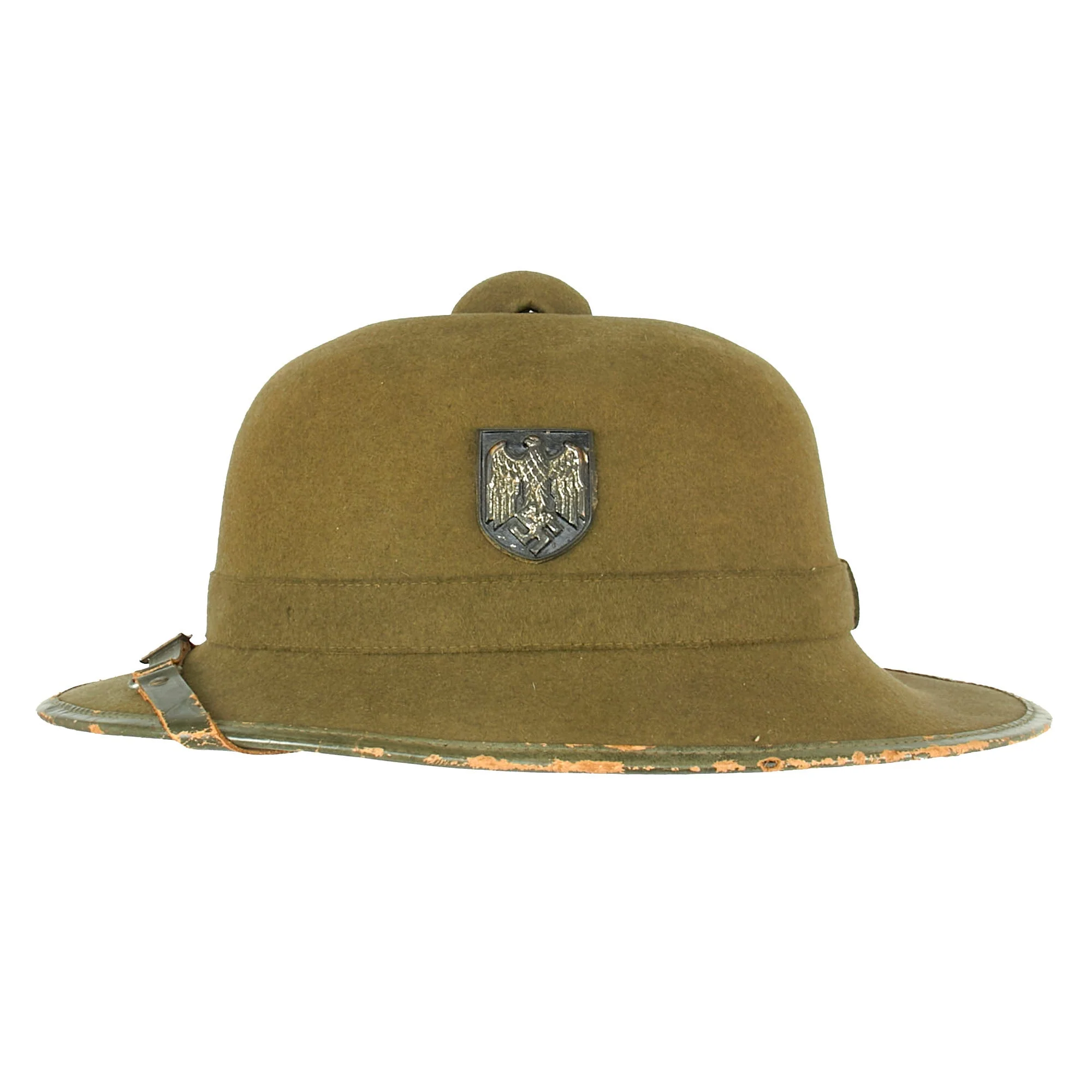
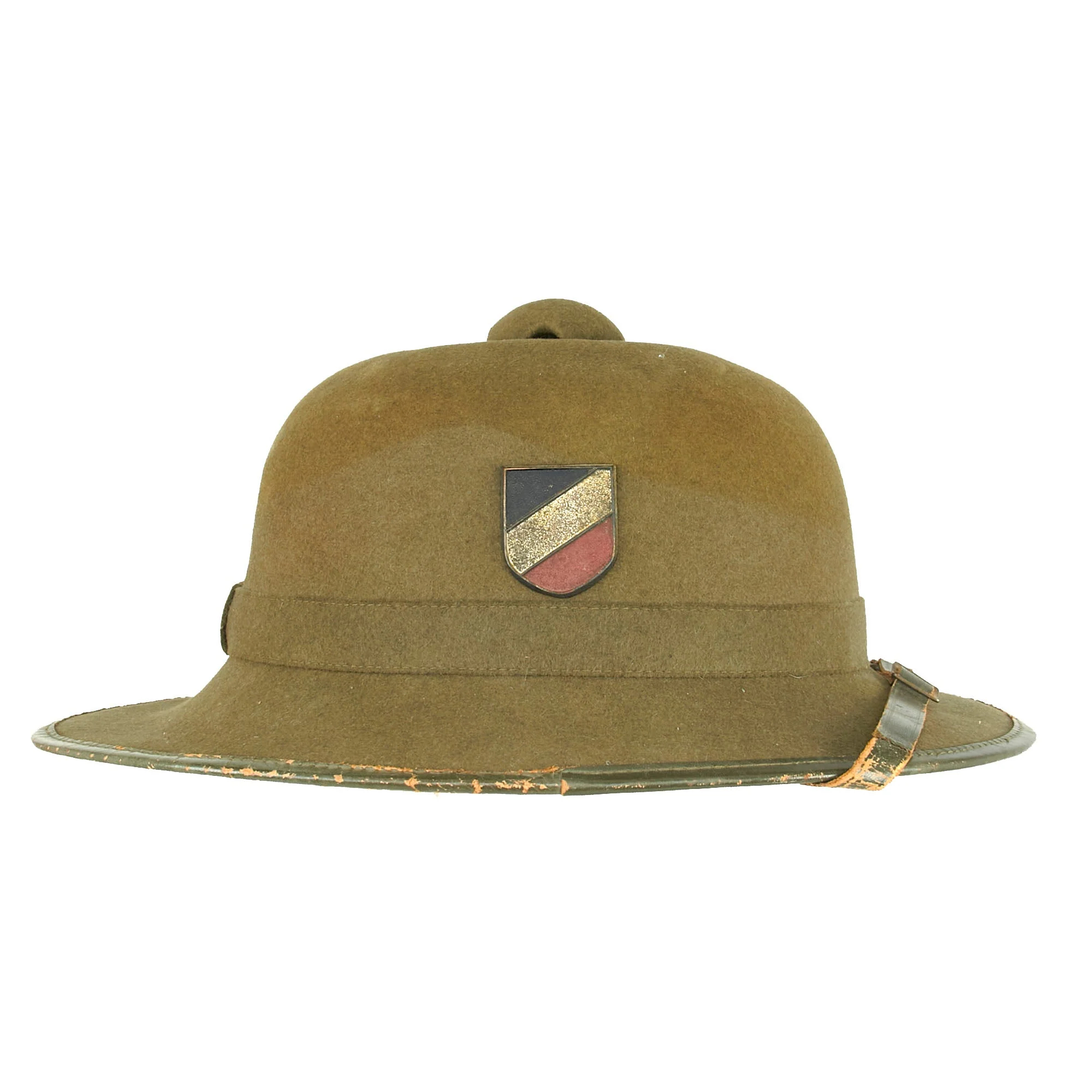
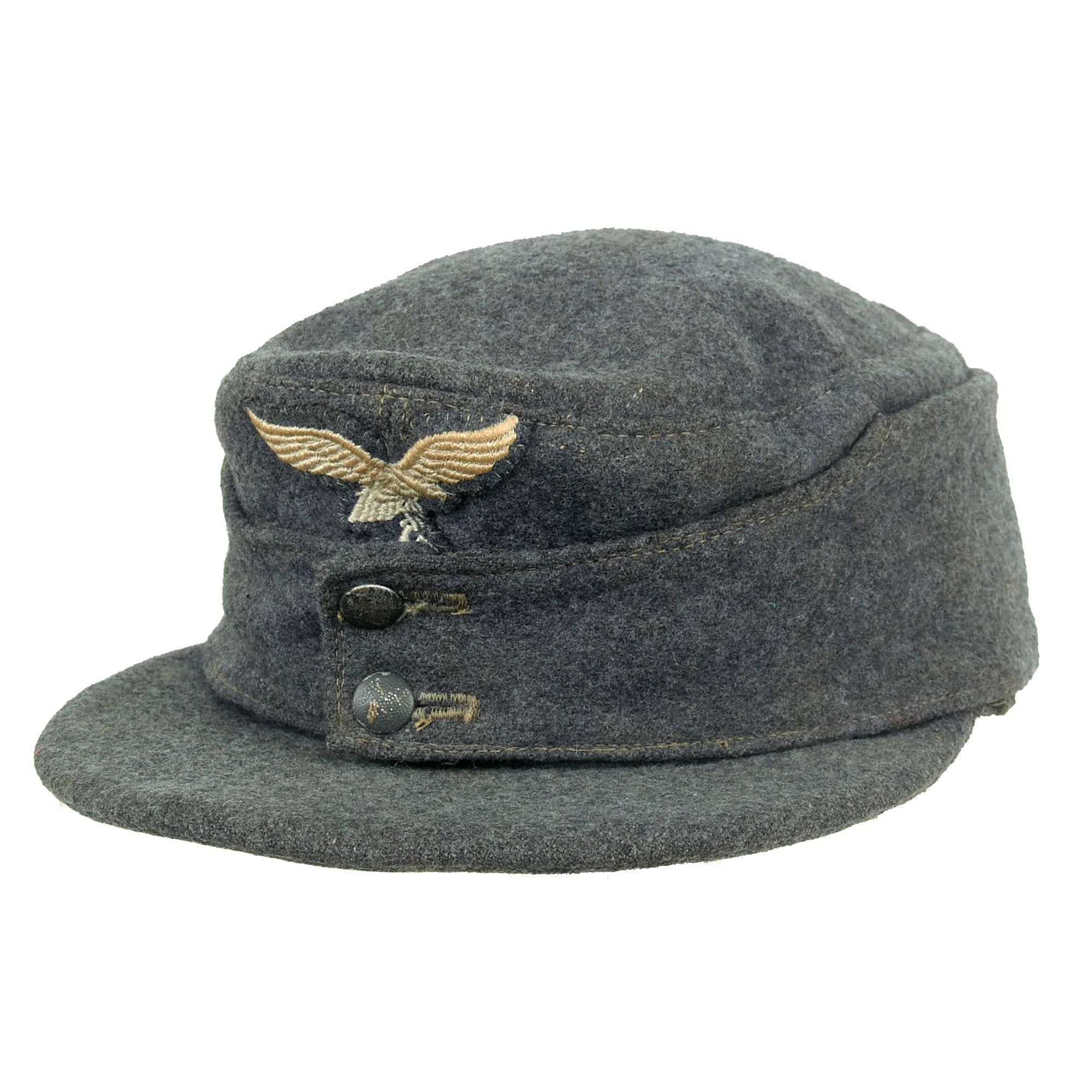
Original Item: Only One Available. After the catastrophic winter of 1941-42 on the Eastern Front, the German military rapidly designed improved cold weather clothing. By the Fall of 1942, a variety of winter fur lined caps (Pelzmütze or Winterfellmütze) had been introduced. There were no standardized "model numbers", but this version is a commonly encountered pattern. It has a fieldgray wool body, which is lined with rayon or cotton fabric, and a visor and fold down ear flaps backed with rabbit fur.
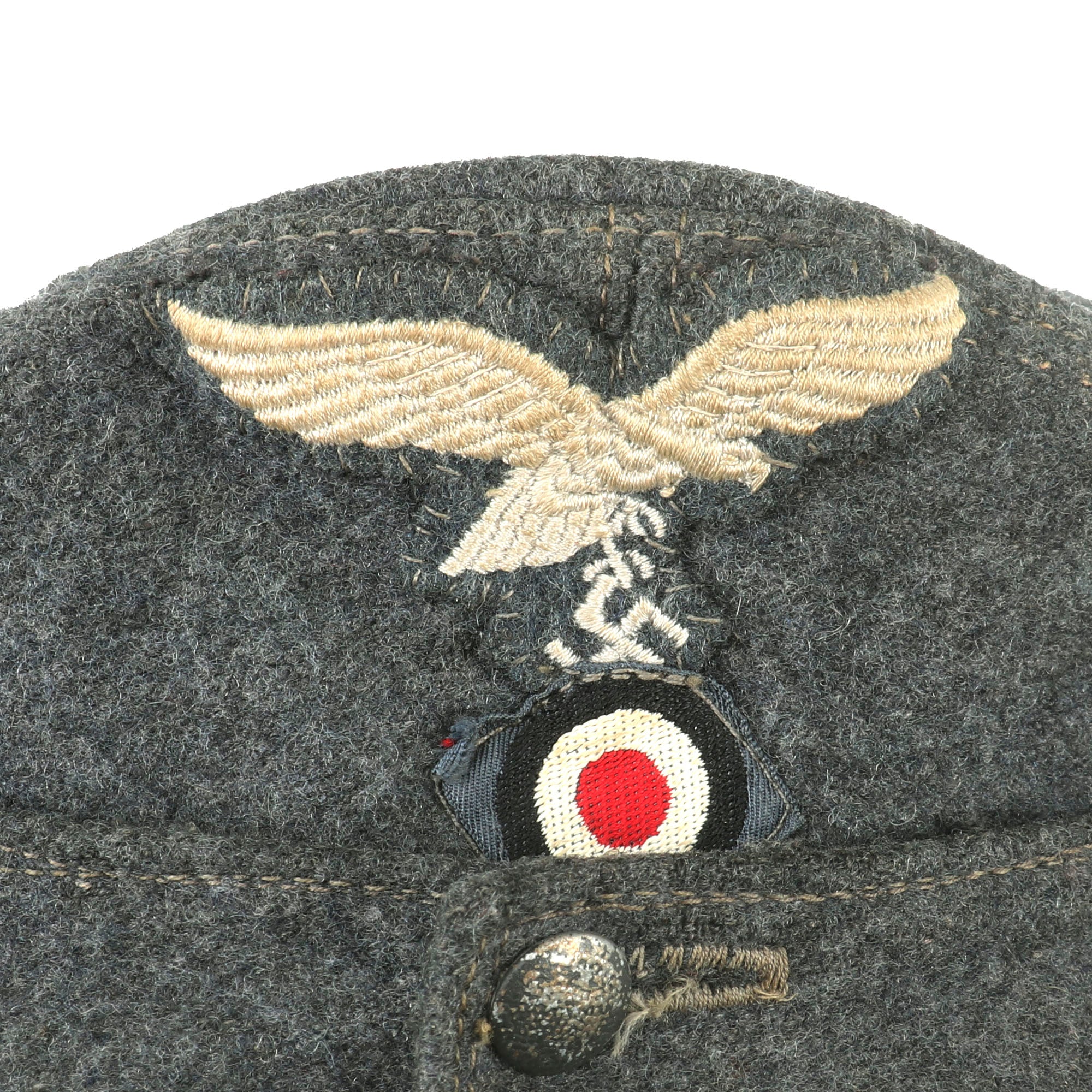
Many soldiers pinned or sewed insignia to it as is seen here. Most often encountered are the metal visor cap badges - the Heer Wehrmachtadler Eagle (as seen on this example) or the SS skull. The flaps are usually held in the "up" (open) position by a single button on the right flap, which fits into a loop on the left flap, both of which are actually still intact, a real rarity! The flaps can be tied under the wearer's chin via the attached cloth ties, which are also fully intact.
This fine example is offered in excellent condition, with virtually all of the fur intact, and the rayon cotton blend outer lining in great shape. The interior rayon cotton blend lining is clean and undamaged. Unlike most we see, this one is stamped with an RBNr number, size, and date:
1943
RBNr. 1/0675/0252
?
55
These have become very hard to find on the market today and even decent reproductions sell for hundreds of dollars. An excellent example, ready to add to your collection and display!
Reichsbetriebsnummer or RB number (also represented as RB Nr or Rbnr). Before the war, the Germans set up a system for registering and recording the factory information, the Reichsbetriebskartei. This was to help enable machine tabulation of facts and figures. It was from this that the Reichsbetriebsnummer came into being. The Reichsministerium für Rüstung und Kriegsproduktion (Ministry for Armaments and War Production) files survive today in the Bundesarchiv, however, these are only fragmentary. There is a holding file from the working group created by the Office of Machine Reporting in the Armament Office of the Reich Ministry for Armaments and War Production - their main focus was the operations of the industry group for which an economic interest was Armour production. This index provides information on the most important data of the companies covered by it, production profile, operating area, number of employees and the responsible operator.
As a prerequisite for the intended use of the punch-card method in the armaments industry, it was this system which gave rise to the Rbnr. The operating numbers were assigned by the competent local district offices of Machine reporting. (Bezirksstellen des Maschinellen Berichtswesens.) The index is in the form of index cards that are accessible numerically (approximately 14 meters of index cards!). Access to this register is only possible through the naming of this company, stating the place of production. The Reichsministerium für Rüstung und Kriegsproduktion files have multiple entries on the introduction of the factory and also the lot no.
The Rbnr code was used from 1943 onwards and replaced the makers name and address (or company logo) on government contract uniforms, caps and field equipment and knives. It is either rubber ink stamped on cloth or die stamped onto leather & metal items. It has been written countless times that this numeric code system was introduced as a security measure to help mask production locations. This was not the case but it was perhaps, a helpful by- product of the system. It is not unknown to find the Rbnr together with the maker’s info. Had it been a security measure, clearly this practise would have been banned.
So what was the Rbnr? It was a nine digit number and was normally represented thus: RB Nr: 0/000/0000.
The first prefix number could range from 0 through to 9. This number determined the membership of the various groups in the realm of Trade and Industry (Reichsgruppenleitzahl)
• 0 Industry
• 1 Crafts
• 2 Commercial wholesale trading companies
• 3 Banking
• 4 Insurance Companies
• 5 Energy (Electrical companies and such)
• 6 Tourism (Including Hotels, Wine and Mineral Water companies)
• 7 Traffic
• 8 Food Industry
• 9 Not otherwise mentioned groups

Details & Craftsmanship
Every detail has been carefully considered to bring you the perfect product.

Details & Craftsmanship
Every detail has been carefully considered to bring you the perfect product.

Details & Craftsmanship
Every detail has been carefully considered to bring you the perfect product.

Details & Craftsmanship
Every detail has been carefully considered to bring you the perfect product.

Details & Craftsmanship
Every detail has been carefully considered to bring you the perfect product.

Details & Craftsmanship
Every detail has been carefully considered to bring you the perfect product.

Details & Craftsmanship
Every detail has been carefully considered to bring you the perfect product.

Details & Craftsmanship
Every detail has been carefully considered to bring you the perfect product.

Details & Craftsmanship
Every detail has been carefully considered to bring you the perfect product.

Details & Craftsmanship
Every detail has been carefully considered to bring you the perfect product.

Details & Craftsmanship
Every detail has been carefully considered to bring you the perfect product.

Details & Craftsmanship
Every detail has been carefully considered to bring you the perfect product.

Details & Craftsmanship
Every detail has been carefully considered to bring you the perfect product.

Details & Craftsmanship
Every detail has been carefully considered to bring you the perfect product.
Description
Original Item: Only One Available. After the catastrophic winter of 1941-42 on the Eastern Front, the German military rapidly designed improved cold weather clothing. By the Fall of 1942, a variety of winter fur lined caps (Pelzmütze or Winterfellmütze) had been introduced. There were no standardized "model numbers", but this version is a commonly encountered pattern. It has a fieldgray wool body, which is lined with rayon or cotton fabric, and a visor and fold down ear flaps backed with rabbit fur.
Many soldiers pinned or sewed insignia to it as is seen here. Most often encountered are the metal visor cap badges - the Heer Wehrmachtadler Eagle (as seen on this example) or the SS skull. The flaps are usually held in the "up" (open) position by a single button on the right flap, which fits into a loop on the left flap, both of which are actually still intact, a real rarity! The flaps can be tied under the wearer's chin via the attached cloth ties, which are also fully intact.
This fine example is offered in excellent condition, with virtually all of the fur intact, and the rayon cotton blend outer lining in great shape. The interior rayon cotton blend lining is clean and undamaged. Unlike most we see, this one is stamped with an RBNr number, size, and date:
1943
RBNr. 1/0675/0252
?
55
These have become very hard to find on the market today and even decent reproductions sell for hundreds of dollars. An excellent example, ready to add to your collection and display!
Reichsbetriebsnummer or RB number (also represented as RB Nr or Rbnr). Before the war, the Germans set up a system for registering and recording the factory information, the Reichsbetriebskartei. This was to help enable machine tabulation of facts and figures. It was from this that the Reichsbetriebsnummer came into being. The Reichsministerium für Rüstung und Kriegsproduktion (Ministry for Armaments and War Production) files survive today in the Bundesarchiv, however, these are only fragmentary. There is a holding file from the working group created by the Office of Machine Reporting in the Armament Office of the Reich Ministry for Armaments and War Production - their main focus was the operations of the industry group for which an economic interest was Armour production. This index provides information on the most important data of the companies covered by it, production profile, operating area, number of employees and the responsible operator.
As a prerequisite for the intended use of the punch-card method in the armaments industry, it was this system which gave rise to the Rbnr. The operating numbers were assigned by the competent local district offices of Machine reporting. (Bezirksstellen des Maschinellen Berichtswesens.) The index is in the form of index cards that are accessible numerically (approximately 14 meters of index cards!). Access to this register is only possible through the naming of this company, stating the place of production. The Reichsministerium für Rüstung und Kriegsproduktion files have multiple entries on the introduction of the factory and also the lot no.
The Rbnr code was used from 1943 onwards and replaced the makers name and address (or company logo) on government contract uniforms, caps and field equipment and knives. It is either rubber ink stamped on cloth or die stamped onto leather & metal items. It has been written countless times that this numeric code system was introduced as a security measure to help mask production locations. This was not the case but it was perhaps, a helpful by- product of the system. It is not unknown to find the Rbnr together with the maker’s info. Had it been a security measure, clearly this practise would have been banned.
So what was the Rbnr? It was a nine digit number and was normally represented thus: RB Nr: 0/000/0000.
The first prefix number could range from 0 through to 9. This number determined the membership of the various groups in the realm of Trade and Industry (Reichsgruppenleitzahl)
• 0 Industry
• 1 Crafts
• 2 Commercial wholesale trading companies
• 3 Banking
• 4 Insurance Companies
• 5 Energy (Electrical companies and such)
• 6 Tourism (Including Hotels, Wine and Mineral Water companies)
• 7 Traffic
• 8 Food Industry
• 9 Not otherwise mentioned groups