
Original: $150.00
-70%$150.00
$45.00The Story
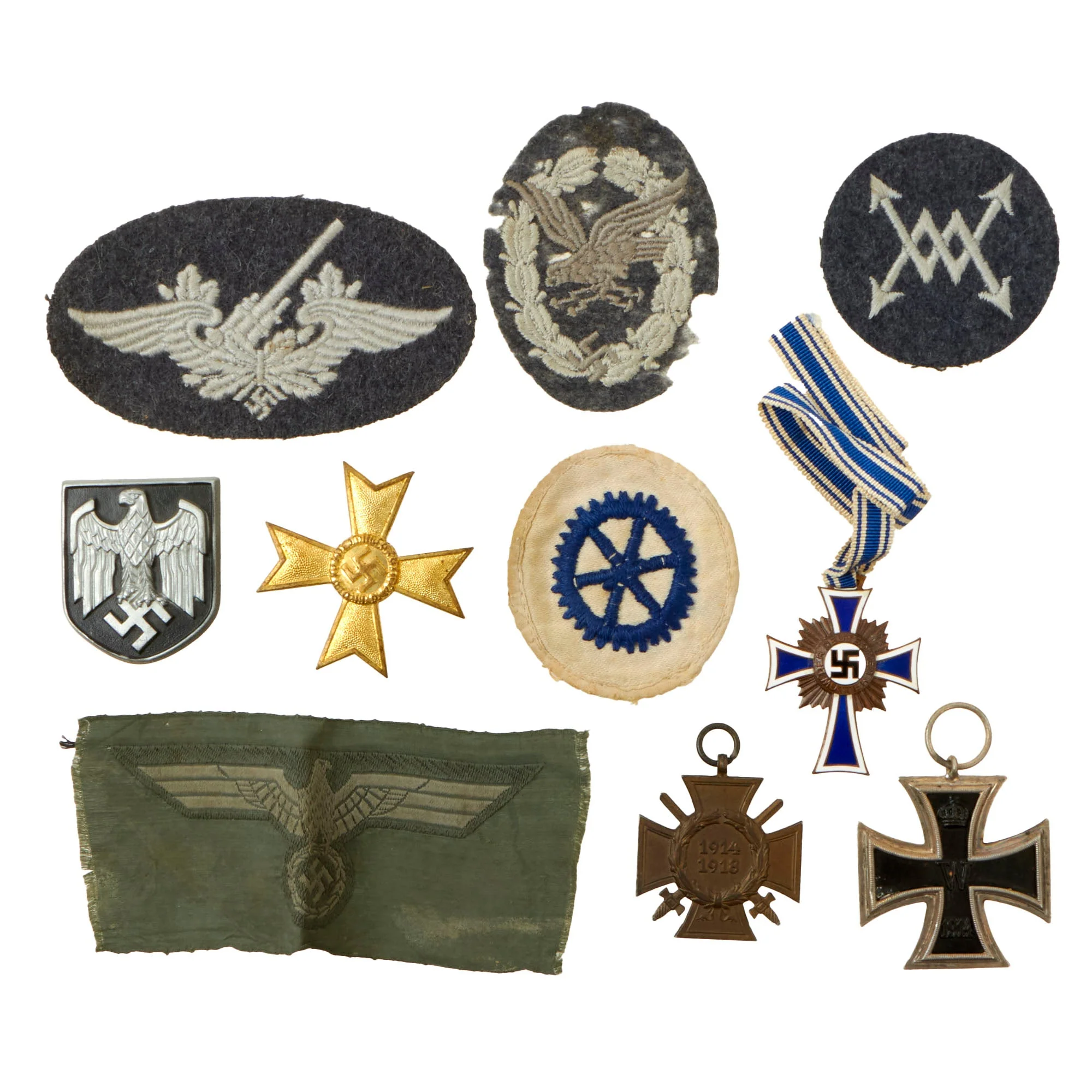
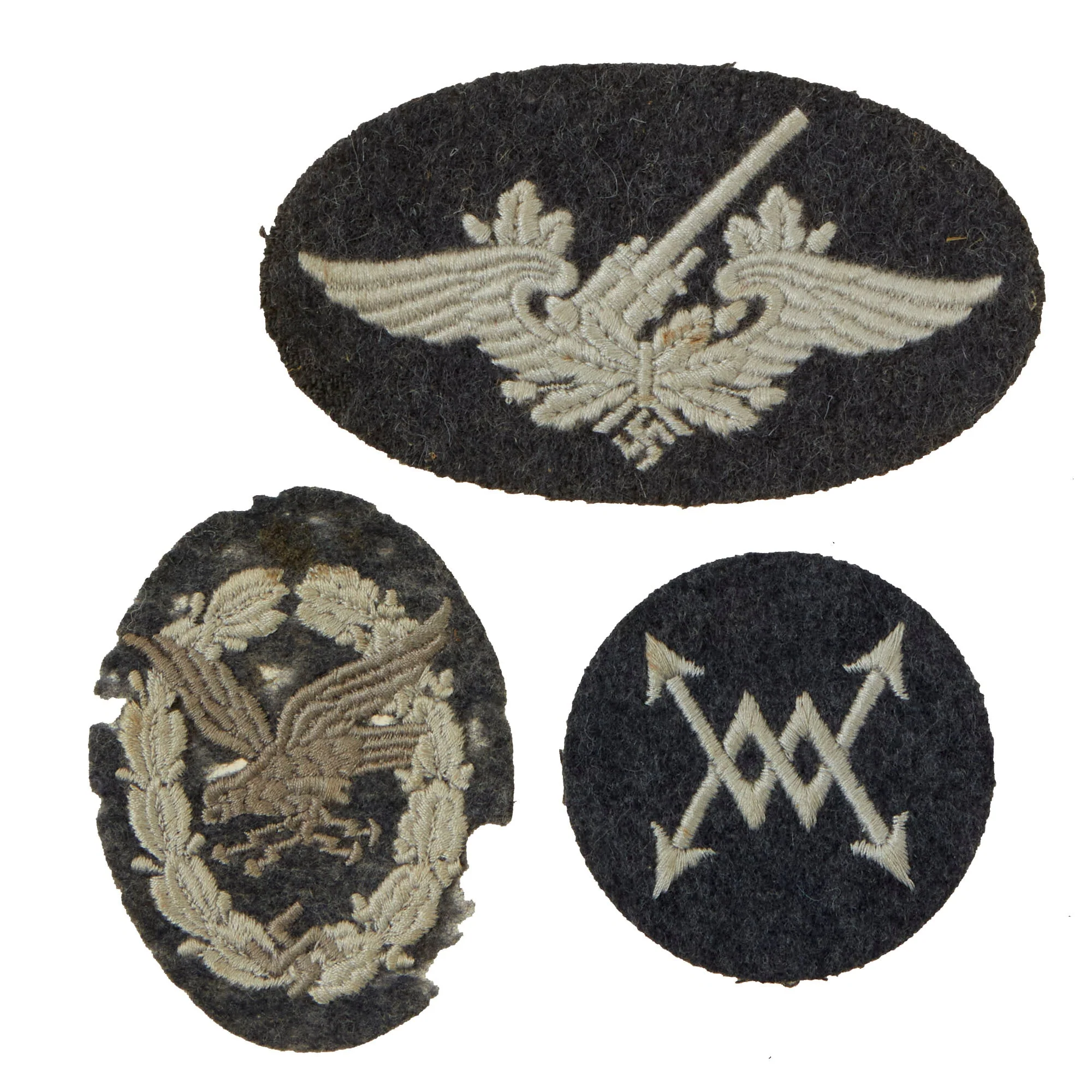
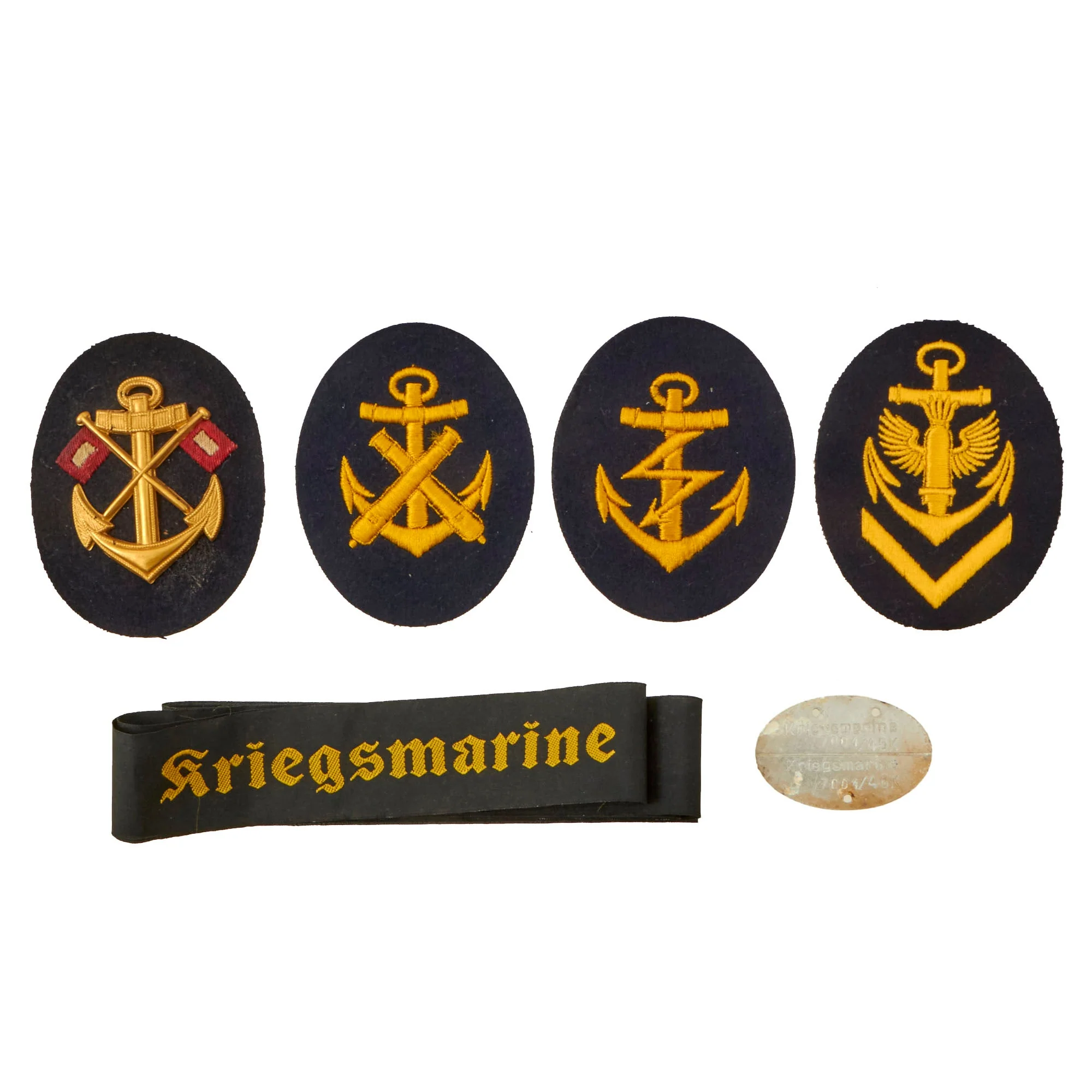
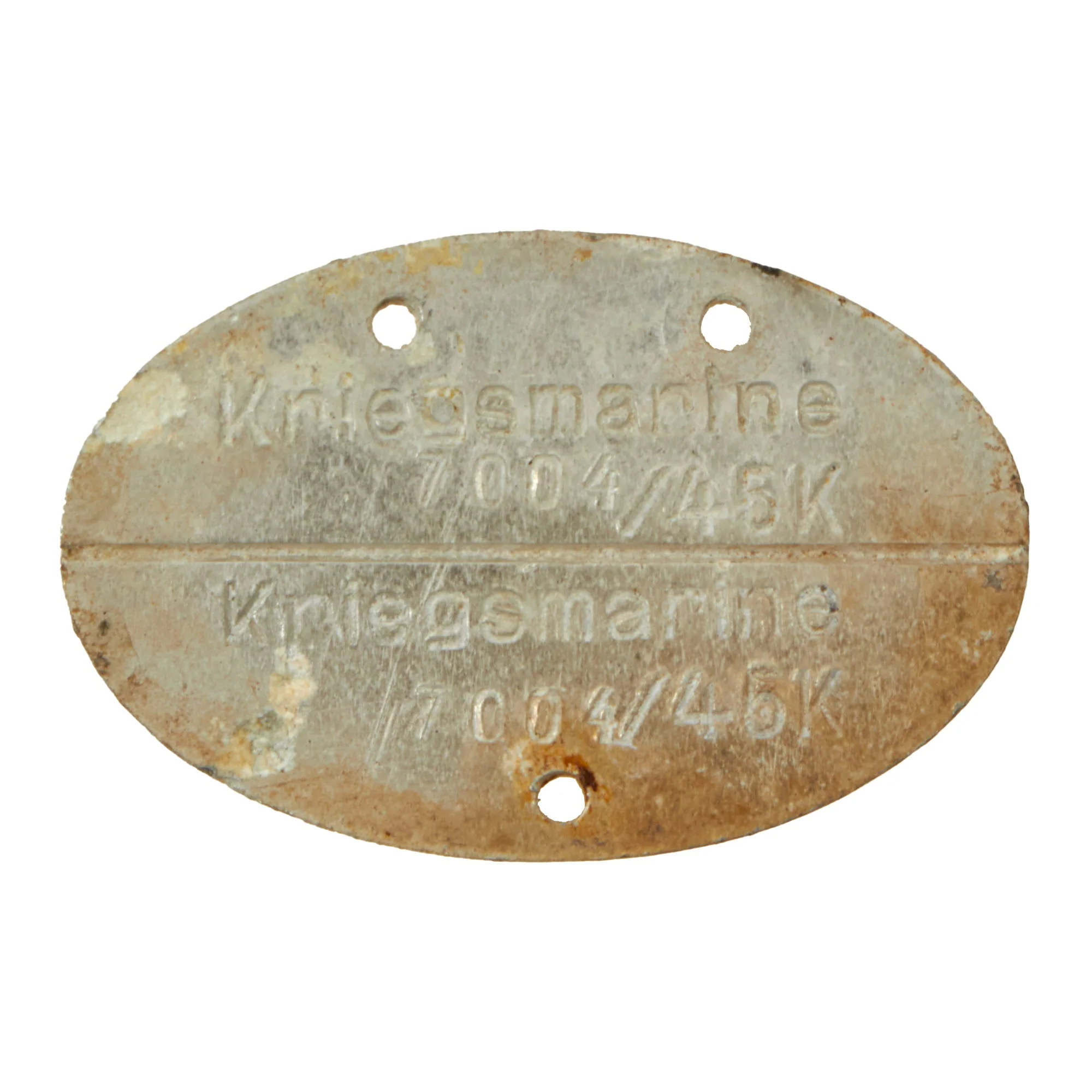
Original Items: Only One Set Available. This is a very nice collection of German WWII Awards and other items, which was brought back from the European theater by a USGI after the war was concluded. Many solders traded these on the way back, and would end up with a pocket full of various different collectible items, and this set represents the typical "haul" one might have come back with. It includes a Long Civil Service Award, Silver wound badge, and various other insignia and tinnies.
This lovely set includes:
- One German WWII Civil Service Faithful Service Medal 2nd Class with ribbon. The second class award for 25 years of service was a silver cross, with a silver wreath and a black enameled swas in the center of the cross. The medal shows some wear and light oxidation, however the silvering is still quite well retained. The ribbon shows staining and wear from use, and there is a nice installed brass attachment pin.
- One German WWII 2nd Class Silver Wound Badge (Verwundetenabzeichen in Silber). This is as wartime die cast zinc example of the silver wound badge, which were awarded for 3 or 4 wounds during service. The reverse features a solid back and is maker marked with Präsidialkanzlei (Presidential Chancellery) Supplier number 107 (Carl Wild of Hamburg) under the pin catch. The badge has lost most of the original silver wash on both sides, with the functional barrel hinge, pin, and bent round wire catch being the only parts that really still are silver.
- One German WWII 2 Award Ribbon Bar, representing the 13 March 1938 Commemorative Austrian Anschluss Medal and the 1 October 1938 Commemorative Sudetenland Medal
- One German WWII Heer Army Obergefreiter Sleeve Chevrons patch. These are the correct gray / silver tresse and are sewn onto a field gray wool background.
- One German WWII Deutsches Frauenwerk (German women's organization) membership pin. RZM marked M1/93 on the back, indicating manufacture by Gottlieb Friedrick Keck & Sohn of Lüdenscheid, a German city known for it's clothing accessories industry.
- One German Pre WWII 1935 TAG DER ARBEIT Labor Day tinnie.
- One German WWII Deutsches Jugendfest 1935 (German Youth Festival 1935) DJ & HJ Tinnie
- One Small Hindenburg Cross brass cutout.
A wonderful totally genuine grouping perfect for the German Medal and Insignia collector. Ready to research and display!
More information on some of the awards in this set:
"Tinnies" (Veranstaltungsabzeichen - Event Badges) are small commemorative pins or medals, acquired when one attended a specific event held in Germany. They were often made of thin stamped metal, bakelite, or even pressed paper. Many of these were given out as part of the WHW (Winterhilfswerk - Winter Help Work) Organization, which often involved Germans traveling quite a bit to help out the war effort. Many others were given for the annual Reichsparteitag (Reich Party Congress), otherwise known as the Nuremberg Rallies.
Faithful Civil Service Decoration First Class Cross for 25 Years of Service - A fullsize frosted silver with an oak leaf wreath and black enameled Swas (hook cross) on original ribbon. The Civil Service Faithful Service Medal (Treudienst-Ehrenzeichen für Beamte Angestellte und Arbeiter im öffentlichen Dienst) was a NSDAP Germany medal of honor that was founded on 30 January 1938, in two grades, to reward civilians and military in the employ of the German public services for long and faithful service.
All officials, employees, and laborers at any level of the public service (local, regional or national) who complete 25 or 40 years service were eligible. The second class award was for 25 years of service was a silver cross, with a silver wreath and a black enameled swas in the center of the cross. The first class award was for 40 years of service was a gold cross, with a gold wreath and a black enameled swas in the center of the cross.
The reverse of both classes was stamped with Für treue Dienste (For faithful Services). in German black letter typeface. The ribbon for the medal is cornflower blue.
The Wound Badge (Verwundetenabzeichen) was a German military decoration first promulgated by Wilhelm II, German Emperor on 3 March 1918, which was first awarded to soldiers of the German Army who were wounded during World War I. Between the world wars, it was awarded to members of the German armed forces who fought on the Nationalist side of the Spanish Civil War, 1938–39, and received combat related wounds. It was awarded to members in the Reichswehr, the Wehrmacht, SS and the auxiliary service organizations during World War II. After March 1943, due to the increasing number of Allied bombings, it was also awarded to civilians wounded in air raids. It was awarded when the wound was the result of enemy hostile action.
Badges were made of pressed steel, brass and zinc. All versions of the Wound Badge were worn on the lower left breast of the uniform or tunic. The badge was worn below all other awards on the left. It ranked lower than combat badges. There were 24 approved manufacturers of the Wound Badge. At first, the Wound Badge in Black was stamped from sheet brass, painted semi-matte black with a hollow reverse pin back attachment or of solid construction. From 1942, steel was used to make the badges. The Wound Badge in silver was made (before 1942) from silver-plated brass, and (after 1942) from lacquered zinc, and had a solid reverse with either a needle pin or a broad flat pin bar. The Wound Badge in Gold was a gilded version of the Wound Badge in Silver. In 1957, a revised version of the Wound Badge was authorized for wear; however, the previous type could still be worn if the swas were removed (for example by grinding).
The Wound Badge Awards came in three different types of grades representing the amount , or severity, of wounds received. The first grade, the Black Wound Badge was awarded for 1 to 2 wounds received in combat. The Silver Grade was awarded for 3 to 4 wounds, and finally the Gold Grade for 5 or more wounds, total disability, or death.

Details & Craftsmanship
Every detail has been carefully considered to bring you the perfect product.

Details & Craftsmanship
Every detail has been carefully considered to bring you the perfect product.

Details & Craftsmanship
Every detail has been carefully considered to bring you the perfect product.

Details & Craftsmanship
Every detail has been carefully considered to bring you the perfect product.

Details & Craftsmanship
Every detail has been carefully considered to bring you the perfect product.

Details & Craftsmanship
Every detail has been carefully considered to bring you the perfect product.
Description
Original Items: Only One Set Available. This is a very nice collection of German WWII Awards and other items, which was brought back from the European theater by a USGI after the war was concluded. Many solders traded these on the way back, and would end up with a pocket full of various different collectible items, and this set represents the typical "haul" one might have come back with. It includes a Long Civil Service Award, Silver wound badge, and various other insignia and tinnies.
This lovely set includes:
- One German WWII Civil Service Faithful Service Medal 2nd Class with ribbon. The second class award for 25 years of service was a silver cross, with a silver wreath and a black enameled swas in the center of the cross. The medal shows some wear and light oxidation, however the silvering is still quite well retained. The ribbon shows staining and wear from use, and there is a nice installed brass attachment pin.
- One German WWII 2nd Class Silver Wound Badge (Verwundetenabzeichen in Silber). This is as wartime die cast zinc example of the silver wound badge, which were awarded for 3 or 4 wounds during service. The reverse features a solid back and is maker marked with Präsidialkanzlei (Presidential Chancellery) Supplier number 107 (Carl Wild of Hamburg) under the pin catch. The badge has lost most of the original silver wash on both sides, with the functional barrel hinge, pin, and bent round wire catch being the only parts that really still are silver.
- One German WWII 2 Award Ribbon Bar, representing the 13 March 1938 Commemorative Austrian Anschluss Medal and the 1 October 1938 Commemorative Sudetenland Medal
- One German WWII Heer Army Obergefreiter Sleeve Chevrons patch. These are the correct gray / silver tresse and are sewn onto a field gray wool background.
- One German WWII Deutsches Frauenwerk (German women's organization) membership pin. RZM marked M1/93 on the back, indicating manufacture by Gottlieb Friedrick Keck & Sohn of Lüdenscheid, a German city known for it's clothing accessories industry.
- One German Pre WWII 1935 TAG DER ARBEIT Labor Day tinnie.
- One German WWII Deutsches Jugendfest 1935 (German Youth Festival 1935) DJ & HJ Tinnie
- One Small Hindenburg Cross brass cutout.
A wonderful totally genuine grouping perfect for the German Medal and Insignia collector. Ready to research and display!
More information on some of the awards in this set:
"Tinnies" (Veranstaltungsabzeichen - Event Badges) are small commemorative pins or medals, acquired when one attended a specific event held in Germany. They were often made of thin stamped metal, bakelite, or even pressed paper. Many of these were given out as part of the WHW (Winterhilfswerk - Winter Help Work) Organization, which often involved Germans traveling quite a bit to help out the war effort. Many others were given for the annual Reichsparteitag (Reich Party Congress), otherwise known as the Nuremberg Rallies.
Faithful Civil Service Decoration First Class Cross for 25 Years of Service - A fullsize frosted silver with an oak leaf wreath and black enameled Swas (hook cross) on original ribbon. The Civil Service Faithful Service Medal (Treudienst-Ehrenzeichen für Beamte Angestellte und Arbeiter im öffentlichen Dienst) was a NSDAP Germany medal of honor that was founded on 30 January 1938, in two grades, to reward civilians and military in the employ of the German public services for long and faithful service.
All officials, employees, and laborers at any level of the public service (local, regional or national) who complete 25 or 40 years service were eligible. The second class award was for 25 years of service was a silver cross, with a silver wreath and a black enameled swas in the center of the cross. The first class award was for 40 years of service was a gold cross, with a gold wreath and a black enameled swas in the center of the cross.
The reverse of both classes was stamped with Für treue Dienste (For faithful Services). in German black letter typeface. The ribbon for the medal is cornflower blue.
The Wound Badge (Verwundetenabzeichen) was a German military decoration first promulgated by Wilhelm II, German Emperor on 3 March 1918, which was first awarded to soldiers of the German Army who were wounded during World War I. Between the world wars, it was awarded to members of the German armed forces who fought on the Nationalist side of the Spanish Civil War, 1938–39, and received combat related wounds. It was awarded to members in the Reichswehr, the Wehrmacht, SS and the auxiliary service organizations during World War II. After March 1943, due to the increasing number of Allied bombings, it was also awarded to civilians wounded in air raids. It was awarded when the wound was the result of enemy hostile action.
Badges were made of pressed steel, brass and zinc. All versions of the Wound Badge were worn on the lower left breast of the uniform or tunic. The badge was worn below all other awards on the left. It ranked lower than combat badges. There were 24 approved manufacturers of the Wound Badge. At first, the Wound Badge in Black was stamped from sheet brass, painted semi-matte black with a hollow reverse pin back attachment or of solid construction. From 1942, steel was used to make the badges. The Wound Badge in silver was made (before 1942) from silver-plated brass, and (after 1942) from lacquered zinc, and had a solid reverse with either a needle pin or a broad flat pin bar. The Wound Badge in Gold was a gilded version of the Wound Badge in Silver. In 1957, a revised version of the Wound Badge was authorized for wear; however, the previous type could still be worn if the swas were removed (for example by grinding).
The Wound Badge Awards came in three different types of grades representing the amount , or severity, of wounds received. The first grade, the Black Wound Badge was awarded for 1 to 2 wounds received in combat. The Silver Grade was awarded for 3 to 4 wounds, and finally the Gold Grade for 5 or more wounds, total disability, or death.