
Original: $295.00
-70%$295.00
$88.50The Story
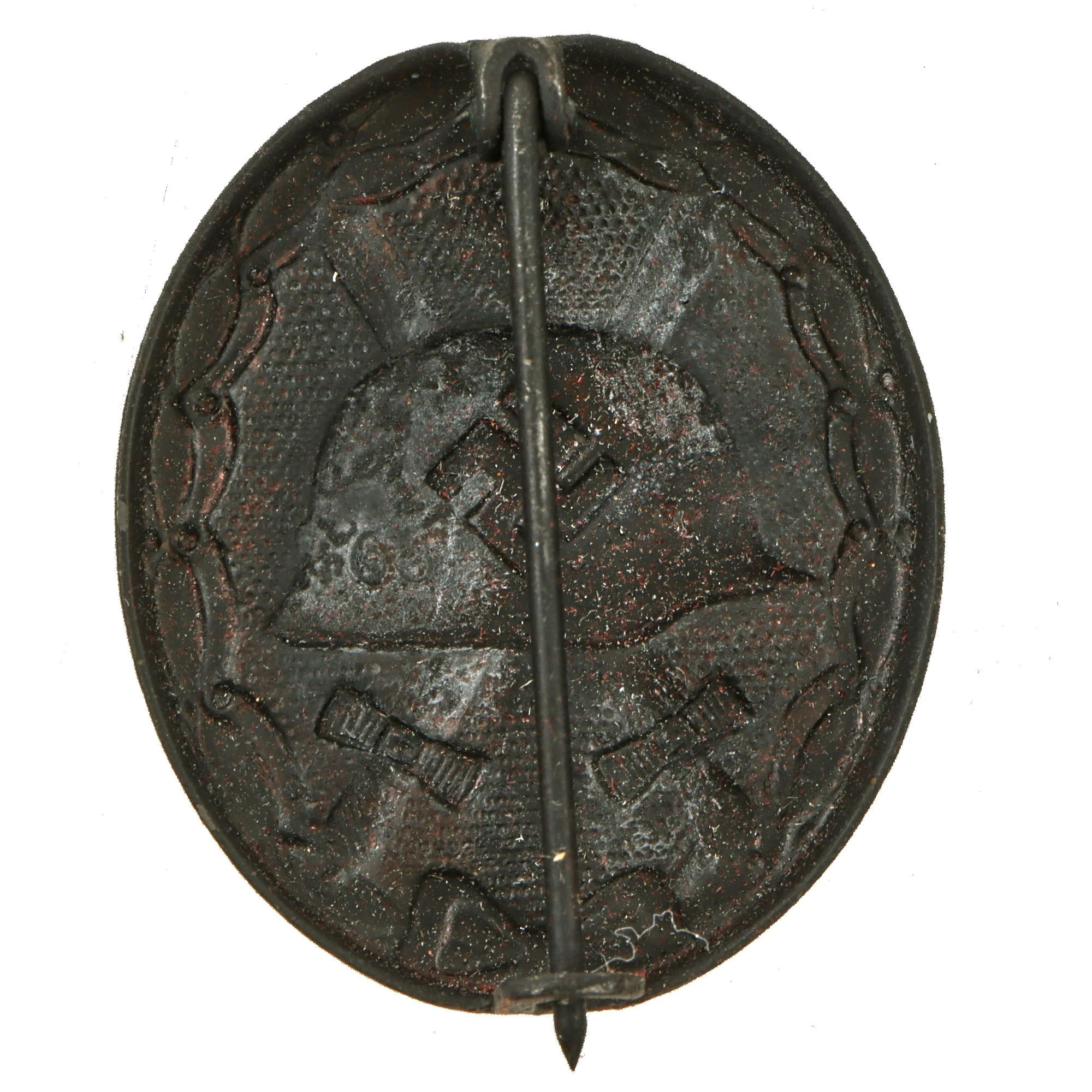
Original Item: Only One Available. Here we have an excellent condition black wound badge in the original case box. It looks to be in unissued condition, and we assume has spent virtually all of its life inside the original box, which is also in great shape. The badge is constructed out of stamped steel with a matte black finish, and has a functional vertical pinback. The oval badge depicts an embossed profile of a mobile swas, above an M35 pattern helmet, which is above two crossed broad swords. This then lies on a pebbled field and is surrounded by a laurel leaf and berry wreath which is tied together at the bottom with a bow tie. The badge measures 1 11/16 inches high by 1 5/16 inches wide. Overall condition is excellent, with the pinback working flawlessly, and showing just a bit of wear to the finish. We checked the back, and were not able to see any maker marking, which is fairly typical for stamped steel black wound badges. Most likely it was never awarded or issued.
Also included is the original maroon leatherette presentation box, which shows light wear to the exterior, and is of card stock construction with a leatherette hinge. It still opens easily, and the inlet in the bottom of the case holds the award securely.
Probably one of the best condition Black Wound badges we have ever seen, in its original issue box. Ready to add to your collection!
The German Wound Badge (Verwundetenabzeichen) was instituted during the First World War to recognize those wounded in the conflict. It was designed using a World War One style Imperial German helmet as the main motif. The helmet was set on top two crossed swords against a pebbled background and surrounded by a laurel leaves wreath.
During the Spanish Civil War the Third Reich reinstated the Wound Badge for a short period to honor those who were wounded during the conflict from 1936 to 1939. These German units participating in the assistance of the Spanish Fascists were deemed the “Condor Legion”. The pattern of the World War One Wound Badge was again used, except this time with a raised swas on the center of the World War One era helmet.
At the outbreak of war in September 1939 with Poland, Adolf AH once again reinstated the Wound Badge Award. Again the pattern of the badge was similar to that of the earlier style except the new design was freshened up a bit by using an M35 pattern German helmet and a slightly softer looking wreath. This pattern was used until the end of the war in 1945. After March 1943, due to the increasing number of Allied bombings, it was also awarded to wounded civilians in air raids. It was awarded when the wound was the result of enemy hostile action, with an exception being for frostbite. It is impossible to know the exact numbers of wound badges awarded during the course of the Second World War due to the vast scale and countless individuals who were wounded or killed in the conflict.
The badge had three classes:
- Black (3rd class, representing Iron), for those wounded once or twice by hostile action (including air raids).
- Silver (2nd class) for being wounded three or four times.
- Gold (1st class, which could be awarded posthumously) for five or more times wounded.
The "progression" could be waived in the event of loss of a limb or eyesight; when such a severe wound occurred, the silver badge was awarded.
Badges were made of pressed steel, brass and zinc. All versions of the Wound Badge were worn on the lower left breast of the uniform or tunic. The badge was worn below all other awards on the left. It ranked lower than combat badges. There were 24 approved manufacturers of the Wound Badge. At first, the Wound Badge in Black was stamped from sheet brass, painted semi-matte black with a hollow reverse pin back attachment or of solid construction. From 1942, steel was used to make the badges. The Wound Badge in silver was made (before 1942) from silver-plated brass, and (after 1942) from lacquered zinc, and had a solid reverse with either a needle pin or a broad flat pin bar. The Wound Badge in Gold was a gilded version of the Wound Badge in Silver. In 1957, a revised version of the Wound Badge was authorised for wear; however, the previous type could still be worn if the swas were removed (for example by grinding).

Details & Craftsmanship
Every detail has been carefully considered to bring you the perfect product.

Details & Craftsmanship
Every detail has been carefully considered to bring you the perfect product.
Details & Craftsmanship
Every detail has been carefully considered to bring you the perfect product.

Details & Craftsmanship
Every detail has been carefully considered to bring you the perfect product.

Details & Craftsmanship
Every detail has been carefully considered to bring you the perfect product.

Details & Craftsmanship
Every detail has been carefully considered to bring you the perfect product.
Description
Original Item: Only One Available. Here we have an excellent condition black wound badge in the original case box. It looks to be in unissued condition, and we assume has spent virtually all of its life inside the original box, which is also in great shape. The badge is constructed out of stamped steel with a matte black finish, and has a functional vertical pinback. The oval badge depicts an embossed profile of a mobile swas, above an M35 pattern helmet, which is above two crossed broad swords. This then lies on a pebbled field and is surrounded by a laurel leaf and berry wreath which is tied together at the bottom with a bow tie. The badge measures 1 11/16 inches high by 1 5/16 inches wide. Overall condition is excellent, with the pinback working flawlessly, and showing just a bit of wear to the finish. We checked the back, and were not able to see any maker marking, which is fairly typical for stamped steel black wound badges. Most likely it was never awarded or issued.
Also included is the original maroon leatherette presentation box, which shows light wear to the exterior, and is of card stock construction with a leatherette hinge. It still opens easily, and the inlet in the bottom of the case holds the award securely.
Probably one of the best condition Black Wound badges we have ever seen, in its original issue box. Ready to add to your collection!
The German Wound Badge (Verwundetenabzeichen) was instituted during the First World War to recognize those wounded in the conflict. It was designed using a World War One style Imperial German helmet as the main motif. The helmet was set on top two crossed swords against a pebbled background and surrounded by a laurel leaves wreath.
During the Spanish Civil War the Third Reich reinstated the Wound Badge for a short period to honor those who were wounded during the conflict from 1936 to 1939. These German units participating in the assistance of the Spanish Fascists were deemed the “Condor Legion”. The pattern of the World War One Wound Badge was again used, except this time with a raised swas on the center of the World War One era helmet.
At the outbreak of war in September 1939 with Poland, Adolf AH once again reinstated the Wound Badge Award. Again the pattern of the badge was similar to that of the earlier style except the new design was freshened up a bit by using an M35 pattern German helmet and a slightly softer looking wreath. This pattern was used until the end of the war in 1945. After March 1943, due to the increasing number of Allied bombings, it was also awarded to wounded civilians in air raids. It was awarded when the wound was the result of enemy hostile action, with an exception being for frostbite. It is impossible to know the exact numbers of wound badges awarded during the course of the Second World War due to the vast scale and countless individuals who were wounded or killed in the conflict.
The badge had three classes:
- Black (3rd class, representing Iron), for those wounded once or twice by hostile action (including air raids).
- Silver (2nd class) for being wounded three or four times.
- Gold (1st class, which could be awarded posthumously) for five or more times wounded.
The "progression" could be waived in the event of loss of a limb or eyesight; when such a severe wound occurred, the silver badge was awarded.
Badges were made of pressed steel, brass and zinc. All versions of the Wound Badge were worn on the lower left breast of the uniform or tunic. The badge was worn below all other awards on the left. It ranked lower than combat badges. There were 24 approved manufacturers of the Wound Badge. At first, the Wound Badge in Black was stamped from sheet brass, painted semi-matte black with a hollow reverse pin back attachment or of solid construction. From 1942, steel was used to make the badges. The Wound Badge in silver was made (before 1942) from silver-plated brass, and (after 1942) from lacquered zinc, and had a solid reverse with either a needle pin or a broad flat pin bar. The Wound Badge in Gold was a gilded version of the Wound Badge in Silver. In 1957, a revised version of the Wound Badge was authorised for wear; however, the previous type could still be worn if the swas were removed (for example by grinding).