
Original: $795.00
-70%$795.00
$238.50The Story
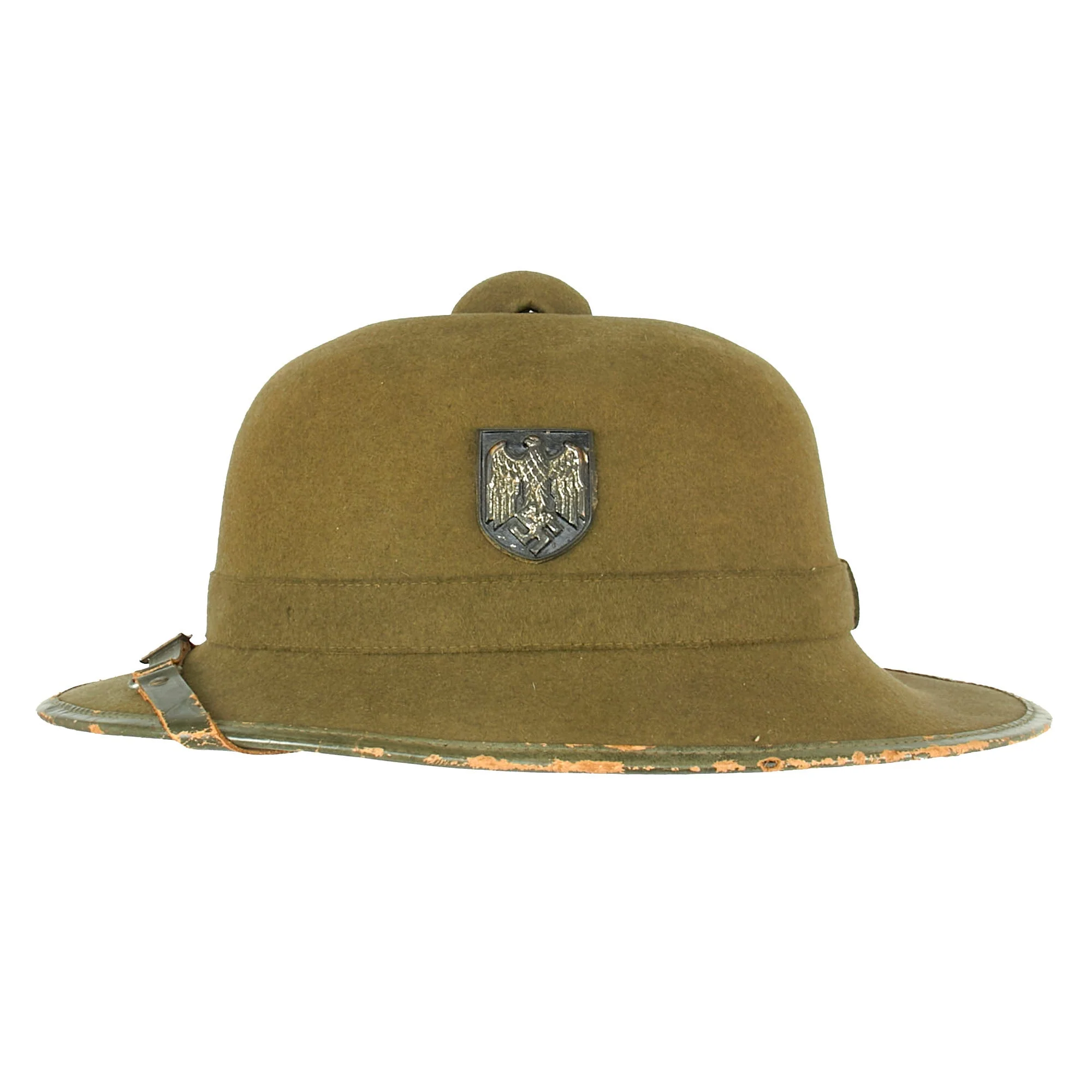
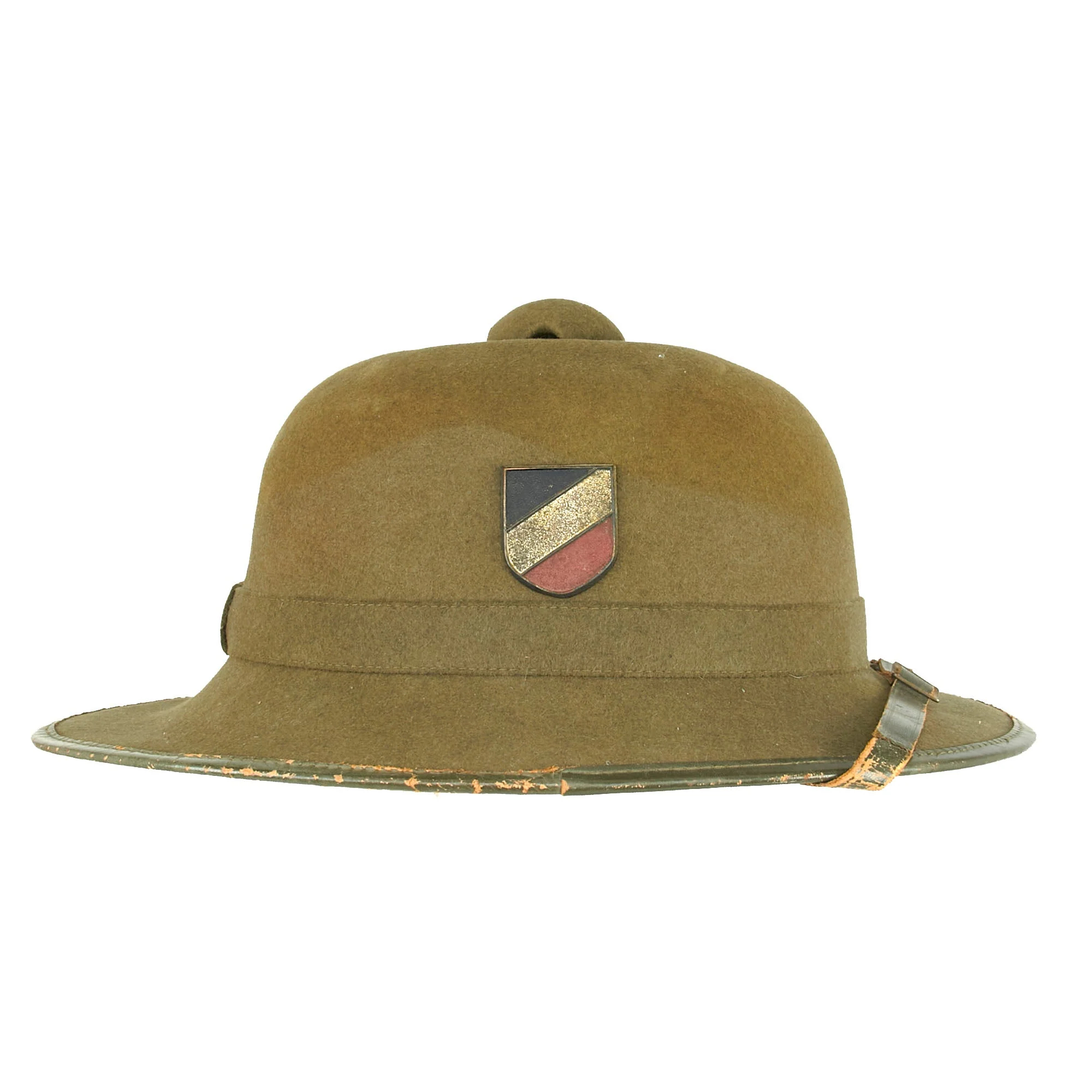
Original Item: Only One Available. The second most predominant item of Heer tropical soft headgear was based on the M-34 / 38 overseas cap, nicknamed in German army slang as Schiffchen, or literally "little ship" as it resembled an up-turned row-boat. It lacked a peak or visor, and was made in the same cotton as the M-40 'Afrikamütze' cap. The production of these also started in 1940. The schiffchen utilized the same brown enameled stock for the vent holes as the M-40.
As with the continental wool version, the tropical overseas cap had turn-down sides, but these could not be folded down to cover the ears for cold weather protection because they were stitched in the front and back. Later war versions retained the seam, but were entirely sewn down, now just a separate part of the exterior.
The cap was also lined with red cotton, the sides being the last to be sewn in place. The insignia was sewn to the shell before the lining was added, and used exactly the same eagle, roundel and soutache as the M-40 'Afrikamütze'. From 1943 onwards, as with the M-40 billed cap, the eagle can be seen to be sewn on some examples on a triangular backing. This was a simple measure to speed up production, although it tended to lend the cap with a less attractive appearance.
The overseas cap was popular with armored vehicle crews due to the lack of a visor, which would get in the way of using optical equipment and continual banging against the sides, equipment, hatches and other obstructions in closely confined work spaces like tanks and armored vehicles. Due to their very utilitarian and somewhat unflattering appearance, the overseas cap never gained the affection that the M-40 evoked from those who wore them. These M-34 / 38 Pattern Tropical caps also have an important place in any tropical uniform collection.
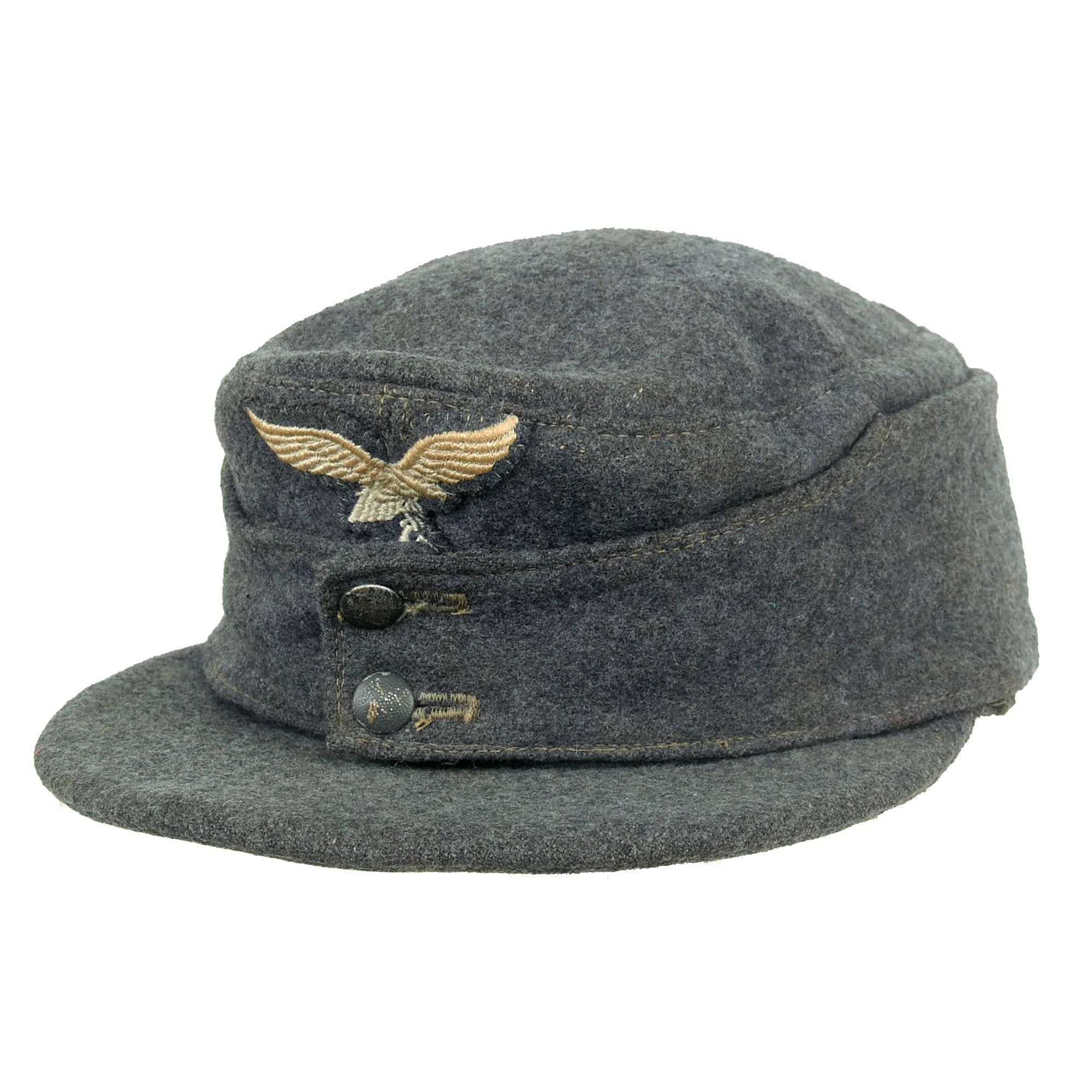
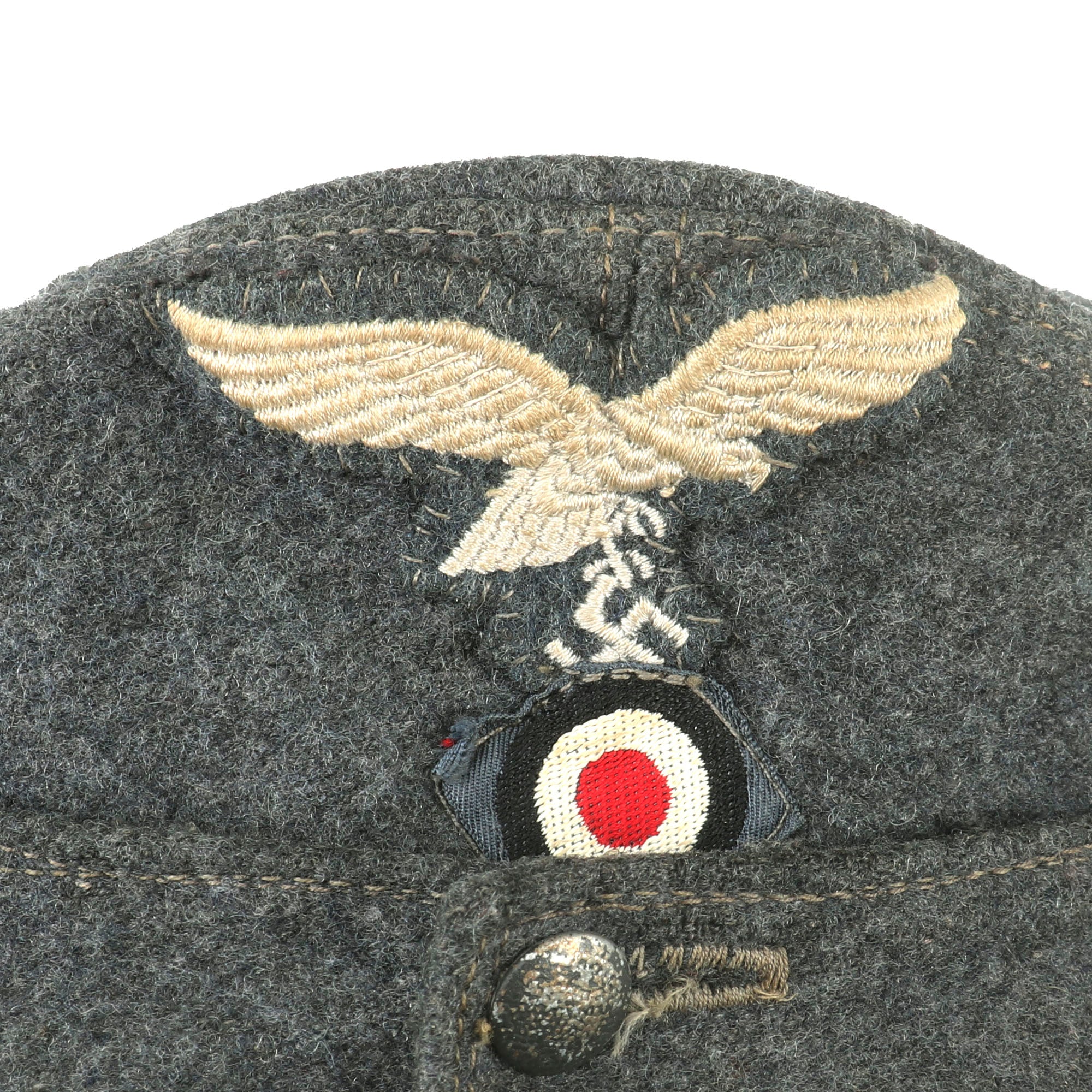
This is a very good condition Heer tropical pattern overseas cap, as worn by NCO and enlisted ranks in the DAK and southern Europe. Styled after the 1940 pattern, it is produced in olive-green cotton twill with decorative "faux" flaps and tan enameled alloy vent grommets. The front has a very nice BeVO style machine embroidered Tan tropical pattern Heer eagle with blue threads on the front top and the correct tri-color Kokarde underneath. There is no soutache on this example, so it was most likely for an infantry soldier.
The interior has a liner of lightweight red cotton cloth that is well marked with the size information as well as stock numbers:
54
2590
0100
343
R.Btr.·Nr. 0/0265/5044
The size "54" was crossed out, and another 52 stamped to the side, so most likely it shrank at some point during service and was remarked to match the true size. German RBN Numbers, or Reichsbetriebsnummer, also known as the National Business Number, were an alternative to the 3 letter codes in use late in the war. The first number 0 is the prefix for "industry", while 0265 is the location code, and manufacturer 5044 is a specific maker. The records of these are very incomplete, so we have not been able to locate this specific manufacturer or location, however we have seen many other examples from them before. We assume that "343" is the production time, for march of 1943.
The cap is in very good condition, showing only light wear, and little to no staining that we can see. It is a bit wrinkled, and looks like it may have been laundered at some time in the past. We do no see these often at all, especially in this gently used condition. Ready to display!
Reichsbetriebsnummer or RB number (also represented as RB Nr or Rbnr). Before the war, the Germans set up a system for registering and recording the factory information, the Reichsbetriebskartei. This was to help enable machine tabulation of facts and figures. It was from this that the Reichsbetriebsnummer came into being. The Reichsministerium für Rüstung und Kriegsproduktion (Ministry for Armaments and War Production) files survive today in the Bundesarchiv, however, these are only fragmentary. There is a holding file from the working group created by the Office of Machine Reporting in the Armament Office of the Reich Ministry for Armaments and War Production - their main focus was the operations of the industry group for which an economic interest was Armour production. This index provides information on the most important data of the companies covered by it, production profile, operating area, number of employees and the responsible operator.
As a prerequisite for the intended use of the punch-card method in the armaments industry, it was this system which gave rise to the Rbnr. The operating numbers were assigned by the competent local district offices of Machine reporting. (Bezirksstellen des Maschinellen Berichtswesens.) The index is in the form of index cards that are accessible numerically (approximately 14 meters of index cards!). Access to this register is only possible through the naming of this company, stating the place of production. The Reichsministerium für Rüstung und Kriegsproduktion files have multiple entries on the introduction of the factory and also the lot no.
The Rbnr code was used from 1943 onwards and replaced the makers name and address (or company logo) on government contract uniforms, caps and field equipment and knives. It is either rubber ink stamped on cloth or die stamped onto leather & metal items. It has been written countless times that this numeric code system was introduced as a security measure to help mask production locations. This was not the case but it was perhaps, a helpful by- product of the system. It is not unknown to find the Rbnr together with the maker’s info. Had it been a security measure, clearly this practise would have been banned.
So what was the Rbnr? It was a nine digit number and was normally represented thus: RB Nr: 0/000/0000.
The first prefix number could range from 0 through to 9. This number determined the membership of the various groups in the realm of Trade and Industry (Reichsgruppenleitzahl)
• 0 Industry
• 1 Crafts
• 2 Commercial wholesale trading companies
• 3 Banking
• 4 Insurance Companies
• 5 Energy (Electrical companies and such)
• 6 Tourism (Including Hotels, Wine and Mineral Water companies)
• 7 Traffic
• 8 Food Industry
• 9 Not otherwise mentioned groups

Details & Craftsmanship
Every detail has been carefully considered to bring you the perfect product.

Details & Craftsmanship
Every detail has been carefully considered to bring you the perfect product.

Details & Craftsmanship
Every detail has been carefully considered to bring you the perfect product.

Details & Craftsmanship
Every detail has been carefully considered to bring you the perfect product.

Details & Craftsmanship
Every detail has been carefully considered to bring you the perfect product.

Details & Craftsmanship
Every detail has been carefully considered to bring you the perfect product.

Details & Craftsmanship
Every detail has been carefully considered to bring you the perfect product.

Details & Craftsmanship
Every detail has been carefully considered to bring you the perfect product.

Details & Craftsmanship
Every detail has been carefully considered to bring you the perfect product.

Details & Craftsmanship
Every detail has been carefully considered to bring you the perfect product.

Details & Craftsmanship
Every detail has been carefully considered to bring you the perfect product.
Description
Original Item: Only One Available. The second most predominant item of Heer tropical soft headgear was based on the M-34 / 38 overseas cap, nicknamed in German army slang as Schiffchen, or literally "little ship" as it resembled an up-turned row-boat. It lacked a peak or visor, and was made in the same cotton as the M-40 'Afrikamütze' cap. The production of these also started in 1940. The schiffchen utilized the same brown enameled stock for the vent holes as the M-40.
As with the continental wool version, the tropical overseas cap had turn-down sides, but these could not be folded down to cover the ears for cold weather protection because they were stitched in the front and back. Later war versions retained the seam, but were entirely sewn down, now just a separate part of the exterior.
The cap was also lined with red cotton, the sides being the last to be sewn in place. The insignia was sewn to the shell before the lining was added, and used exactly the same eagle, roundel and soutache as the M-40 'Afrikamütze'. From 1943 onwards, as with the M-40 billed cap, the eagle can be seen to be sewn on some examples on a triangular backing. This was a simple measure to speed up production, although it tended to lend the cap with a less attractive appearance.
The overseas cap was popular with armored vehicle crews due to the lack of a visor, which would get in the way of using optical equipment and continual banging against the sides, equipment, hatches and other obstructions in closely confined work spaces like tanks and armored vehicles. Due to their very utilitarian and somewhat unflattering appearance, the overseas cap never gained the affection that the M-40 evoked from those who wore them. These M-34 / 38 Pattern Tropical caps also have an important place in any tropical uniform collection.
This is a very good condition Heer tropical pattern overseas cap, as worn by NCO and enlisted ranks in the DAK and southern Europe. Styled after the 1940 pattern, it is produced in olive-green cotton twill with decorative "faux" flaps and tan enameled alloy vent grommets. The front has a very nice BeVO style machine embroidered Tan tropical pattern Heer eagle with blue threads on the front top and the correct tri-color Kokarde underneath. There is no soutache on this example, so it was most likely for an infantry soldier.
The interior has a liner of lightweight red cotton cloth that is well marked with the size information as well as stock numbers:
54
2590
0100
343
R.Btr.·Nr. 0/0265/5044
The size "54" was crossed out, and another 52 stamped to the side, so most likely it shrank at some point during service and was remarked to match the true size. German RBN Numbers, or Reichsbetriebsnummer, also known as the National Business Number, were an alternative to the 3 letter codes in use late in the war. The first number 0 is the prefix for "industry", while 0265 is the location code, and manufacturer 5044 is a specific maker. The records of these are very incomplete, so we have not been able to locate this specific manufacturer or location, however we have seen many other examples from them before. We assume that "343" is the production time, for march of 1943.
The cap is in very good condition, showing only light wear, and little to no staining that we can see. It is a bit wrinkled, and looks like it may have been laundered at some time in the past. We do no see these often at all, especially in this gently used condition. Ready to display!
Reichsbetriebsnummer or RB number (also represented as RB Nr or Rbnr). Before the war, the Germans set up a system for registering and recording the factory information, the Reichsbetriebskartei. This was to help enable machine tabulation of facts and figures. It was from this that the Reichsbetriebsnummer came into being. The Reichsministerium für Rüstung und Kriegsproduktion (Ministry for Armaments and War Production) files survive today in the Bundesarchiv, however, these are only fragmentary. There is a holding file from the working group created by the Office of Machine Reporting in the Armament Office of the Reich Ministry for Armaments and War Production - their main focus was the operations of the industry group for which an economic interest was Armour production. This index provides information on the most important data of the companies covered by it, production profile, operating area, number of employees and the responsible operator.
As a prerequisite for the intended use of the punch-card method in the armaments industry, it was this system which gave rise to the Rbnr. The operating numbers were assigned by the competent local district offices of Machine reporting. (Bezirksstellen des Maschinellen Berichtswesens.) The index is in the form of index cards that are accessible numerically (approximately 14 meters of index cards!). Access to this register is only possible through the naming of this company, stating the place of production. The Reichsministerium für Rüstung und Kriegsproduktion files have multiple entries on the introduction of the factory and also the lot no.
The Rbnr code was used from 1943 onwards and replaced the makers name and address (or company logo) on government contract uniforms, caps and field equipment and knives. It is either rubber ink stamped on cloth or die stamped onto leather & metal items. It has been written countless times that this numeric code system was introduced as a security measure to help mask production locations. This was not the case but it was perhaps, a helpful by- product of the system. It is not unknown to find the Rbnr together with the maker’s info. Had it been a security measure, clearly this practise would have been banned.
So what was the Rbnr? It was a nine digit number and was normally represented thus: RB Nr: 0/000/0000.
The first prefix number could range from 0 through to 9. This number determined the membership of the various groups in the realm of Trade and Industry (Reichsgruppenleitzahl)
• 0 Industry
• 1 Crafts
• 2 Commercial wholesale trading companies
• 3 Banking
• 4 Insurance Companies
• 5 Energy (Electrical companies and such)
• 6 Tourism (Including Hotels, Wine and Mineral Water companies)
• 7 Traffic
• 8 Food Industry
• 9 Not otherwise mentioned groups