
Original: $795.00
-70%$795.00
$238.50The Story
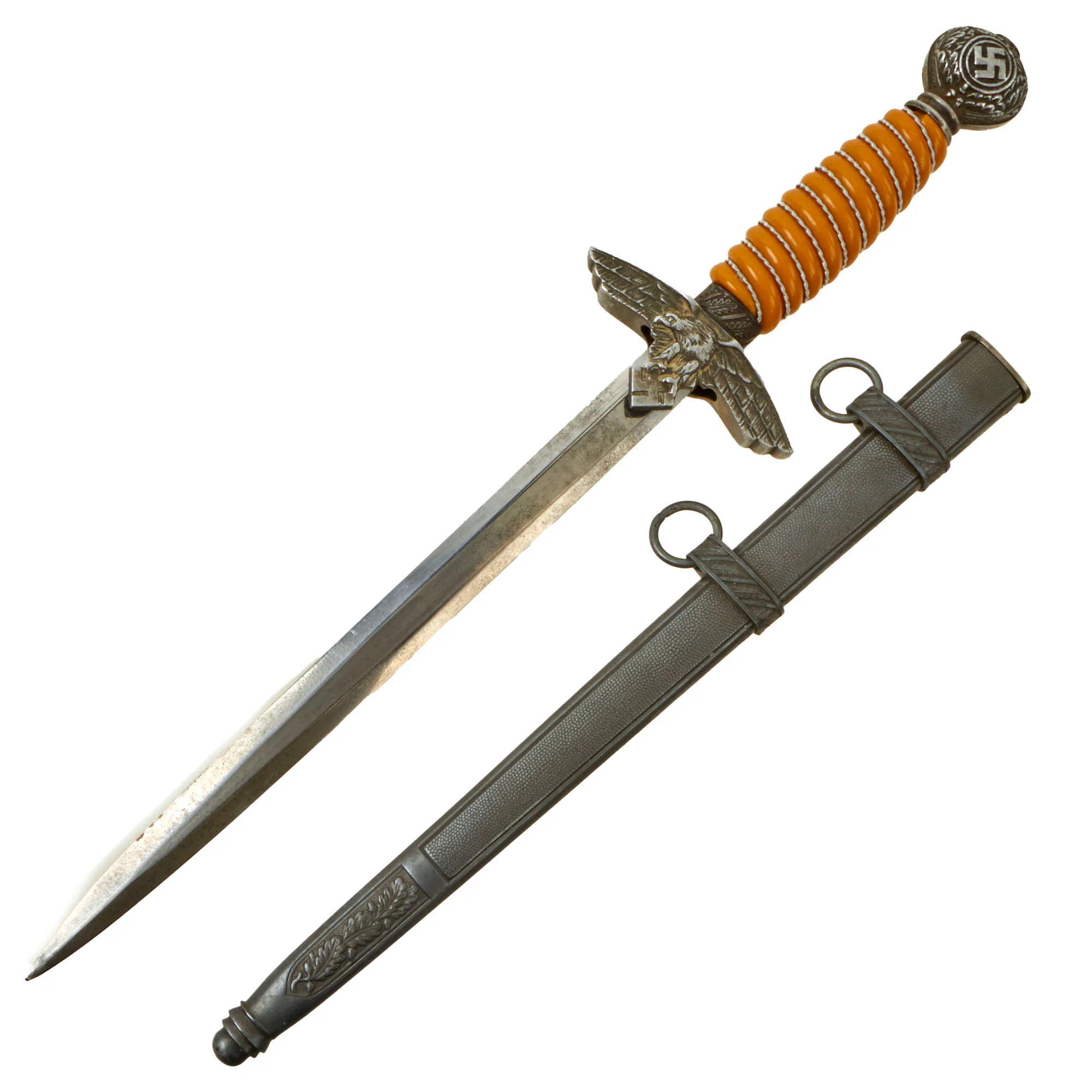
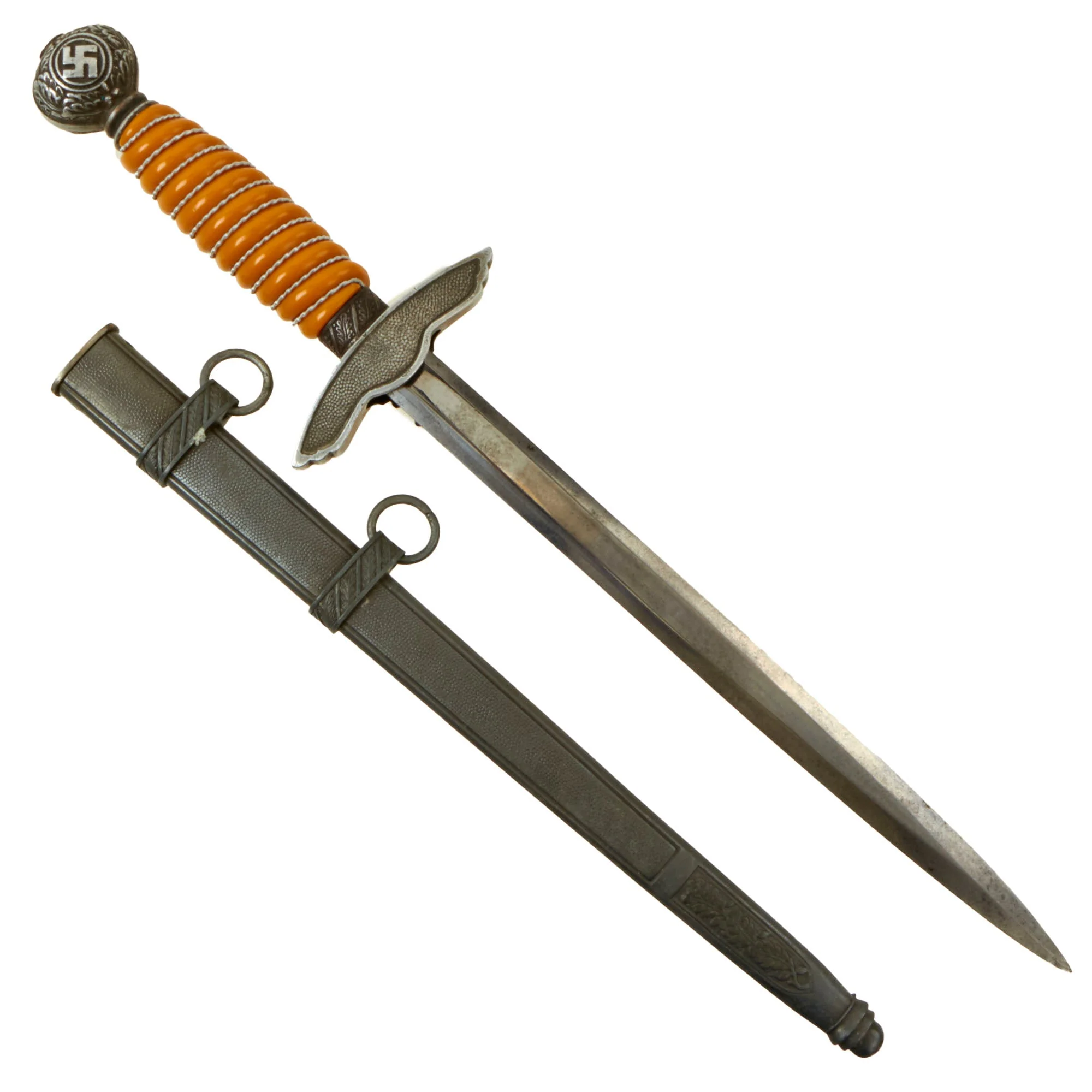
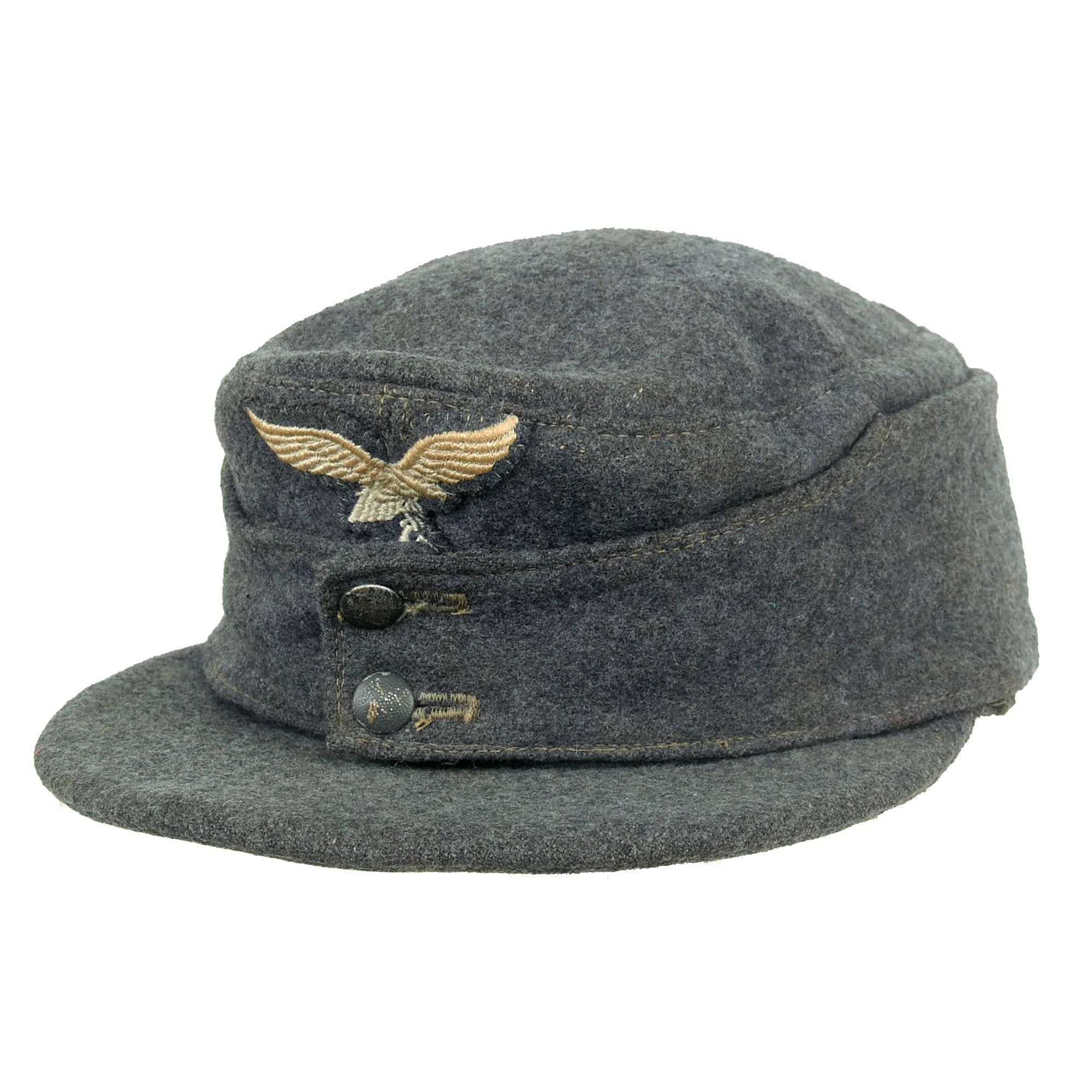
Original Item: Only One Available. During the Pre-WWII years in Germany, virtually all aspects of the government fell under control of the NSDAP, and the Forestry service was no exception. Germany has a long tradition of hunting, and has many famous forest areas throughout the country. The government set up an office of forestry to help manage the natural resources. Upon the arrival of the Third Reich, forestry uniforms were outfitted with swas symbols, resulting in items like this Forestry Official Schirmmütze (Peaked Cap).
The design of the caps were not nearly as standardized as the Army or Airforce, so the colors used could vary from gray to green, to black for the band. What remained the same for all however was the dark "forest green" piping used around the top of the crown, and around the central band. This lightly used example has a lovely "whipcord" weave body, which is a gray green color, similar to the Heer Army feldgrau, but definitely with much more green in the dye mix. The band is a lovely forest green color matching the piping, which is a bit darker than the flaschengrün (dark bottle-green) used by the Heer. The cap still retains the crown stiffener, however it looks to have either been made or bent into a lovely "Saddle-form" crusher shape, which really looks great!
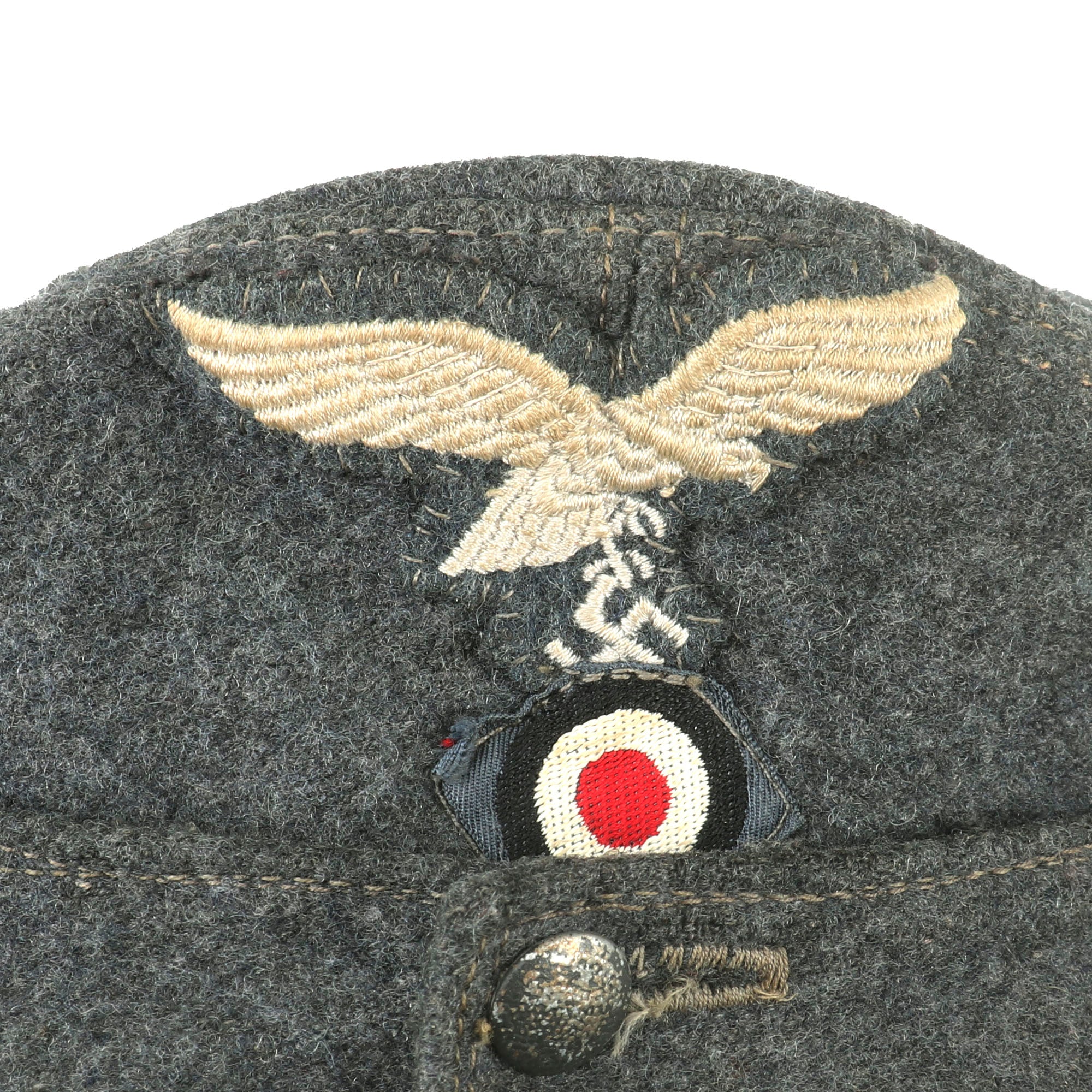
It is decorated with a well detailed stamped aluminum eagle insignia on the front crown, which faces to the left, correct for forestry eagles. There is also a very nice aluminum bullion embroidered forestry oak leaf wreath surrounding a plated metal tri-color cockade on the band. This wreath is far wider than the standard Heer style, correct for the forestry service. The insignia overall look very good, with a lovely patina on the plated cockade, and the red felt insert is still vibrant and undamaged. The cap features a very good condition silver bullion chinstrap attached by pebbled silver buttons, indicating an Officer or equivalent rank in the Forestry Service. The vulcanfibre visor has a smooth black leather-look upper, exhibiting just a bit of wear along the edge and is checkered beige on the underside. The top shows a lovely pattern of fine checking and crazing due to age.
The cap is lined with lovely cream colored rayon faux silk, which is ribbed on the sides, and shows very little wear or discoloration. The celluloid sweat shield diamond on the top is fully intact, with complete stitching, and has a size 59 size tag in the name slot. The maker logo is still fully intact in gold bronze powder paint, and reads as follows:
ORIGINAL
SCHELLENBERG
(Logo)
STIRNDRUCKFREI
D.R.G.M.
SONDERKLASSE
The sweatband is tan finished leather, which is still supple with intact stitching holding it to the body of the cap, with just a small area where the leather is torn on the left side near where the chinstrap attaches. It looks to have seen very little use during its service life, with little to no staining or wear visible. It has a further embossed "Stirndruckfrei" (forehead pressure free) marking. Overall condition would be very hard to improve upon.
A fantastic lightly used example of a classic hat worn by German Forestry Service Officers during WWII.
The Forstverein (Forestry Association) was a civil union, founded in 1899, whose members were either Foresters or Forest owners and was founded to give more "power" to their interests when dealing with the Governments of the states or the Reich. Their "targets" were mainly economical with some "spreads" of caring for nature and forests. The aim of the association was: to take care of the German forest, the promotion of forest economy and science and the exchange of personal ideas. After the NSDAP took over Germany, the various Forestry Groups were folded under the NSDAP umbrella.
The Forstschutzkommando (FSK), or simply Forstschutz was a uniformed and armed para-military security formation raised in late 1939. Composed of some 10,000 volunteers, it was recruited from forestry officials and forest workers and headed by Landesforstmeister Ernst Boden. Hermann Göring, as the Reichsforstmeister, was its "supreme commander".
After having received brief training, the first 2,000 so-called Forstschützen were put into action in wooded areas in occupied Poland. Here, they provided security for lumber transports and -storage places and sawmills, as well as being employed to combat wood-thieves and poachers and to arrest "unauthorized" persons in the forests. They were authorized to use firearms in the case of resistance or attempted escapes.
In July 1941, the Forstschutz took charge of the Bialowies forest, a former hunting ground of the Czar and important area for the lumber industry. The civilian population was evacuated from Göring's new Reichsforst, with their villages and farms being burnt to the ground and two small Jewish communities being liquidated as well.
In the summer of 1942, Forstschutz units were dispatched to the Reichs Commissariats of "Ostland" and the Ukraine. Here, they were used in anti-partisan operations, suffering significant casualties in the process themselves.
Apart from their original security tasks and anti-partisan operations, Forstschutz personnel were involved in the capture and liquidation of Jews, who had managed to keep from being arrested or who had escaped from Ghettoes and were hiding in the forests. Apparently, Forstschutz men were also actively involved in the liquidation of Jewish Ghettoes if regular SS- and Police forces were not available.
Later, during the large-scale German fighting retreat, Forstschutz units even participated in military combat engagements in an infantry role.

Details & Craftsmanship
Every detail has been carefully considered to bring you the perfect product.

Details & Craftsmanship
Every detail has been carefully considered to bring you the perfect product.

Details & Craftsmanship
Every detail has been carefully considered to bring you the perfect product.

Details & Craftsmanship
Every detail has been carefully considered to bring you the perfect product.

Details & Craftsmanship
Every detail has been carefully considered to bring you the perfect product.

Details & Craftsmanship
Every detail has been carefully considered to bring you the perfect product.

Details & Craftsmanship
Every detail has been carefully considered to bring you the perfect product.

Details & Craftsmanship
Every detail has been carefully considered to bring you the perfect product.

Details & Craftsmanship
Every detail has been carefully considered to bring you the perfect product.

Details & Craftsmanship
Every detail has been carefully considered to bring you the perfect product.

Details & Craftsmanship
Every detail has been carefully considered to bring you the perfect product.

Details & Craftsmanship
Every detail has been carefully considered to bring you the perfect product.

Details & Craftsmanship
Every detail has been carefully considered to bring you the perfect product.

Details & Craftsmanship
Every detail has been carefully considered to bring you the perfect product.

Details & Craftsmanship
Every detail has been carefully considered to bring you the perfect product.
Description
Original Item: Only One Available. During the Pre-WWII years in Germany, virtually all aspects of the government fell under control of the NSDAP, and the Forestry service was no exception. Germany has a long tradition of hunting, and has many famous forest areas throughout the country. The government set up an office of forestry to help manage the natural resources. Upon the arrival of the Third Reich, forestry uniforms were outfitted with swas symbols, resulting in items like this Forestry Official Schirmmütze (Peaked Cap).
The design of the caps were not nearly as standardized as the Army or Airforce, so the colors used could vary from gray to green, to black for the band. What remained the same for all however was the dark "forest green" piping used around the top of the crown, and around the central band. This lightly used example has a lovely "whipcord" weave body, which is a gray green color, similar to the Heer Army feldgrau, but definitely with much more green in the dye mix. The band is a lovely forest green color matching the piping, which is a bit darker than the flaschengrün (dark bottle-green) used by the Heer. The cap still retains the crown stiffener, however it looks to have either been made or bent into a lovely "Saddle-form" crusher shape, which really looks great!
It is decorated with a well detailed stamped aluminum eagle insignia on the front crown, which faces to the left, correct for forestry eagles. There is also a very nice aluminum bullion embroidered forestry oak leaf wreath surrounding a plated metal tri-color cockade on the band. This wreath is far wider than the standard Heer style, correct for the forestry service. The insignia overall look very good, with a lovely patina on the plated cockade, and the red felt insert is still vibrant and undamaged. The cap features a very good condition silver bullion chinstrap attached by pebbled silver buttons, indicating an Officer or equivalent rank in the Forestry Service. The vulcanfibre visor has a smooth black leather-look upper, exhibiting just a bit of wear along the edge and is checkered beige on the underside. The top shows a lovely pattern of fine checking and crazing due to age.
The cap is lined with lovely cream colored rayon faux silk, which is ribbed on the sides, and shows very little wear or discoloration. The celluloid sweat shield diamond on the top is fully intact, with complete stitching, and has a size 59 size tag in the name slot. The maker logo is still fully intact in gold bronze powder paint, and reads as follows:
ORIGINAL
SCHELLENBERG
(Logo)
STIRNDRUCKFREI
D.R.G.M.
SONDERKLASSE
The sweatband is tan finished leather, which is still supple with intact stitching holding it to the body of the cap, with just a small area where the leather is torn on the left side near where the chinstrap attaches. It looks to have seen very little use during its service life, with little to no staining or wear visible. It has a further embossed "Stirndruckfrei" (forehead pressure free) marking. Overall condition would be very hard to improve upon.
A fantastic lightly used example of a classic hat worn by German Forestry Service Officers during WWII.
The Forstverein (Forestry Association) was a civil union, founded in 1899, whose members were either Foresters or Forest owners and was founded to give more "power" to their interests when dealing with the Governments of the states or the Reich. Their "targets" were mainly economical with some "spreads" of caring for nature and forests. The aim of the association was: to take care of the German forest, the promotion of forest economy and science and the exchange of personal ideas. After the NSDAP took over Germany, the various Forestry Groups were folded under the NSDAP umbrella.
The Forstschutzkommando (FSK), or simply Forstschutz was a uniformed and armed para-military security formation raised in late 1939. Composed of some 10,000 volunteers, it was recruited from forestry officials and forest workers and headed by Landesforstmeister Ernst Boden. Hermann Göring, as the Reichsforstmeister, was its "supreme commander".
After having received brief training, the first 2,000 so-called Forstschützen were put into action in wooded areas in occupied Poland. Here, they provided security for lumber transports and -storage places and sawmills, as well as being employed to combat wood-thieves and poachers and to arrest "unauthorized" persons in the forests. They were authorized to use firearms in the case of resistance or attempted escapes.
In July 1941, the Forstschutz took charge of the Bialowies forest, a former hunting ground of the Czar and important area for the lumber industry. The civilian population was evacuated from Göring's new Reichsforst, with their villages and farms being burnt to the ground and two small Jewish communities being liquidated as well.
In the summer of 1942, Forstschutz units were dispatched to the Reichs Commissariats of "Ostland" and the Ukraine. Here, they were used in anti-partisan operations, suffering significant casualties in the process themselves.
Apart from their original security tasks and anti-partisan operations, Forstschutz personnel were involved in the capture and liquidation of Jews, who had managed to keep from being arrested or who had escaped from Ghettoes and were hiding in the forests. Apparently, Forstschutz men were also actively involved in the liquidation of Jewish Ghettoes if regular SS- and Police forces were not available.
Later, during the large-scale German fighting retreat, Forstschutz units even participated in military combat engagements in an infantry role.