
Original: $595.00
-70%$595.00
$178.50The Story
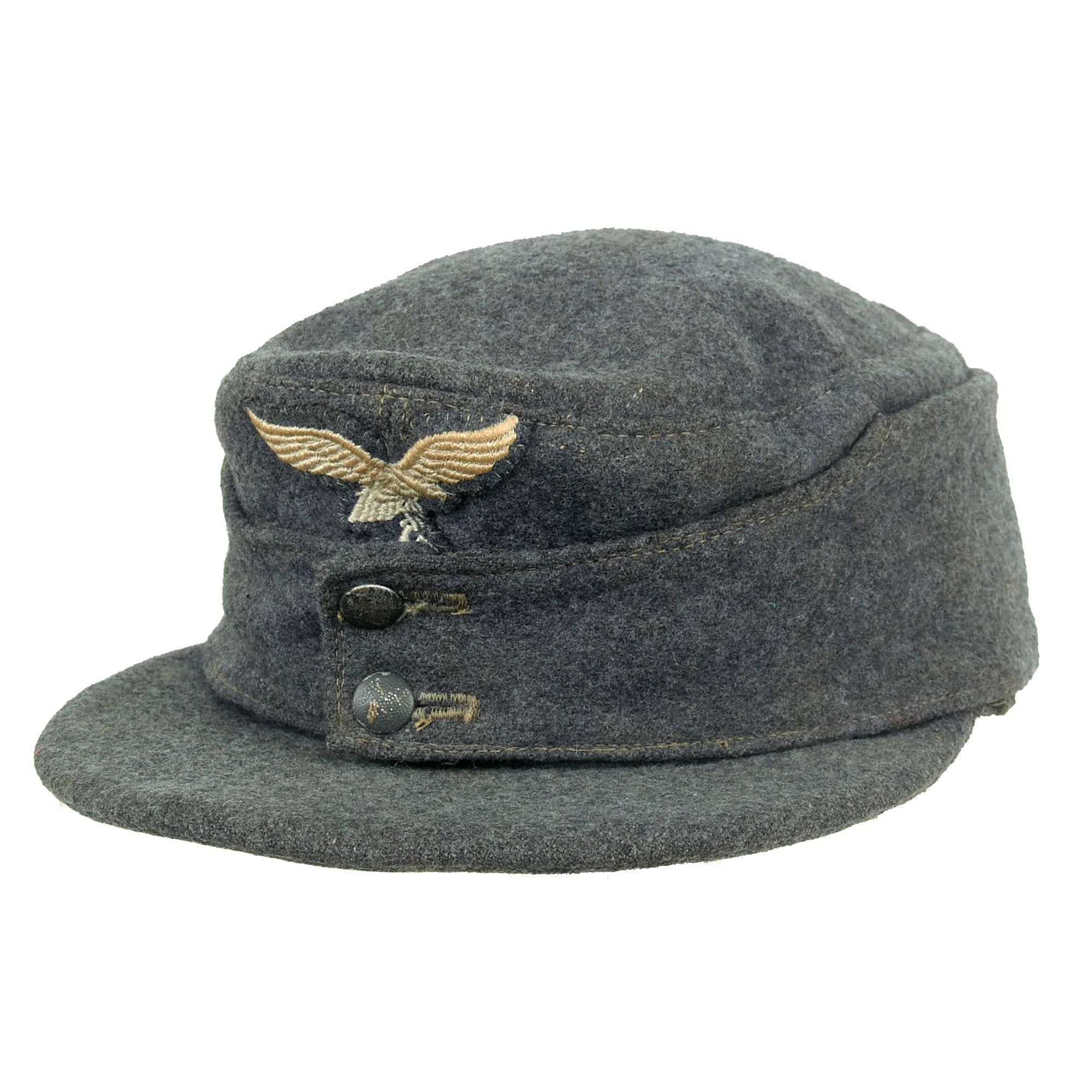
Original Item: Only One Available. This is a very interesting example of a German WWII Heer Army Infantry Officer's M38 overseas cap (Schiffchen), upgraded in the field from an EM/NCO cap. The overseas cap, nicknamed in German military slang as Schiffchen, or literally "little ship" as it resembled an up-turned row-boat, was standard issue for all branches of the Heer. This example is constructed of a a field gray (feldgrau) wool exterior, with a tan brushed canvas lining, and still retains a complete maker marking on the left side, which reads:-
BEROLINA 1941
BERLIN
59
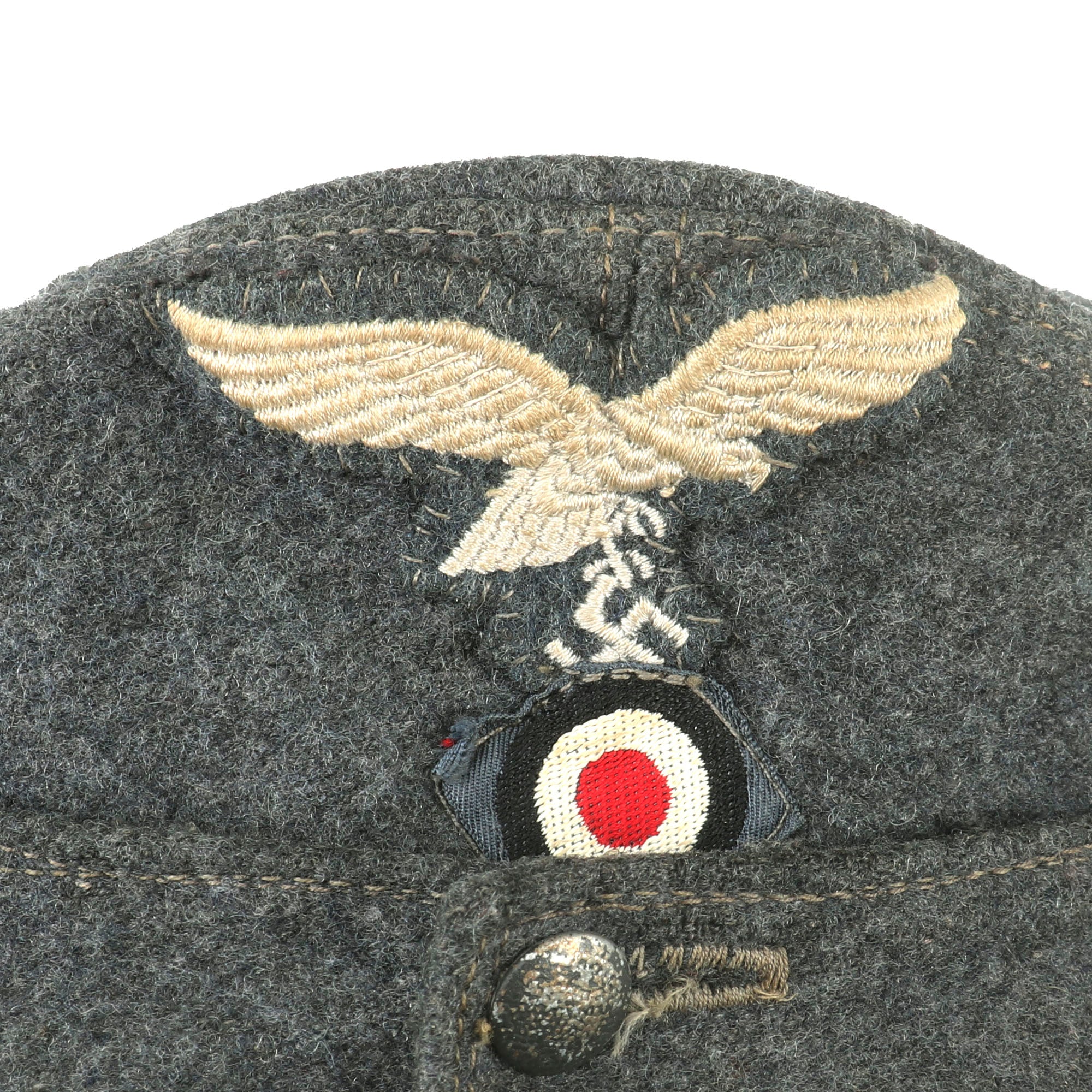
The front of the cap features a very nice Weiß (white) V-shaped soutache, which is the Corps Color (Waffenfarbe) for Infanterie (Infantry) and Motorisiert Infanterie (Motorized Infantry). The bottom stitches go over the soutache, so it was installed during the original manufacture of the cap. As an EM/NCO cap, it would originally have had a BeVo embroidered Wehrmachtadler Eagle on the top front, along with a BeVo cockade inside the soutache.
To upgrade the cap, the original insignia on the front were removed, and replaced with an officer's silver bullion Eagle on the top, and a metal tri-color cockade on the front scallop, with a red felt insert. It then had silver bullion piping added around the crown, along with additional bullion around the front scallop, which has a black backing sewn onto the interior flap. The bullion is in great shape, however over time oxidation built up and caused the front of the cockade to pop off, leaving the metal retaining clip still in place behind the flap. The cockade is included, though separated, and is still in lovely condition on the front side.
Overall condition is very good, showing some light staining to the interior, while the exterior shows a bit more staining, as well as wear to the fuzzy "nap" of the fabric. The piping is a bit stained, and there is the previously mentioned issue with the cockade, which could possibly be repaired.
A very interesting field upgraded infantry oversea cap by a known maker, ready to display!
German Jäger Units -
Jäger (hunter) is a German military term referring to specific light infantry units. In German-speaking states during the early modern era, the term Jäger came to denote light infantrymen whose civilian occupations (mostly hunters and foresters) made them well-suited to patrolling and skirmishing, on an individual and independent basis, rather than as part of a large-scale military unit or traditional line infantry. As a consequence, Jäger was used to describe skirmishers, scouts, sharpshooters and runners.
The German Empire had various different Jäger units, which were disbanded at the conclusion of WWI. The Reichswehr of Weimar Germany did keep their traditions somewhat intact, and during the NSDAP led rearmament preceding WWII, various different Jäger units were reformed, the most famous of which were the Heer Gebirgsjäger Mountain Troopers and Luftwaffe Fallschirmjäger paratroopers. Later in the war, Skijäger Ski Troopers and Jäger Infantry units were raised, as well as some smaller units with more specific purposes, such as "Tank Hunters".
Gebirgsjäger material is among the most popular of all German WWII items. They were the light infantry part of the alpine or mountain troops (Gebirgstruppe) of Germany and Austria. The word Jäger (meaning "hunter" or "huntsman") is a characteristic term used for light-infantry or light-infantryman in German-speaking military context.
The mountain infantry of Austria have their roots in the three Landesschützen regiments of the Austro-Hungarian Empire. The mountain infantry of Germany carry on certain traditions of the Alpenkorps (Alpine corps) of World War I. Both countries' mountain infantry share the Edelweiß insignia. It was established in 1907 as a symbol of the Austro-Hungarian Landesschützen regiments by Emperor Franz Joseph I. These troops wore their edelweiss on the collar of their uniforms. When the Alpenkorps came to aid the Landesschützen in defending Austria-Hungary's southern frontier against the Italian attack in May 1915, the grateful Landesschützen honored the men of the Alpenkorps by awarding them their own insignia: the edelweiss. Together with the Fallschirmjäger (Paratroopers) they are perceived as the elite infantry units of the German Army.

Details & Craftsmanship
Every detail has been carefully considered to bring you the perfect product.

Details & Craftsmanship
Every detail has been carefully considered to bring you the perfect product.

Details & Craftsmanship
Every detail has been carefully considered to bring you the perfect product.

Details & Craftsmanship
Every detail has been carefully considered to bring you the perfect product.

Details & Craftsmanship
Every detail has been carefully considered to bring you the perfect product.

Details & Craftsmanship
Every detail has been carefully considered to bring you the perfect product.

Details & Craftsmanship
Every detail has been carefully considered to bring you the perfect product.

Details & Craftsmanship
Every detail has been carefully considered to bring you the perfect product.

Details & Craftsmanship
Every detail has been carefully considered to bring you the perfect product.

Details & Craftsmanship
Every detail has been carefully considered to bring you the perfect product.

Details & Craftsmanship
Every detail has been carefully considered to bring you the perfect product.

Details & Craftsmanship
Every detail has been carefully considered to bring you the perfect product.
Description
Original Item: Only One Available. This is a very interesting example of a German WWII Heer Army Infantry Officer's M38 overseas cap (Schiffchen), upgraded in the field from an EM/NCO cap. The overseas cap, nicknamed in German military slang as Schiffchen, or literally "little ship" as it resembled an up-turned row-boat, was standard issue for all branches of the Heer. This example is constructed of a a field gray (feldgrau) wool exterior, with a tan brushed canvas lining, and still retains a complete maker marking on the left side, which reads:-
BEROLINA 1941
BERLIN
59
The front of the cap features a very nice Weiß (white) V-shaped soutache, which is the Corps Color (Waffenfarbe) for Infanterie (Infantry) and Motorisiert Infanterie (Motorized Infantry). The bottom stitches go over the soutache, so it was installed during the original manufacture of the cap. As an EM/NCO cap, it would originally have had a BeVo embroidered Wehrmachtadler Eagle on the top front, along with a BeVo cockade inside the soutache.
To upgrade the cap, the original insignia on the front were removed, and replaced with an officer's silver bullion Eagle on the top, and a metal tri-color cockade on the front scallop, with a red felt insert. It then had silver bullion piping added around the crown, along with additional bullion around the front scallop, which has a black backing sewn onto the interior flap. The bullion is in great shape, however over time oxidation built up and caused the front of the cockade to pop off, leaving the metal retaining clip still in place behind the flap. The cockade is included, though separated, and is still in lovely condition on the front side.
Overall condition is very good, showing some light staining to the interior, while the exterior shows a bit more staining, as well as wear to the fuzzy "nap" of the fabric. The piping is a bit stained, and there is the previously mentioned issue with the cockade, which could possibly be repaired.
A very interesting field upgraded infantry oversea cap by a known maker, ready to display!
German Jäger Units -
Jäger (hunter) is a German military term referring to specific light infantry units. In German-speaking states during the early modern era, the term Jäger came to denote light infantrymen whose civilian occupations (mostly hunters and foresters) made them well-suited to patrolling and skirmishing, on an individual and independent basis, rather than as part of a large-scale military unit or traditional line infantry. As a consequence, Jäger was used to describe skirmishers, scouts, sharpshooters and runners.
The German Empire had various different Jäger units, which were disbanded at the conclusion of WWI. The Reichswehr of Weimar Germany did keep their traditions somewhat intact, and during the NSDAP led rearmament preceding WWII, various different Jäger units were reformed, the most famous of which were the Heer Gebirgsjäger Mountain Troopers and Luftwaffe Fallschirmjäger paratroopers. Later in the war, Skijäger Ski Troopers and Jäger Infantry units were raised, as well as some smaller units with more specific purposes, such as "Tank Hunters".
Gebirgsjäger material is among the most popular of all German WWII items. They were the light infantry part of the alpine or mountain troops (Gebirgstruppe) of Germany and Austria. The word Jäger (meaning "hunter" or "huntsman") is a characteristic term used for light-infantry or light-infantryman in German-speaking military context.
The mountain infantry of Austria have their roots in the three Landesschützen regiments of the Austro-Hungarian Empire. The mountain infantry of Germany carry on certain traditions of the Alpenkorps (Alpine corps) of World War I. Both countries' mountain infantry share the Edelweiß insignia. It was established in 1907 as a symbol of the Austro-Hungarian Landesschützen regiments by Emperor Franz Joseph I. These troops wore their edelweiss on the collar of their uniforms. When the Alpenkorps came to aid the Landesschützen in defending Austria-Hungary's southern frontier against the Italian attack in May 1915, the grateful Landesschützen honored the men of the Alpenkorps by awarding them their own insignia: the edelweiss. Together with the Fallschirmjäger (Paratroopers) they are perceived as the elite infantry units of the German Army.