
Original: $495.00
-70%$495.00
$148.50The Story
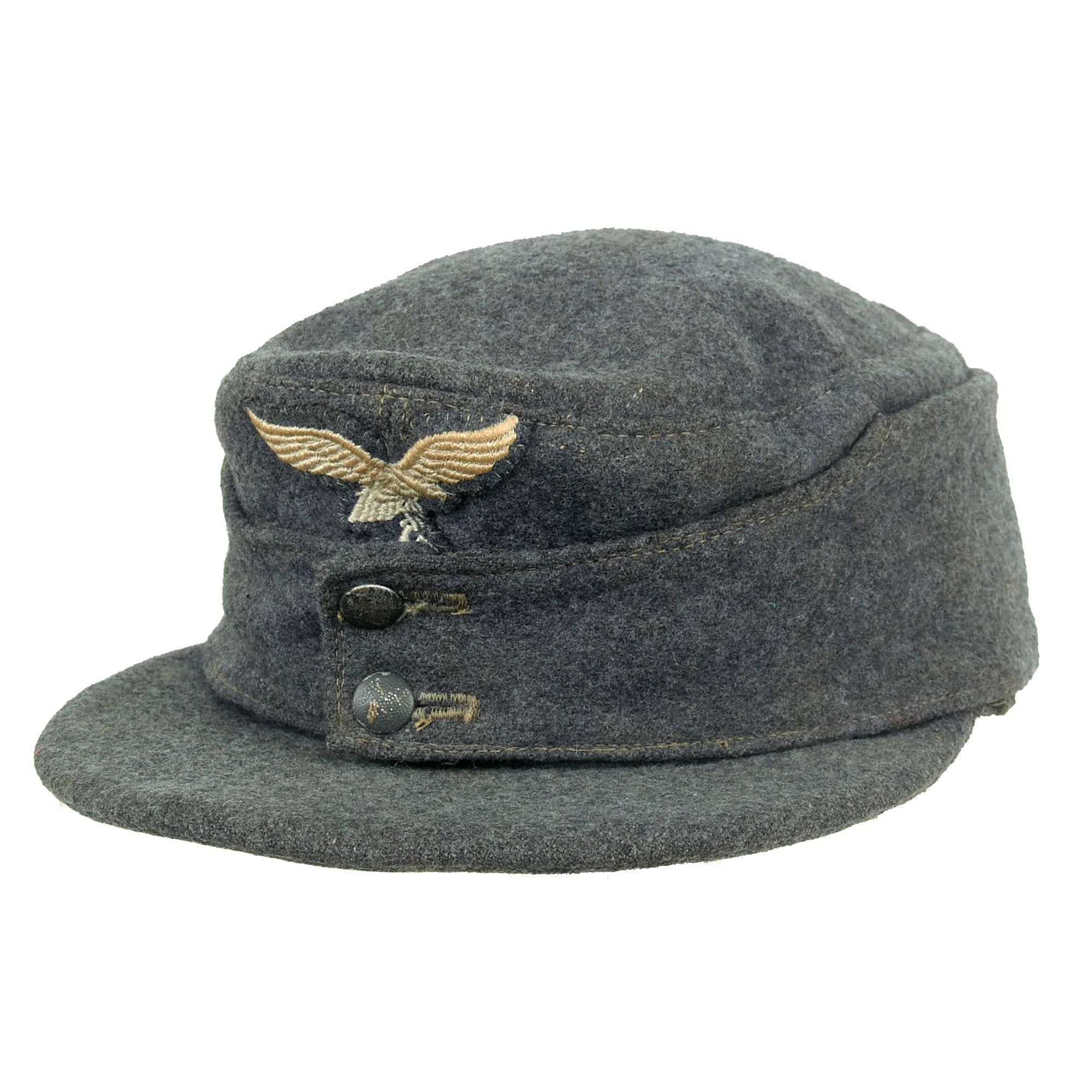
Original Item: Only One Available. This cap is a very nice example of a German WWII Wehrmacht Heer Army Pioneer Combat Engineer EM/NCO Schirmmütze (visor cap), made by the highly desirable by Peter Küpper company, who also made caps under the Peküro label. This company was a "Top Five" maker during the WWII period, up there with EREL and Wilhelm Welhausen, and caps made by them were desirable then as they are now.
This early pattern cap really looks the business, though it has had the front brim replaced with a period leather one at some point. We unfortunately have no way to know whether this was replaced during the WWII period or after. It still has the original crown stiffener installed, so the sides have not sunken down over the years, giving it a lovely gently swept back shape. It features the typical feldgrau (field gray) wool construction with a traditional high forward crown, however in this case the cap band is made from the same material, and not the "dark bottle green" seen later. It also has matching Schwarz (Black) piping along the top edge and flanking either side of the band. This is the Waffenfarbe (Corps Color) for the Pioniere (Combat engineers), as well as Assault, Armored, Fortress, and Railway engineers.
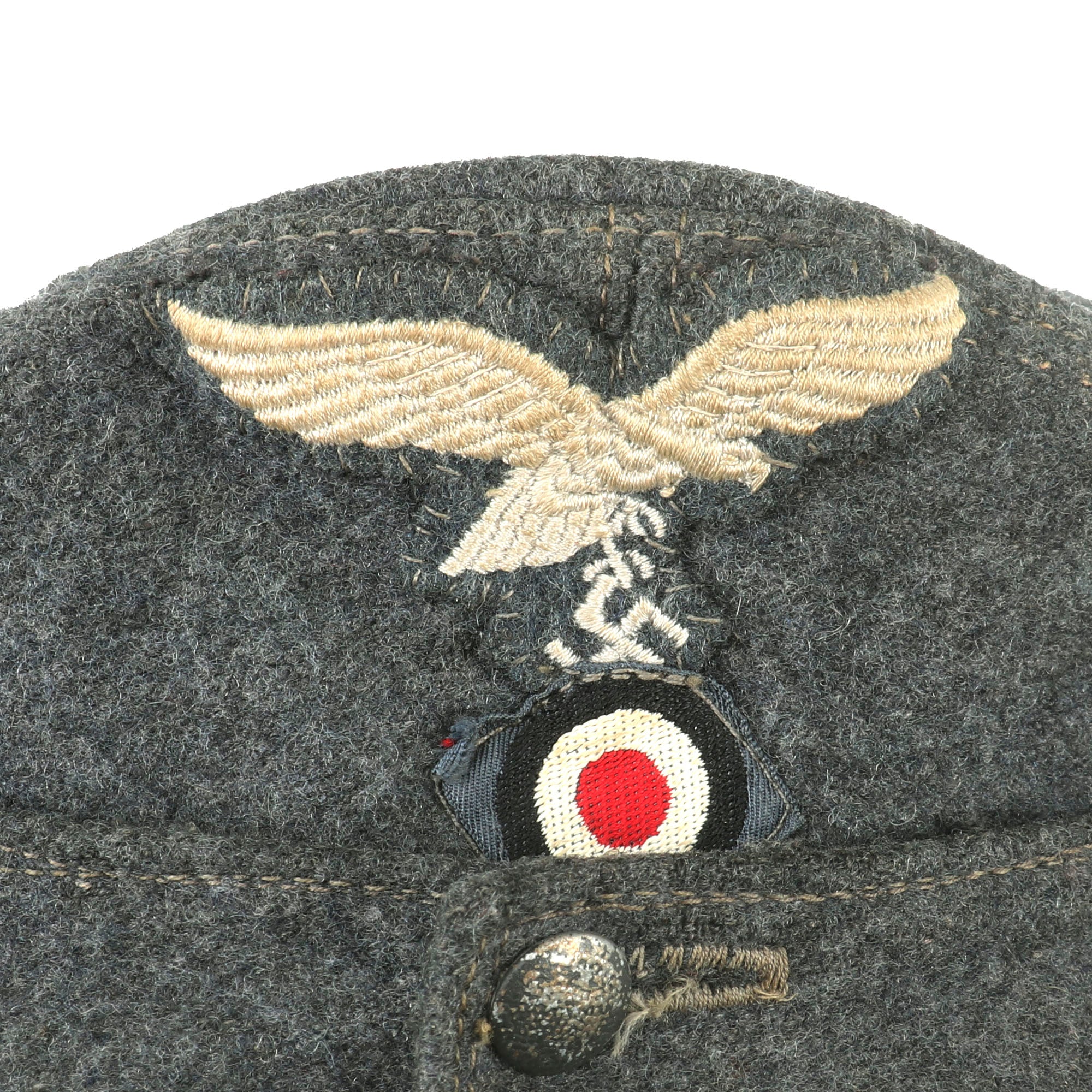
It is decorated with a well detailed stamped aluminum Wehrmachtadler eagle on the peak and and an open aluminum wreath surrounding a plated metal tri-color cockade on the band. The aluminum insignia are all in very good shape, still bright, while the cockade shows plating loss and oxidation, though the red insert in the cockade is still vibrant. The cap has the correct black patent leather EM/NCO chin strap with double buckles, which shows some age related degradation, as well as some tears where the strap goes over the black end buttons. The replacement leather visor is in very good condition, showing some degradation of the black finish due to age.
The cap is lined with brown "service cloth" type material on the sides, while the top is lined with brown oil cloth. The lining is in very good condition, though the celluloid sweat shield diamond and its stitching are completely missing. However, the maker information stamped on the top in silver paint is still fully legible:
Lieferant
Peter Küpper
RONSDORF
(Gold Medal Awards)
Wasserdichte
Stirndruckfrei
Deutsches Reichspatent
54
"Wasserdichte" translates to "waterproof" and "Stirndruckfrei" translates to "forehead pressure free". We also noted a unit marking stamped on the inside, which is a bit faint, and we believe it reads Rbd. Frt. 11 B3. We unfortunately have not been able to find any information regarding what this marking means, and as it is in faded 'Blackletter' typeface, we are not confident in our transcription. The cap is also fitted with a brown oil cloth sweatband, attached to the cap via a black velvet plush material spacer. It shows wear and some degradation of the stitching, and is torn through on the right side.
Overall condition is just lovely, with nice honest used look. The colors are very well retained, and there is no major staining on the exterior. We did not notice any areas of mothing or major damage. This is a very nice, high quality German Heer Pioneer EM/NCO peak visor cap, offered for sale in very good condition. Ready to display!
The German Schirmmütze Visor Cap:
The visor cap (Schirmmütze) was an important part of the headgear worn by German uniformed military, civil, paramilitary and political organizations during the Third Reich. This was the standard cloth headgear worn as a part of the service uniform. Visor caps were worn outdoors as well as indoors, and were often required to be worn by all personnel on duty. Visor caps were made in versions specific to each organization and were often further differentiated through the use of insignia, colored piping, or style of chin cord, to indicate rank, role or branch. The insignia used on these caps ranged from simple stamped metal emblems, to elaborate hand embroidery. Visor caps were issued to enlisted soldiers and NCOs in the military and in some other organizations. Officers had to purchase their own hats, and lower ranks could choose to purchase caps that were of a higher quality than the rather basic, issue examples. The private purchase caps were generally made in very high quality, with fine materials. A wide variety of fabrics were used, from Trikot and doeskin, to heavy wool, or even lightweight white fabric for summer wear. In the military, issue of these caps was generally suspended shortly after the outbreak of the war, but they continued to be worn by some troops until the end of the war.

Details & Craftsmanship
Every detail has been carefully considered to bring you the perfect product.

Details & Craftsmanship
Every detail has been carefully considered to bring you the perfect product.

Details & Craftsmanship
Every detail has been carefully considered to bring you the perfect product.

Details & Craftsmanship
Every detail has been carefully considered to bring you the perfect product.

Details & Craftsmanship
Every detail has been carefully considered to bring you the perfect product.

Details & Craftsmanship
Every detail has been carefully considered to bring you the perfect product.

Details & Craftsmanship
Every detail has been carefully considered to bring you the perfect product.

Details & Craftsmanship
Every detail has been carefully considered to bring you the perfect product.

Details & Craftsmanship
Every detail has been carefully considered to bring you the perfect product.

Details & Craftsmanship
Every detail has been carefully considered to bring you the perfect product.

Details & Craftsmanship
Every detail has been carefully considered to bring you the perfect product.
Description
Original Item: Only One Available. This cap is a very nice example of a German WWII Wehrmacht Heer Army Pioneer Combat Engineer EM/NCO Schirmmütze (visor cap), made by the highly desirable by Peter Küpper company, who also made caps under the Peküro label. This company was a "Top Five" maker during the WWII period, up there with EREL and Wilhelm Welhausen, and caps made by them were desirable then as they are now.
This early pattern cap really looks the business, though it has had the front brim replaced with a period leather one at some point. We unfortunately have no way to know whether this was replaced during the WWII period or after. It still has the original crown stiffener installed, so the sides have not sunken down over the years, giving it a lovely gently swept back shape. It features the typical feldgrau (field gray) wool construction with a traditional high forward crown, however in this case the cap band is made from the same material, and not the "dark bottle green" seen later. It also has matching Schwarz (Black) piping along the top edge and flanking either side of the band. This is the Waffenfarbe (Corps Color) for the Pioniere (Combat engineers), as well as Assault, Armored, Fortress, and Railway engineers.
It is decorated with a well detailed stamped aluminum Wehrmachtadler eagle on the peak and and an open aluminum wreath surrounding a plated metal tri-color cockade on the band. The aluminum insignia are all in very good shape, still bright, while the cockade shows plating loss and oxidation, though the red insert in the cockade is still vibrant. The cap has the correct black patent leather EM/NCO chin strap with double buckles, which shows some age related degradation, as well as some tears where the strap goes over the black end buttons. The replacement leather visor is in very good condition, showing some degradation of the black finish due to age.
The cap is lined with brown "service cloth" type material on the sides, while the top is lined with brown oil cloth. The lining is in very good condition, though the celluloid sweat shield diamond and its stitching are completely missing. However, the maker information stamped on the top in silver paint is still fully legible:
Lieferant
Peter Küpper
RONSDORF
(Gold Medal Awards)
Wasserdichte
Stirndruckfrei
Deutsches Reichspatent
54
"Wasserdichte" translates to "waterproof" and "Stirndruckfrei" translates to "forehead pressure free". We also noted a unit marking stamped on the inside, which is a bit faint, and we believe it reads Rbd. Frt. 11 B3. We unfortunately have not been able to find any information regarding what this marking means, and as it is in faded 'Blackletter' typeface, we are not confident in our transcription. The cap is also fitted with a brown oil cloth sweatband, attached to the cap via a black velvet plush material spacer. It shows wear and some degradation of the stitching, and is torn through on the right side.
Overall condition is just lovely, with nice honest used look. The colors are very well retained, and there is no major staining on the exterior. We did not notice any areas of mothing or major damage. This is a very nice, high quality German Heer Pioneer EM/NCO peak visor cap, offered for sale in very good condition. Ready to display!
The German Schirmmütze Visor Cap:
The visor cap (Schirmmütze) was an important part of the headgear worn by German uniformed military, civil, paramilitary and political organizations during the Third Reich. This was the standard cloth headgear worn as a part of the service uniform. Visor caps were worn outdoors as well as indoors, and were often required to be worn by all personnel on duty. Visor caps were made in versions specific to each organization and were often further differentiated through the use of insignia, colored piping, or style of chin cord, to indicate rank, role or branch. The insignia used on these caps ranged from simple stamped metal emblems, to elaborate hand embroidery. Visor caps were issued to enlisted soldiers and NCOs in the military and in some other organizations. Officers had to purchase their own hats, and lower ranks could choose to purchase caps that were of a higher quality than the rather basic, issue examples. The private purchase caps were generally made in very high quality, with fine materials. A wide variety of fabrics were used, from Trikot and doeskin, to heavy wool, or even lightweight white fabric for summer wear. In the military, issue of these caps was generally suspended shortly after the outbreak of the war, but they continued to be worn by some troops until the end of the war.