
Original: $895.00
-70%$895.00
$268.50The Story
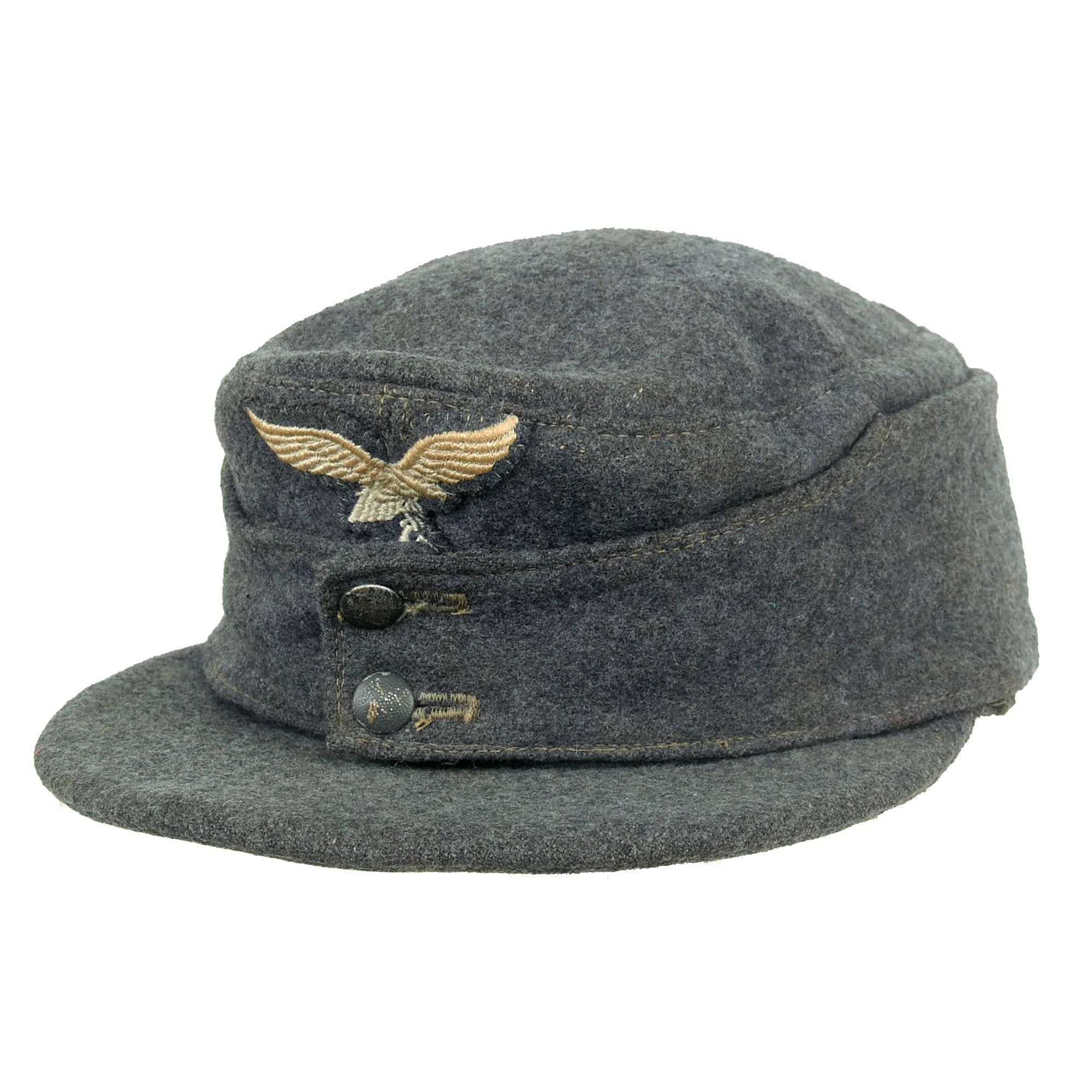
Original Item: Only One Available. This is a very nice example of a German WWII Kriegsmarine Navy M38 Overseas cap (Schiffchen), as worn Officer ranks. The overseas cap, nicknamed in German military slang as Schiffchen, or literally "little ship" as it resembled an up-turned row-boat, was standard issue for Warrant and Petty officer NCO ranks.
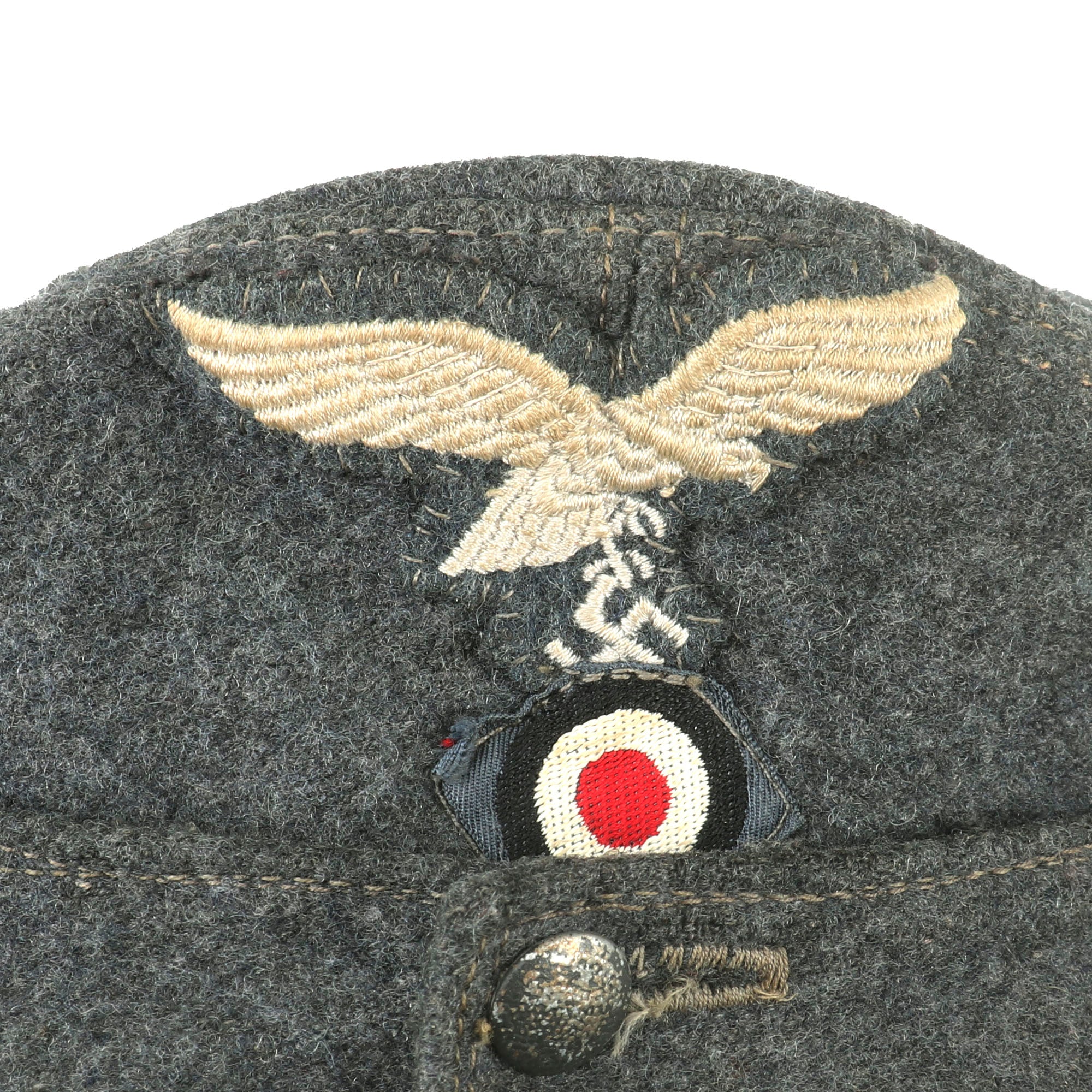
The cap is constructed of a navy blue wool exterior, and features BeVo machine embroidered Wehrmachtadler Eagle on the front, made from golden yellow thread on a blue background. Below this is an aluminum tri-color cockade, with a vibrant red felt insert. The scalloped flap around the cap has lovely gold celeon braid piping around the top, indicating officer issue. The interior is black cotton, and is in very good condition. There is a size 57 stamped on the left side inner lining, with no other markings that we can see.
Condition of the cap is very good, showing only light wear from service on the exterior, which has caused some light damage to the celeon piping. There is some minor fading and soiling, but no major condition issues. Also of note is that there is tack stitching along the top crease, which helped adjust how the hat sits on the head.
A very nice lightly worn Kriegsmarine Officer cap, ready to add to your collection!
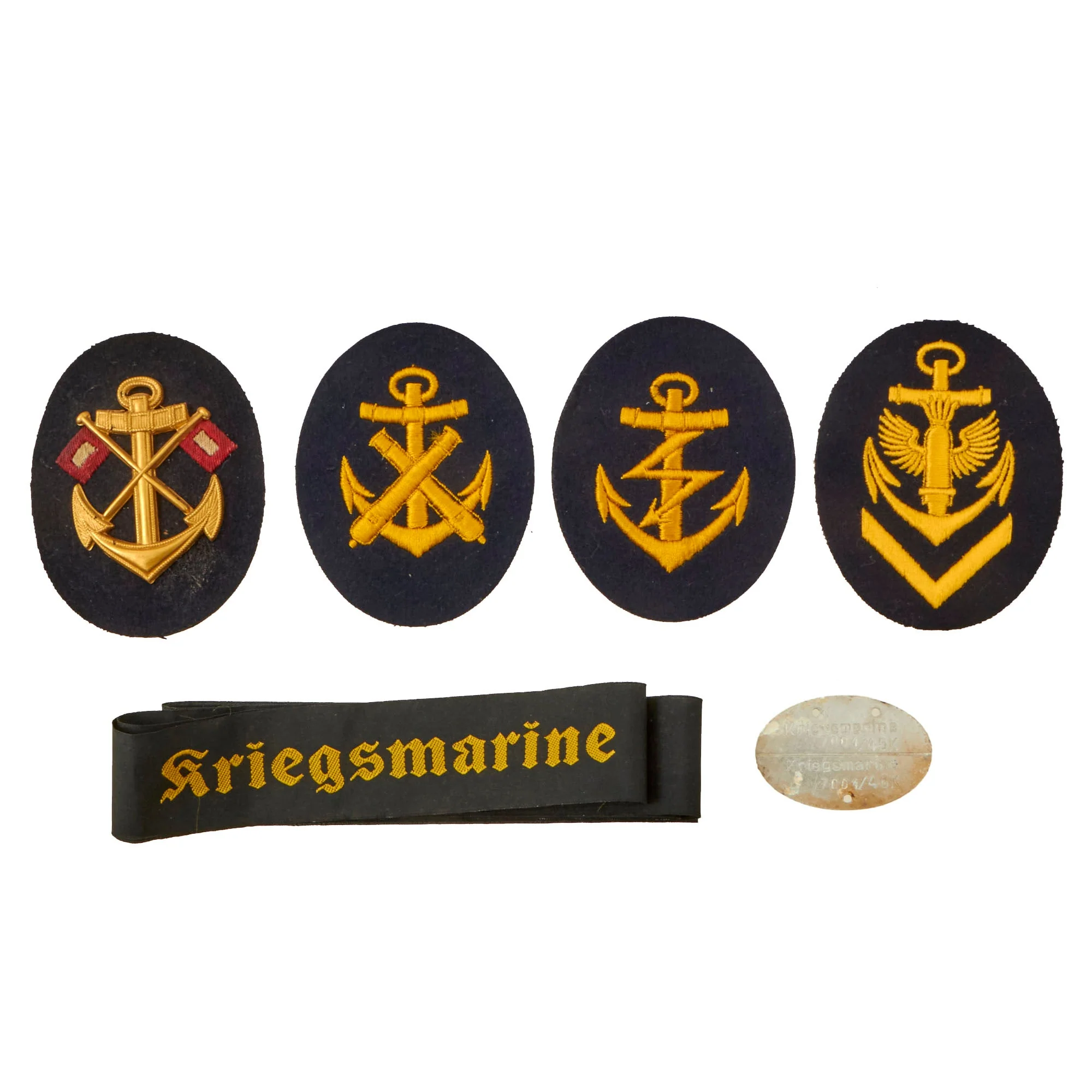
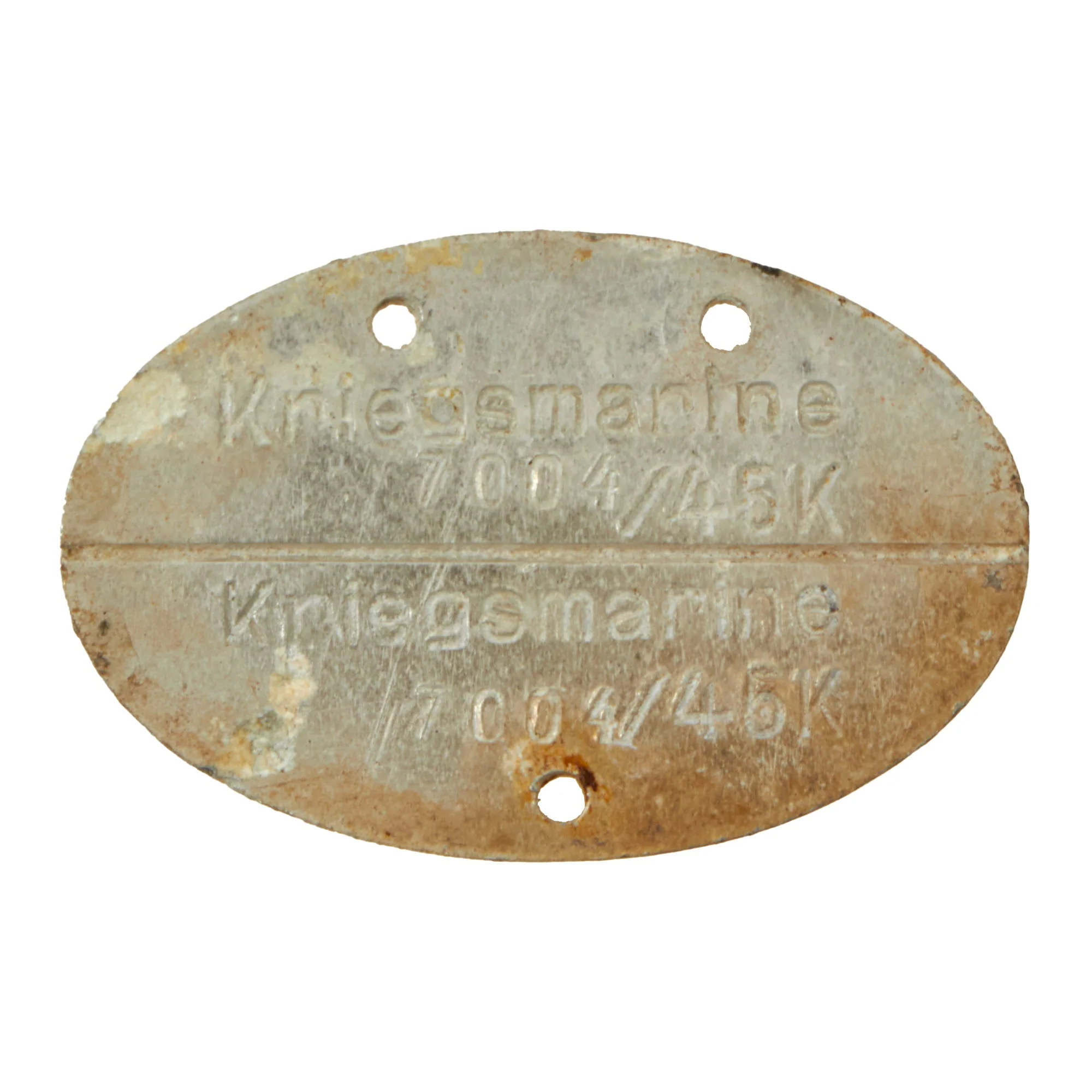
The Kriegsmarine was the navy of NSDAP Germany from 1935 to 1945. It superseded the Imperial German Navy of the German Empire (1871–1918) and the inter-war Reichsmarine (1919–1935) of the Weimar Republic. The Kriegsmarine was one of three official branches, along with the Heer and the Luftwaffe, of the Wehrmacht, the German armed forces from 1935 to 1945.
In violation of the Treaty of Versailles, the Kriegsmarine grew rapidly during German naval rearmament in the 1930s. The 1919 treaty had limited the size of the German navy and prohibited the building of submarines.
Kriegsmarine ships were deployed to the waters around Spain during the Spanish Civil War (1936–1939) under the guise of enforcing non-intervention, but in reality supported the Nationalists against the Spanish Republicans.
In January 1939, Plan Z, a massive shipbuilding program, was ordered, calling for surface naval parity with the British Royal Navy by 1944. When World War II broke out in September 1939, Plan Z was shelved in favor of a crash building program for submarines (U-boats) instead of capital surface warships, and land and air forces were given priority of strategic resources.
The Commander-in-Chief of the Kriegsmarine (as for all branches of armed forces during the period of absolute NSDAP power) was Adolf H, who exercised his authority through the Oberkommando der Marine ("High Command of the Navy").
The Kriegsmarine's most significant ships were the U-boats, most of which were constructed after Plan Z was abandoned at the beginning of World War II. Wolfpacks were rapidly assembled groups of submarines which attacked British convoys during the first half of the Battle of the Atlantic but this tactic was largely abandoned by May 1943 when U-boat losses mounted. Along with the U-boats, surface commerce raiders (including auxiliary cruisers) were used to disrupt Allied shipping in the early years of the war, the most famous of these being the heavy cruisers Admiral Graf Spee and Admiral Scheer and the battleship Bismarck. However, the adoption of convoy escorts, especially in the Atlantic, greatly reduced the effectiveness of surface commerce raiders against convoys.
Following the end of World War II in 1945, the Kriegsmarine's remaining ships were divided up among the Allied powers and were used for various purposes including minesweeping. Some were loaded with superfluous chemical weapons and scuttled.

Details & Craftsmanship
Every detail has been carefully considered to bring you the perfect product.

Details & Craftsmanship
Every detail has been carefully considered to bring you the perfect product.

Details & Craftsmanship
Every detail has been carefully considered to bring you the perfect product.

Details & Craftsmanship
Every detail has been carefully considered to bring you the perfect product.

Details & Craftsmanship
Every detail has been carefully considered to bring you the perfect product.

Details & Craftsmanship
Every detail has been carefully considered to bring you the perfect product.

Details & Craftsmanship
Every detail has been carefully considered to bring you the perfect product.

Details & Craftsmanship
Every detail has been carefully considered to bring you the perfect product.

Details & Craftsmanship
Every detail has been carefully considered to bring you the perfect product.
Description
Original Item: Only One Available. This is a very nice example of a German WWII Kriegsmarine Navy M38 Overseas cap (Schiffchen), as worn Officer ranks. The overseas cap, nicknamed in German military slang as Schiffchen, or literally "little ship" as it resembled an up-turned row-boat, was standard issue for Warrant and Petty officer NCO ranks.
The cap is constructed of a navy blue wool exterior, and features BeVo machine embroidered Wehrmachtadler Eagle on the front, made from golden yellow thread on a blue background. Below this is an aluminum tri-color cockade, with a vibrant red felt insert. The scalloped flap around the cap has lovely gold celeon braid piping around the top, indicating officer issue. The interior is black cotton, and is in very good condition. There is a size 57 stamped on the left side inner lining, with no other markings that we can see.
Condition of the cap is very good, showing only light wear from service on the exterior, which has caused some light damage to the celeon piping. There is some minor fading and soiling, but no major condition issues. Also of note is that there is tack stitching along the top crease, which helped adjust how the hat sits on the head.
A very nice lightly worn Kriegsmarine Officer cap, ready to add to your collection!
The Kriegsmarine was the navy of NSDAP Germany from 1935 to 1945. It superseded the Imperial German Navy of the German Empire (1871–1918) and the inter-war Reichsmarine (1919–1935) of the Weimar Republic. The Kriegsmarine was one of three official branches, along with the Heer and the Luftwaffe, of the Wehrmacht, the German armed forces from 1935 to 1945.
In violation of the Treaty of Versailles, the Kriegsmarine grew rapidly during German naval rearmament in the 1930s. The 1919 treaty had limited the size of the German navy and prohibited the building of submarines.
Kriegsmarine ships were deployed to the waters around Spain during the Spanish Civil War (1936–1939) under the guise of enforcing non-intervention, but in reality supported the Nationalists against the Spanish Republicans.
In January 1939, Plan Z, a massive shipbuilding program, was ordered, calling for surface naval parity with the British Royal Navy by 1944. When World War II broke out in September 1939, Plan Z was shelved in favor of a crash building program for submarines (U-boats) instead of capital surface warships, and land and air forces were given priority of strategic resources.
The Commander-in-Chief of the Kriegsmarine (as for all branches of armed forces during the period of absolute NSDAP power) was Adolf H, who exercised his authority through the Oberkommando der Marine ("High Command of the Navy").
The Kriegsmarine's most significant ships were the U-boats, most of which were constructed after Plan Z was abandoned at the beginning of World War II. Wolfpacks were rapidly assembled groups of submarines which attacked British convoys during the first half of the Battle of the Atlantic but this tactic was largely abandoned by May 1943 when U-boat losses mounted. Along with the U-boats, surface commerce raiders (including auxiliary cruisers) were used to disrupt Allied shipping in the early years of the war, the most famous of these being the heavy cruisers Admiral Graf Spee and Admiral Scheer and the battleship Bismarck. However, the adoption of convoy escorts, especially in the Atlantic, greatly reduced the effectiveness of surface commerce raiders against convoys.
Following the end of World War II in 1945, the Kriegsmarine's remaining ships were divided up among the Allied powers and were used for various purposes including minesweeping. Some were loaded with superfluous chemical weapons and scuttled.