
Original: $595.00
-70%$595.00
$178.50The Story
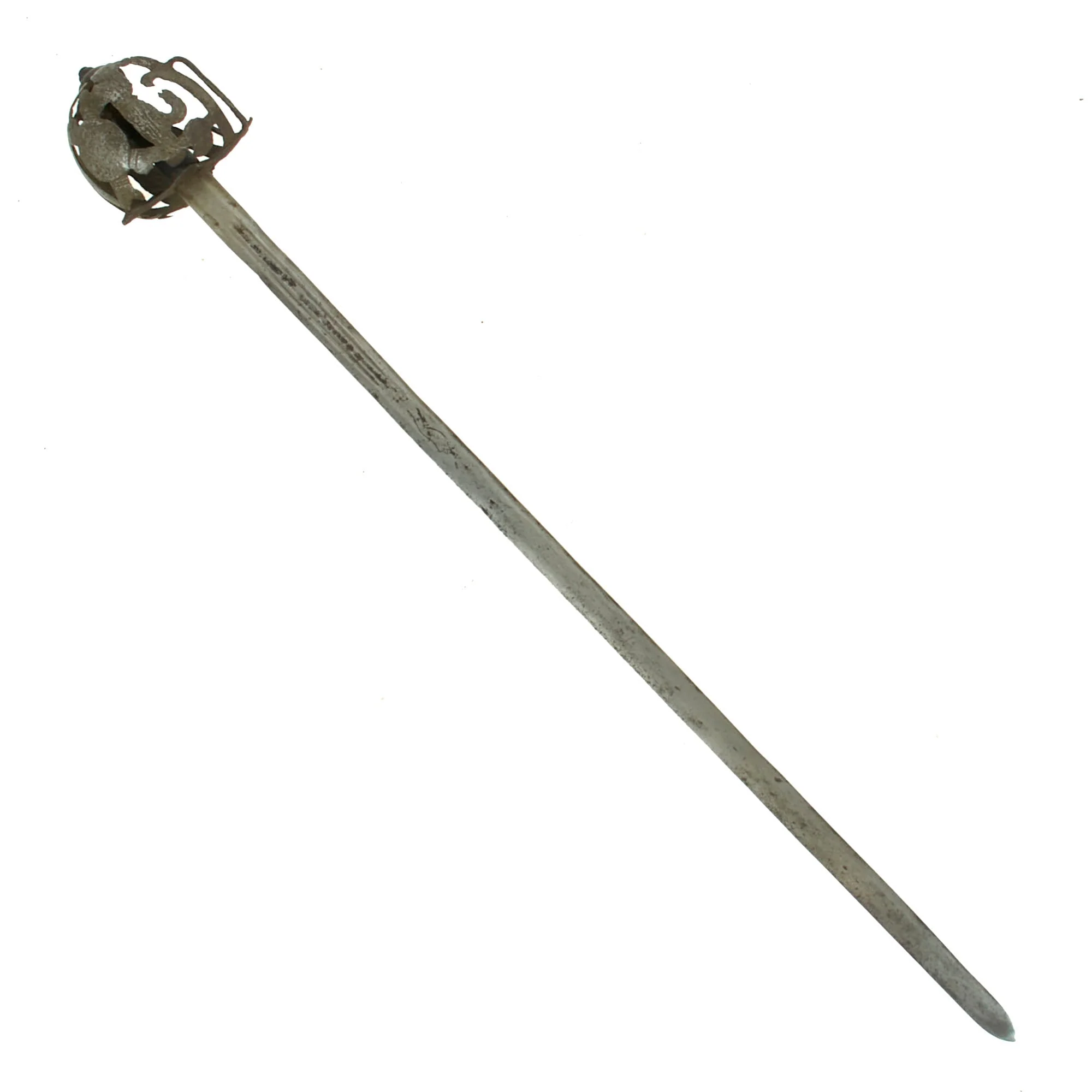
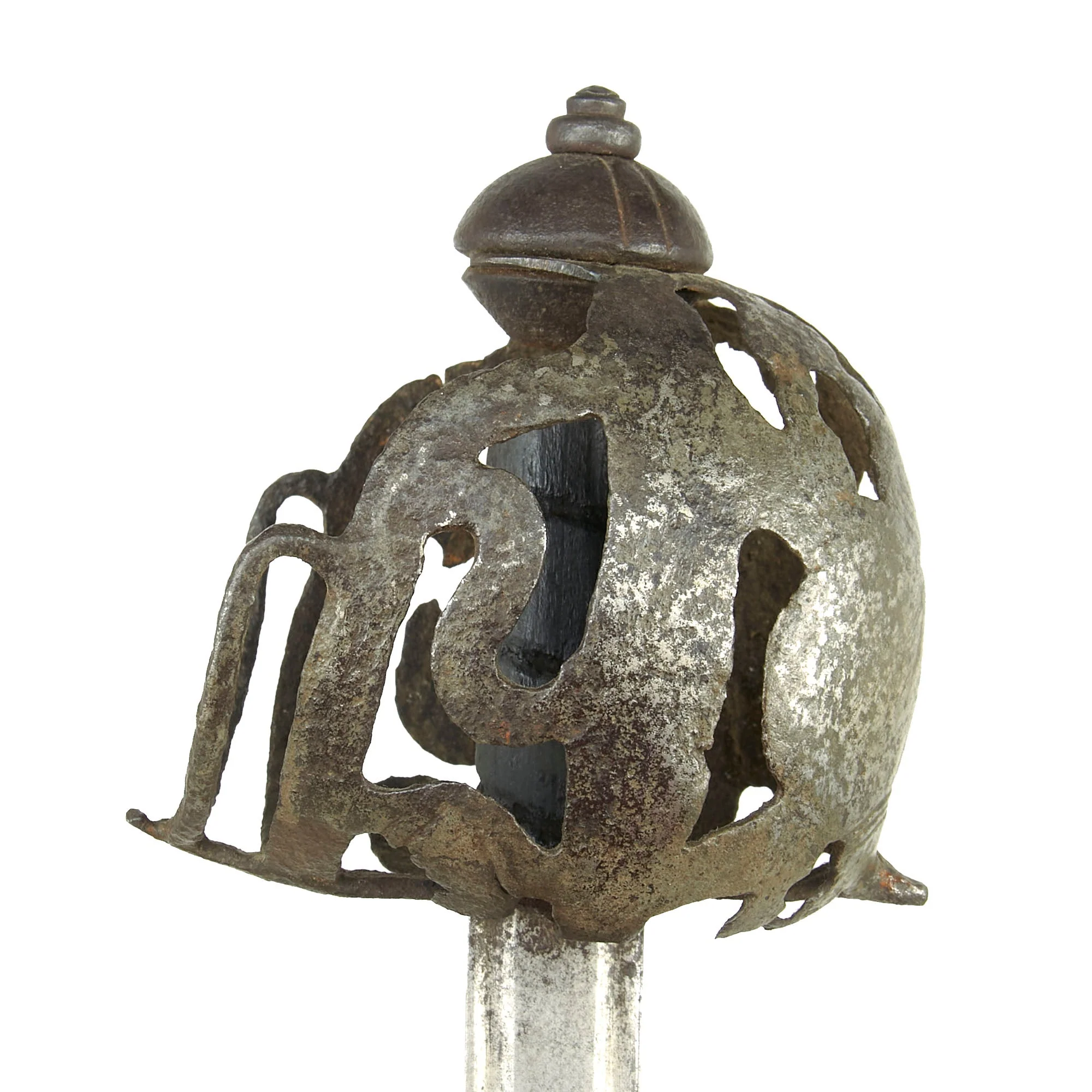
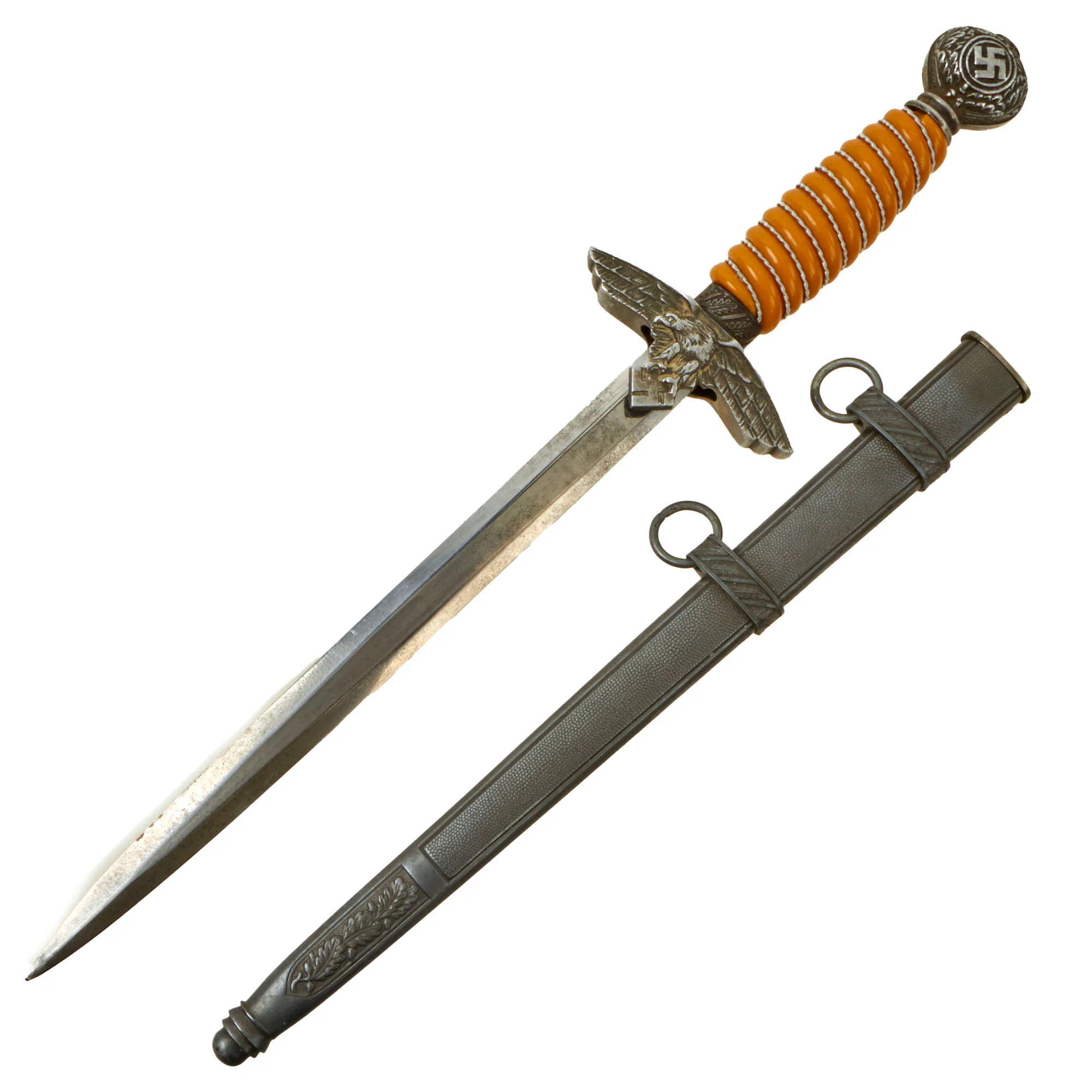
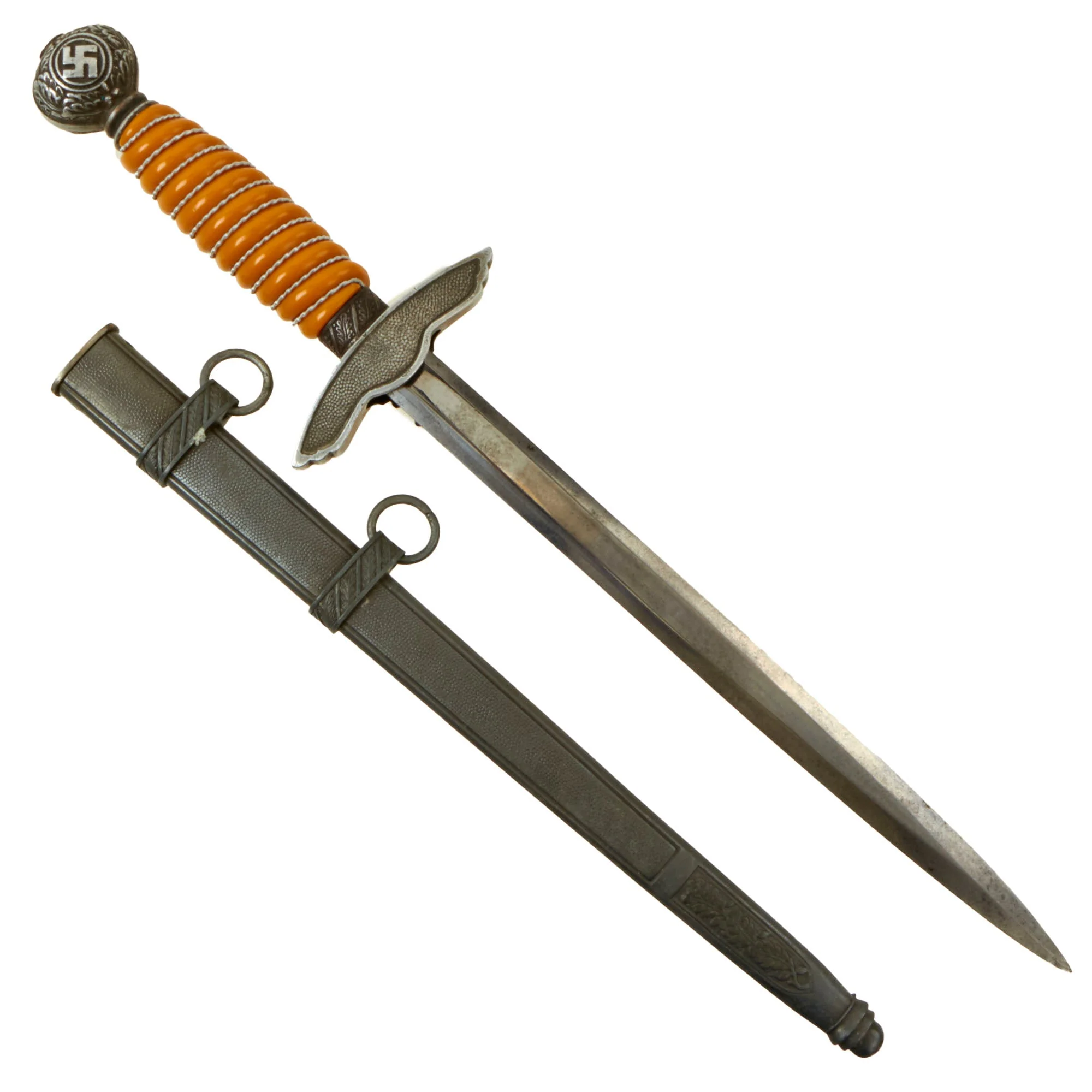
Original Item: Only One Available. This is a lovely example of the rare and desirable "Roon" variation of the Feldherrn Serie (Commander Series) of German Army Officer's swords by famed firm Carl Eickhorn of Solingen, the legendary "City of Blades" in Western Germany. Named after famous figures in German history, many of which were high ranking military officers, the series has a total of nine different variations. These are usually referred to as the Feldmarschall (Field Marshal) series by collectors, even though only four of the nine actually held that rank. These included the Wrangel, Scharnhorst, Freiherr vom Stein, Roon, Derfflinger, Zieten, and Blücher patterns. The Prinz Eugen and Lützow patterns were added in 1938 and 1939, which are the rarest patterns to find. Many other makers made some similar designs to the series. We have had many examples of the series previously, this is the first time that we have had a Roon pattern!
The Pattern 1716 - Roon sword is named after Albrecht Theodor Emil Graf von Roon (30 April 1803 – 23 February 1879), often referred to as Albrecht von Roon. He was a Prussian Soldier and Stateman, who was the Prussian Minister of War 5 December 1859 – 9 November 1873. Along with Otto von Bismarck and Helmuth von Moltke, he was a key figure in 1860s Prussia, undertaking several wars which would lead to the formation of the German Empire in 1871. For his service he was made a Graf and promoted to the rank of Generalfeldmarschall in 1873, however due to ill health he had to retire soon after.
This piece is a real treasure as it is not constructed from the later war aluminum, but rather is made of solid brass. It really looks great, with the gilding still well retained in many areas, particularly on the crossguard. Other areas show some wear to the finish, which is still well retained in the recesses of the design, while the raised areas have a lovely patina. The Roon pattern is unique in that the design is almost entirely engraved, even the langet, which mean that the insignia could easily be customized from the factory. A Closed-wing Wehrmachtadler Eagle, Oak Leaves, and Crossed Cannons designs have all been seen, and this example has the standard left-facing eagle.
The overall design is definitely less ornate than others, being mostly engraved, and features the iconic German "Oak Leaves and Acorns" on the "dove's head" pommel and back strap, grip ferrule, and also on the "P"-guard. The sides of the guard have repeating acorns, and as mentioned previously the langet has a closed-wing Wehrmacht Eagle that looks to the left. Definitely a departure from other patterns we have seen! The reverse of the crossguard is often engraved with the owners monogram, and in this case the sword actually has one! It has a lovely interlocking C W, which definitely looks to have been factory executed.
The grip is of carved wood covered in black celluloid, which is in very good condition and remains shiny, though there is a missing piece and a crack at the bottom, probably due to the celluloid shrinking. It looks like someone used a black marker on the exposed wood to make it less noticeable. The grip is wrapped with a skein of six brass wires twisted into three pairs, the center two of which are larger. There is a bit of looseness in the wrapping, but it is still correctly in the grooves and shows light oxidation. The hilt is relatively secure on the tang, though there is definitely some wobble.
The blade on this sword is an excellent example. It measures 28 3/8" inches and has the highest quality nickel plating. This plating is still bright with only some light oxidation in areas, which would probably polish out if desired. The edges is correctly unsharpened and still dent free, with just the tiniest of bends at the very tip. The original leather washer is still in place, though it is somewhat dried out from age.
The rear ricasso of the blade under the langet is stamped with the 1935-41 Eickhorn trademark: a seated squirrel holding a sword, with the word ORIGINAL above and the firm's name and location, Eickhorn / SOLINGEN below. Carl Eickhorn is a legendary maker from Solingen, the famous "City of Blades" in Western Germany. According to J. Anthony Carter's book, GERMAN KNIFE AND SWORD MAKERS, this company was founded in 1865 by Carl Eickhorn, and is arguably the most famous of all Solingen makers. Not only could the family trace their history back 500 years, but they could also demonstrate involvement in the hardening and grinding industries for the same period. Truly the nobility of Solingen Edged weapon dynasties. Eickhorn edged weapons are the most desirable of all makers.
The steel scabbard is free of dents and bends, and still retains about 85% of the black enamel lacquer. There is wear and scratching commensurate with age and service, as well as checking and crazing in the lacquer, confirming the age and that it has not been refinished. There is a bit of flaking in areas, but no major oxidation, and it really has a great look. The scabbard still retains the original hanger ring and loop to hook on the belt hanger.
This is a very nice monogrammed example of a rare pattern from the highly desirable Field Marshal series of swords, made by the most legendary of all Solingen makers. If you were looking for a great sword to hang on the wall, this may be it!
Specifications:
Blade Length: 28 3/8"
Blade Style: Single Edge w/ Fuller
Overall length: 33 1/8“
Guard dimensions: 5" width x 5” length
Scabbard length: 29 1/2”
The German Army (German: Heer, was the land forces component of the Wehrmacht, the German armed forces, from 1935 to 1945. The Wehrmacht also included the Kriegsmarine (Navy) and the Luftwaffe (Air Force). During World War II, a total of about 15 million soldiers served in the German Army, of whom about seven million became casualties. Separate from the army, the Waffen-SS (Armed SS) was a multi-ethnic and multi-national military force of the Third Reich. Growing from three regiments to over 38 divisions during World War II, it served alongside the army but was never formally part of it.
Only 17 months after AH announced publicly the rearmament program, the Army reached its projected goal of 36 divisions. During the autumn of 1937, two more corps were formed. In 1938, four additional corps were formed with the inclusion of the five divisions of the Austrian Army after the Anschluss in March. During the period of its expansion by Adolf AH, the German Army continued to develop concepts pioneered during World War I, combining ground (Heer) and air (Luftwaffe) assets into combined arms teams. Coupled with operational and tactical methods such as encirclements and the "battle of annihilation", the German military managed quick victories in the two initial years of World War II, prompting the use of the word Blitzkrieg (literally lightning war, meaning lightning-fast war) for the techniques used.
The German Army entered the war with a majority of its infantry formations relying on the horse for transportation. The infantry remained foot soldiers throughout the war; artillery also remained primarily horse-drawn. The motorized formations received much attention in the world press in the opening years of the war, and were cited as the main reason for the success of the German invasions of Poland (September 1939), Norway and Denmark (April 1940), Belgium, France and Netherlands (May 1940), Yugoslavia (April 1941) and the early campaigns in the Soviet Union (June 1941). However their motorized and tank formations accounted for only 20% of the Heer's capacity at their peak strength.

Details & Craftsmanship
Every detail has been carefully considered to bring you the perfect product.

Details & Craftsmanship
Every detail has been carefully considered to bring you the perfect product.

Details & Craftsmanship
Every detail has been carefully considered to bring you the perfect product.

Details & Craftsmanship
Every detail has been carefully considered to bring you the perfect product.

Details & Craftsmanship
Every detail has been carefully considered to bring you the perfect product.

Details & Craftsmanship
Every detail has been carefully considered to bring you the perfect product.

Details & Craftsmanship
Every detail has been carefully considered to bring you the perfect product.

Details & Craftsmanship
Every detail has been carefully considered to bring you the perfect product.

Details & Craftsmanship
Every detail has been carefully considered to bring you the perfect product.

Details & Craftsmanship
Every detail has been carefully considered to bring you the perfect product.

Details & Craftsmanship
Every detail has been carefully considered to bring you the perfect product.

Details & Craftsmanship
Every detail has been carefully considered to bring you the perfect product.

Details & Craftsmanship
Every detail has been carefully considered to bring you the perfect product.
Description
Original Item: Only One Available. This is a lovely example of the rare and desirable "Roon" variation of the Feldherrn Serie (Commander Series) of German Army Officer's swords by famed firm Carl Eickhorn of Solingen, the legendary "City of Blades" in Western Germany. Named after famous figures in German history, many of which were high ranking military officers, the series has a total of nine different variations. These are usually referred to as the Feldmarschall (Field Marshal) series by collectors, even though only four of the nine actually held that rank. These included the Wrangel, Scharnhorst, Freiherr vom Stein, Roon, Derfflinger, Zieten, and Blücher patterns. The Prinz Eugen and Lützow patterns were added in 1938 and 1939, which are the rarest patterns to find. Many other makers made some similar designs to the series. We have had many examples of the series previously, this is the first time that we have had a Roon pattern!
The Pattern 1716 - Roon sword is named after Albrecht Theodor Emil Graf von Roon (30 April 1803 – 23 February 1879), often referred to as Albrecht von Roon. He was a Prussian Soldier and Stateman, who was the Prussian Minister of War 5 December 1859 – 9 November 1873. Along with Otto von Bismarck and Helmuth von Moltke, he was a key figure in 1860s Prussia, undertaking several wars which would lead to the formation of the German Empire in 1871. For his service he was made a Graf and promoted to the rank of Generalfeldmarschall in 1873, however due to ill health he had to retire soon after.
This piece is a real treasure as it is not constructed from the later war aluminum, but rather is made of solid brass. It really looks great, with the gilding still well retained in many areas, particularly on the crossguard. Other areas show some wear to the finish, which is still well retained in the recesses of the design, while the raised areas have a lovely patina. The Roon pattern is unique in that the design is almost entirely engraved, even the langet, which mean that the insignia could easily be customized from the factory. A Closed-wing Wehrmachtadler Eagle, Oak Leaves, and Crossed Cannons designs have all been seen, and this example has the standard left-facing eagle.
The overall design is definitely less ornate than others, being mostly engraved, and features the iconic German "Oak Leaves and Acorns" on the "dove's head" pommel and back strap, grip ferrule, and also on the "P"-guard. The sides of the guard have repeating acorns, and as mentioned previously the langet has a closed-wing Wehrmacht Eagle that looks to the left. Definitely a departure from other patterns we have seen! The reverse of the crossguard is often engraved with the owners monogram, and in this case the sword actually has one! It has a lovely interlocking C W, which definitely looks to have been factory executed.
The grip is of carved wood covered in black celluloid, which is in very good condition and remains shiny, though there is a missing piece and a crack at the bottom, probably due to the celluloid shrinking. It looks like someone used a black marker on the exposed wood to make it less noticeable. The grip is wrapped with a skein of six brass wires twisted into three pairs, the center two of which are larger. There is a bit of looseness in the wrapping, but it is still correctly in the grooves and shows light oxidation. The hilt is relatively secure on the tang, though there is definitely some wobble.
The blade on this sword is an excellent example. It measures 28 3/8" inches and has the highest quality nickel plating. This plating is still bright with only some light oxidation in areas, which would probably polish out if desired. The edges is correctly unsharpened and still dent free, with just the tiniest of bends at the very tip. The original leather washer is still in place, though it is somewhat dried out from age.
The rear ricasso of the blade under the langet is stamped with the 1935-41 Eickhorn trademark: a seated squirrel holding a sword, with the word ORIGINAL above and the firm's name and location, Eickhorn / SOLINGEN below. Carl Eickhorn is a legendary maker from Solingen, the famous "City of Blades" in Western Germany. According to J. Anthony Carter's book, GERMAN KNIFE AND SWORD MAKERS, this company was founded in 1865 by Carl Eickhorn, and is arguably the most famous of all Solingen makers. Not only could the family trace their history back 500 years, but they could also demonstrate involvement in the hardening and grinding industries for the same period. Truly the nobility of Solingen Edged weapon dynasties. Eickhorn edged weapons are the most desirable of all makers.
The steel scabbard is free of dents and bends, and still retains about 85% of the black enamel lacquer. There is wear and scratching commensurate with age and service, as well as checking and crazing in the lacquer, confirming the age and that it has not been refinished. There is a bit of flaking in areas, but no major oxidation, and it really has a great look. The scabbard still retains the original hanger ring and loop to hook on the belt hanger.
This is a very nice monogrammed example of a rare pattern from the highly desirable Field Marshal series of swords, made by the most legendary of all Solingen makers. If you were looking for a great sword to hang on the wall, this may be it!
Specifications:
Blade Length: 28 3/8"
Blade Style: Single Edge w/ Fuller
Overall length: 33 1/8“
Guard dimensions: 5" width x 5” length
Scabbard length: 29 1/2”
The German Army (German: Heer, was the land forces component of the Wehrmacht, the German armed forces, from 1935 to 1945. The Wehrmacht also included the Kriegsmarine (Navy) and the Luftwaffe (Air Force). During World War II, a total of about 15 million soldiers served in the German Army, of whom about seven million became casualties. Separate from the army, the Waffen-SS (Armed SS) was a multi-ethnic and multi-national military force of the Third Reich. Growing from three regiments to over 38 divisions during World War II, it served alongside the army but was never formally part of it.
Only 17 months after AH announced publicly the rearmament program, the Army reached its projected goal of 36 divisions. During the autumn of 1937, two more corps were formed. In 1938, four additional corps were formed with the inclusion of the five divisions of the Austrian Army after the Anschluss in March. During the period of its expansion by Adolf AH, the German Army continued to develop concepts pioneered during World War I, combining ground (Heer) and air (Luftwaffe) assets into combined arms teams. Coupled with operational and tactical methods such as encirclements and the "battle of annihilation", the German military managed quick victories in the two initial years of World War II, prompting the use of the word Blitzkrieg (literally lightning war, meaning lightning-fast war) for the techniques used.
The German Army entered the war with a majority of its infantry formations relying on the horse for transportation. The infantry remained foot soldiers throughout the war; artillery also remained primarily horse-drawn. The motorized formations received much attention in the world press in the opening years of the war, and were cited as the main reason for the success of the German invasions of Poland (September 1939), Norway and Denmark (April 1940), Belgium, France and Netherlands (May 1940), Yugoslavia (April 1941) and the early campaigns in the Soviet Union (June 1941). However their motorized and tank formations accounted for only 20% of the Heer's capacity at their peak strength.