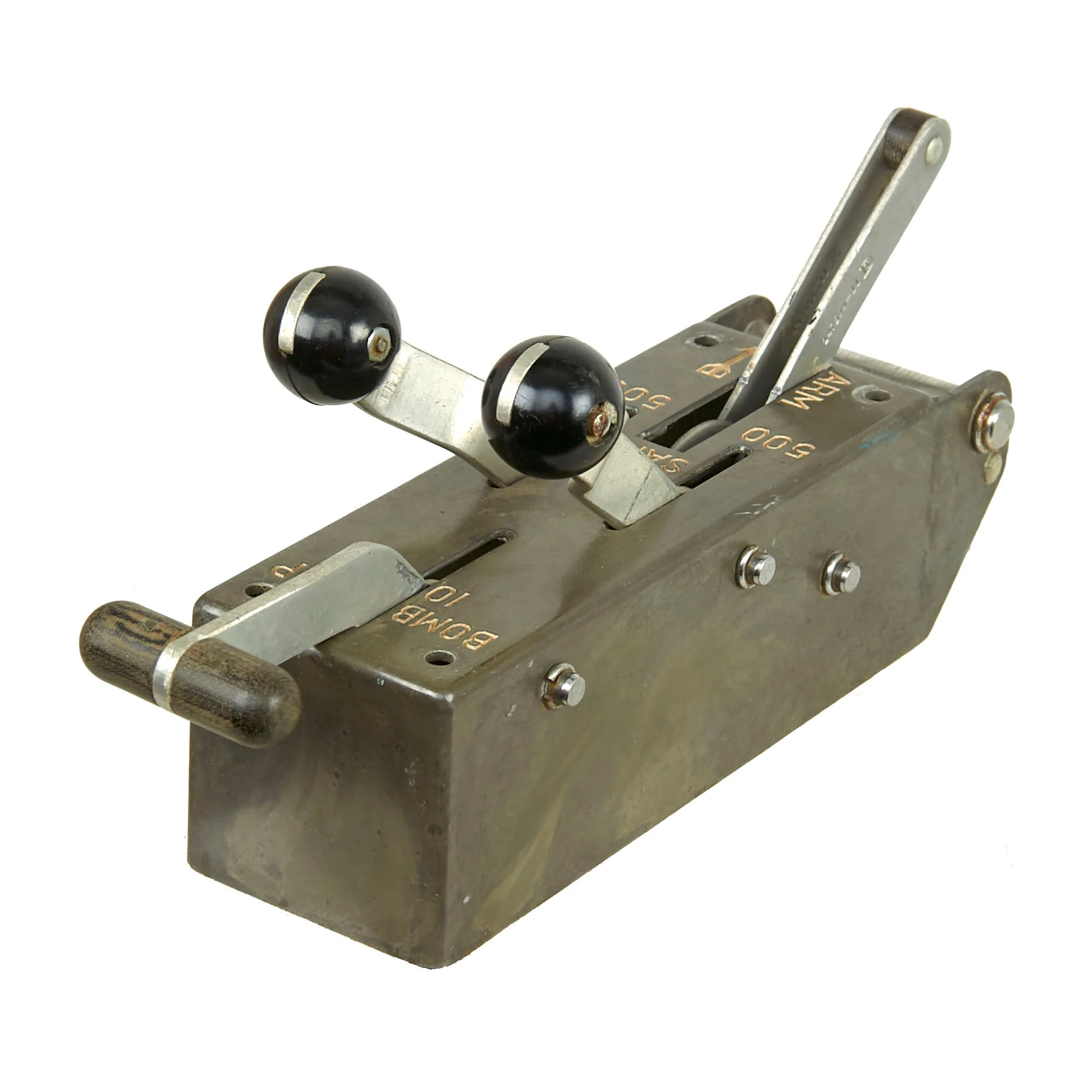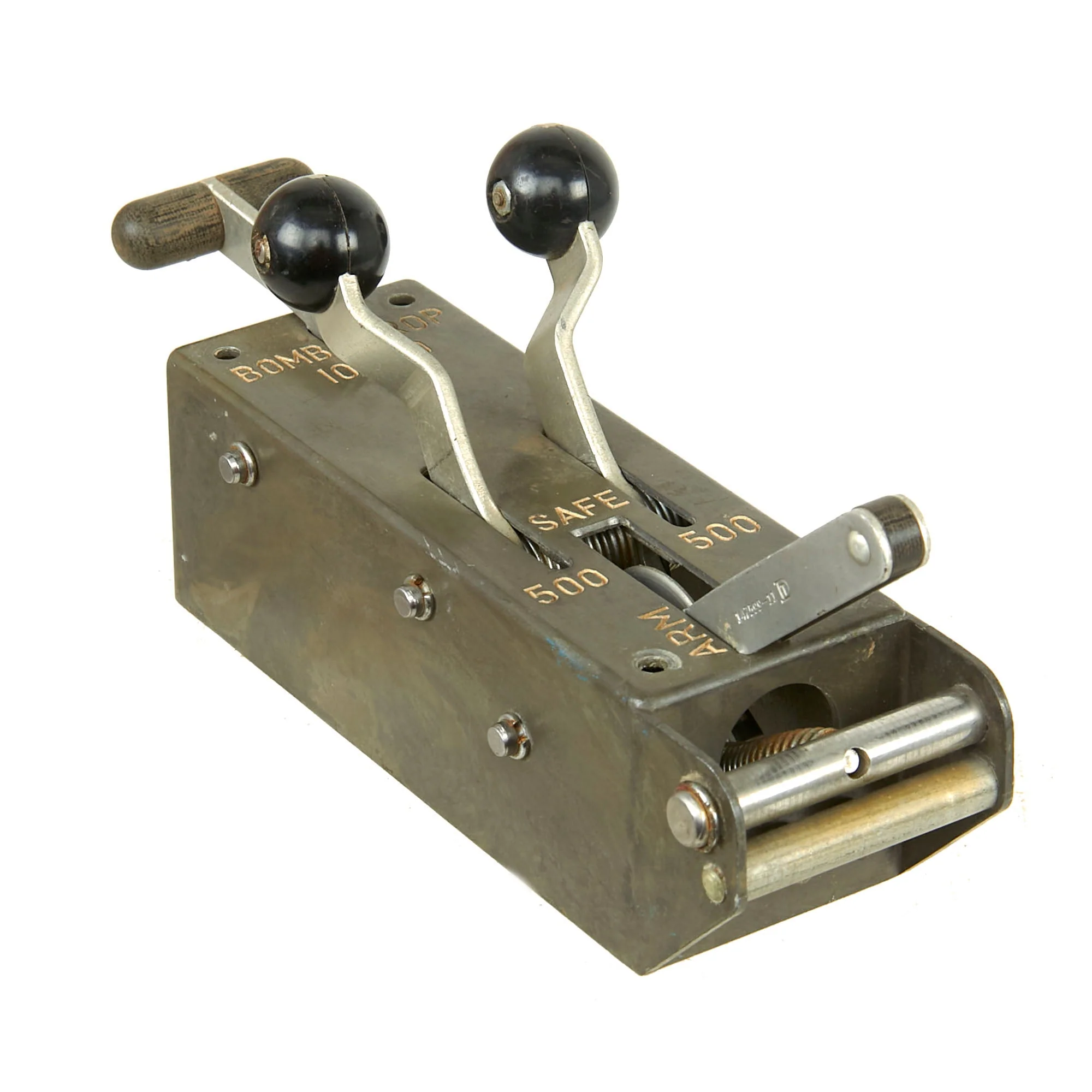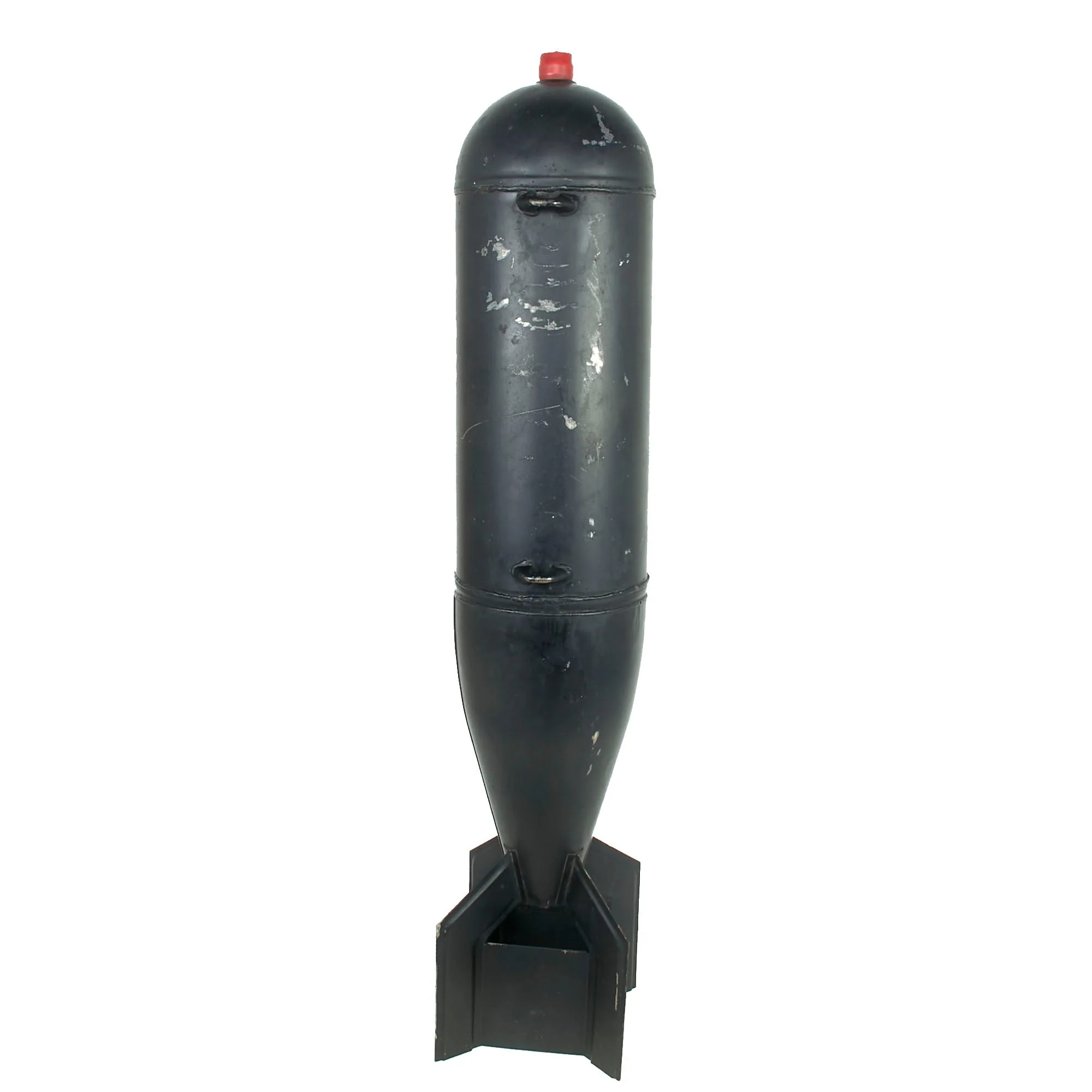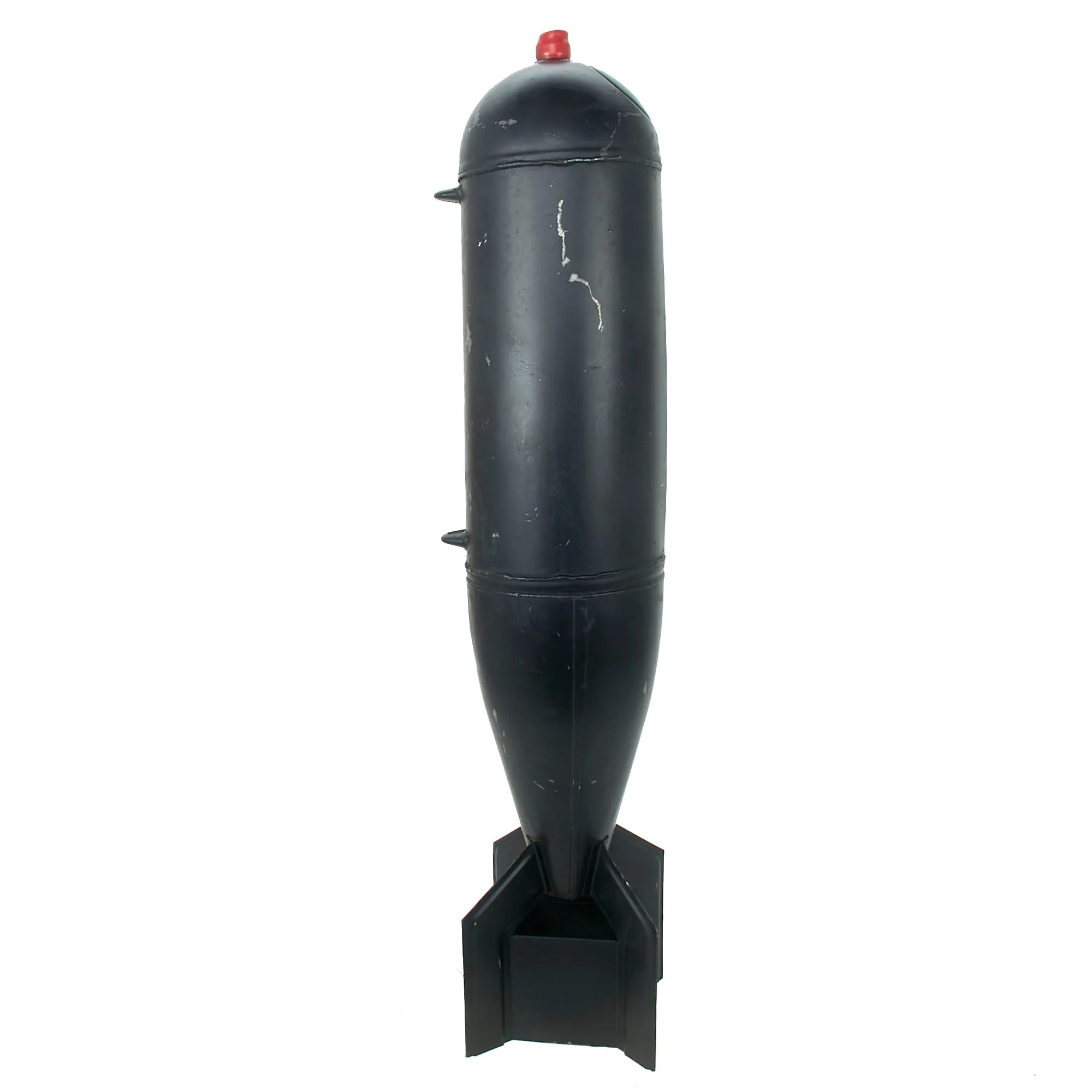

Original German WWII Panzergruppe Afrika Inscribed Inert 8cm Granatwerfer 34 “Bringback” Mortar Round by Kollmer & Jourdan of Pforzheim - GrW 34 - Dated 1943
Original German WWII Panzergruppe Afrika Inscribed Inert 8cm Granatwerfer 34 “Bringback” Mortar Round by Kollmer & Jourdan of Pforzheim - GrW 34 - Dated 1943
Original: $650.00
-70%$650.00
$195.00The Story
Original Item: Only One Available. This is a great totally genuine 8mm mortar round which was brought back by a German soldier from Afrika. The round is completely void of any explosive content and cannot be rendered live again. This is in compliance with the current BATF standards on inert ordnance. Like all deactivated ordnance, this mortar is Not Available for Export.
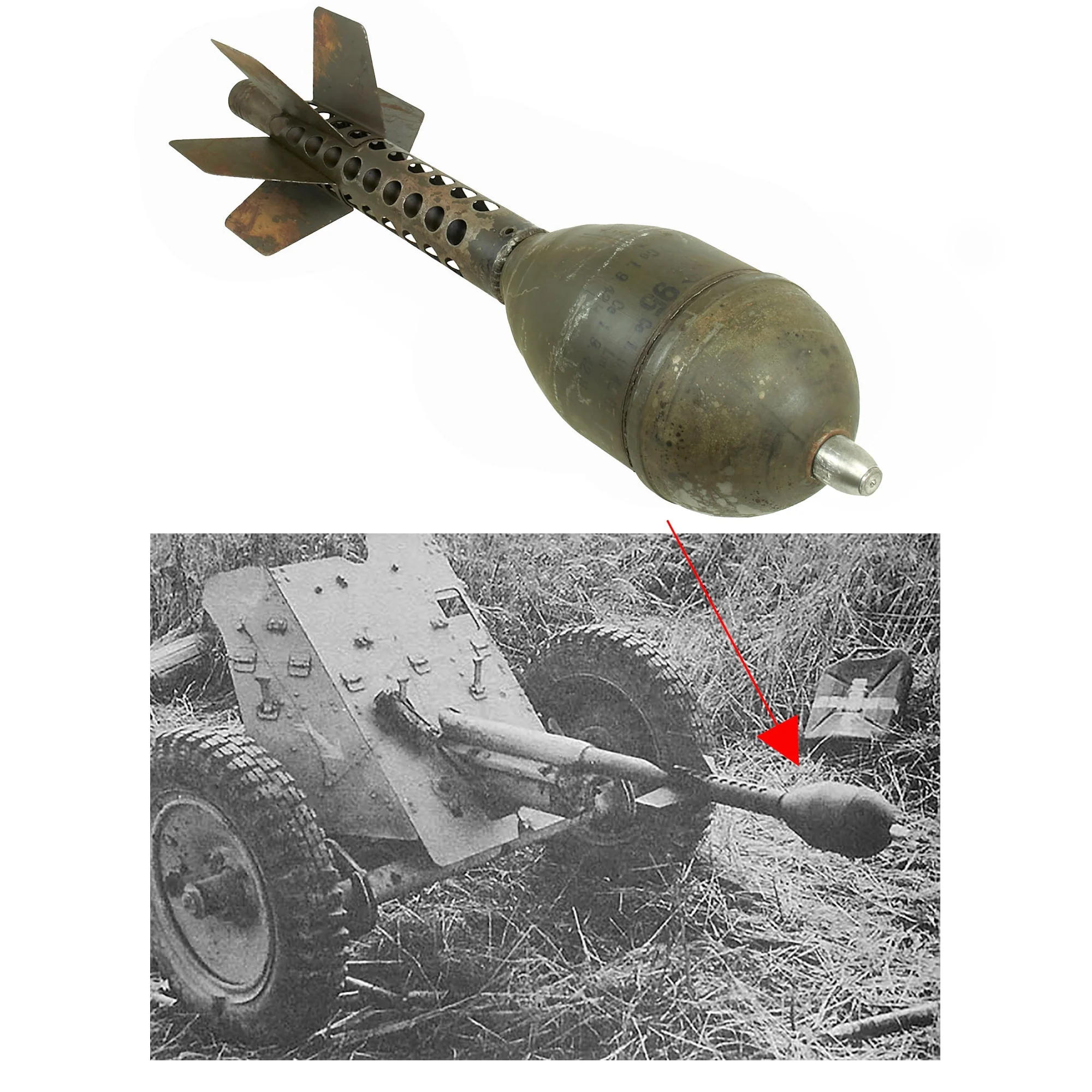
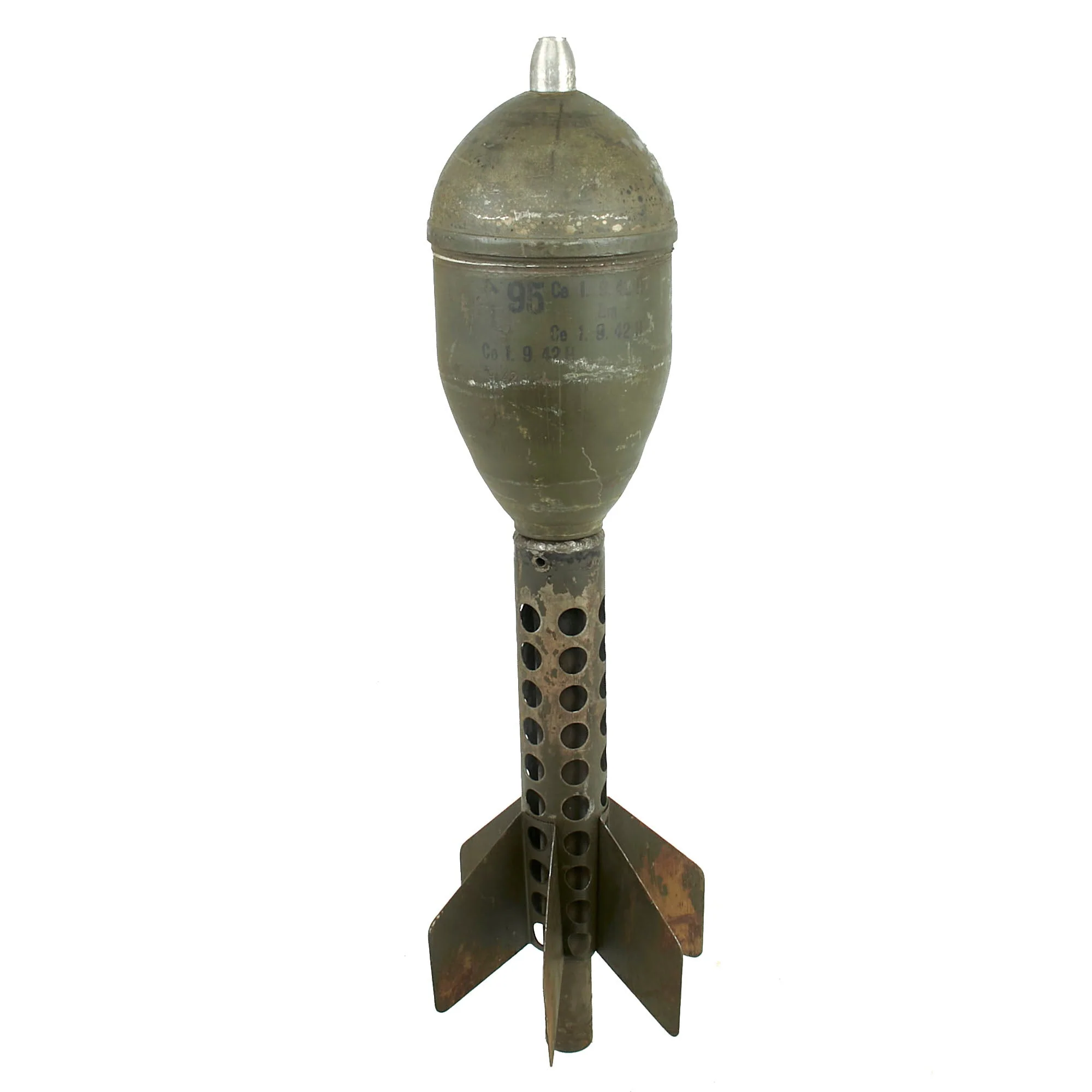
8cm Wgr.34 fired by 8mm 8cm Gr.W.34 were streamlined high explosive anti-personnel fragmentation rounds. Both types have a finned tail unit which carries the out-shooting cartridge. The 8cm Gr.W.3 was fitted with a quick-acting and very sensitive nose fuse with a booster made of alloy. The fuse arms itself by inertia forces once the mortar left the muzzle of the barrel. Mortar shell’s body was made of mild steel with a bursting charge of T.N.T. inside, thick walls, screw-threaded fuse hole in the head. Mortar’s fin tail unit was designed to receive the out-shooting cartridge charge.
This example is painted black with the side being painted:
PANZERGRUPPE
AFRIKA
1942-’43
This would denote that the round was taken back home by a German Panzer soldier in 1943.
The round retains its original fuze which is marked wgr ZT btj 43 263 (Waffenamt) WaA873. The code “btj” denotes manufacture by Kollmer & Jourdan of Pforzheim.
Comes ready to display.
The 8 cm Granatwerfer 34 (8 cm GrW 34) was the standard German heavy mortar throughout World War II. It gained a reputation for extreme accuracy and rapid rate of fire, although it was not as effective when being operated by poorly trained crews.
The weapon was of conventional design and broke down into three loads (smooth bore barrel, bipod, baseplate) for transport. Attached to the bipod were a traversing handwheel and a cross-leveling handwheel below the elevating mechanism. A panoramic sight was mounted on the traversing mechanism yoke for fine adjustments. A line on the tube could be used for rough laying.
The 8 cm GrW 34/1 was an adaptation for use in self-propelled mountings. A lightened version with a shorter barrel was put into production as the kurzer 8 cm Granatwerfer 42.
The mortar employed conventional 8 cm 3.5 kg shells (high explosive or smoke) with percussion fuzes. The range could be extended by fitting up to three additional powder charges between the shell tailfins.

Details & Craftsmanship
Every detail has been carefully considered to bring you the perfect product.

Details & Craftsmanship
Every detail has been carefully considered to bring you the perfect product.

Details & Craftsmanship
Every detail has been carefully considered to bring you the perfect product.

Details & Craftsmanship
Every detail has been carefully considered to bring you the perfect product.

Details & Craftsmanship
Every detail has been carefully considered to bring you the perfect product.

Details & Craftsmanship
Every detail has been carefully considered to bring you the perfect product.

Details & Craftsmanship
Every detail has been carefully considered to bring you the perfect product.

Details & Craftsmanship
Every detail has been carefully considered to bring you the perfect product.
Description
Original Item: Only One Available. This is a great totally genuine 8mm mortar round which was brought back by a German soldier from Afrika. The round is completely void of any explosive content and cannot be rendered live again. This is in compliance with the current BATF standards on inert ordnance. Like all deactivated ordnance, this mortar is Not Available for Export.
8cm Wgr.34 fired by 8mm 8cm Gr.W.34 were streamlined high explosive anti-personnel fragmentation rounds. Both types have a finned tail unit which carries the out-shooting cartridge. The 8cm Gr.W.3 was fitted with a quick-acting and very sensitive nose fuse with a booster made of alloy. The fuse arms itself by inertia forces once the mortar left the muzzle of the barrel. Mortar shell’s body was made of mild steel with a bursting charge of T.N.T. inside, thick walls, screw-threaded fuse hole in the head. Mortar’s fin tail unit was designed to receive the out-shooting cartridge charge.
This example is painted black with the side being painted:
PANZERGRUPPE
AFRIKA
1942-’43
This would denote that the round was taken back home by a German Panzer soldier in 1943.
The round retains its original fuze which is marked wgr ZT btj 43 263 (Waffenamt) WaA873. The code “btj” denotes manufacture by Kollmer & Jourdan of Pforzheim.
Comes ready to display.
The 8 cm Granatwerfer 34 (8 cm GrW 34) was the standard German heavy mortar throughout World War II. It gained a reputation for extreme accuracy and rapid rate of fire, although it was not as effective when being operated by poorly trained crews.
The weapon was of conventional design and broke down into three loads (smooth bore barrel, bipod, baseplate) for transport. Attached to the bipod were a traversing handwheel and a cross-leveling handwheel below the elevating mechanism. A panoramic sight was mounted on the traversing mechanism yoke for fine adjustments. A line on the tube could be used for rough laying.
The 8 cm GrW 34/1 was an adaptation for use in self-propelled mountings. A lightened version with a shorter barrel was put into production as the kurzer 8 cm Granatwerfer 42.
The mortar employed conventional 8 cm 3.5 kg shells (high explosive or smoke) with percussion fuzes. The range could be extended by fitting up to three additional powder charges between the shell tailfins.