
Original: $395.00
-70%$395.00
$118.50The Story
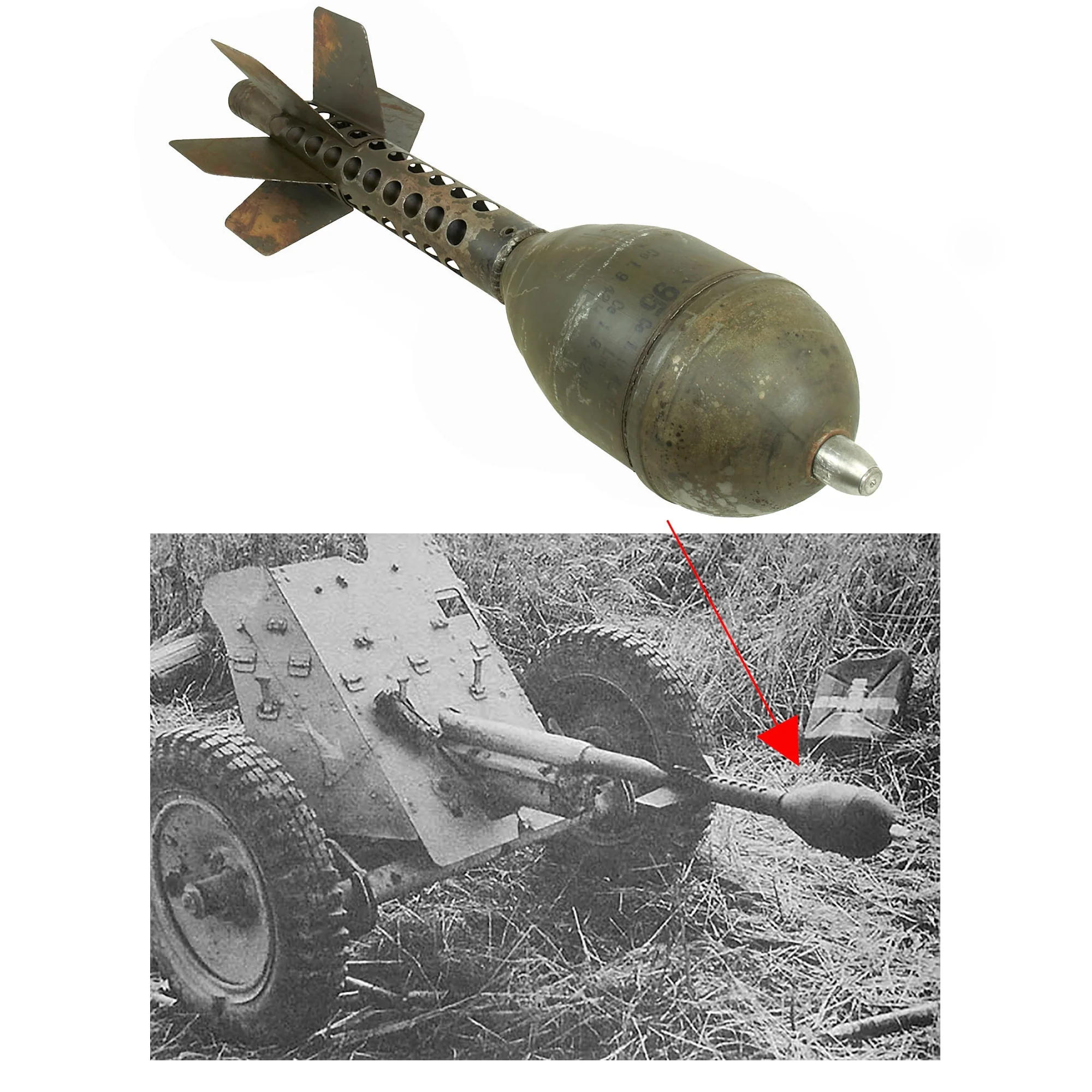
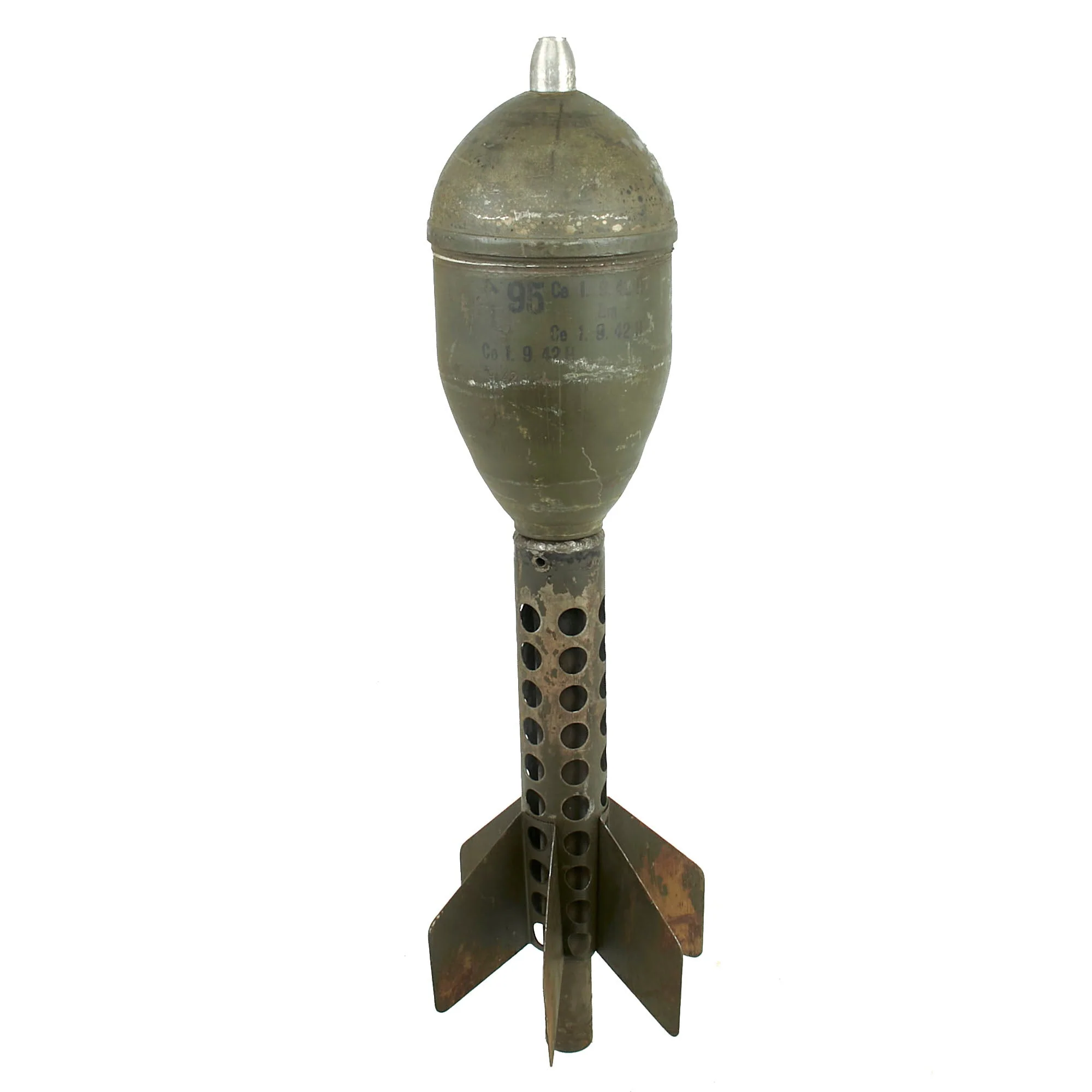
Original Item: Only One Available. This is a very nice German WWI Karabingranate M 1914 rifle grenade, as used during the Great War. This example is completely inert and is in compliance with the current BATF standards on inert ordnance. Not Available For Export.
German WW1 Rifle Grenades of any ilk are rare. This example is missing the rod and the range cup. The fuze is made from brass and the body of the grenade is in rough shape overall with heavy oxidation. The brass fuze housing is still able to be unscrewed.
The iron body is a standard fragmentation pattern, and upon detonation would break into fragments inflicting terrible injury. Most of these that we see have had a brass fuse housing, like this example.
Still in good condition and fully INERT this rare German WW1 Rifle Grenade is ready to display.
History of the German WW1 Karabingranate M1914
The Karabingranate M 1914 was the successor to the M1913, and was designed specifically to overcome to shortcomings of the 1913. The main problem with the model 1913 that it was very aerodynamic, making it too effective a projectile, which caused it to sink too far into the ground on impact to be very effective. Developments led to the birth of a less aerodynamic and more massive grenade that would limit the penetration in the ground at impact, the rifle grenade M 1914.
This variation was made keeping constant the total weight to keep the firing table unchanged, and therefore admitting a small reduction of the explosive charge. An optional steel cupola could be added at the base of the body to reduce the range, depending the way it was mounted (25% or 50%).
The ignition system was completely different from the one of the 1913 model. Entirely confined into the brass piece screwed at the top of the projectile, it was this time a real percussion fuse with inertia arming system (inertia block and springs). At the departure (and after the safety pin had been removed), inertia force pushed back a ring, unmasking the percussion pin. From the outside, this 'armed' condition was recognized by the elevated position of the fuse head, which also gave it a more effective detonation force.
Another advancement was that the detonator was now inserted inside a high explosive relay-charge, itself included into the body explosive load. This characteristic provided that grenade an internal organization surprisingly similar to some artillery shells used in WWI.
Despite these improvements, none of the 1913 or 1914 rod grenades went 'popular' within German infantrymen, the need of changing the rifle ammunition to blank type to use them being a frequent source of fatal accidents.

Details & Craftsmanship
Every detail has been carefully considered to bring you the perfect product.

Details & Craftsmanship
Every detail has been carefully considered to bring you the perfect product.

Details & Craftsmanship
Every detail has been carefully considered to bring you the perfect product.

Details & Craftsmanship
Every detail has been carefully considered to bring you the perfect product.

Details & Craftsmanship
Every detail has been carefully considered to bring you the perfect product.

Details & Craftsmanship
Every detail has been carefully considered to bring you the perfect product.
Description
Original Item: Only One Available. This is a very nice German WWI Karabingranate M 1914 rifle grenade, as used during the Great War. This example is completely inert and is in compliance with the current BATF standards on inert ordnance. Not Available For Export.
German WW1 Rifle Grenades of any ilk are rare. This example is missing the rod and the range cup. The fuze is made from brass and the body of the grenade is in rough shape overall with heavy oxidation. The brass fuze housing is still able to be unscrewed.
The iron body is a standard fragmentation pattern, and upon detonation would break into fragments inflicting terrible injury. Most of these that we see have had a brass fuse housing, like this example.
Still in good condition and fully INERT this rare German WW1 Rifle Grenade is ready to display.
History of the German WW1 Karabingranate M1914
The Karabingranate M 1914 was the successor to the M1913, and was designed specifically to overcome to shortcomings of the 1913. The main problem with the model 1913 that it was very aerodynamic, making it too effective a projectile, which caused it to sink too far into the ground on impact to be very effective. Developments led to the birth of a less aerodynamic and more massive grenade that would limit the penetration in the ground at impact, the rifle grenade M 1914.
This variation was made keeping constant the total weight to keep the firing table unchanged, and therefore admitting a small reduction of the explosive charge. An optional steel cupola could be added at the base of the body to reduce the range, depending the way it was mounted (25% or 50%).
The ignition system was completely different from the one of the 1913 model. Entirely confined into the brass piece screwed at the top of the projectile, it was this time a real percussion fuse with inertia arming system (inertia block and springs). At the departure (and after the safety pin had been removed), inertia force pushed back a ring, unmasking the percussion pin. From the outside, this 'armed' condition was recognized by the elevated position of the fuse head, which also gave it a more effective detonation force.
Another advancement was that the detonator was now inserted inside a high explosive relay-charge, itself included into the body explosive load. This characteristic provided that grenade an internal organization surprisingly similar to some artillery shells used in WWI.
Despite these improvements, none of the 1913 or 1914 rod grenades went 'popular' within German infantrymen, the need of changing the rifle ammunition to blank type to use them being a frequent source of fatal accidents.