
Original Imperial German WWI Unit-Marked M1907 Feldmütze Field Cap with Prussian Cockade - Königin Elisabeth Garde-Grenadier-Regiment Nr. 3 - Size 56
Original Imperial German WWI Unit-Marked M1907 Feldmütze Field Cap with Prussian Cockade - Königin Elisabeth Garde-Grenadier-Regiment Nr. 3 - Size 56
Original: $595.00
-70%$595.00
$178.50The Story
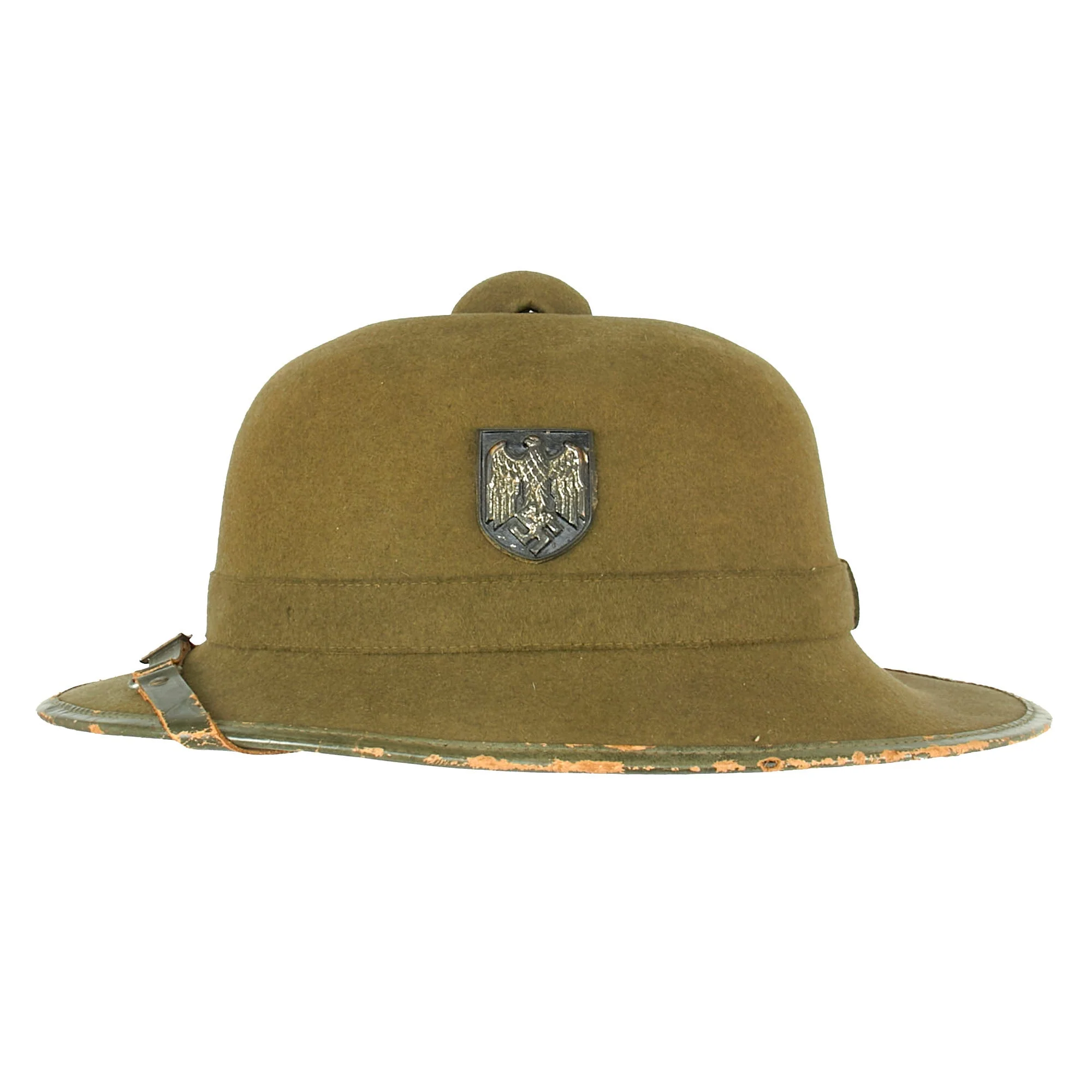
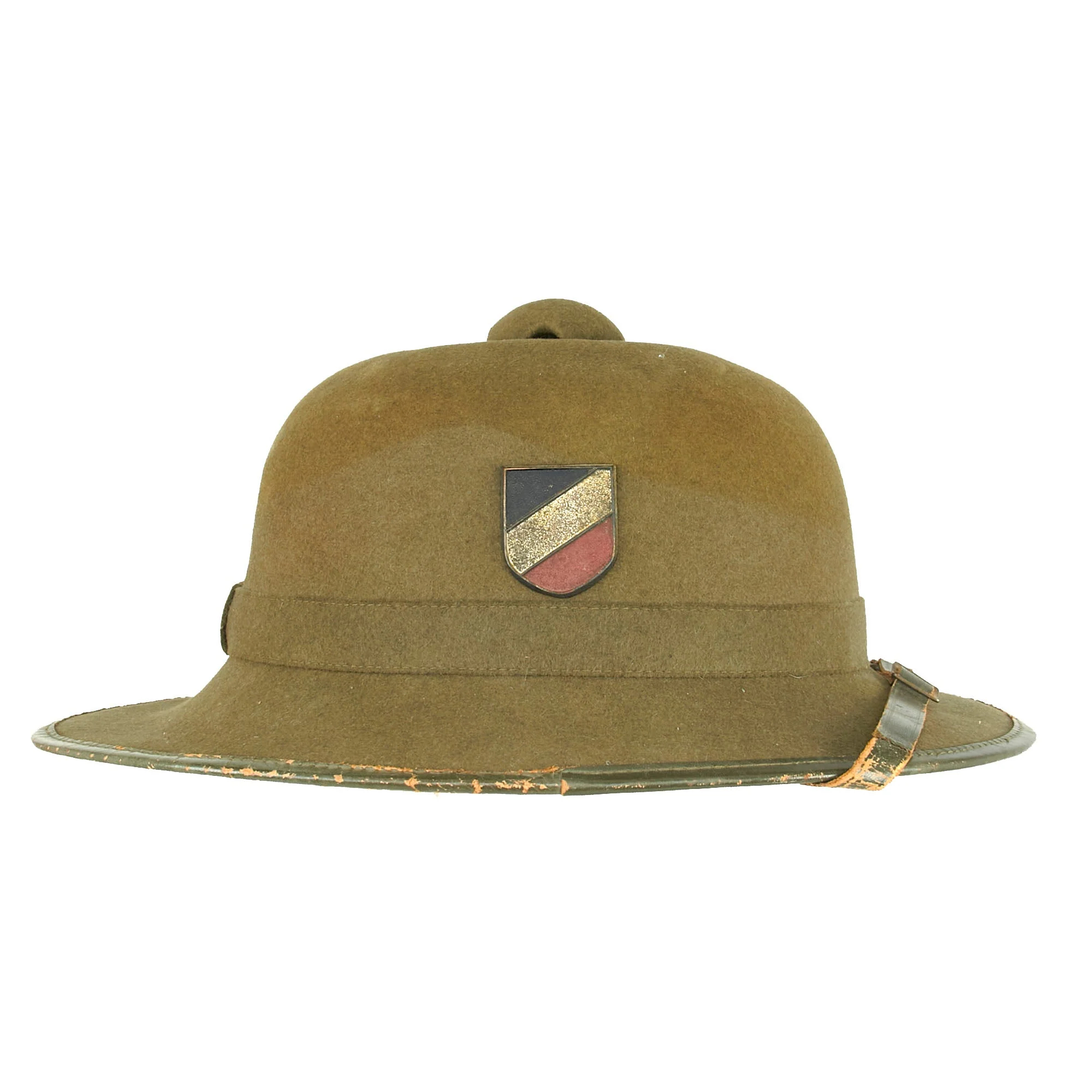
Original Item: Only one available. This is an outstanding service-worn Great War Imperial German Field Cap (Feldmütze or Krätzche) which is unit-marked on the interior G.G.R.3, denoting wear by a member of the Queen Elizabeth Guard Grenadier Regiment No. 3, or Königin Elisabeth Garde-Grenadier-Regiment Nr. 3. This regiment was almost continuously deployed on the front lines during the First World War and participated in all major battles, making this an extremely scarce example to find in such preserved condition. As these were worn from 1907 through the end of the war, who knows what this Feldmütze witnessed?
The Feldmütze is constructed of grey/green "Felgrau" wool with red cap band and red piping along with an interior linen lining. The front of the cap bears a Black, White and Red Reichskokarde (Imperial Cockade) on the front of the crown, with a White and Black cockade for Prussia.
The exterior has light moth tracking and small moth nips in spots across, and the interior shows great period sweat-staining. Over the unit marking is a Size, 56, and underneath is a depot marking reading:
B.A.G.
1917.
This denotes servicing at the Garde-Korps Army Depot in Berlin, which is correct considering the Garde unit marking.
The Elisabeth Regiment was almost continuously deployed on the front lines during the First World War and participated in all major battles. After its initial engagements in August 1914 in Belgium near Jemeppe, Fossé, and Boult-aux-Bois, it was involved in the fighting in northern France, including at Marfaux, Normée, and Nauroy. In the following weeks, the regiment saw action near Reims, Puiseux, Sébastopol-Ferme, and other locations. At the beginning of 1915, it fought near Gommécourt and Monchy-au-Bois in Artois before being transferred to the Eastern Front in the spring and summer. There, it participated in operations in Galicia and Poland, including at Szebnie, Jarosław, Tuchla, Krasnystaw, Rejowiec, and Tulicze.
From August 1916, the regiment was deployed in the Battle of the Somme, particularly at Beuvraignes and Maurepas. In 1917, it remained engaged in heavy fighting on the Western Front, including at Villers-Carbonnel, Winterberg, Brancourt, Pargny, and Bellicourt. During the German spring offensives of 1918, the regiment participated in the attacks at Golancourt, Roye-sur-Matz, Soissons, and on the Marne. In the subsequent fighting retreat, it fought at Licy-Clignon, Apremont, Chéhéry, Chatel, and finally, until the armistice in November 1918, at Hautecourt.
This is an outstanding unit-marked example of a now-very scarce model of cap to find in any condition. Don’t miss it!

Details & Craftsmanship
Every detail has been carefully considered to bring you the perfect product.

Details & Craftsmanship
Every detail has been carefully considered to bring you the perfect product.

Details & Craftsmanship
Every detail has been carefully considered to bring you the perfect product.

Details & Craftsmanship
Every detail has been carefully considered to bring you the perfect product.

Details & Craftsmanship
Every detail has been carefully considered to bring you the perfect product.

Details & Craftsmanship
Every detail has been carefully considered to bring you the perfect product.

Details & Craftsmanship
Every detail has been carefully considered to bring you the perfect product.

Details & Craftsmanship
Every detail has been carefully considered to bring you the perfect product.

Details & Craftsmanship
Every detail has been carefully considered to bring you the perfect product.
Description
Original Item: Only one available. This is an outstanding service-worn Great War Imperial German Field Cap (Feldmütze or Krätzche) which is unit-marked on the interior G.G.R.3, denoting wear by a member of the Queen Elizabeth Guard Grenadier Regiment No. 3, or Königin Elisabeth Garde-Grenadier-Regiment Nr. 3. This regiment was almost continuously deployed on the front lines during the First World War and participated in all major battles, making this an extremely scarce example to find in such preserved condition. As these were worn from 1907 through the end of the war, who knows what this Feldmütze witnessed?
The Feldmütze is constructed of grey/green "Felgrau" wool with red cap band and red piping along with an interior linen lining. The front of the cap bears a Black, White and Red Reichskokarde (Imperial Cockade) on the front of the crown, with a White and Black cockade for Prussia.
The exterior has light moth tracking and small moth nips in spots across, and the interior shows great period sweat-staining. Over the unit marking is a Size, 56, and underneath is a depot marking reading:
B.A.G.
1917.
This denotes servicing at the Garde-Korps Army Depot in Berlin, which is correct considering the Garde unit marking.
The Elisabeth Regiment was almost continuously deployed on the front lines during the First World War and participated in all major battles. After its initial engagements in August 1914 in Belgium near Jemeppe, Fossé, and Boult-aux-Bois, it was involved in the fighting in northern France, including at Marfaux, Normée, and Nauroy. In the following weeks, the regiment saw action near Reims, Puiseux, Sébastopol-Ferme, and other locations. At the beginning of 1915, it fought near Gommécourt and Monchy-au-Bois in Artois before being transferred to the Eastern Front in the spring and summer. There, it participated in operations in Galicia and Poland, including at Szebnie, Jarosław, Tuchla, Krasnystaw, Rejowiec, and Tulicze.
From August 1916, the regiment was deployed in the Battle of the Somme, particularly at Beuvraignes and Maurepas. In 1917, it remained engaged in heavy fighting on the Western Front, including at Villers-Carbonnel, Winterberg, Brancourt, Pargny, and Bellicourt. During the German spring offensives of 1918, the regiment participated in the attacks at Golancourt, Roye-sur-Matz, Soissons, and on the Marne. In the subsequent fighting retreat, it fought at Licy-Clignon, Apremont, Chéhéry, Chatel, and finally, until the armistice in November 1918, at Hautecourt.
This is an outstanding unit-marked example of a now-very scarce model of cap to find in any condition. Don’t miss it!