
The Story
Original Item: Only One Available. The first standard sword of the Japanese military was known as the kyu gunto (旧軍刀, old military sword). Murata Tsuneyoshi (1838-1921), a Japanese general who previously made guns, started making what was probably the first mass-produced substitute for traditionally made samurai swords. These swords are referred to as "Murata-to" and they were used in both the Sino-Japanese war (1894-1895) and the Russo-Japanese war (1904-1905).
The kyu gunto was used from 1875 until 1934, it closely resembled European and American swords of the time, with a wraparound hand guard (also known as a D-Guard) and chrome plated scabbard (saya), the steel scabbard is said to have been introduced around 1900.
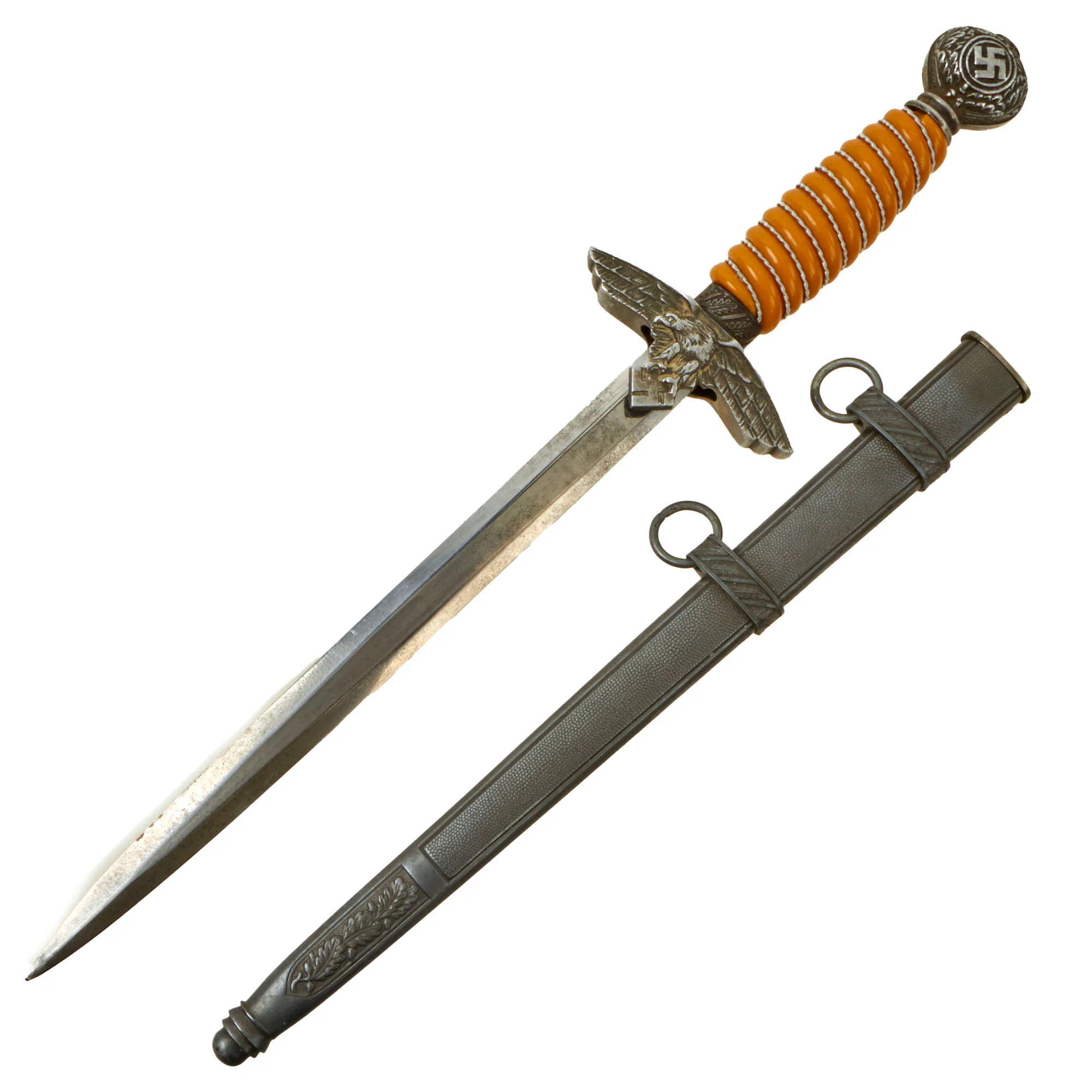
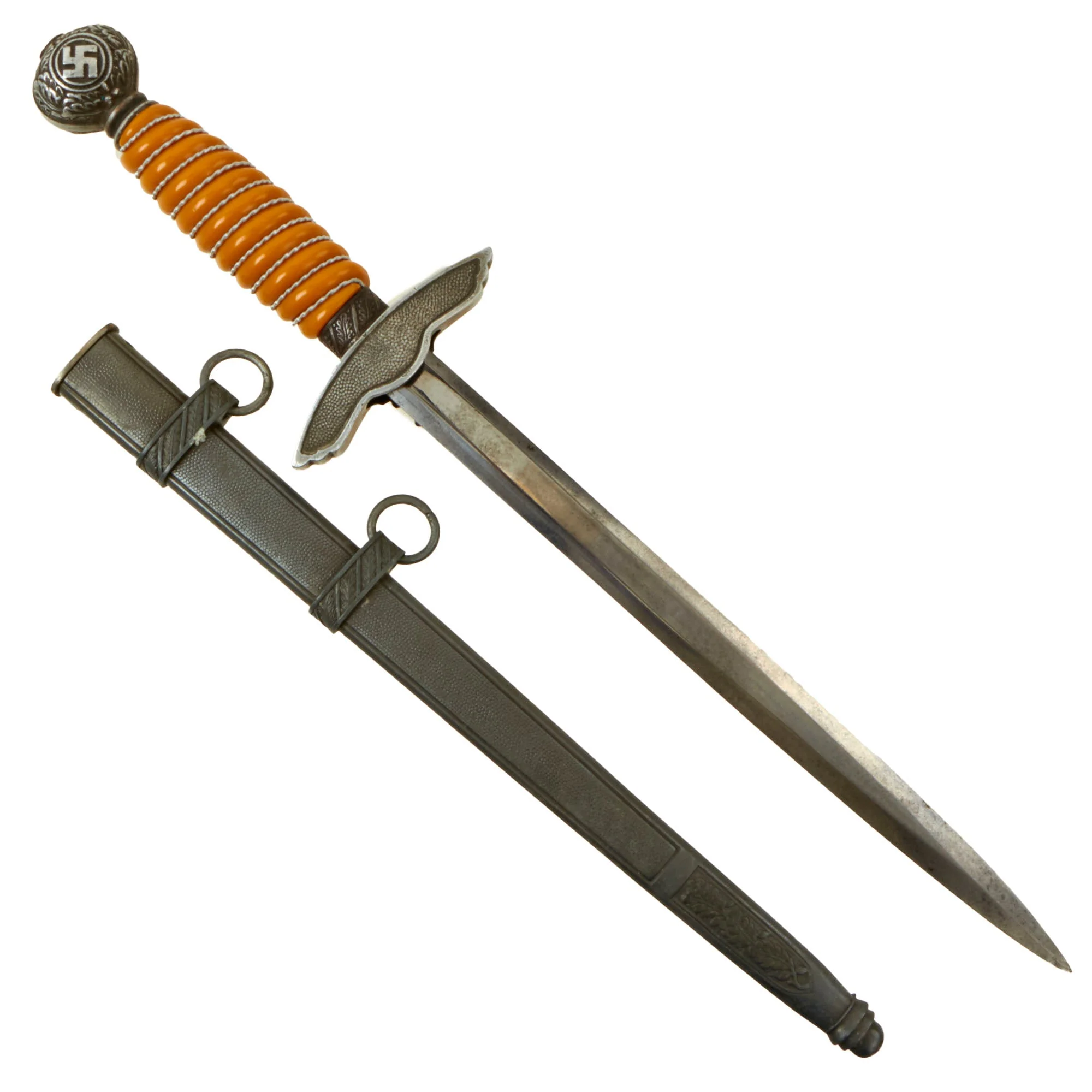
This is a very good example of a WWII Era Japanese Army Officer's Parade Sword with a horn (or possibly lacquered wood) grip and the "10 petal" IJA Cherry Blossom Emblem on the sides of the handle. These are often confused with the Imperial Japanese Police Dress Swords, which are extremely similar, however feature a "5 petal" Cherry blossom, and usually have a Police emblem on the back of the hilt near the pommel.
This is a very fine example in lovely well preserved condition. The brass guard has a rich patina, with much of the original gilt finish still retained, especially on the outside of the guard. The brass wire wrap on the handle is present, though there is some damage, with some strands loose and or missing. The grip is in very good shape, though there are some holes that look to be insect damage. The blade is in very good condition, with a full nickeled finish well retained, showing some overall wear and light oxidation, with a few areas of missing plating. The etched simulated temper line (hamon) can still be seen in the light, and the leather blade buffer is still retained, something that’s often missing on these.
The nickel-plated steel scabbard is in very good shape, though it does show wear from use in service. There is a bit of deformation to the steel shell, as well as a few dents and minor bends, and the nickel plating has bubbled up and flaked in areas. In these areas there is oxidation of the steel body of the scabbard giving it a great patina of age. The top hanger ring is still present, though the finish is worn.
This is a very nice example, ready to add to any collection of Japanese WW2 edged weapons and display!
Dimensions:
Overall length: 38 3/8”
Blade length: 33 3/8”
Hand guard: 4” width x 5” length
Scabbard length: 34 3/8”
The Imperial Japanese Army parade sword was first adopted in 1875 (Meiji 8) as the Type 8 Kyu-Gunto (First Military Sword). It was later modified in 1886 (Meiji 19) as the Type 19 Kyu-Gunto. Regulations state that the grips of these swords for officers below the rank of General shall be black horn, although other materials may be seen. General Officer swords were to have grips made of turtle shell. Type 8 sword scabbards have two suspension rings while Type 19 swords have one ring that is removable or only one suspension ring after circa 1932.
As stated above, this Japanese Army "Parade Sword" is often mistaken for the almost identical "Police Sword" but there are distinct differences. The quick way to determine the difference between Army and Police swords of this type is to note the backstrap decoration. Army swords will normally have a ten petal cherry blossom on the back of the pommel and on the "ears" of the backstrap. Nearly identical Police swords will have a Police badge on the back of the pommel and a five petal cherry blossom on the "ears" of the backstrap. The same applies to ten- and five-petal cherry blossoms found in the guard design.

Details & Craftsmanship
Every detail has been carefully considered to bring you the perfect product.

Details & Craftsmanship
Every detail has been carefully considered to bring you the perfect product.

Details & Craftsmanship
Every detail has been carefully considered to bring you the perfect product.

Details & Craftsmanship
Every detail has been carefully considered to bring you the perfect product.

Details & Craftsmanship
Every detail has been carefully considered to bring you the perfect product.

Details & Craftsmanship
Every detail has been carefully considered to bring you the perfect product.

Details & Craftsmanship
Every detail has been carefully considered to bring you the perfect product.

Details & Craftsmanship
Every detail has been carefully considered to bring you the perfect product.

Details & Craftsmanship
Every detail has been carefully considered to bring you the perfect product.

Details & Craftsmanship
Every detail has been carefully considered to bring you the perfect product.

Details & Craftsmanship
Every detail has been carefully considered to bring you the perfect product.

Details & Craftsmanship
Every detail has been carefully considered to bring you the perfect product.

Details & Craftsmanship
Every detail has been carefully considered to bring you the perfect product.
Description
Original Item: Only One Available. The first standard sword of the Japanese military was known as the kyu gunto (旧軍刀, old military sword). Murata Tsuneyoshi (1838-1921), a Japanese general who previously made guns, started making what was probably the first mass-produced substitute for traditionally made samurai swords. These swords are referred to as "Murata-to" and they were used in both the Sino-Japanese war (1894-1895) and the Russo-Japanese war (1904-1905).
The kyu gunto was used from 1875 until 1934, it closely resembled European and American swords of the time, with a wraparound hand guard (also known as a D-Guard) and chrome plated scabbard (saya), the steel scabbard is said to have been introduced around 1900.
This is a very good example of a WWII Era Japanese Army Officer's Parade Sword with a horn (or possibly lacquered wood) grip and the "10 petal" IJA Cherry Blossom Emblem on the sides of the handle. These are often confused with the Imperial Japanese Police Dress Swords, which are extremely similar, however feature a "5 petal" Cherry blossom, and usually have a Police emblem on the back of the hilt near the pommel.
This is a very fine example in lovely well preserved condition. The brass guard has a rich patina, with much of the original gilt finish still retained, especially on the outside of the guard. The brass wire wrap on the handle is present, though there is some damage, with some strands loose and or missing. The grip is in very good shape, though there are some holes that look to be insect damage. The blade is in very good condition, with a full nickeled finish well retained, showing some overall wear and light oxidation, with a few areas of missing plating. The etched simulated temper line (hamon) can still be seen in the light, and the leather blade buffer is still retained, something that’s often missing on these.
The nickel-plated steel scabbard is in very good shape, though it does show wear from use in service. There is a bit of deformation to the steel shell, as well as a few dents and minor bends, and the nickel plating has bubbled up and flaked in areas. In these areas there is oxidation of the steel body of the scabbard giving it a great patina of age. The top hanger ring is still present, though the finish is worn.
This is a very nice example, ready to add to any collection of Japanese WW2 edged weapons and display!
Dimensions:
Overall length: 38 3/8”
Blade length: 33 3/8”
Hand guard: 4” width x 5” length
Scabbard length: 34 3/8”
The Imperial Japanese Army parade sword was first adopted in 1875 (Meiji 8) as the Type 8 Kyu-Gunto (First Military Sword). It was later modified in 1886 (Meiji 19) as the Type 19 Kyu-Gunto. Regulations state that the grips of these swords for officers below the rank of General shall be black horn, although other materials may be seen. General Officer swords were to have grips made of turtle shell. Type 8 sword scabbards have two suspension rings while Type 19 swords have one ring that is removable or only one suspension ring after circa 1932.
As stated above, this Japanese Army "Parade Sword" is often mistaken for the almost identical "Police Sword" but there are distinct differences. The quick way to determine the difference between Army and Police swords of this type is to note the backstrap decoration. Army swords will normally have a ten petal cherry blossom on the back of the pommel and on the "ears" of the backstrap. Nearly identical Police swords will have a Police badge on the back of the pommel and a five petal cherry blossom on the "ears" of the backstrap. The same applies to ten- and five-petal cherry blossoms found in the guard design.