
The Story
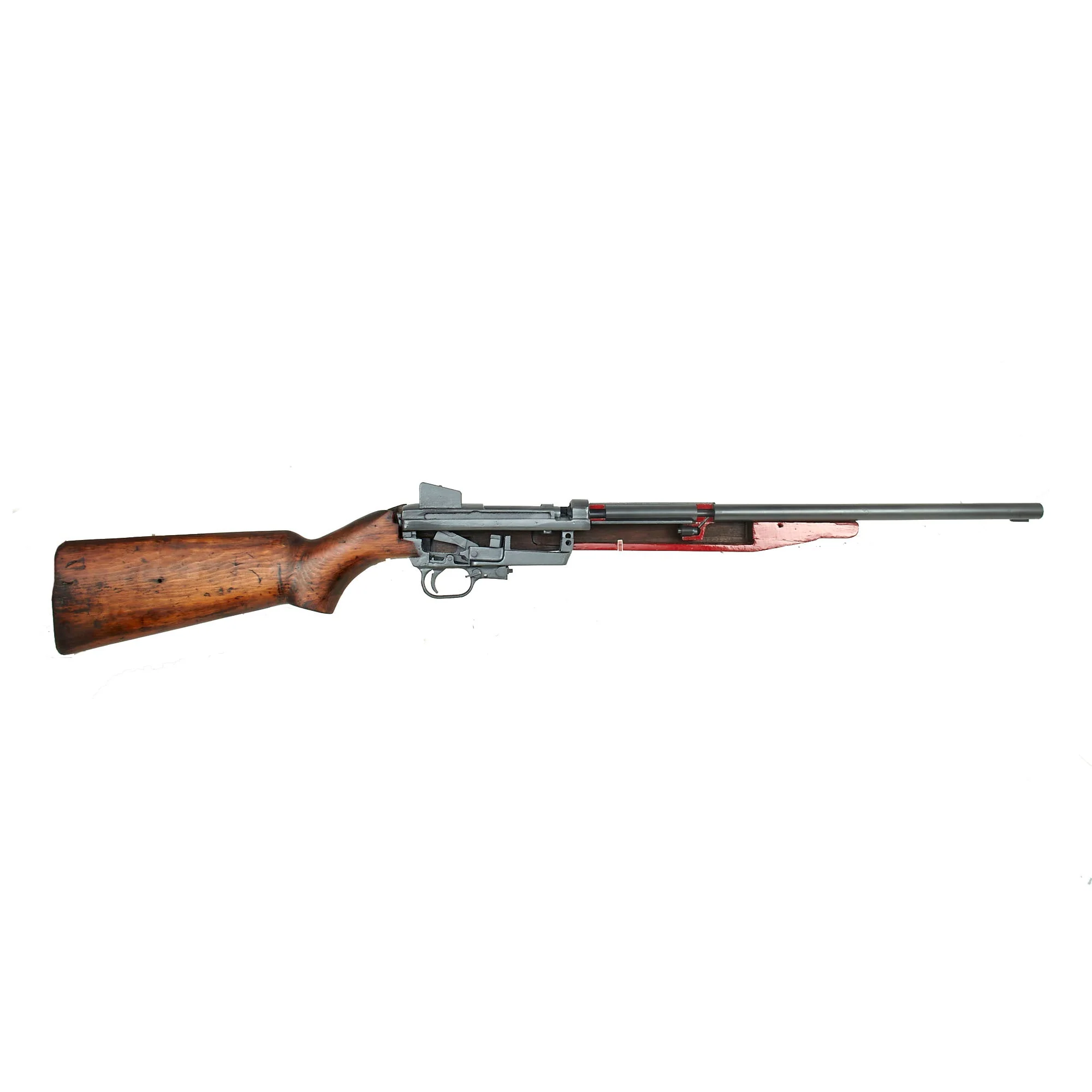
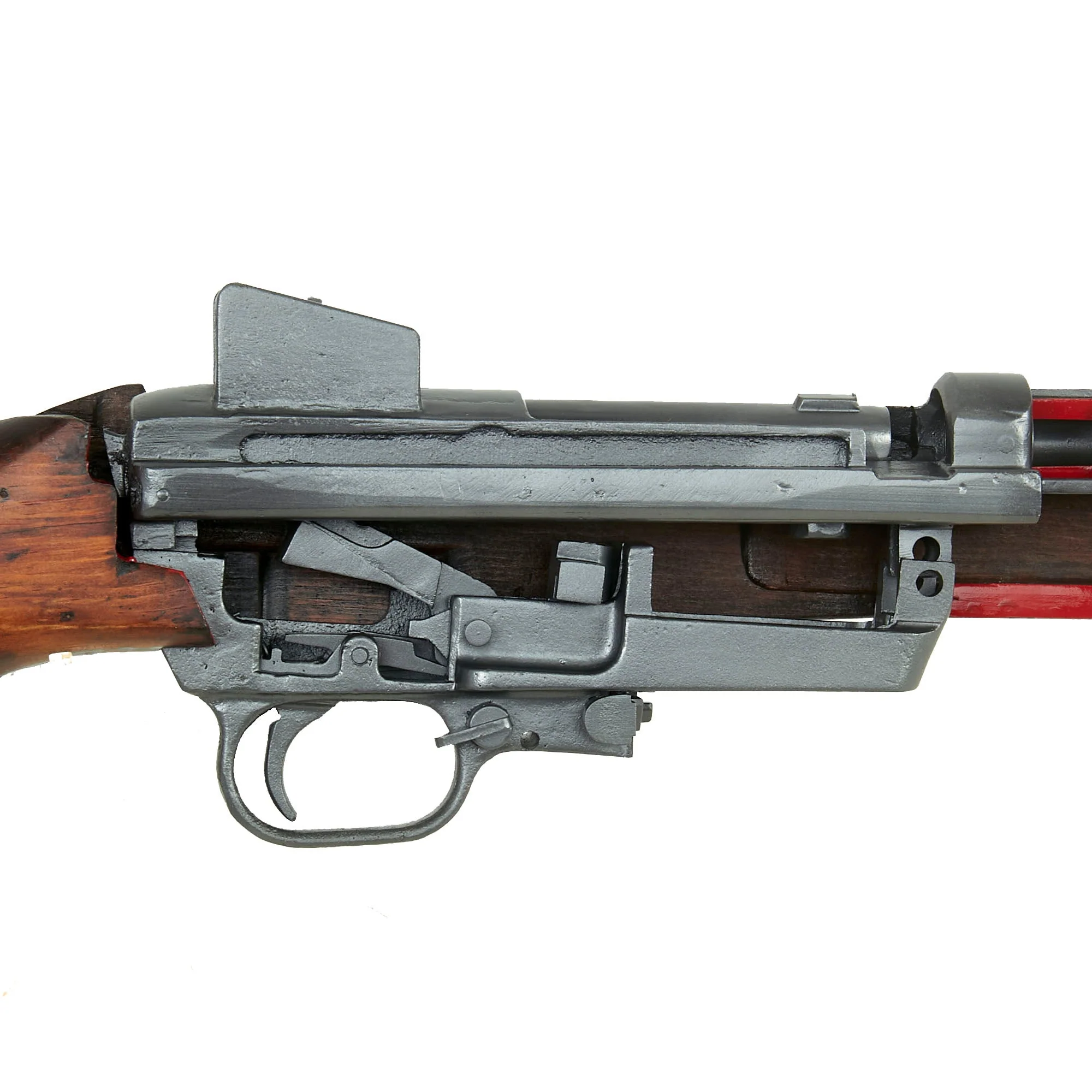
Original Item: Only One Available. Just purchased at a recent military show, this is a fantastic original Polish 7.62 x 54R DPM Display Light Machine Gun, built from all original parts on an original BATF compliant non-firing display receiver, making this a 100% legal display machine gun. This receiver was made using portions of the original demilitarized receiver, which was destroyed per BATF specifications with a flame torch that removed at least 1/4" of material per cut. These pieces, including the barrel bushing, were combined with some new made steel portions to make a display receiver, which has properly had a 25% section of the total length completely replaced entirely with solid steel bar stock. Meaning a 1/4 length section of the display receiver is solid steel, making this totally legal to own without a license of any kind.
There was no barrel included with this parts set, so it has been fitted with a custom fabricated example made from pipe and finished with our lovely gunmetal gray spray paint. Additionally, some internal components have been welded up inside of the receiver to complete the look. These include the cocking handle and gas piston assembly. Every part on this display gun is original manufacture other than 25% of the receiver replaced by solid steel (as required by BATF).
The 7.62 mm Ruchnoy Pulemyot DP (Degtyaryova pakhotnyi) was adopted by the Soviet army in 1928. It is extremely simple, yet remarkably reliable and robust. It remained the standard light gun until the 50's, and large numbers of them were used by the North Korean and Chinese Communists in the Korean war. The secret of the DP was the simple locking device, which makes use of locking flaps on the bolt, pushed out by the firing pin. The DP proved resistant to dust and dirt, and free from any serious vices.
In 1943-1944 during WWII, a modern version of the DP28 was adopted by Soviet forces, called the DPM. This featured a more robust bipod fastened to the cooling jacket and also had the recoil spring housed in a tube projecting from the rear of the receiver. The latter necessitated a pistol grip for this version, as the spring housing interfered with the standard rifle style grip. After WWII and the rise of the "Iron Curtain" Eastern Bloc Soviet Sphere of influence, the DPM was adopted by several countries including Poland and Romania. China also made a version of the weapon called the "Type 53".
This is a fantastic original Polish 7.62 x 54R DPM Display light machine gun, complete with an original pan magazine and bipod! Also, unlike almost all other examples we have, this one was made using an original re-welded display receiver, with the correct 25% replaced with solid steel bar stock per BATF regulations. It is however missing the very end of the receiver, which was probably discarded after demilitarization.
This display gun is constructed of all original parts on a totally re-welded display receiver, complete with an original bipod and pan magazine. Additionally, some of the parts not used in construction of the display gun are included, as well as a second magazine, which is held in an original Chinese Communist issue marked magazine pouch. There are also a gun cover, a tool kit bag with a three part cleaning rod and cleaning tool, with lots of markings that could be potential avenues of future research.
The display gun is clearly marked with 11 in a Circle behind the rear sight, which is the Polish arsenal marking for Zakłady Metalowe im. gen. "Waltera" (General Walter Metal Works). Located in Radom, Poland, this is a factory with a lot of history, having produced and designed numerous arms. It received the factory code number of 11; to prevent confusion with an earlier Factory #11, the number received a single circle around it to differentiate it. Just below this is the production date of 1955, however the very end section of the receiver was lost over the years, so we do not know the serial number of the receiver. The trigger group is marked with serial number 9406, and there are some partial serial numbers on some components.
Condition is excellent, with a very good condition Buttstock, which still has the original oil bottle and intact brush. The butt stock has a lovely color and oil finish, showing some wood graft repairs from service. Most of the metalwork still retains the heavy factory bluing, showing a bit of wear from service, with the display receiver having been refinished to match. It comes complete with two original DP28 Pan magazines, which will be deactivated where required.
We have not had one of these available for some time, and possibly rarely with an original re-welded receiver, and these always go quickly. This is a chance to add a hard to find Polish DPM display gun to your WWII or Cold War collection!
More on the DP 28 Machine Gun
The Degtyaryov machine gun (Russian: Пулемёт Дегтярёвa Пехотный Pulemyot Degtyaryova Pekhotny "Degtyaryov's infantry machine gun") or DP is a light machine gun firing the 7.62×54mmR cartridge that was used primarily by the Soviet Union starting in 1928. The DP machine gun was supplemented in the 1950s by the more modern RPD machine gun and entirely replaced in Soviet service by the general purpose PK machine gun in the 1960s.
Design:
The DP-28 was an improvement of the earlier DP-26, both designed by Vasily Degtyaryov. The DP-28 was relatively cheap and easy to manufacture - early models had fewer than 80 parts. The DP was especially able to withstand dirt in a reliable fashion. In tests it was buried in sand and mud and was still capable of firing more than 500 rounds. One of the DP's main drawbacks though was its bipod; it could not withstand much abuse and broke easily. Furthermore, the recoil spring was located under the barrel, around the gas piston; this was one of the design problems of the DP, since the spring tended to lose its temper due to overheating. Also, the only magazine option, a pan with 47 rounds that fed in from the top, was relatively small and continuous fire for long periods could not be relied on as much as contemporary belt-fed weapons. The ammunition was troublesome for automatic fire. Degtyarov had to use a flat pan magazine, which could feed those cartridges reliably, but was too heavy itself, uncomfortable to carry and prone to damage. Due to the design of the magazine, reloading an empty magazine with cartridges took a very long time. A redeeming factor was that the DP's lower cyclic rate of fire did however reduce the risk of barrel overheating.
Service History:
Despite its numerous problems the DP had a reputation as a relatively effective light support weapon. It was nicknamed the "Record player" (proigryvatel') by Red Army troops because the disc-shaped pan magazine resembled a gramophone record and its top cover revolved while the weapon was fired. Many were captured by the Finnish army in the Winter War and the Continuation War and partially replaced the Lahti-Saloranta M/26. The DP received the nickname Emma in Finnish service after a popular waltz. In the summer of 1944, the Finnish army had about 3400 Finnish-made Lahti-Salorantas and 9000 captured Soviet-made Degtyarevs on the front.
The Chinese Nationalists received 5,600 DPs from the USSR and used them in the Second Sino-Japanese War and the Chinese Civil War. The Chinese Communists used the DP in the Korean War and copied the DPM as the Type 53.
A number of the RP-46 variant of the DP have been spotted in present day Somalia, in use with militant forces, and also among rebel forces in the 2011 Libyan uprising to overthrow Muammar Gaddafi.

Details & Craftsmanship
Every detail has been carefully considered to bring you the perfect product.

Details & Craftsmanship
Every detail has been carefully considered to bring you the perfect product.

Details & Craftsmanship
Every detail has been carefully considered to bring you the perfect product.

Details & Craftsmanship
Every detail has been carefully considered to bring you the perfect product.

Details & Craftsmanship
Every detail has been carefully considered to bring you the perfect product.

Details & Craftsmanship
Every detail has been carefully considered to bring you the perfect product.

Details & Craftsmanship
Every detail has been carefully considered to bring you the perfect product.

Details & Craftsmanship
Every detail has been carefully considered to bring you the perfect product.

Details & Craftsmanship
Every detail has been carefully considered to bring you the perfect product.

Details & Craftsmanship
Every detail has been carefully considered to bring you the perfect product.

Details & Craftsmanship
Every detail has been carefully considered to bring you the perfect product.

Details & Craftsmanship
Every detail has been carefully considered to bring you the perfect product.

Details & Craftsmanship
Every detail has been carefully considered to bring you the perfect product.

Details & Craftsmanship
Every detail has been carefully considered to bring you the perfect product.

Details & Craftsmanship
Every detail has been carefully considered to bring you the perfect product.

Details & Craftsmanship
Every detail has been carefully considered to bring you the perfect product.

Details & Craftsmanship
Every detail has been carefully considered to bring you the perfect product.

Details & Craftsmanship
Every detail has been carefully considered to bring you the perfect product.

Details & Craftsmanship
Every detail has been carefully considered to bring you the perfect product.

Details & Craftsmanship
Every detail has been carefully considered to bring you the perfect product.

Details & Craftsmanship
Every detail has been carefully considered to bring you the perfect product.

Details & Craftsmanship
Every detail has been carefully considered to bring you the perfect product.

Details & Craftsmanship
Every detail has been carefully considered to bring you the perfect product.

Details & Craftsmanship
Every detail has been carefully considered to bring you the perfect product.

Details & Craftsmanship
Every detail has been carefully considered to bring you the perfect product.

Details & Craftsmanship
Every detail has been carefully considered to bring you the perfect product.

Details & Craftsmanship
Every detail has been carefully considered to bring you the perfect product.

Details & Craftsmanship
Every detail has been carefully considered to bring you the perfect product.

Details & Craftsmanship
Every detail has been carefully considered to bring you the perfect product.

Details & Craftsmanship
Every detail has been carefully considered to bring you the perfect product.
Description
Original Item: Only One Available. Just purchased at a recent military show, this is a fantastic original Polish 7.62 x 54R DPM Display Light Machine Gun, built from all original parts on an original BATF compliant non-firing display receiver, making this a 100% legal display machine gun. This receiver was made using portions of the original demilitarized receiver, which was destroyed per BATF specifications with a flame torch that removed at least 1/4" of material per cut. These pieces, including the barrel bushing, were combined with some new made steel portions to make a display receiver, which has properly had a 25% section of the total length completely replaced entirely with solid steel bar stock. Meaning a 1/4 length section of the display receiver is solid steel, making this totally legal to own without a license of any kind.
There was no barrel included with this parts set, so it has been fitted with a custom fabricated example made from pipe and finished with our lovely gunmetal gray spray paint. Additionally, some internal components have been welded up inside of the receiver to complete the look. These include the cocking handle and gas piston assembly. Every part on this display gun is original manufacture other than 25% of the receiver replaced by solid steel (as required by BATF).
The 7.62 mm Ruchnoy Pulemyot DP (Degtyaryova pakhotnyi) was adopted by the Soviet army in 1928. It is extremely simple, yet remarkably reliable and robust. It remained the standard light gun until the 50's, and large numbers of them were used by the North Korean and Chinese Communists in the Korean war. The secret of the DP was the simple locking device, which makes use of locking flaps on the bolt, pushed out by the firing pin. The DP proved resistant to dust and dirt, and free from any serious vices.
In 1943-1944 during WWII, a modern version of the DP28 was adopted by Soviet forces, called the DPM. This featured a more robust bipod fastened to the cooling jacket and also had the recoil spring housed in a tube projecting from the rear of the receiver. The latter necessitated a pistol grip for this version, as the spring housing interfered with the standard rifle style grip. After WWII and the rise of the "Iron Curtain" Eastern Bloc Soviet Sphere of influence, the DPM was adopted by several countries including Poland and Romania. China also made a version of the weapon called the "Type 53".
This is a fantastic original Polish 7.62 x 54R DPM Display light machine gun, complete with an original pan magazine and bipod! Also, unlike almost all other examples we have, this one was made using an original re-welded display receiver, with the correct 25% replaced with solid steel bar stock per BATF regulations. It is however missing the very end of the receiver, which was probably discarded after demilitarization.
This display gun is constructed of all original parts on a totally re-welded display receiver, complete with an original bipod and pan magazine. Additionally, some of the parts not used in construction of the display gun are included, as well as a second magazine, which is held in an original Chinese Communist issue marked magazine pouch. There are also a gun cover, a tool kit bag with a three part cleaning rod and cleaning tool, with lots of markings that could be potential avenues of future research.
The display gun is clearly marked with 11 in a Circle behind the rear sight, which is the Polish arsenal marking for Zakłady Metalowe im. gen. "Waltera" (General Walter Metal Works). Located in Radom, Poland, this is a factory with a lot of history, having produced and designed numerous arms. It received the factory code number of 11; to prevent confusion with an earlier Factory #11, the number received a single circle around it to differentiate it. Just below this is the production date of 1955, however the very end section of the receiver was lost over the years, so we do not know the serial number of the receiver. The trigger group is marked with serial number 9406, and there are some partial serial numbers on some components.
Condition is excellent, with a very good condition Buttstock, which still has the original oil bottle and intact brush. The butt stock has a lovely color and oil finish, showing some wood graft repairs from service. Most of the metalwork still retains the heavy factory bluing, showing a bit of wear from service, with the display receiver having been refinished to match. It comes complete with two original DP28 Pan magazines, which will be deactivated where required.
We have not had one of these available for some time, and possibly rarely with an original re-welded receiver, and these always go quickly. This is a chance to add a hard to find Polish DPM display gun to your WWII or Cold War collection!
More on the DP 28 Machine Gun
The Degtyaryov machine gun (Russian: Пулемёт Дегтярёвa Пехотный Pulemyot Degtyaryova Pekhotny "Degtyaryov's infantry machine gun") or DP is a light machine gun firing the 7.62×54mmR cartridge that was used primarily by the Soviet Union starting in 1928. The DP machine gun was supplemented in the 1950s by the more modern RPD machine gun and entirely replaced in Soviet service by the general purpose PK machine gun in the 1960s.
Design:
The DP-28 was an improvement of the earlier DP-26, both designed by Vasily Degtyaryov. The DP-28 was relatively cheap and easy to manufacture - early models had fewer than 80 parts. The DP was especially able to withstand dirt in a reliable fashion. In tests it was buried in sand and mud and was still capable of firing more than 500 rounds. One of the DP's main drawbacks though was its bipod; it could not withstand much abuse and broke easily. Furthermore, the recoil spring was located under the barrel, around the gas piston; this was one of the design problems of the DP, since the spring tended to lose its temper due to overheating. Also, the only magazine option, a pan with 47 rounds that fed in from the top, was relatively small and continuous fire for long periods could not be relied on as much as contemporary belt-fed weapons. The ammunition was troublesome for automatic fire. Degtyarov had to use a flat pan magazine, which could feed those cartridges reliably, but was too heavy itself, uncomfortable to carry and prone to damage. Due to the design of the magazine, reloading an empty magazine with cartridges took a very long time. A redeeming factor was that the DP's lower cyclic rate of fire did however reduce the risk of barrel overheating.
Service History:
Despite its numerous problems the DP had a reputation as a relatively effective light support weapon. It was nicknamed the "Record player" (proigryvatel') by Red Army troops because the disc-shaped pan magazine resembled a gramophone record and its top cover revolved while the weapon was fired. Many were captured by the Finnish army in the Winter War and the Continuation War and partially replaced the Lahti-Saloranta M/26. The DP received the nickname Emma in Finnish service after a popular waltz. In the summer of 1944, the Finnish army had about 3400 Finnish-made Lahti-Salorantas and 9000 captured Soviet-made Degtyarevs on the front.
The Chinese Nationalists received 5,600 DPs from the USSR and used them in the Second Sino-Japanese War and the Chinese Civil War. The Chinese Communists used the DP in the Korean War and copied the DPM as the Type 53.
A number of the RP-46 variant of the DP have been spotted in present day Somalia, in use with militant forces, and also among rebel forces in the 2011 Libyan uprising to overthrow Muammar Gaddafi.