
Original: $1,395.00
-70%$1,395.00
$418.50The Story
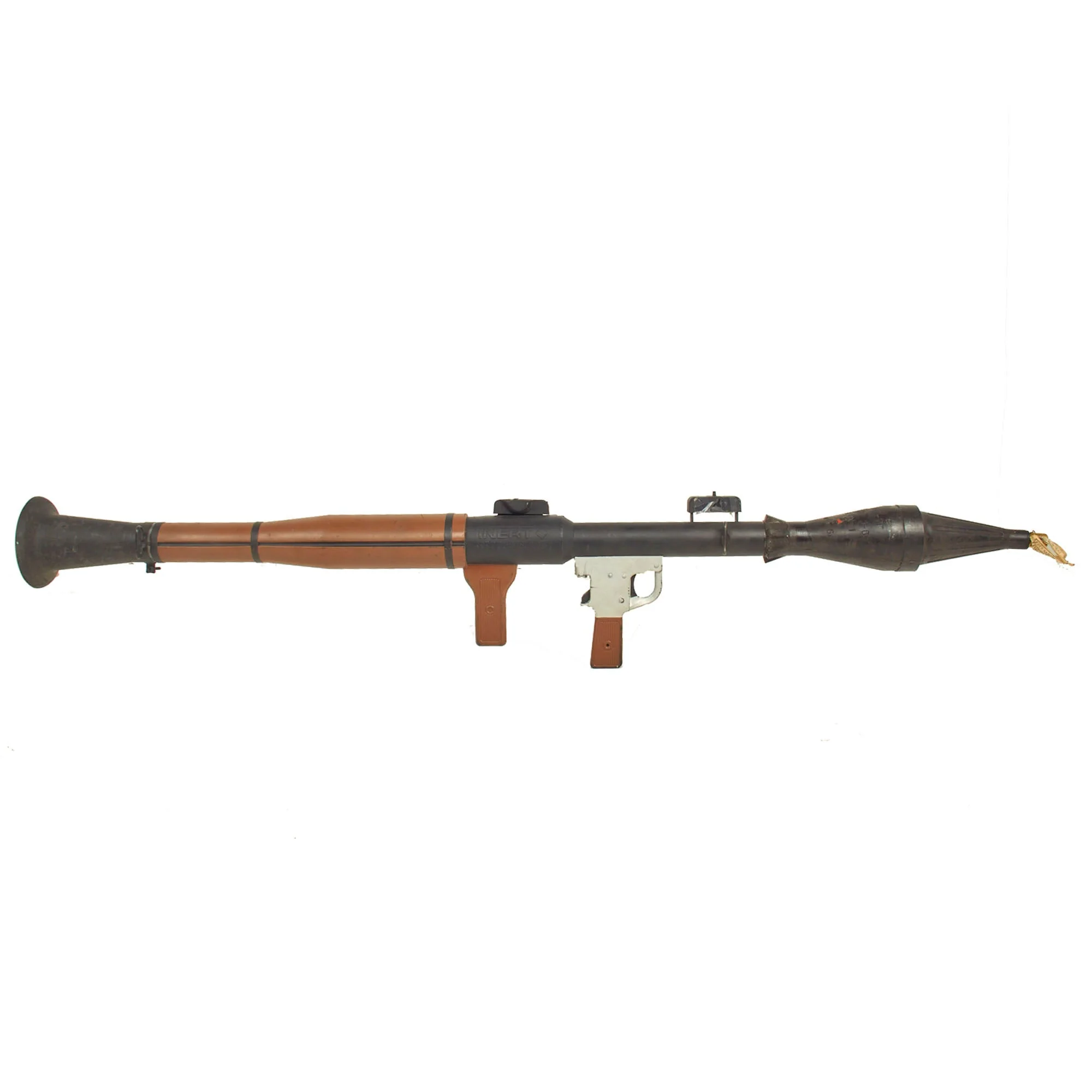
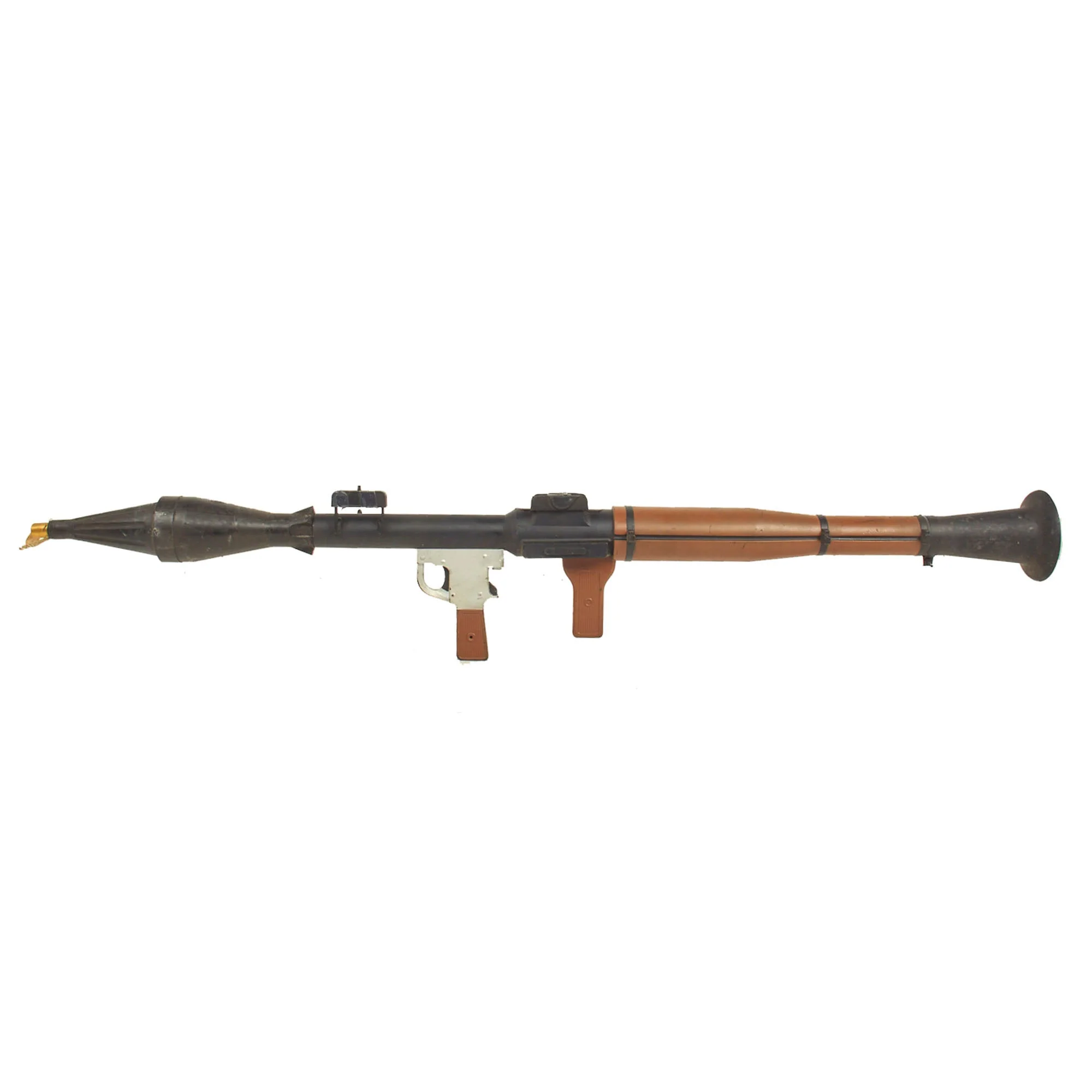
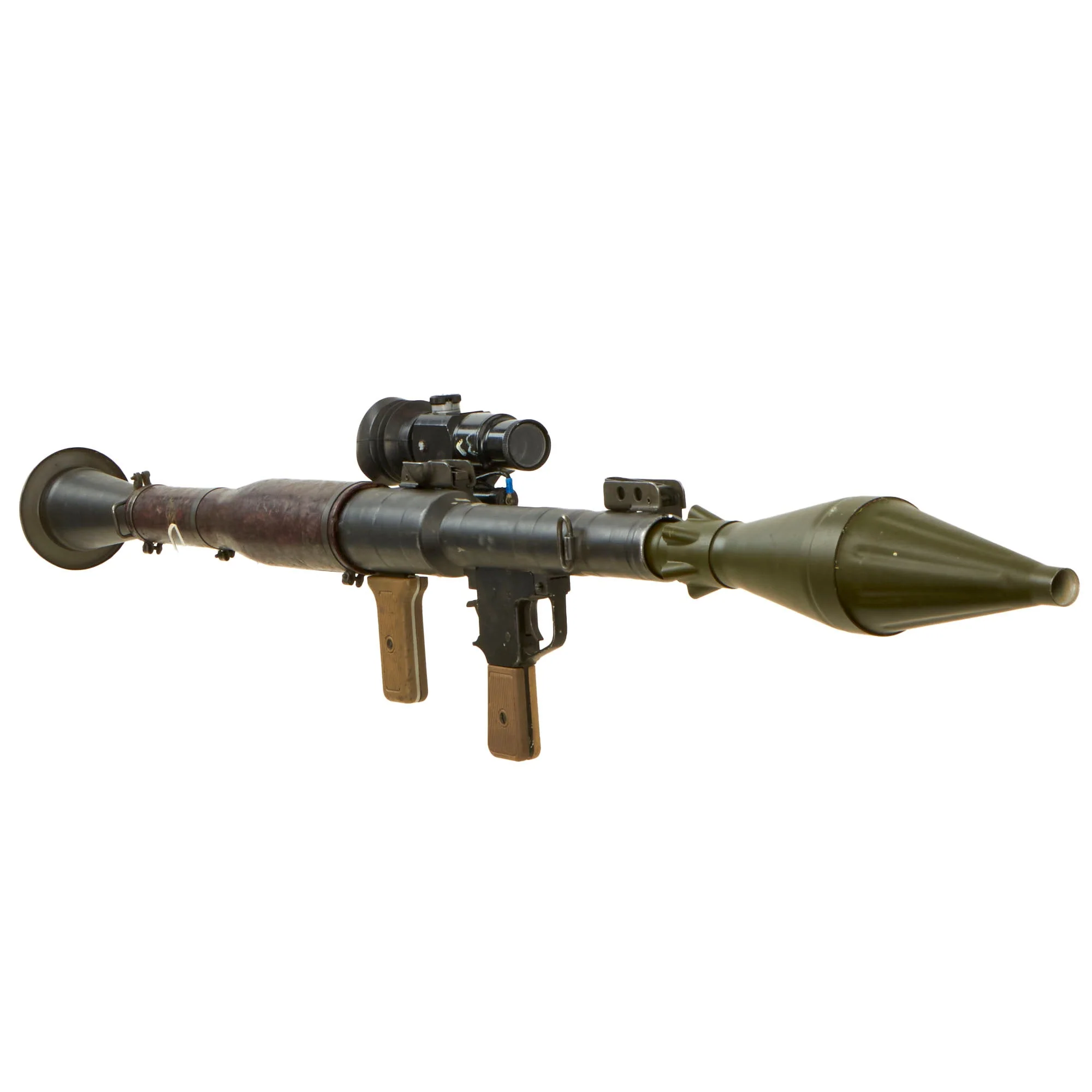
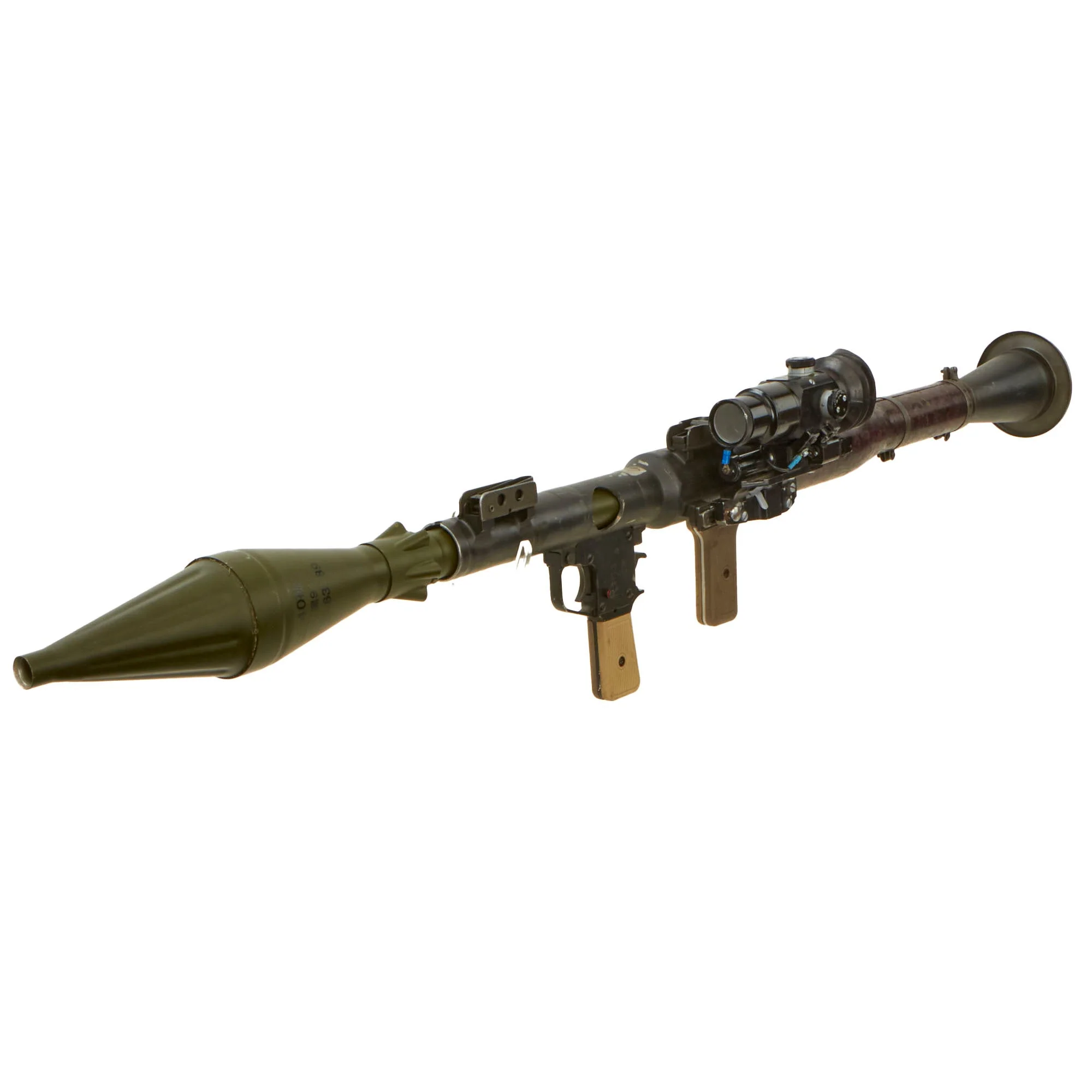
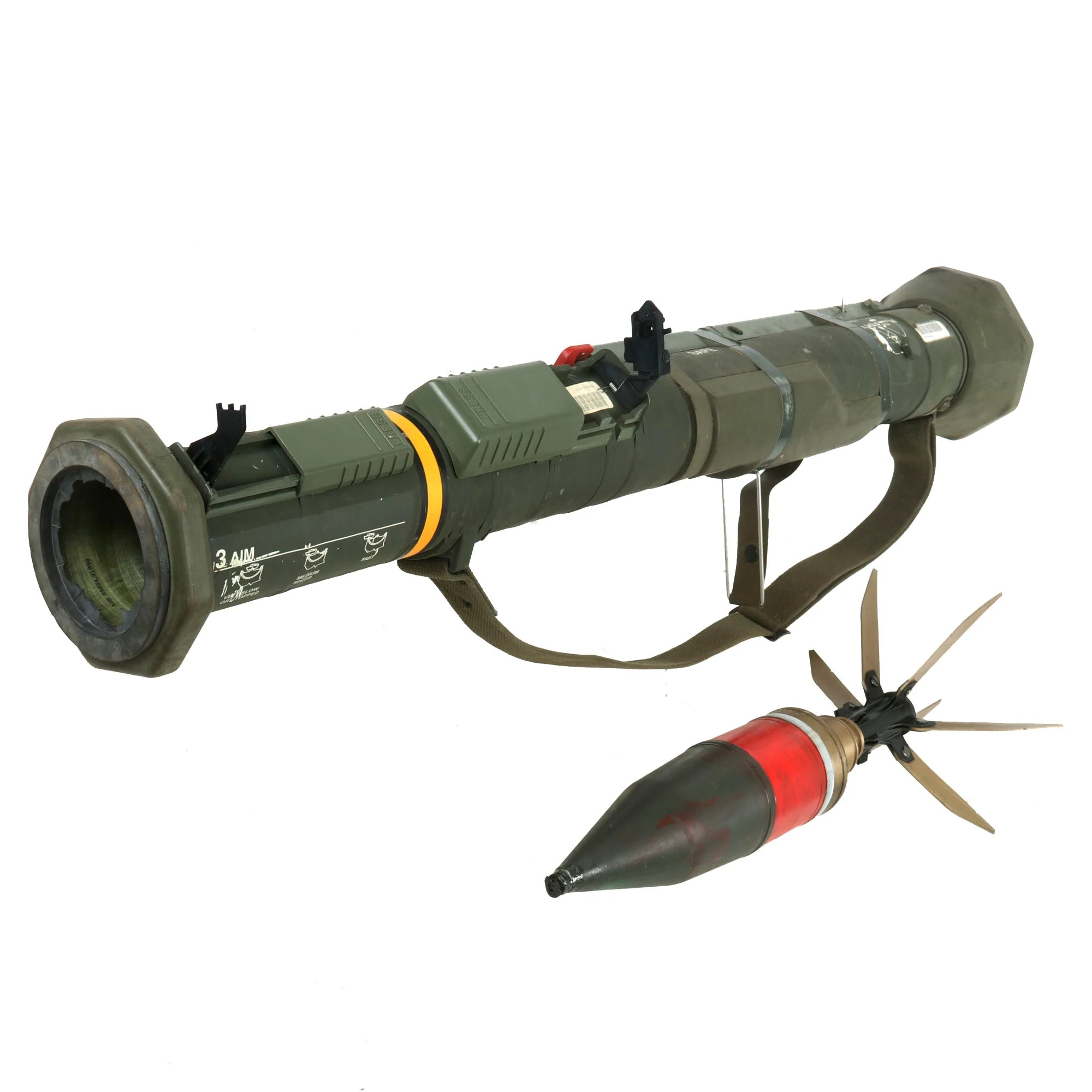
Original Item: Only one available. This lovely example of an M136 AT-4 Launcher is totally inert and incapable of firing, as it is a single use non-reloadable item. Used launchers such as this are "expended ordnance" which "are not classified as a "firearm" or "destructive device"" by the BATF once used, and "therefore, they are not subject to GCA or NFA provisions."
NOT AVAILABLE FOR EXPORT. NOT AVAILABLE TO CALIFORNIA RESIDENTS.
In terms of recent military weapons that make impressive wall-hanger display pieces, Anti-Tank launchers definitely take the cake. They may not be as impressive as the tank itself, but they are also far more display friendly, and require far less maintenance, preparation, and so forth.
This is a 2022 production U.S. M136 AT-4 CS Confined Space Anti-Tank Weapon Launcher, and it is in excellent display condition, most likely the best and most modern example that we have ever had! It looks great, and has all of the original labels, instructions, and safety warnings. It also still has the original sling and fold-away "shoulder stock" that helps stabilize the weapon. This more modern version also features a plastic fold away foregrip by the muzzle, something we have never had before! The front and rear sights are both intact, and they properly pop up when the covers are opened. The front and rear rubber fittings are present, and there is even a bit of the plastic seal present on the rear. It even still has the original "Safety Fork" that prevents the launcher from being cocked!
The markings are in excellent overall, with very little wear or damage. This example looks to be a Swedish made launcher, produced by Saab Bofors Dynamics. It has the original production label and serial number on the side:
FORSVARETS MATERIELTJENESTE
84 MM PANSERVÆRNSVÅBEN M/97
LNR: 1315-22-124-1054
It is marked near the rubber gasket:
AT4 CS HP HEAT
01-BOF-10
The "CS" stands for "Confined Space", and looking inside the launcher shows that it has a double stage break-away metal gasket inside, which helps to spread and reduce the backblast when the fins at both ends fold back. This means that it can be used indoors in a large room, and there are detailed specifications regarding clearance required on the rear of the launcher. As it is "recoilless", in the original form it meant that anyone or thing to the rear of it was in quite a bit of danger due to the back blast. The "CS" version be used much closer to objects and structures, making it much more effective for city warfare.
The launcher now is in a very safe "spent" display form, which are generally discarded after use. Like the U.S. LAW series of Anti-Tank weapons, the AT-4 is packaged as a launcher and round unit, with the launcher being considered "Disposable". Thankfully this one was saved from that fate! Ready to display!
NOTE: Please note that the back blast metal insert has SHARP EDGES, and we do not recommend sticking your hand or anything else into the rear of the launcher, as you risk injury.
More on the AT-4:
The AT4 (also AT-4) is an 84-mm unguided, portable, single-shot recoilless smoothbore weapon built in Sweden by Saab Bofors Dynamics (previously Bofors Anti-Armour Systems). Saab has had considerable sales success with the AT4, making it one of the most common light anti-tank weapons in the world.
The AT4 is intended to give infantry units a means to destroy or disable armoured vehicles and fortifications, although it is generally ineffective against current modern main battle tanks (MBT). The launcher and projectile are manufactured prepacked and issued as a single unit of ammunition, with the launcher discarded after a single use.
The AT4 is a development of the 74-mm Pansarskott m/68 (Miniman), adopted by the Swedish Army in the late 1960s. Like the m/68, the AT4 was designed by Förenade Fabriksverken (FFV) and manufactured at their facility at Zakrisdal, Karlstad, Sweden. FFV began research in a replacement for the m/68 in 1976, deliberately designing an individual anti-armor weapon that would not be able to defeat the heavy armour protection of MBTs (main battle tanks) in frontal engagements, believing that to be counterproductive. The AT4 was designed as a weapon to engage medium to light armoured vehicles from any direction, MBTs from the sides or rear, and as an assault weapon against buildings and fortifications. FFV also had the design goal of a weapon that was simple to use, rugged, and far more accurate than previous individual antiarmor weapons against moving targets.
Another key requirement was that the AT4 not only be able to penetrate armour, but also have a devastating beyond-armour effect after penetration. FFV and the Swedish Army began the first evaluation firings of the prototype AT4s in the spring of 1981 with 100 tested by early 1982.
Even before the AT4 had been adopted by Sweden, it was entered into a US Army competition for a new anti-tank weapon mandated by Congress in 1982 when the FGR-17 Viper failed as a replacement for the M72 LAW. Six weapons were tested in 1983 by the US Army: the British LAW 80, the German Armbrust, the French APILAS, the Norwegian M72E4 (an upgraded M72 LAW), the US Viper (for baseline comparison purposes) and the Swedish AT4. The US Army reported to Congress in November 1983 that the FFV AT4 came the closest to meeting all the major requirements established to replace the M72 LAW, with the Armbrust coming in second.
Though very impressed with the simplicity and durability of the tested version of the AT4, the US Army saw some room for improvement, specifically the addition of rear and front bumpers on the launch tube and changes to the sights and slings. After these changes, the AT4 was adopted by the US Army as the Lightweight Multipurpose Weapon M136. The Swedish Army also recognized these improvements and subsequently adopted the Americanized version of the AT4 as the Pansarskott m/86 (Pskott m/86), with the addition of a forward folding hand grip to help steady the AT4 when being aimed and fired. The forward folding grip is the only difference between the AT4 adopted by Sweden and the US Army version.
Due to the urban combat conditions that US military forces faced regularly during the Iraq War, the US Army Close Combat Systems manager in charge of purchases of the AT4 suspended orders for the standard version of the AT4 and US military forces are now only ordering the AT4 CS (Confined Space) version.

Details & Craftsmanship
Every detail has been carefully considered to bring you the perfect product.

Details & Craftsmanship
Every detail has been carefully considered to bring you the perfect product.

Details & Craftsmanship
Every detail has been carefully considered to bring you the perfect product.

Details & Craftsmanship
Every detail has been carefully considered to bring you the perfect product.

Details & Craftsmanship
Every detail has been carefully considered to bring you the perfect product.

Details & Craftsmanship
Every detail has been carefully considered to bring you the perfect product.

Details & Craftsmanship
Every detail has been carefully considered to bring you the perfect product.

Details & Craftsmanship
Every detail has been carefully considered to bring you the perfect product.

Details & Craftsmanship
Every detail has been carefully considered to bring you the perfect product.

Details & Craftsmanship
Every detail has been carefully considered to bring you the perfect product.

Details & Craftsmanship
Every detail has been carefully considered to bring you the perfect product.

Details & Craftsmanship
Every detail has been carefully considered to bring you the perfect product.

Details & Craftsmanship
Every detail has been carefully considered to bring you the perfect product.

Details & Craftsmanship
Every detail has been carefully considered to bring you the perfect product.

Details & Craftsmanship
Every detail has been carefully considered to bring you the perfect product.

Details & Craftsmanship
Every detail has been carefully considered to bring you the perfect product.

Details & Craftsmanship
Every detail has been carefully considered to bring you the perfect product.

Details & Craftsmanship
Every detail has been carefully considered to bring you the perfect product.

Details & Craftsmanship
Every detail has been carefully considered to bring you the perfect product.
Description
Original Item: Only one available. This lovely example of an M136 AT-4 Launcher is totally inert and incapable of firing, as it is a single use non-reloadable item. Used launchers such as this are "expended ordnance" which "are not classified as a "firearm" or "destructive device"" by the BATF once used, and "therefore, they are not subject to GCA or NFA provisions."
NOT AVAILABLE FOR EXPORT. NOT AVAILABLE TO CALIFORNIA RESIDENTS.
In terms of recent military weapons that make impressive wall-hanger display pieces, Anti-Tank launchers definitely take the cake. They may not be as impressive as the tank itself, but they are also far more display friendly, and require far less maintenance, preparation, and so forth.
This is a 2022 production U.S. M136 AT-4 CS Confined Space Anti-Tank Weapon Launcher, and it is in excellent display condition, most likely the best and most modern example that we have ever had! It looks great, and has all of the original labels, instructions, and safety warnings. It also still has the original sling and fold-away "shoulder stock" that helps stabilize the weapon. This more modern version also features a plastic fold away foregrip by the muzzle, something we have never had before! The front and rear sights are both intact, and they properly pop up when the covers are opened. The front and rear rubber fittings are present, and there is even a bit of the plastic seal present on the rear. It even still has the original "Safety Fork" that prevents the launcher from being cocked!
The markings are in excellent overall, with very little wear or damage. This example looks to be a Swedish made launcher, produced by Saab Bofors Dynamics. It has the original production label and serial number on the side:
FORSVARETS MATERIELTJENESTE
84 MM PANSERVÆRNSVÅBEN M/97
LNR: 1315-22-124-1054
It is marked near the rubber gasket:
AT4 CS HP HEAT
01-BOF-10
The "CS" stands for "Confined Space", and looking inside the launcher shows that it has a double stage break-away metal gasket inside, which helps to spread and reduce the backblast when the fins at both ends fold back. This means that it can be used indoors in a large room, and there are detailed specifications regarding clearance required on the rear of the launcher. As it is "recoilless", in the original form it meant that anyone or thing to the rear of it was in quite a bit of danger due to the back blast. The "CS" version be used much closer to objects and structures, making it much more effective for city warfare.
The launcher now is in a very safe "spent" display form, which are generally discarded after use. Like the U.S. LAW series of Anti-Tank weapons, the AT-4 is packaged as a launcher and round unit, with the launcher being considered "Disposable". Thankfully this one was saved from that fate! Ready to display!
NOTE: Please note that the back blast metal insert has SHARP EDGES, and we do not recommend sticking your hand or anything else into the rear of the launcher, as you risk injury.
More on the AT-4:
The AT4 (also AT-4) is an 84-mm unguided, portable, single-shot recoilless smoothbore weapon built in Sweden by Saab Bofors Dynamics (previously Bofors Anti-Armour Systems). Saab has had considerable sales success with the AT4, making it one of the most common light anti-tank weapons in the world.
The AT4 is intended to give infantry units a means to destroy or disable armoured vehicles and fortifications, although it is generally ineffective against current modern main battle tanks (MBT). The launcher and projectile are manufactured prepacked and issued as a single unit of ammunition, with the launcher discarded after a single use.
The AT4 is a development of the 74-mm Pansarskott m/68 (Miniman), adopted by the Swedish Army in the late 1960s. Like the m/68, the AT4 was designed by Förenade Fabriksverken (FFV) and manufactured at their facility at Zakrisdal, Karlstad, Sweden. FFV began research in a replacement for the m/68 in 1976, deliberately designing an individual anti-armor weapon that would not be able to defeat the heavy armour protection of MBTs (main battle tanks) in frontal engagements, believing that to be counterproductive. The AT4 was designed as a weapon to engage medium to light armoured vehicles from any direction, MBTs from the sides or rear, and as an assault weapon against buildings and fortifications. FFV also had the design goal of a weapon that was simple to use, rugged, and far more accurate than previous individual antiarmor weapons against moving targets.
Another key requirement was that the AT4 not only be able to penetrate armour, but also have a devastating beyond-armour effect after penetration. FFV and the Swedish Army began the first evaluation firings of the prototype AT4s in the spring of 1981 with 100 tested by early 1982.
Even before the AT4 had been adopted by Sweden, it was entered into a US Army competition for a new anti-tank weapon mandated by Congress in 1982 when the FGR-17 Viper failed as a replacement for the M72 LAW. Six weapons were tested in 1983 by the US Army: the British LAW 80, the German Armbrust, the French APILAS, the Norwegian M72E4 (an upgraded M72 LAW), the US Viper (for baseline comparison purposes) and the Swedish AT4. The US Army reported to Congress in November 1983 that the FFV AT4 came the closest to meeting all the major requirements established to replace the M72 LAW, with the Armbrust coming in second.
Though very impressed with the simplicity and durability of the tested version of the AT4, the US Army saw some room for improvement, specifically the addition of rear and front bumpers on the launch tube and changes to the sights and slings. After these changes, the AT4 was adopted by the US Army as the Lightweight Multipurpose Weapon M136. The Swedish Army also recognized these improvements and subsequently adopted the Americanized version of the AT4 as the Pansarskott m/86 (Pskott m/86), with the addition of a forward folding hand grip to help steady the AT4 when being aimed and fired. The forward folding grip is the only difference between the AT4 adopted by Sweden and the US Army version.
Due to the urban combat conditions that US military forces faced regularly during the Iraq War, the US Army Close Combat Systems manager in charge of purchases of the AT4 suspended orders for the standard version of the AT4 and US military forces are now only ordering the AT4 CS (Confined Space) version.