
Original U.S Mexican-American War First Contract M-1840 "Wrist Breaker" Heavy Cavalry Saber with Scabbard by S&K Schnitzler & Kirschbaum of Solingen - German Imported Blade - Excellent
Original U.S Mexican-American War First Contract M-1840 "Wrist Breaker" Heavy Cavalry Saber with Scabbard by S&K Schnitzler & Kirschbaum of Solingen - German Imported Blade - Excellent
The Story
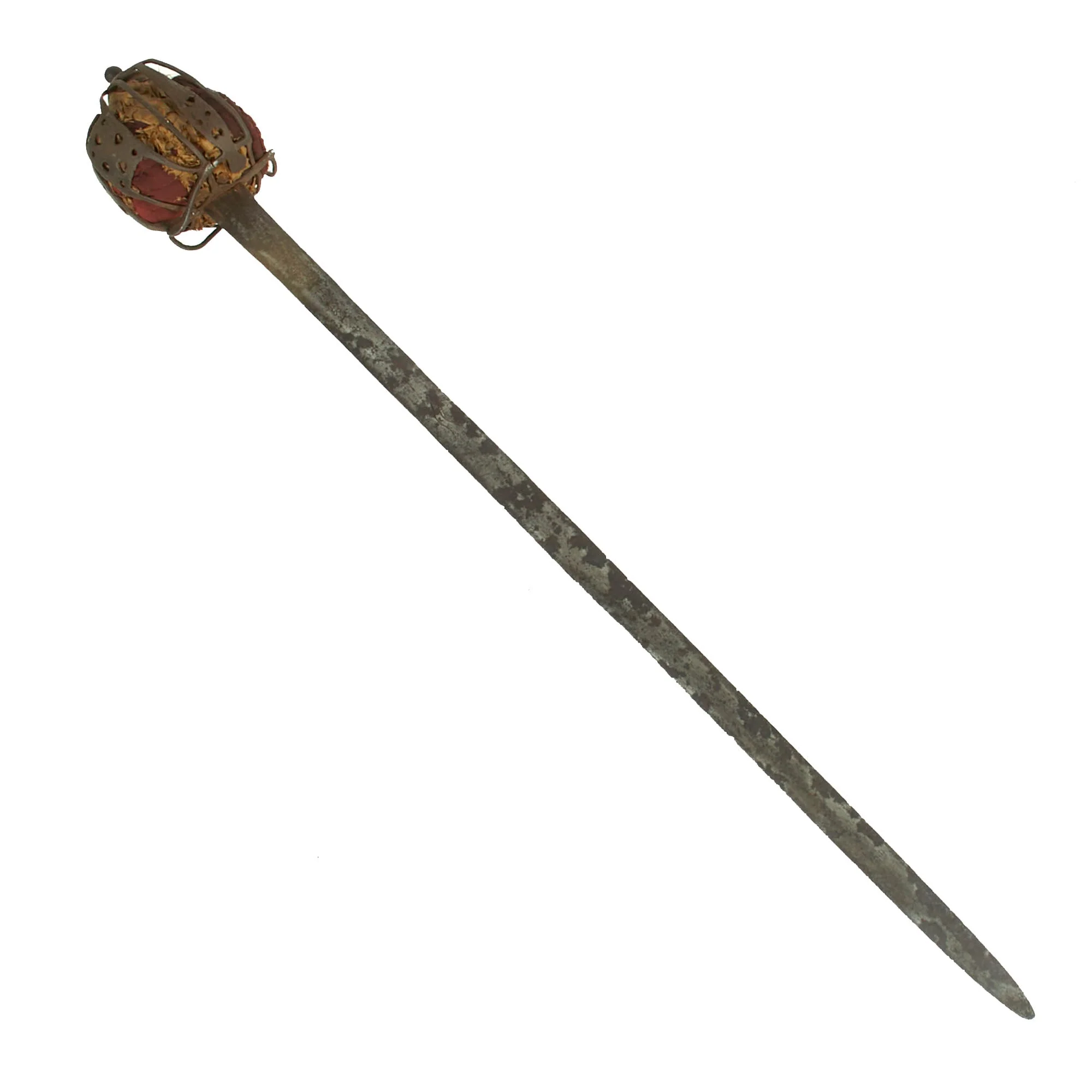
Original item: Only One Available. This Heavy Cavalry Saber, known as "Old Wristbreaker" among troops, was designated the U.S. Model of 1840, but was widely used in the War between the States on both sides. However, this example pre-dates that conflict, and is actually of the first contract for this model of saber.
In 1839 the US Army decided to adopt new cavalry and light artillery sabers based on the French M1822 models. In August 1840, two US officers visited Solingen and signed a contract with Schnitzler & Kirschbaum to manufacture the newly-adopted models. The contract was awarded to the German firm because it was prepared to go into production immediately, whereas Ames would need time to tool-up to make the new models. The contracted sabers were to be ready for inspection by April 1841, and were to be inspected IAW the procedures of the Prussian service. The inspection was to be arranged through the American Minister in Berlin. This was done, and the new sabers were received in New York on 31 Oct 1841.
This outstanding example is stamped on the spine of the blade with:
(CROWN)
D
(CROWN)
RC
S&K
These were delivered in 1840 and they saw heavy use in the Mexican War and Early Civil War. As a result examples of these are quite scarce according to Thillmann’s Book, “Civil War Cavalry & Artillery Sabers: A Study of United States Cavalry and Artillery Sabers, 1833-1865”.
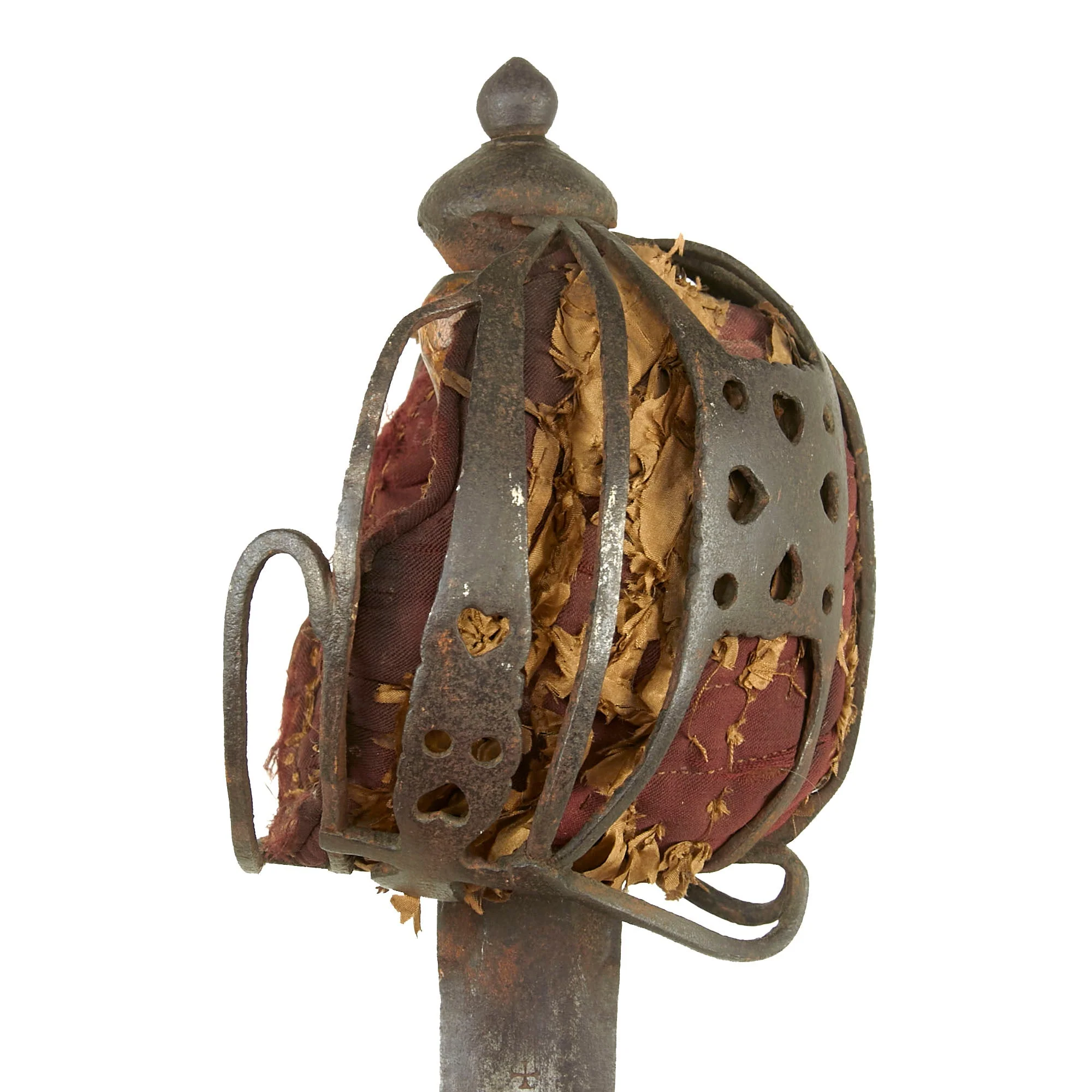
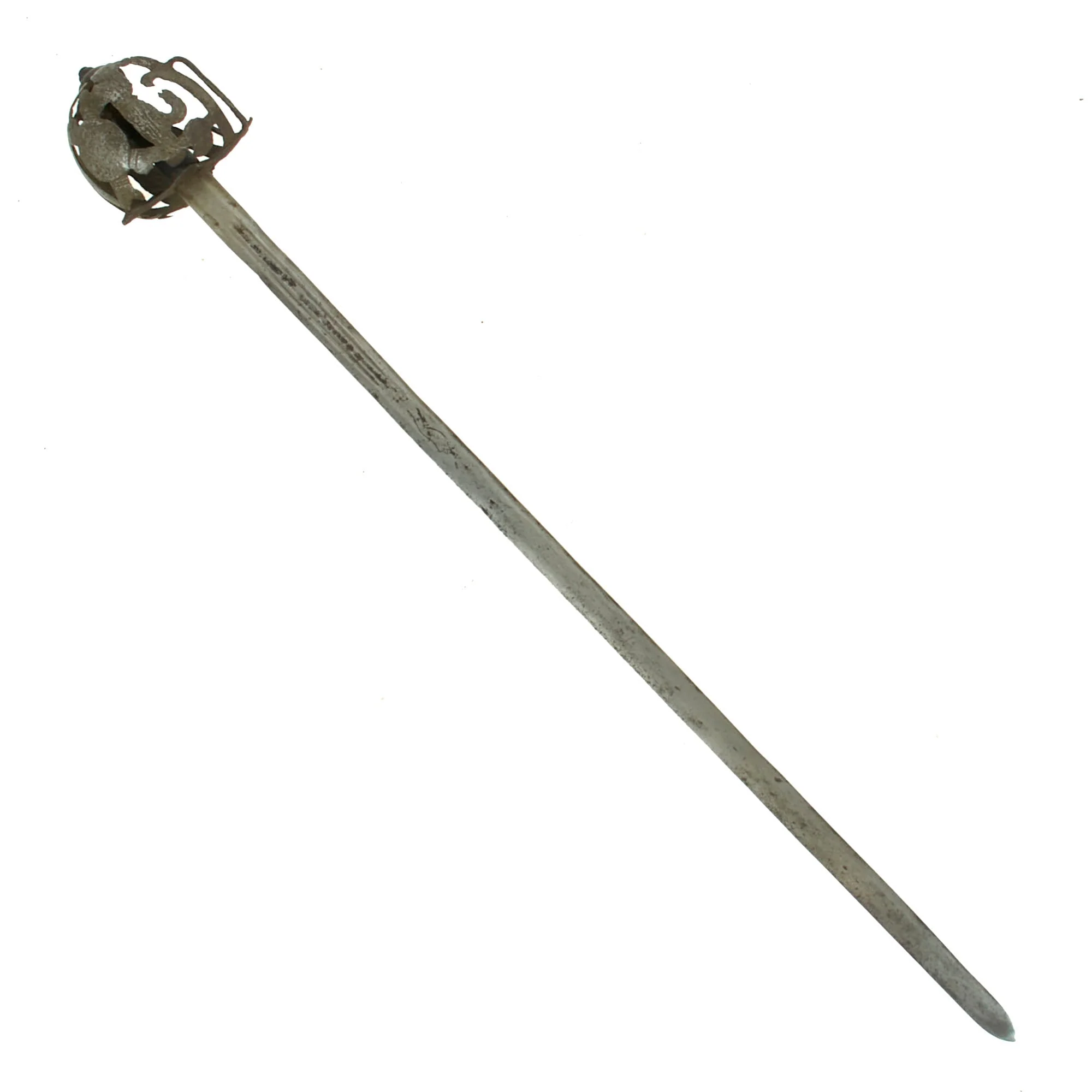
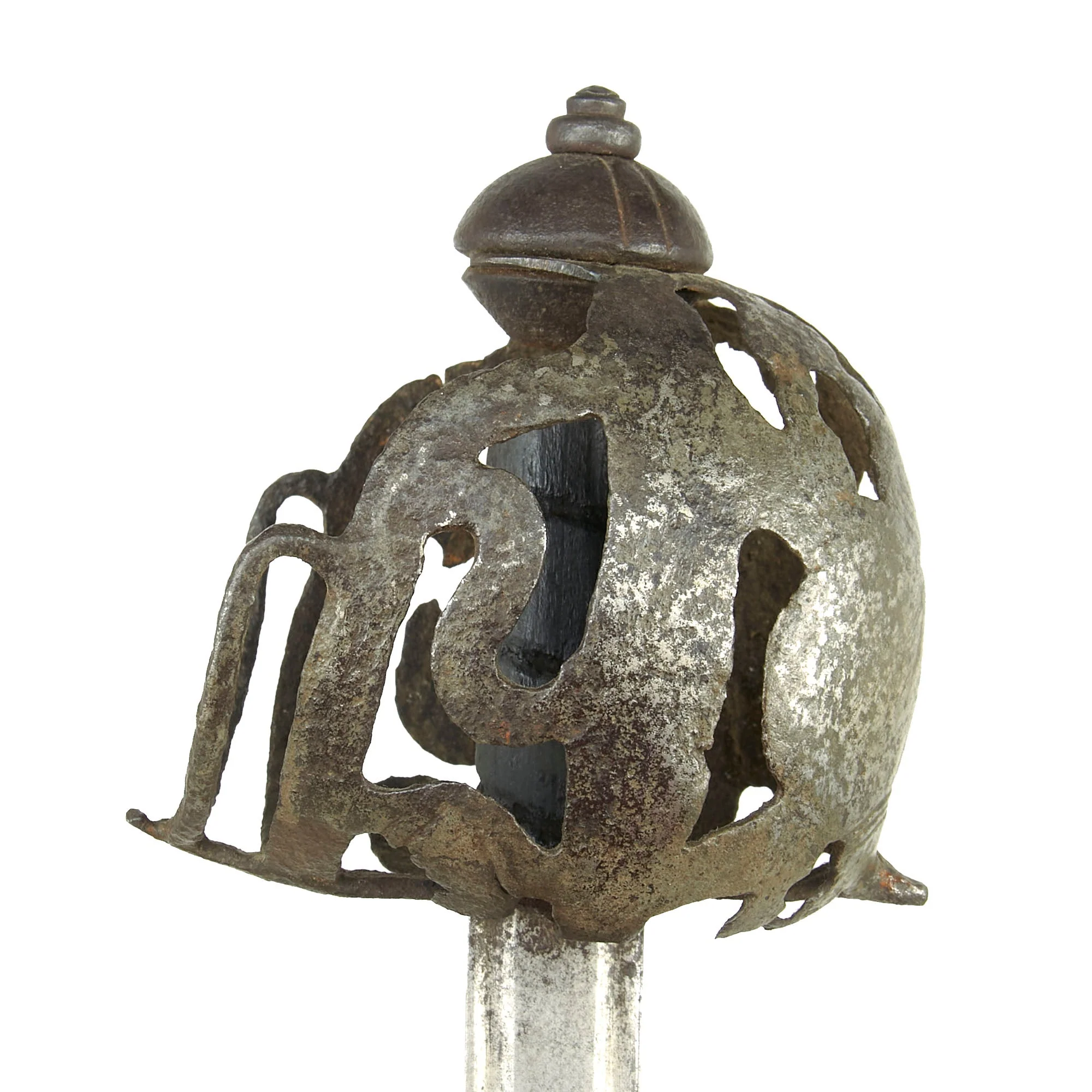
This sword conforms closely to the M-1840 U.S. Heavy Cavalry pattern, and is approximately 41 5/8 inches in overall length, about 2 inches shorter than typical. It has a very nice, untouched, brass wire bound leather grip which is in solid condition, with much of the leather still displaying a lovely black color. The hilt bears a brass three branch handguard fitted to a wicked heavy curved blade measuring 36 1/8”, coming complete with its heavy all steel scabbard. The knucklebow is also stamped with the same “Crown / D” inspection marking as is found on the spine of the blade.
This actually is a very nice sword, with an excellent blade that still retains much of its original bright finish, with some light staining that has been mostly polished out. The blade is still very sharp and has just a few small edge nicks. The hilt is tight on the blade, with no wobble, and the original leather blade buffer is present, rare to see. The scabbard is in very good condition, with a gray/brown patina, and there are no significant dents in the scabbard body.
An extremely scarce saber to find in any condition, but this example is outstanding in every regard, and will likely be the only example of this “First Contract” we will see for a very long time. Comes ready for further research and display!
Approximate Dimensions:
Blade Length: 36 1/8”
Blade Style: Single Edged Curved Saber with Wide Fuller
Overall length: 41 5/8“
Basket dimensions: 5" width x 5” length
Scabbard length: 37 ⅝”
The Model 1840 Cavalry Saber was based on the 1822 French hussar's sabre. Unlike its replacement, the Model 1860 Light Cavalry Saber, the M1840 has a ridge around its quillon, a leather grip wrapped in wire (rather than grooves cut into the wooden handle) and a flat, slotted throat. It is 44" long with a 35" blade and weighs roughly 2.5 lbs.
The M1840 was designed for slashing and because of its heavy flat-backed blade was given the nickname "Old Wristbreaker." It was adopted due to the army's dissatisfaction with its predecessor, the model 1833 Dragoon Saber, the first cavalry sword adopted by the US Army.
The iron-hilted M1833 was based on a Napoleonic-era British sword used by heavy cavalry and reputed to wrap "rubber like around a man's head and was only good for cutting butter" An ornate gilded version of this earlier sword was used by General Philip Sheridan during the Civil War; Sheridan had its sheath engraved with the battles he participated in.
It was evident a replacement was needed so in 1838 the US Ordnance Dept bought British, French and Prussian swords and field-tested them. The troopers overwhelmingly preferred the French saber, and a copy of it was put into production in 1844. A total of 2000 were ordered and by 1846, 600 were in frontline service.
The 1840 saber was used during the U.S.-Mexican War by US Cavalry. The main contractors were Ames of Cabotville, Horstmann, and Tiffany but due to the large number of swords required at least 1000 were made in Germany by S&K and imported. Some troopers used Prussian sabers as an alternative, which in contrast to the M1840 had straight blades.
When production ceased in 1858 over 23,700 were made. During the US Civil War it continued to be issued to Union Cavalry as in the early years it was more readily available than the M1860. George B McClellan carried one at the front, keeping his regulation officer's sword for full dress occasions. Many were also used by the Confederacy including General Nathan Bedford Forrest who had both edges of his sword sharpened to increase combat effectiveness.

Details & Craftsmanship
Every detail has been carefully considered to bring you the perfect product.

Details & Craftsmanship
Every detail has been carefully considered to bring you the perfect product.

Details & Craftsmanship
Every detail has been carefully considered to bring you the perfect product.

Details & Craftsmanship
Every detail has been carefully considered to bring you the perfect product.

Details & Craftsmanship
Every detail has been carefully considered to bring you the perfect product.

Details & Craftsmanship
Every detail has been carefully considered to bring you the perfect product.

Details & Craftsmanship
Every detail has been carefully considered to bring you the perfect product.

Details & Craftsmanship
Every detail has been carefully considered to bring you the perfect product.

Details & Craftsmanship
Every detail has been carefully considered to bring you the perfect product.

Details & Craftsmanship
Every detail has been carefully considered to bring you the perfect product.

Details & Craftsmanship
Every detail has been carefully considered to bring you the perfect product.

Details & Craftsmanship
Every detail has been carefully considered to bring you the perfect product.

Details & Craftsmanship
Every detail has been carefully considered to bring you the perfect product.

Details & Craftsmanship
Every detail has been carefully considered to bring you the perfect product.
Description
Original item: Only One Available. This Heavy Cavalry Saber, known as "Old Wristbreaker" among troops, was designated the U.S. Model of 1840, but was widely used in the War between the States on both sides. However, this example pre-dates that conflict, and is actually of the first contract for this model of saber.
In 1839 the US Army decided to adopt new cavalry and light artillery sabers based on the French M1822 models. In August 1840, two US officers visited Solingen and signed a contract with Schnitzler & Kirschbaum to manufacture the newly-adopted models. The contract was awarded to the German firm because it was prepared to go into production immediately, whereas Ames would need time to tool-up to make the new models. The contracted sabers were to be ready for inspection by April 1841, and were to be inspected IAW the procedures of the Prussian service. The inspection was to be arranged through the American Minister in Berlin. This was done, and the new sabers were received in New York on 31 Oct 1841.
This outstanding example is stamped on the spine of the blade with:
(CROWN)
D
(CROWN)
RC
S&K
These were delivered in 1840 and they saw heavy use in the Mexican War and Early Civil War. As a result examples of these are quite scarce according to Thillmann’s Book, “Civil War Cavalry & Artillery Sabers: A Study of United States Cavalry and Artillery Sabers, 1833-1865”.
This sword conforms closely to the M-1840 U.S. Heavy Cavalry pattern, and is approximately 41 5/8 inches in overall length, about 2 inches shorter than typical. It has a very nice, untouched, brass wire bound leather grip which is in solid condition, with much of the leather still displaying a lovely black color. The hilt bears a brass three branch handguard fitted to a wicked heavy curved blade measuring 36 1/8”, coming complete with its heavy all steel scabbard. The knucklebow is also stamped with the same “Crown / D” inspection marking as is found on the spine of the blade.
This actually is a very nice sword, with an excellent blade that still retains much of its original bright finish, with some light staining that has been mostly polished out. The blade is still very sharp and has just a few small edge nicks. The hilt is tight on the blade, with no wobble, and the original leather blade buffer is present, rare to see. The scabbard is in very good condition, with a gray/brown patina, and there are no significant dents in the scabbard body.
An extremely scarce saber to find in any condition, but this example is outstanding in every regard, and will likely be the only example of this “First Contract” we will see for a very long time. Comes ready for further research and display!
Approximate Dimensions:
Blade Length: 36 1/8”
Blade Style: Single Edged Curved Saber with Wide Fuller
Overall length: 41 5/8“
Basket dimensions: 5" width x 5” length
Scabbard length: 37 ⅝”
The Model 1840 Cavalry Saber was based on the 1822 French hussar's sabre. Unlike its replacement, the Model 1860 Light Cavalry Saber, the M1840 has a ridge around its quillon, a leather grip wrapped in wire (rather than grooves cut into the wooden handle) and a flat, slotted throat. It is 44" long with a 35" blade and weighs roughly 2.5 lbs.
The M1840 was designed for slashing and because of its heavy flat-backed blade was given the nickname "Old Wristbreaker." It was adopted due to the army's dissatisfaction with its predecessor, the model 1833 Dragoon Saber, the first cavalry sword adopted by the US Army.
The iron-hilted M1833 was based on a Napoleonic-era British sword used by heavy cavalry and reputed to wrap "rubber like around a man's head and was only good for cutting butter" An ornate gilded version of this earlier sword was used by General Philip Sheridan during the Civil War; Sheridan had its sheath engraved with the battles he participated in.
It was evident a replacement was needed so in 1838 the US Ordnance Dept bought British, French and Prussian swords and field-tested them. The troopers overwhelmingly preferred the French saber, and a copy of it was put into production in 1844. A total of 2000 were ordered and by 1846, 600 were in frontline service.
The 1840 saber was used during the U.S.-Mexican War by US Cavalry. The main contractors were Ames of Cabotville, Horstmann, and Tiffany but due to the large number of swords required at least 1000 were made in Germany by S&K and imported. Some troopers used Prussian sabers as an alternative, which in contrast to the M1840 had straight blades.
When production ceased in 1858 over 23,700 were made. During the US Civil War it continued to be issued to Union Cavalry as in the early years it was more readily available than the M1860. George B McClellan carried one at the front, keeping his regulation officer's sword for full dress occasions. Many were also used by the Confederacy including General Nathan Bedford Forrest who had both edges of his sword sharpened to increase combat effectiveness.