
Original: $295.00
-70%$295.00
$88.50The Story
Original Item: Only One Available. Totally inert and demilitarized according to BATF guidelines with hollow body and inert fuse. This mortar round cannot be converted to an explosive device.
Unloaded or dummy grenades, artillery shell casings, and similar devices, which are cut or drilled in an BATF-approved manner so that they cannot be used as ammunition components for destructive devices, are not considered NFA weapons. This example is in total compliance and is NOT AVAILABLE FOR EXPORT.
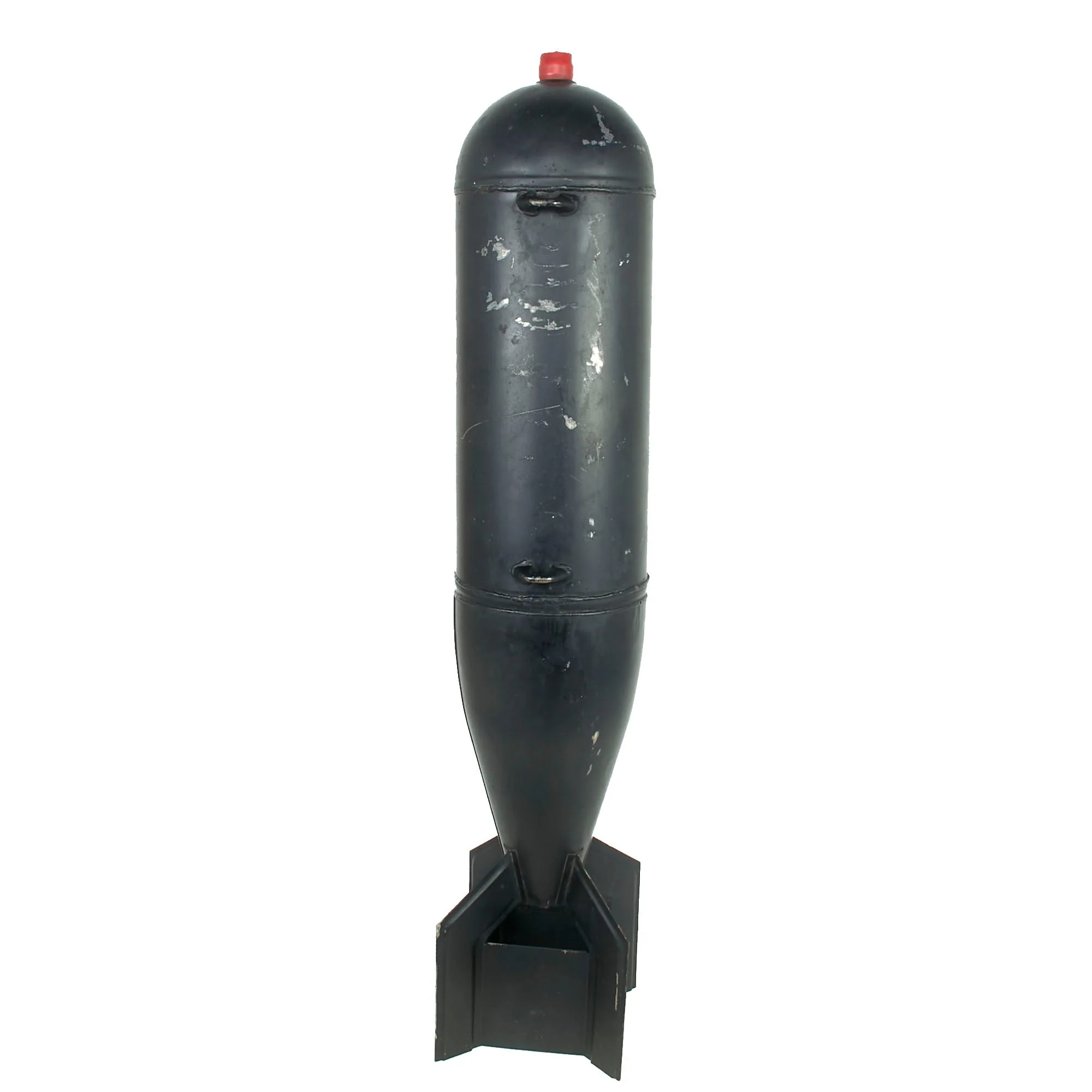
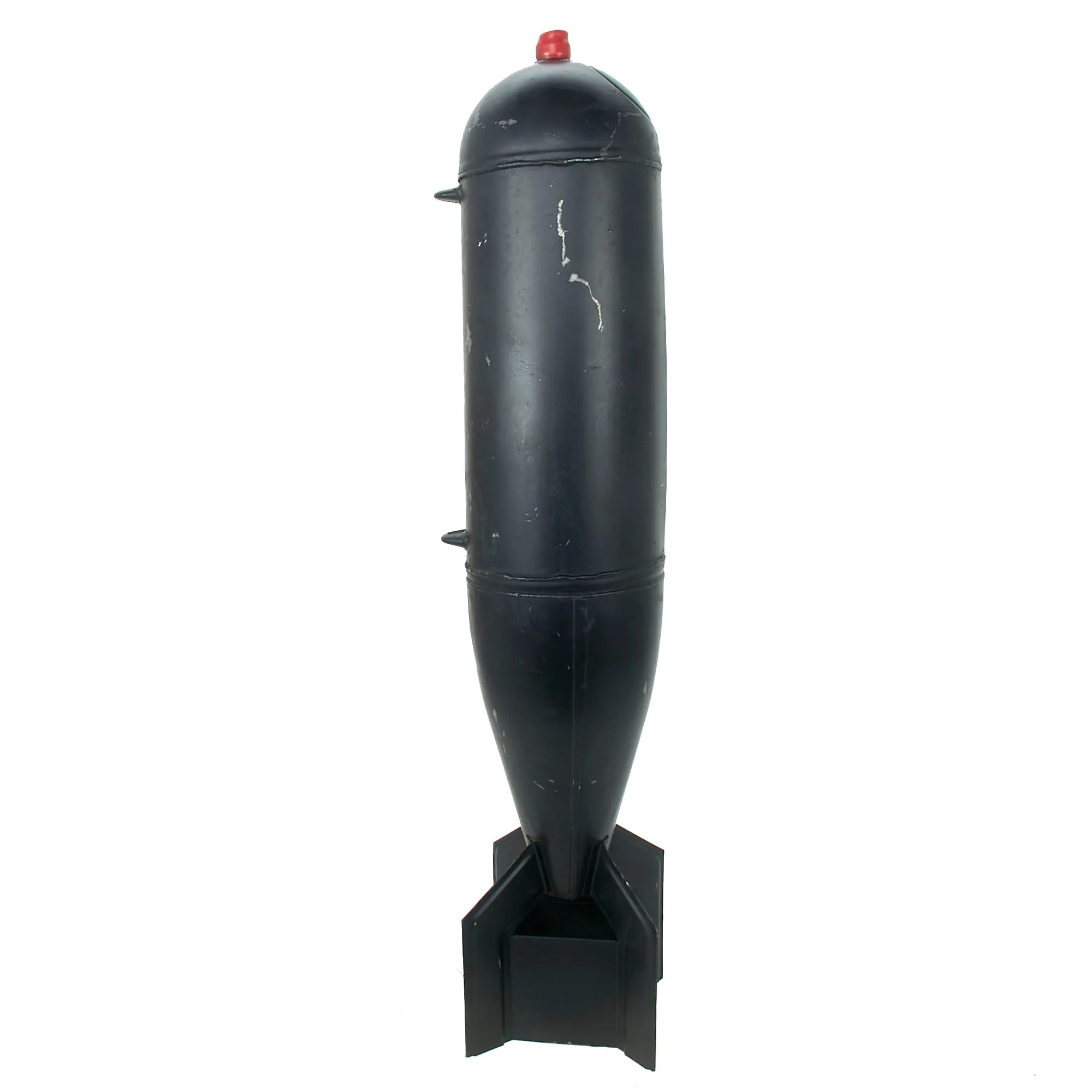
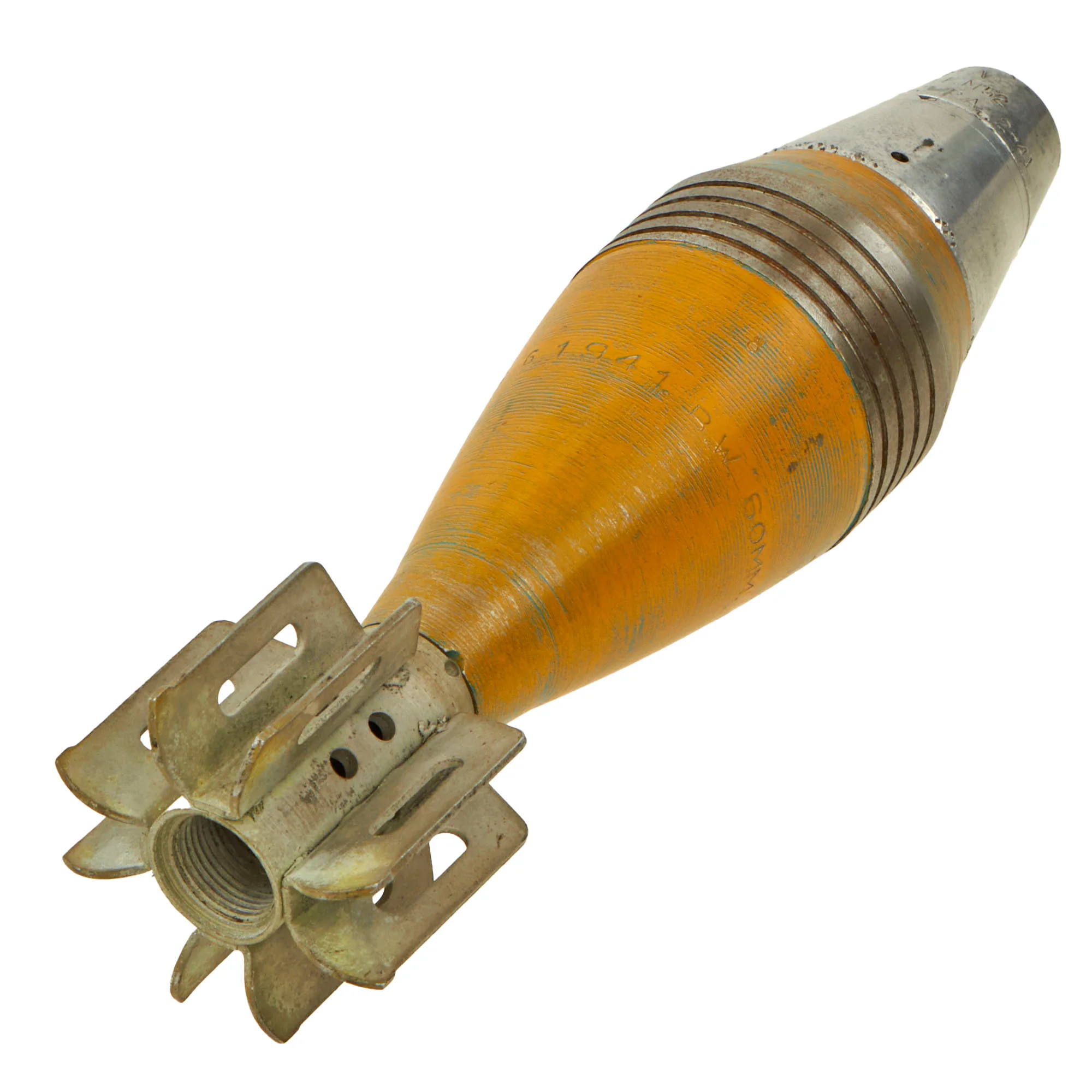
This is a WWII M49A2 Deactivated Practice Mortar Round, for the U.S. 60mm M2 Mortar. The M49A2 was a High explosive (HE) round, equipped with an aluminum housed point detonating fuse PDF M52., which is dated 2-41 for February 1941. This example was originally blue, and painted yellow after the war to look like a high explosive round.
The body is stamped LOT 6206 6 1941. B.W.-60MM M49A2.
There is much of the added yellow paint present, with much of the blue paint still visible underneath. The fuse, which is missing the aluminum detonation button (replaced by a solid block of something, screws off for inspecting the internal structure. The fuze is marked:
P.A.
P.D.F. M52
LOT 273503 P.A. 2-41
A great chance to pick up a WWII dated deactivated practice mortar round!
The U.S. M2 60 mm mortar was developed from the heavier 81 mm M1 Mortar to
provide a lighter-weight alternative to company-level fire support. The M2 attempted to bridge the gap between the 81 mm mortar and the hand grenade. Normally employed by the weapons platoon of a U.S. infantry company, the M2 is of the usual mortar pattern of the day.
It consists of a smoothbore metal tube on a rectangular baseplate, supported by a simple bipod with the elevation and traverse mechanisms. The firing pin was fixed in the base cap of the tube, and the bomb was fired automatically when it dropped down the barrel. Though classed as a light mortar, the M2 had considerable range compared to the 50 mm and 60 mm mortars of most other nations, and its fixed-firing pin design allowed a high rate of fire by trained crews. The M2 Mortar was used throughout World War II by the U.S. Army and U.S. Marine Corps.
Details & Craftsmanship
Every detail has been carefully considered to bring you the perfect product.

Details & Craftsmanship
Every detail has been carefully considered to bring you the perfect product.

Details & Craftsmanship
Every detail has been carefully considered to bring you the perfect product.

Details & Craftsmanship
Every detail has been carefully considered to bring you the perfect product.

Details & Craftsmanship
Every detail has been carefully considered to bring you the perfect product.

Details & Craftsmanship
Every detail has been carefully considered to bring you the perfect product.

Details & Craftsmanship
Every detail has been carefully considered to bring you the perfect product.

Details & Craftsmanship
Every detail has been carefully considered to bring you the perfect product.

Details & Craftsmanship
Every detail has been carefully considered to bring you the perfect product.

Details & Craftsmanship
Every detail has been carefully considered to bring you the perfect product.
Description
Original Item: Only One Available. Totally inert and demilitarized according to BATF guidelines with hollow body and inert fuse. This mortar round cannot be converted to an explosive device.
Unloaded or dummy grenades, artillery shell casings, and similar devices, which are cut or drilled in an BATF-approved manner so that they cannot be used as ammunition components for destructive devices, are not considered NFA weapons. This example is in total compliance and is NOT AVAILABLE FOR EXPORT.
This is a WWII M49A2 Deactivated Practice Mortar Round, for the U.S. 60mm M2 Mortar. The M49A2 was a High explosive (HE) round, equipped with an aluminum housed point detonating fuse PDF M52., which is dated 2-41 for February 1941. This example was originally blue, and painted yellow after the war to look like a high explosive round.
The body is stamped LOT 6206 6 1941. B.W.-60MM M49A2.
There is much of the added yellow paint present, with much of the blue paint still visible underneath. The fuse, which is missing the aluminum detonation button (replaced by a solid block of something, screws off for inspecting the internal structure. The fuze is marked:
P.A.
P.D.F. M52
LOT 273503 P.A. 2-41
A great chance to pick up a WWII dated deactivated practice mortar round!
The U.S. M2 60 mm mortar was developed from the heavier 81 mm M1 Mortar to
provide a lighter-weight alternative to company-level fire support. The M2 attempted to bridge the gap between the 81 mm mortar and the hand grenade. Normally employed by the weapons platoon of a U.S. infantry company, the M2 is of the usual mortar pattern of the day.
It consists of a smoothbore metal tube on a rectangular baseplate, supported by a simple bipod with the elevation and traverse mechanisms. The firing pin was fixed in the base cap of the tube, and the bomb was fired automatically when it dropped down the barrel. Though classed as a light mortar, the M2 had considerable range compared to the 50 mm and 60 mm mortars of most other nations, and its fixed-firing pin design allowed a high rate of fire by trained crews. The M2 Mortar was used throughout World War II by the U.S. Army and U.S. Marine Corps.