
Original: $195.00
-70%$195.00
$58.50The Story
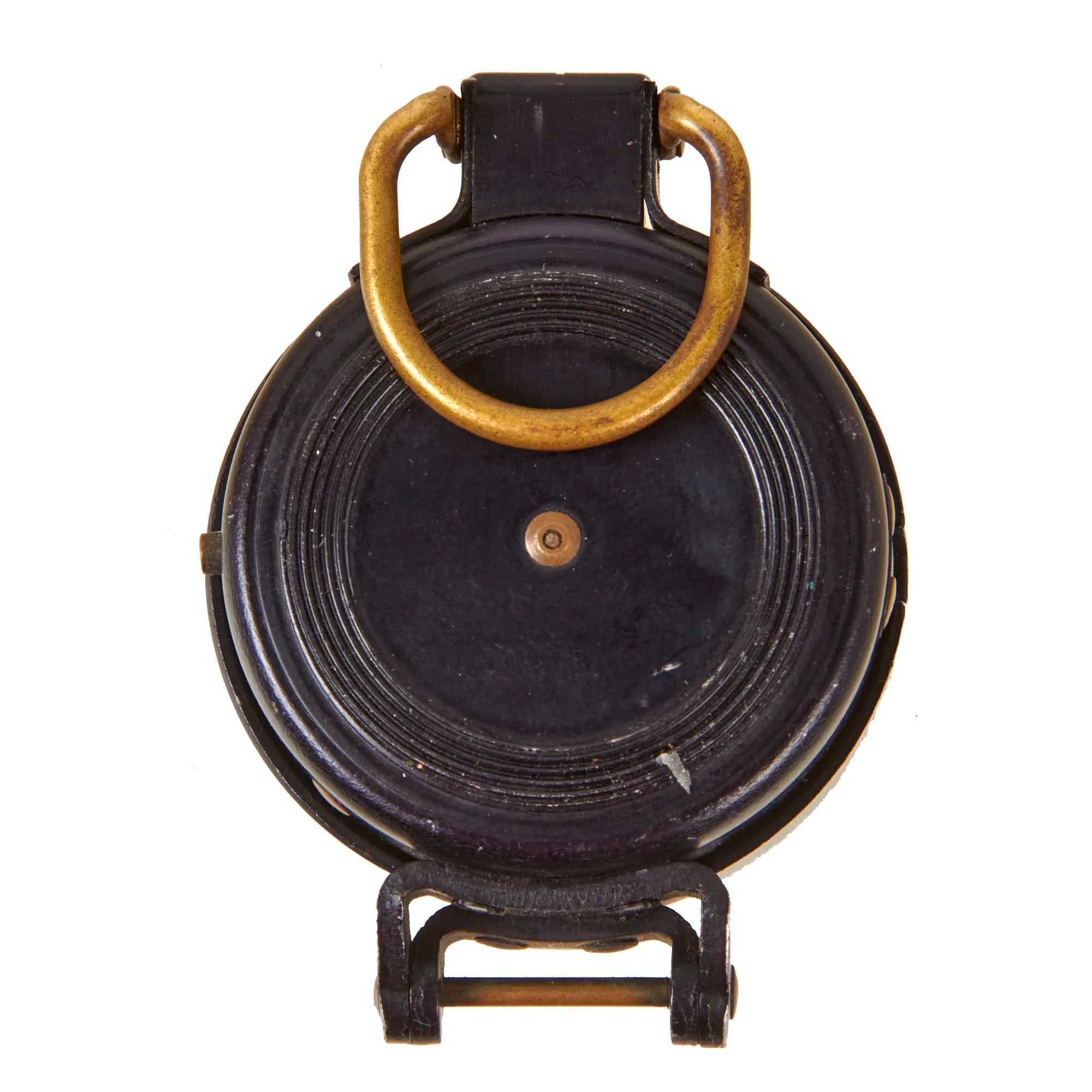
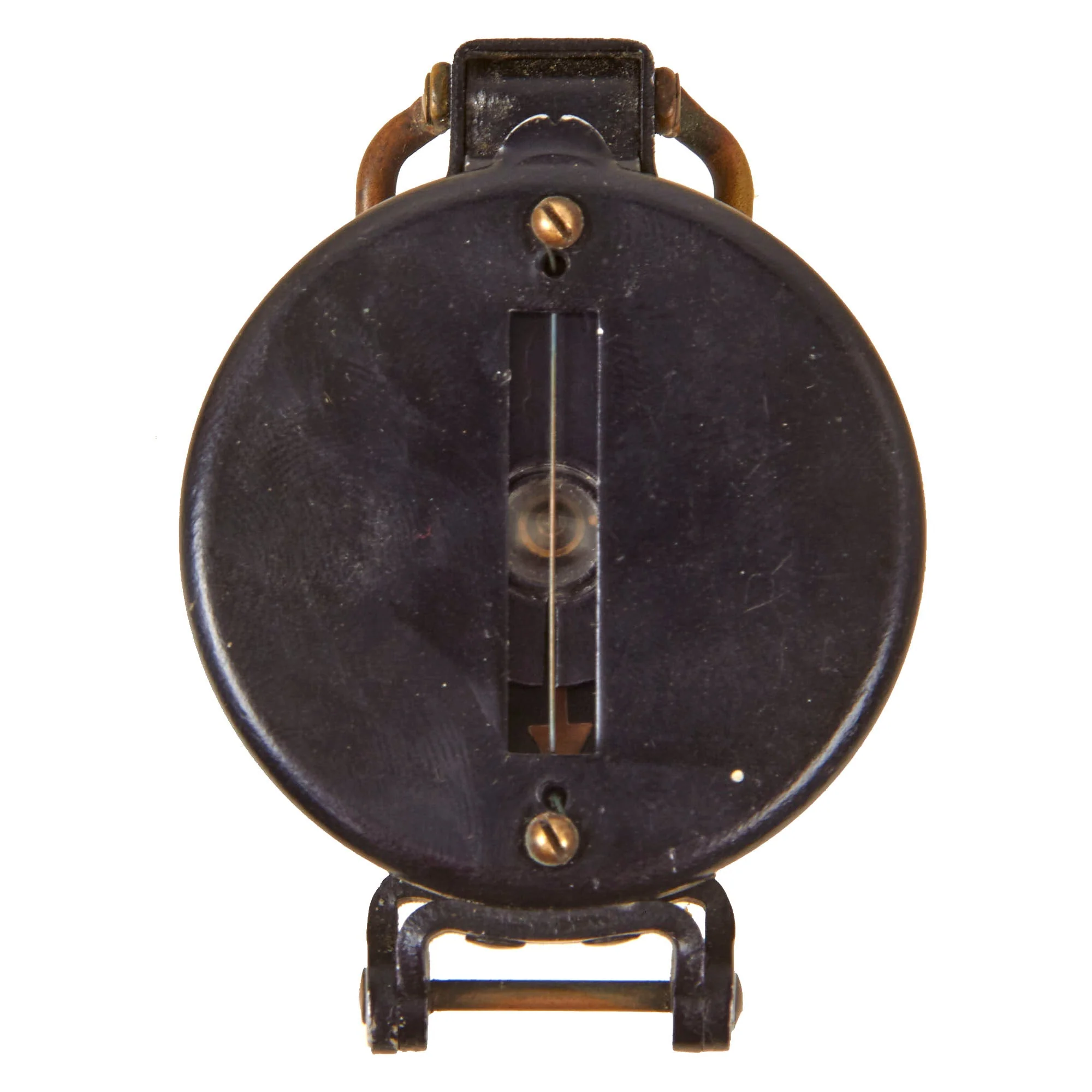
Original Item: Only One Available. This is a good service-used example of the M1938 lensatic compass, which was developed and adopted at the start of WWII. It was an excellent design that was easy to manufacture. Additionally, the adoption of this compass allowed the Army to standardize land navigation training, making it simpler to teach to the millions of young men who were being drafted into the Army and Marines.
The experiences of war taught the Army a few things about compass design. Firstly, it proved that the lensatic compass design was a good one - it was accurate, reliable, and versatile. With its compass card graduated in both degrees and mils, it was usable by both infantry and artillery. The military liked the basic design and stuck with it.
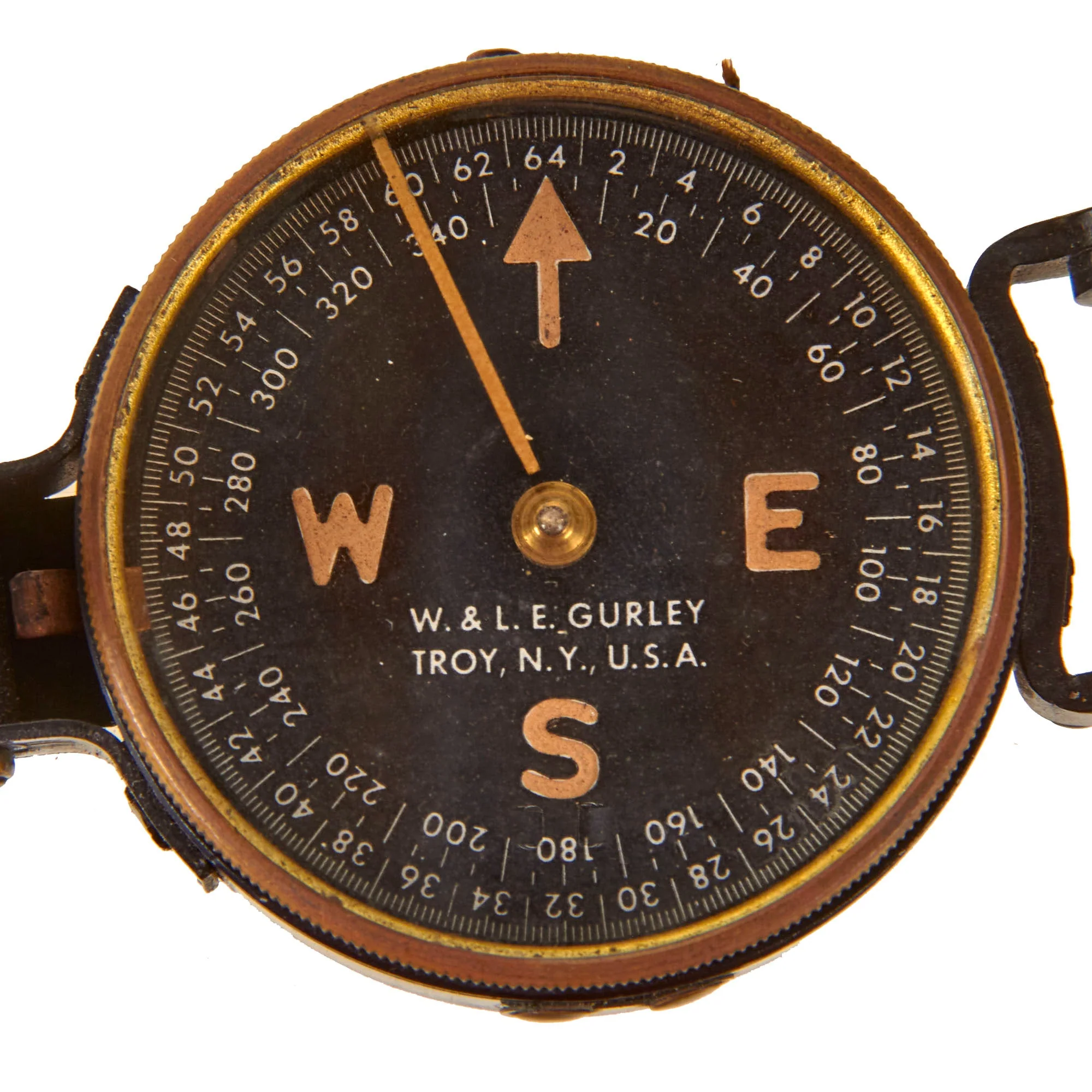
This example is marked on the floating dial as W.&L.E. Gurley / Troy, N.Y., U.S.A. This is the marking for William Gurley and his younger brother Lewis E. Gurley founded the W. and L.E. Gurley Company in Troy, N.Y., in 1852. Initially, the company manufactured precision instruments for civil engineers and surveyors. Today, the company operates as Gurley Precision Instruments in the same building it constructed in 1862 at the corner of Fifth Avenue and Fulton Street in Troy.
Over time, Gurley expanded its product line to include thermometers and other testing equipment. They also contributed precision instruments for both World Wars and began manufacturing gyroscopes, sextants, star trackers, and precision guidance equipment for guided missiles and space exploration during the Cold War and beyond.
Today, Gurley Precision Instruments is best known for its optical encoders. These encoders are used to measure and control speed for medical instrumentation, electronics, robotics, and other applications.
The front of the pouch shows heavy wear but is stamped twice with the name E.G. FREY or GREY, with what could possibly be the marine stamp style. A good research project. There is some minor tearing in the pouch material on the back.
A great set that comes ready for further research and display.

Details & Craftsmanship
Every detail has been carefully considered to bring you the perfect product.

Details & Craftsmanship
Every detail has been carefully considered to bring you the perfect product.
Details & Craftsmanship
Every detail has been carefully considered to bring you the perfect product.
Details & Craftsmanship
Every detail has been carefully considered to bring you the perfect product.
Details & Craftsmanship
Every detail has been carefully considered to bring you the perfect product.

Details & Craftsmanship
Every detail has been carefully considered to bring you the perfect product.

Details & Craftsmanship
Every detail has been carefully considered to bring you the perfect product.

Details & Craftsmanship
Every detail has been carefully considered to bring you the perfect product.
Description
Original Item: Only One Available. This is a good service-used example of the M1938 lensatic compass, which was developed and adopted at the start of WWII. It was an excellent design that was easy to manufacture. Additionally, the adoption of this compass allowed the Army to standardize land navigation training, making it simpler to teach to the millions of young men who were being drafted into the Army and Marines.
The experiences of war taught the Army a few things about compass design. Firstly, it proved that the lensatic compass design was a good one - it was accurate, reliable, and versatile. With its compass card graduated in both degrees and mils, it was usable by both infantry and artillery. The military liked the basic design and stuck with it.
This example is marked on the floating dial as W.&L.E. Gurley / Troy, N.Y., U.S.A. This is the marking for William Gurley and his younger brother Lewis E. Gurley founded the W. and L.E. Gurley Company in Troy, N.Y., in 1852. Initially, the company manufactured precision instruments for civil engineers and surveyors. Today, the company operates as Gurley Precision Instruments in the same building it constructed in 1862 at the corner of Fifth Avenue and Fulton Street in Troy.
Over time, Gurley expanded its product line to include thermometers and other testing equipment. They also contributed precision instruments for both World Wars and began manufacturing gyroscopes, sextants, star trackers, and precision guidance equipment for guided missiles and space exploration during the Cold War and beyond.
Today, Gurley Precision Instruments is best known for its optical encoders. These encoders are used to measure and control speed for medical instrumentation, electronics, robotics, and other applications.
The front of the pouch shows heavy wear but is stamped twice with the name E.G. FREY or GREY, with what could possibly be the marine stamp style. A good research project. There is some minor tearing in the pouch material on the back.
A great set that comes ready for further research and display.